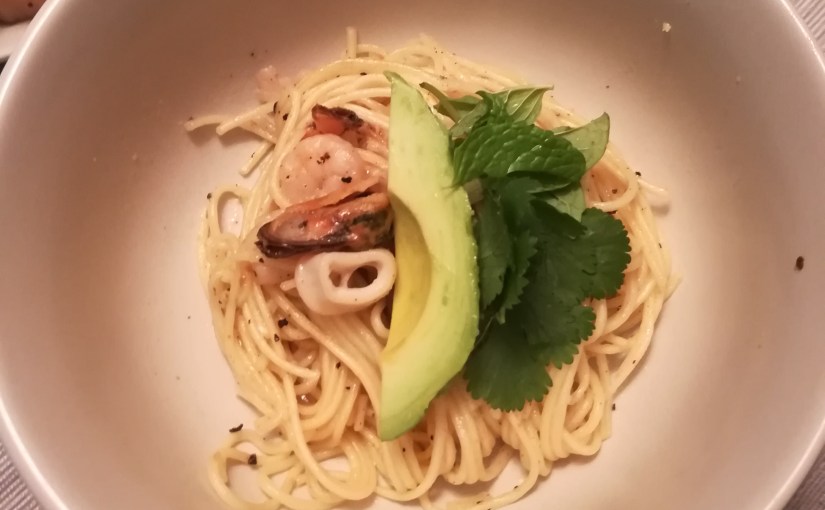
The process of creating anything is always an amazing feat as you can start with seemingly arbitrary components and end with a thoughtfully composed master piece. Well, at least that’s the goal. Going in reverse, you can recursively break down any item, while each time being able to marvel at the mess in front of you. Every moment I lay out the raw ingredients for a dish, I ask myself, “Wait, am I really able to turn all these random ingredients into the coherent concept in my mind?” The answer is usually yes, so I took the thought a step further and decided to create a dish that would be used to create another dish. I call it “dishception” (I don’t really call it that, so please don’t quote me). But all that didn’t sound like enough of a challenge, so I used the dish three different ways.
Cue Vietnamese Style Chow Mein. I was still brimming with inspiration from prior experimentation with fish sauce, so a fusion of Chinese Chow Mein with Vietnamese flavors had been occupying the back of my mind for months. Growing up in a predominately Chinese neighborhood, I had a solid idea of chow mein, but always felt there were areas for improvement. The dish was hearty, but lacked variety in flavors and textures. Vietnamese cuisine was the answer to the lack of flavors, while its role as being a part of something greater would improve its textural complexity.
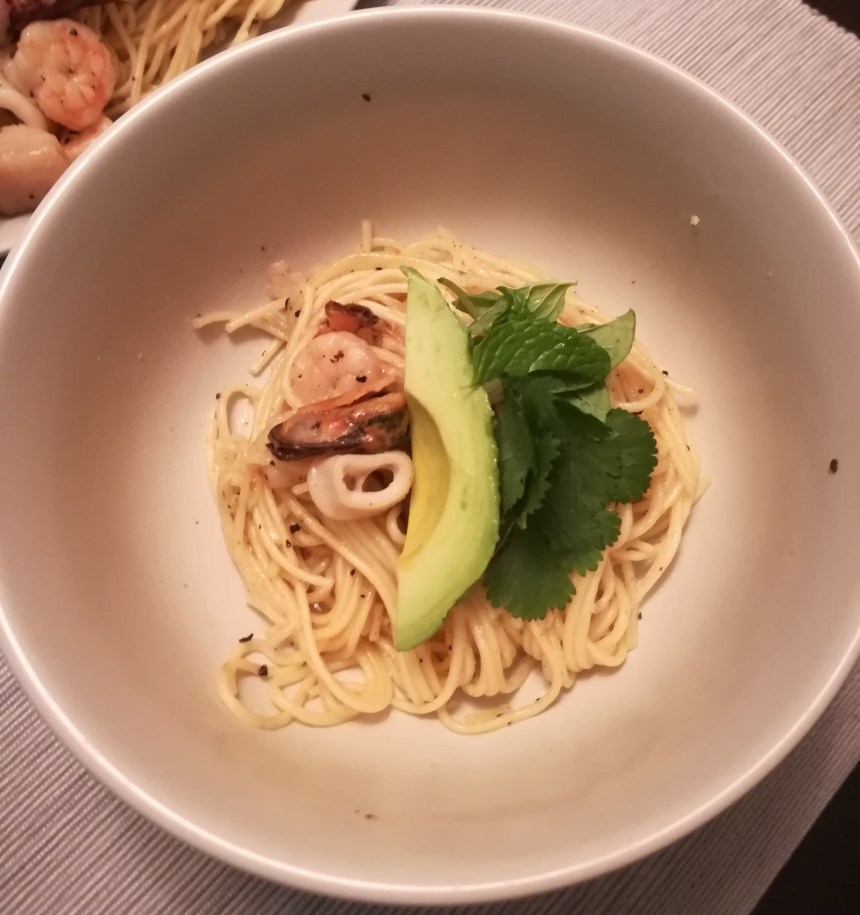
Fish sauce brought in an extra layer of depth to the seafood umami, aside herbal contrast from the herbs, avocado for a rich, creaminess, and the whole package lightened by the presence of lime. Without the aforementioned components, the dish would be reduced to a relatively light seafood chow mein. This laid the groundwork for the next three dishes that would utilize it: a slider, a lettuce wrap, and a sushi roll.
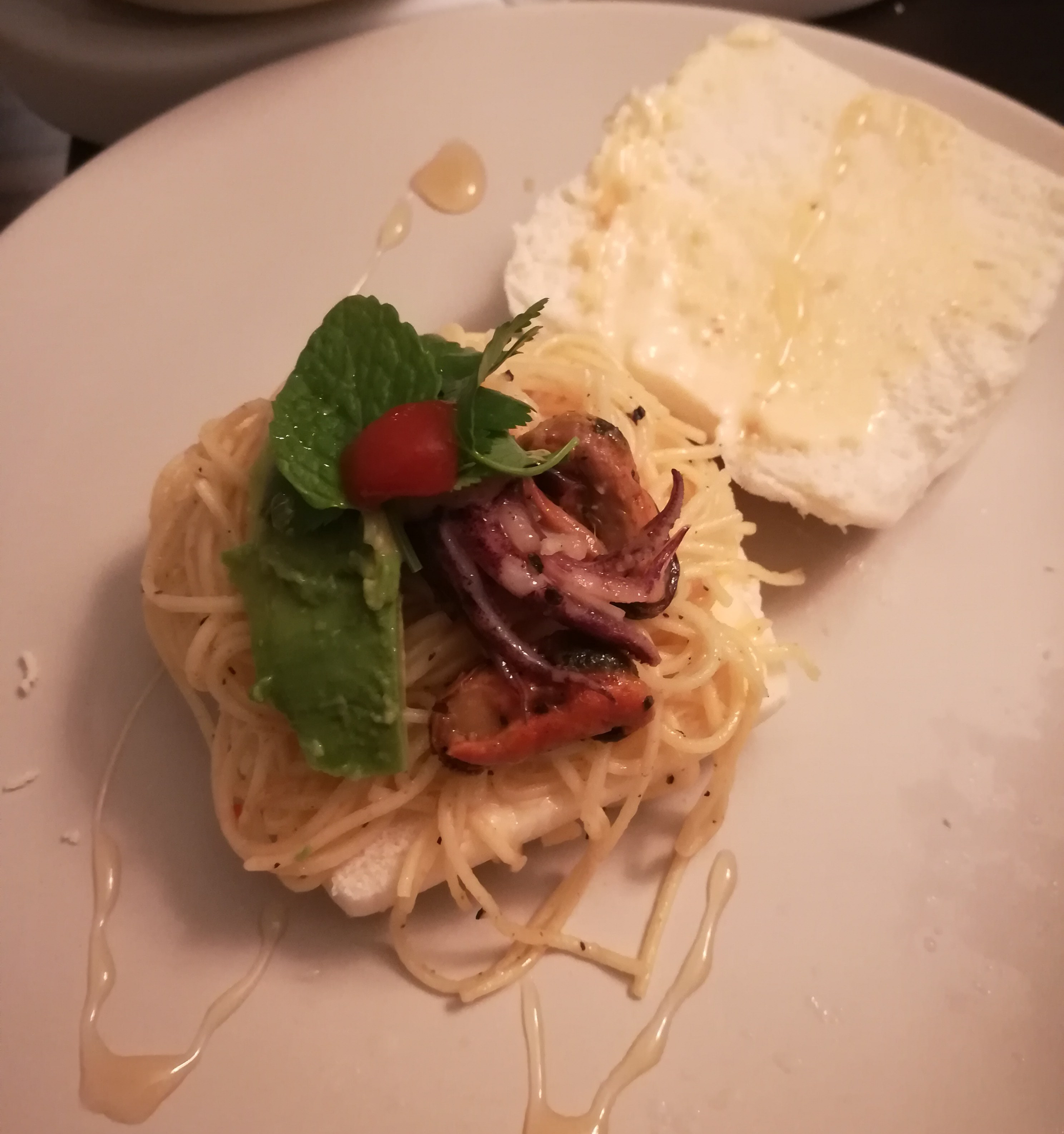
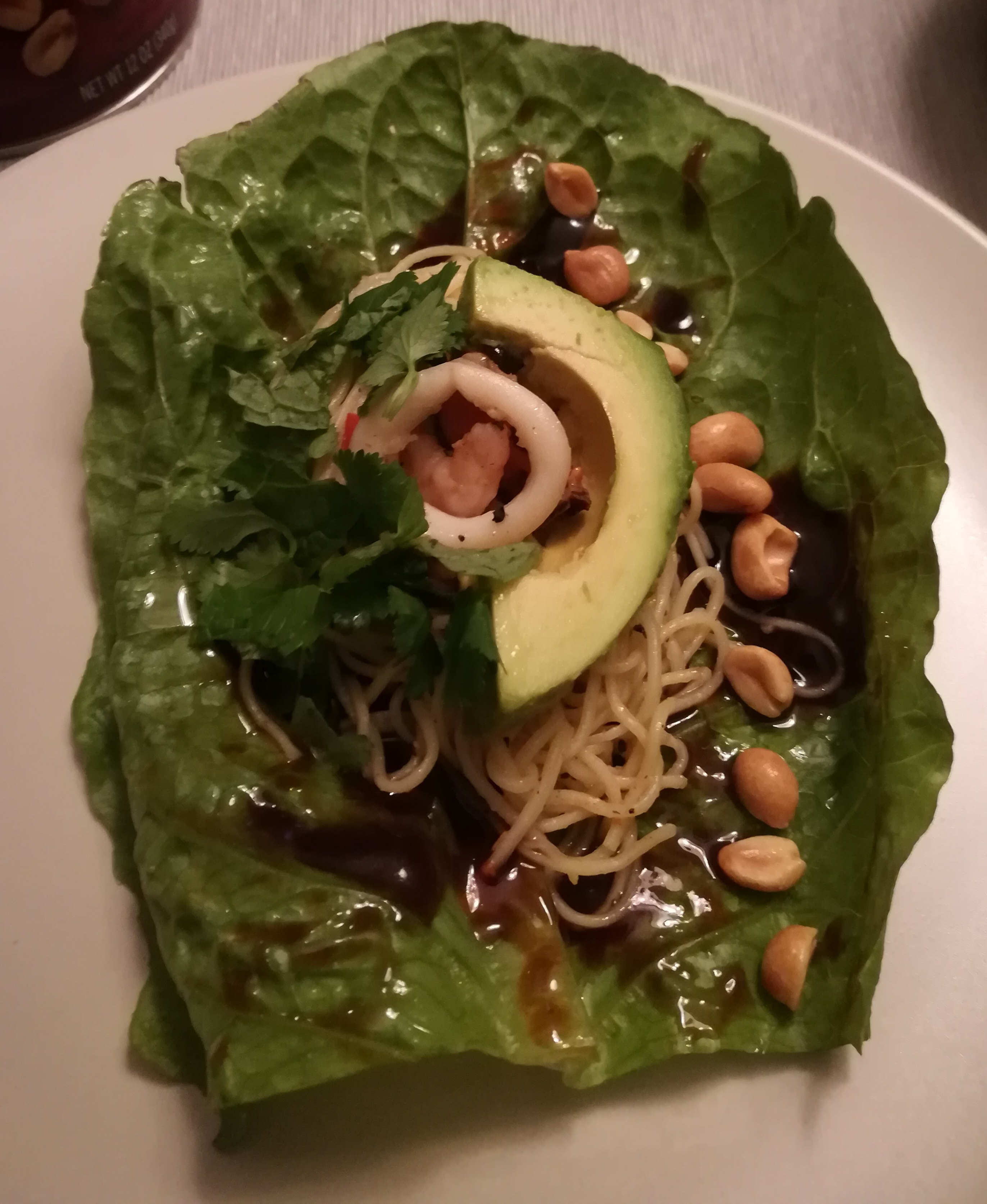
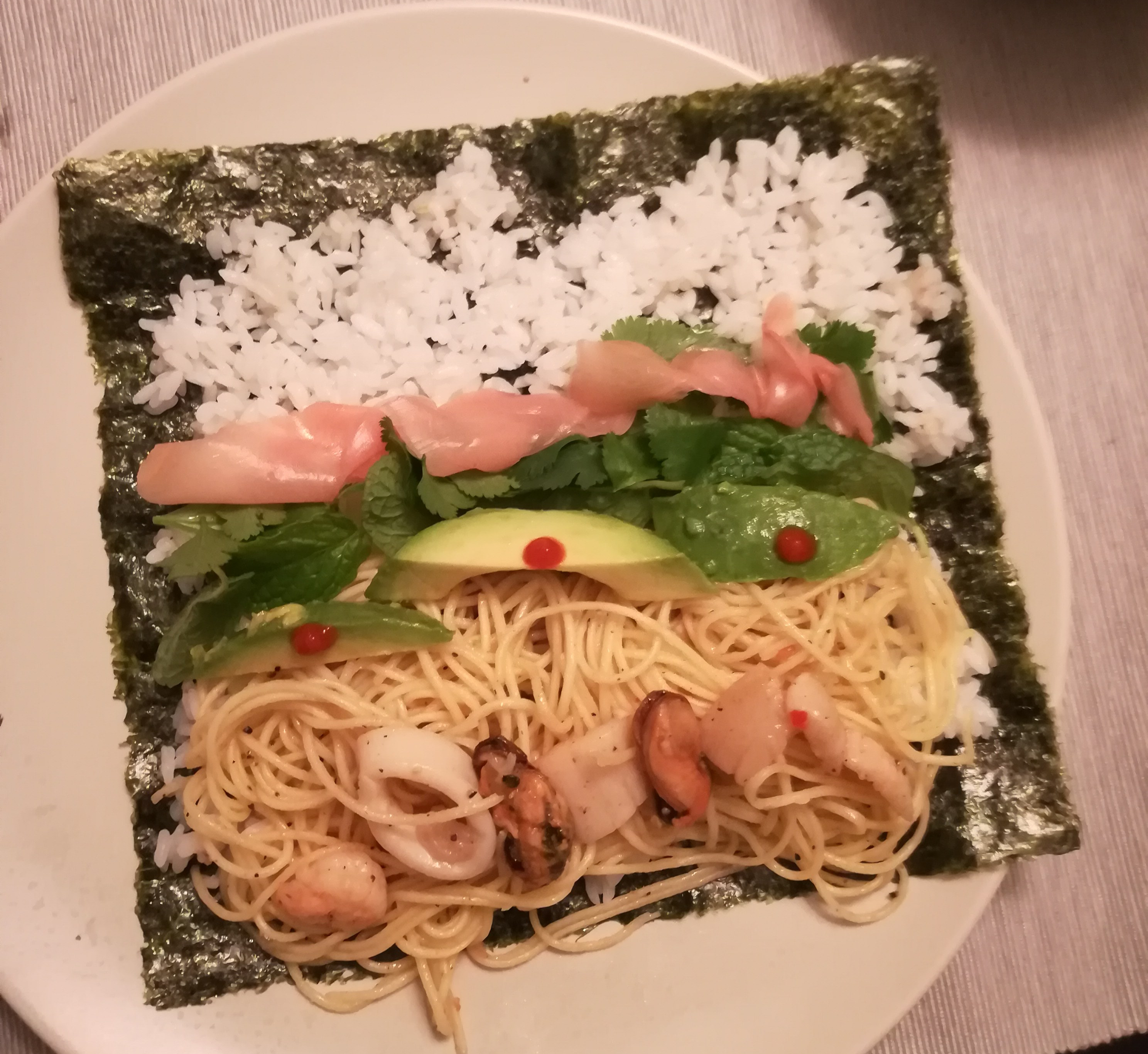
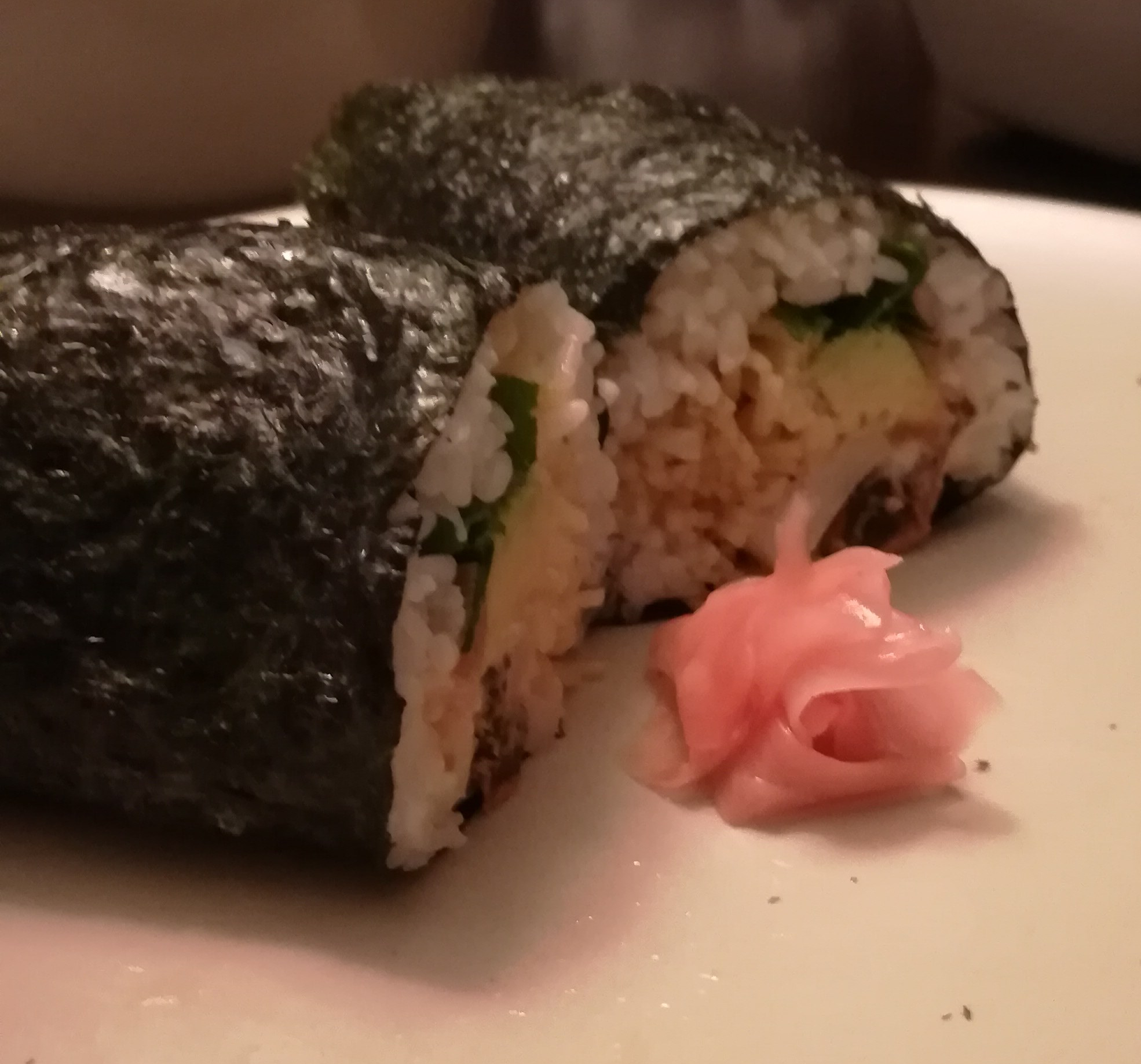
Each dish was a different experience formed by the little details surrounding the integration between the format and chow mein. Bao bread demanded more flavor, which allowed for more spice and sweetness in the slider. Meanwhile, the vibrant butter lettuce’s water content called for more salt and textural variance, leading to the use of hoisin and peanuts. Finally, the sushi roll was more about bridging the gap to have the noodles feel at home in its new role by accenting the rice and seaweed with a common pairing in ginger.
Variety is the spice of life and variety within formats and small details dictated the change in experience of these noodles. With each combination of detail, the chow mein morphed until it appeared unreminiscent of its beginnings, while evoking nostalgia of its original flavor profile. The night was a successful reminder that the recursive process of creation goes in both directions. A reminder that food has more to it than what is initially seen and, like anything else, is as much the sum of its parts as it is the part of something greater.

 Epicurean Experience