For a long time I had put off the day I attempted the challenge of integrating the bold flavors of a cuisine I had once discounted of providing any meaningful value to the food world. I had grown up with this food my entire life, but never perceived much other than distant nostalgia that I felt would never be appreciated by the masses. A culinary culture much drawn to Spanish influence, thus one I dismissed as being an inferior knock off. The theme for this dinner was to prove otherwise with the loud and raw inspiration of Filipino food.
For those unfamiliar, Filipino cuisine is composed largely of one noted wonders. If a dish is sweet, salty, sour, or anything in between then you can be damn sure that’s what you’ll get. This being what led to both my ire and commendation for its culinary composition. Food that exhibits one aspect boldly is a shock to the senses that is confident in its approach, but for those less exposed it’s a rude forcefulness left unrestrained in its unrelenting assault. After several years in delay, I finally had the experience, understanding, and answers necessary to tame the forces available in Filipino food. This would be achieved by pairing delicate, accenting flavors to refine and bolster the raging wildness it exudes.
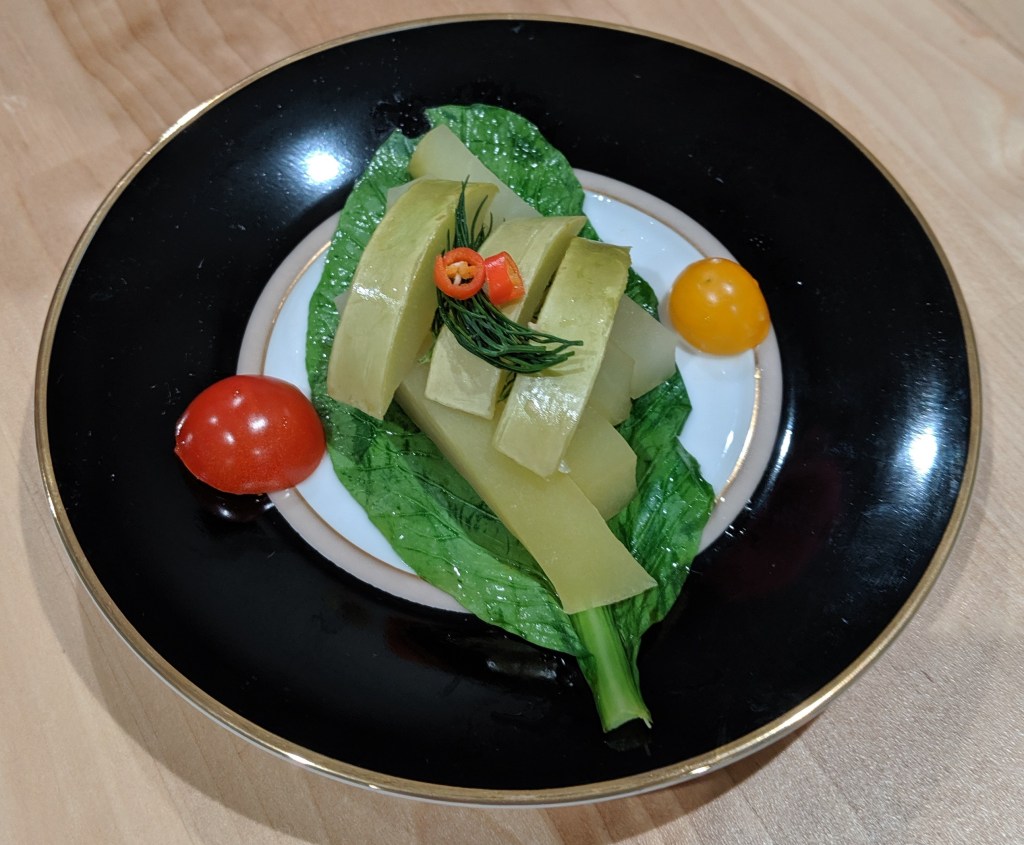
First up was a salad take on the classic upo side dish assigned the purpose of highlighting sourness. Amongst varying degrees of firmness from the upo and papaya, a myriad of citric flavor from the vinegars, yuzu, and lime would hit while being intermingled with a round of dull sweetness from the syrup. The intense acidity is further complimented by a mild bitterness from the pechay, heat from the Thai chili, and freshness from the dill. Accompaniments of cherry tomatoes then chime in to function as a palette cleanser between bites.
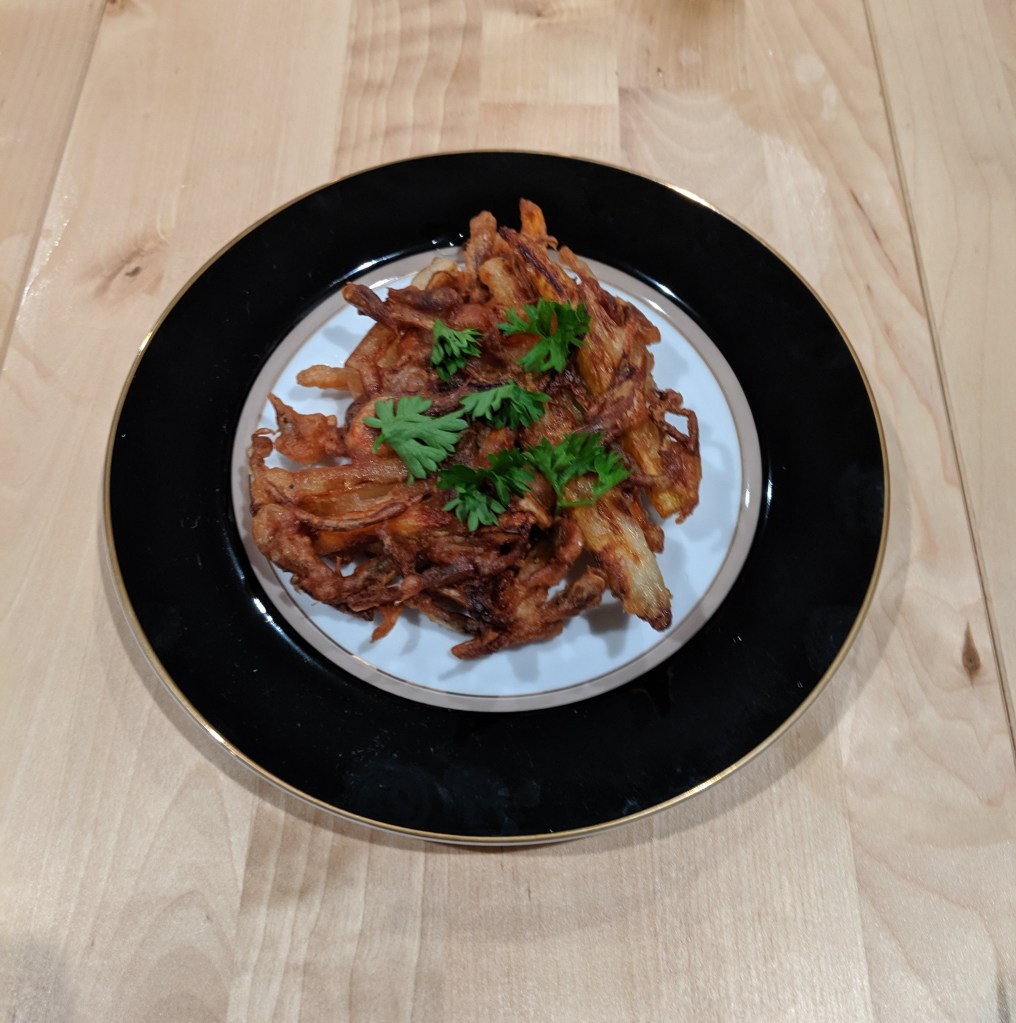
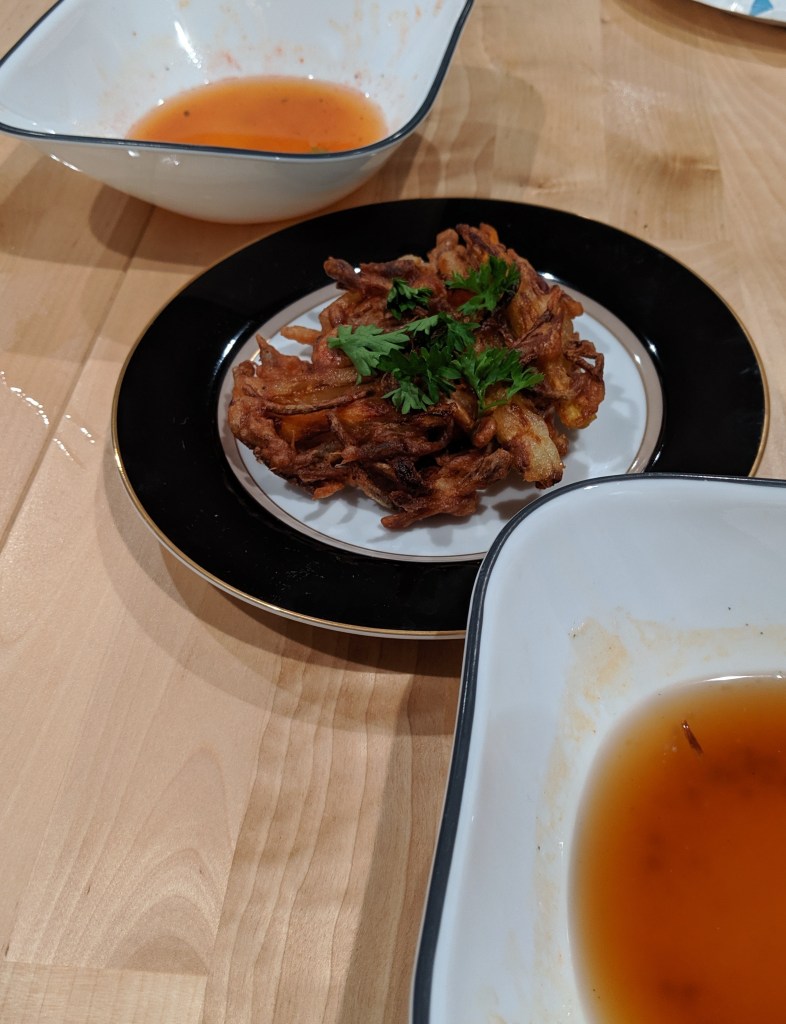
Next was ukoy, a classic Filipino fried fritter appetizer. It is typically relatively unseasoned and optionally served with soy sauce, vinegar (spiced or plain), or a combination of the two. For this dish, yuzu and heat accompany the shrimps while fish sauce, garlic, and brown sugar bring a sweet wave of deep umami to the crunch of the fritter, then followed by sourness from the lime and herbal flavor of the parsley aiding to disperse the oily richness. The sauce is also an intensified variant of the traditional sauce with more spice amidst complexity from the grapefruit.
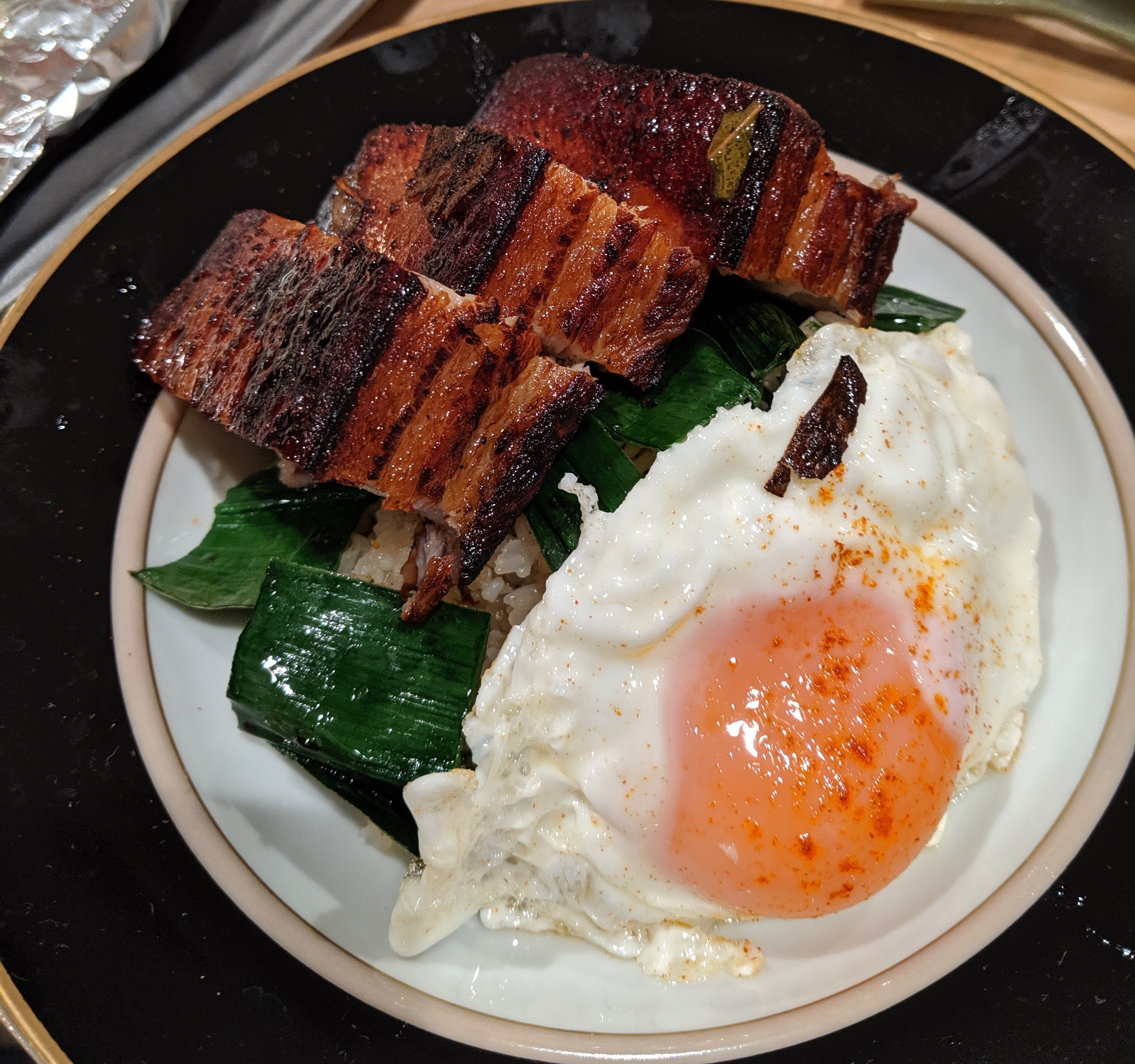
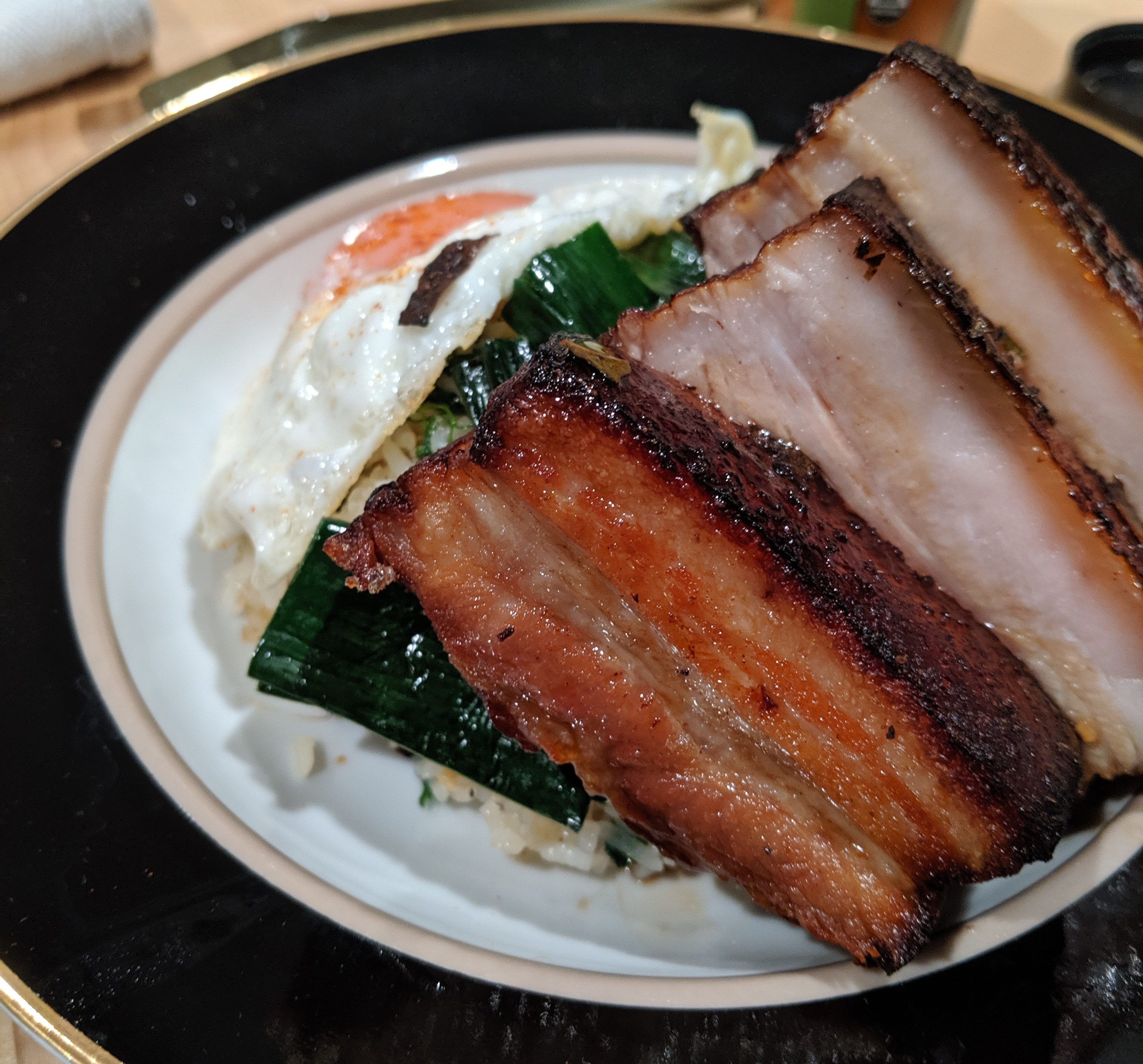
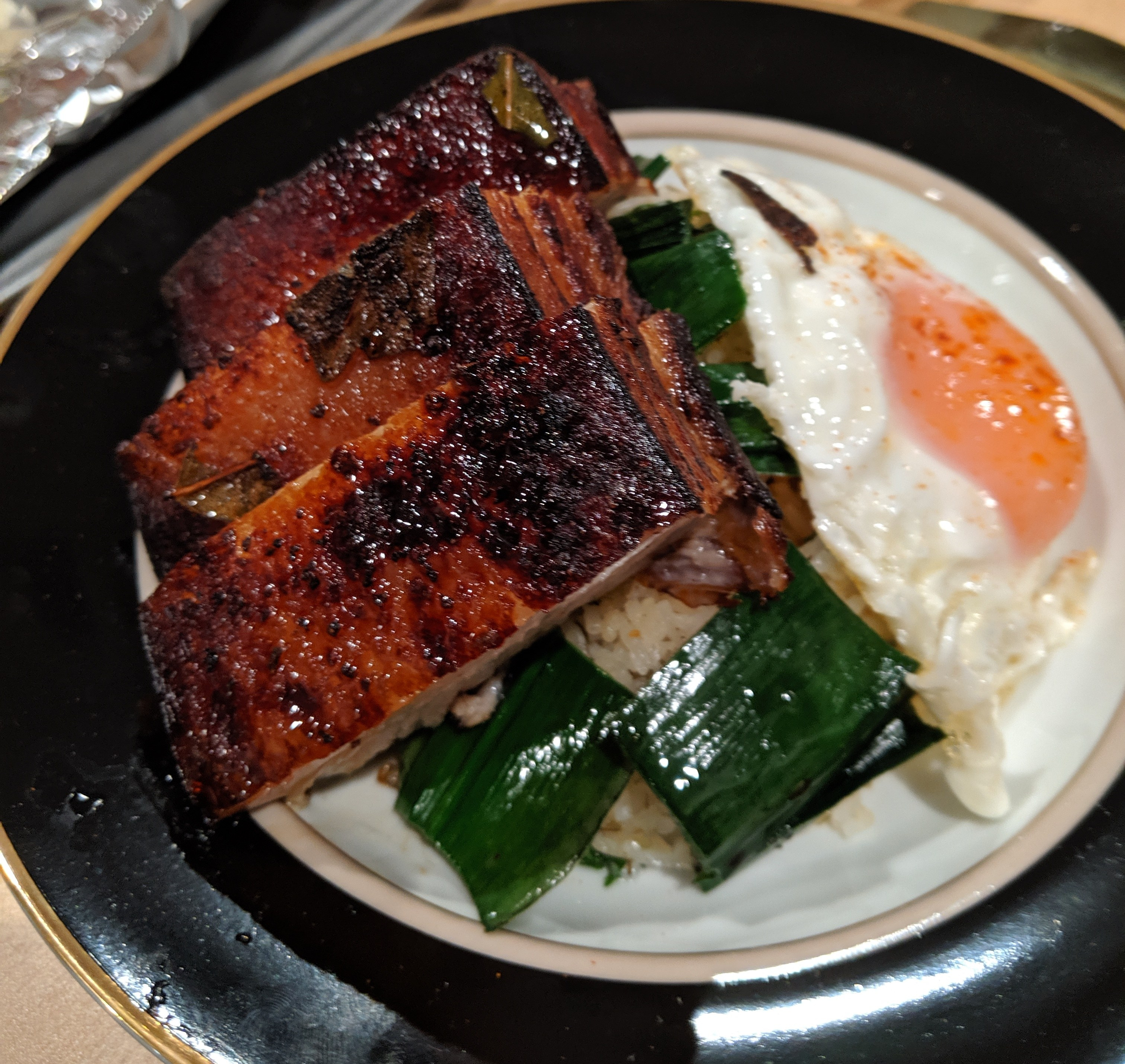
slow cooked honey adobo pork belly that is deep fried and served over sauteed leeks and herbal (lemon grass, cilantro, and white pepper) garlic fried rice with a side of cayenne seasoned egg
The main entree brings one of the most well known Filipino food terms in adobo and plays with it as a component of something greater. Honey is utilized to accent the base adobo flavor (composed of soy sauce, white vinegar, garlic, and bay leaves) as well as bridge the gap between the fried, slow cooked pork belly and fried rice. The rice brings in Asian herbal notes from lemon grass and cilantro with a touch of white pepper to an otherwise standard garlic rice. Sauteed leeks add texture while furthering the play between the pork belly and herbs in the rice. With each bite of pork belly, the intense adobo flavor is met with soft notes of honey as flavors from the rice clean the palette and inhibit a sense of heaviness from all the oils. Finally, an egg with cayenne is added for good measure to provide a rich, creamy mouthfeel.
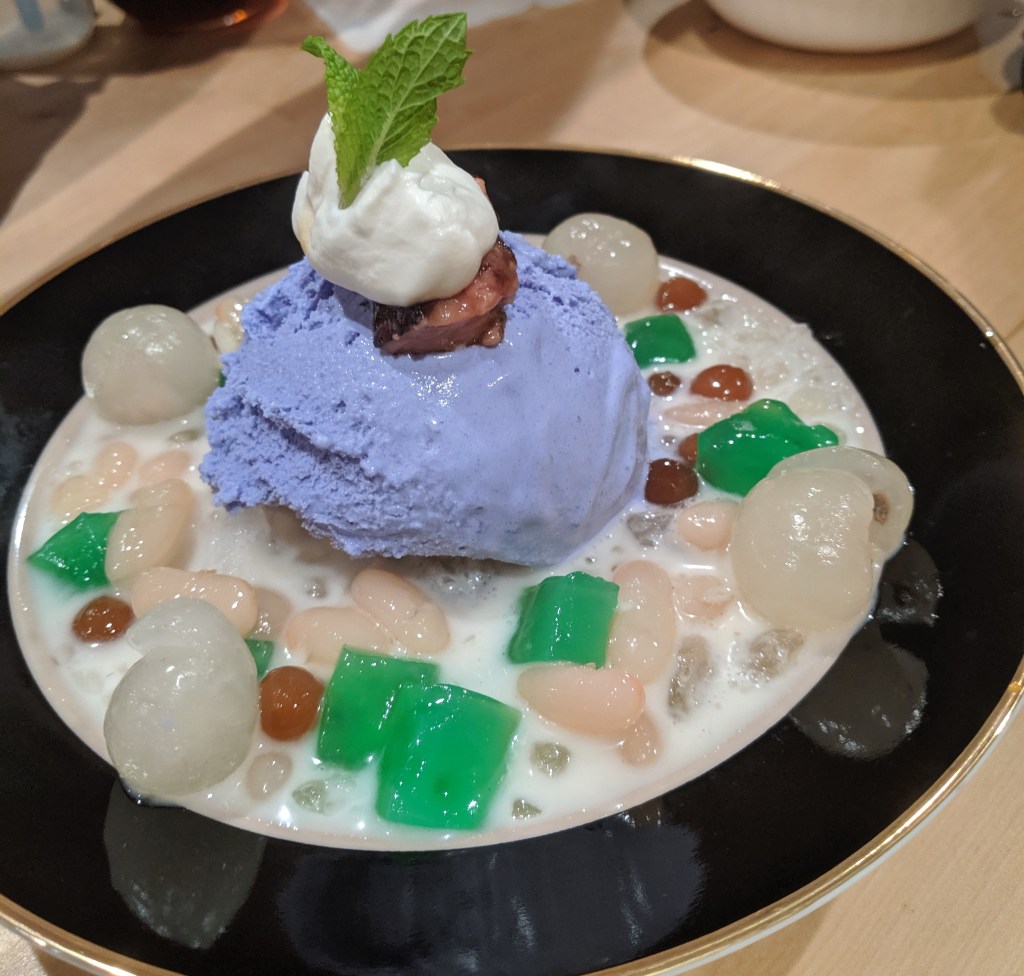
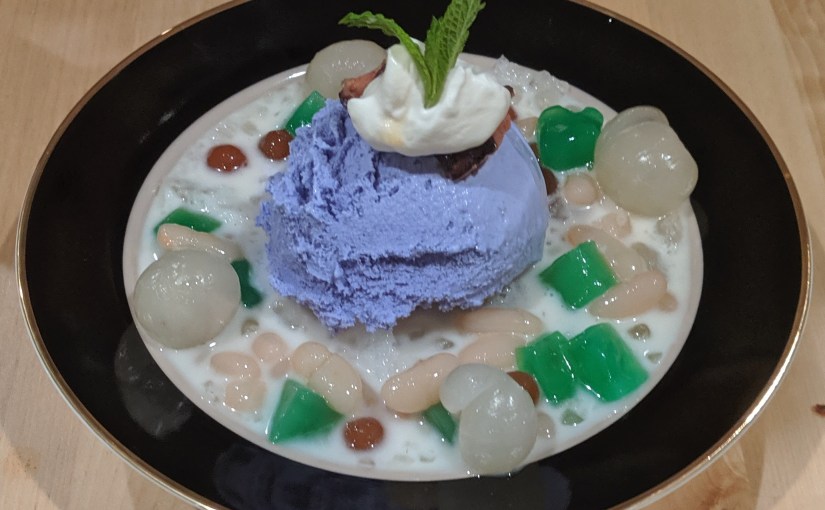
Finishing up the night was the iconic Filipino dessert Halo Halo. Deriving from the Tagalog term for mix (lit. mix mix), the dish is typically composed of ice, ube flavor, condensed milk, and sweetened jellies, beans, and/or tapioca. In other words sweet, sweet, and more sweet. Therefore the optimizations on this medium were to keep its strength as a sweet dish, while mixing in all the other flavors it was missing. Nostalgic to its roots, while functioning as a complete overhaul to the original concept. Bold savory notes are met by waves of varying iconic sweetness with unassuming citric and fresh herbal tones. A dish that represents the ideal mash up for bringing Filipino flavors into a modern world view. The bottom consists of crunchy crushed ice blended with intense umami from the foie gras greased condensed milk met with traditional pairings of tapioca, white beans, and jelly steeped in honey. The sweetness from the honey accommodates fresh yuzu cream and mint as salty bits of foie arrive with ube macupuno ice cream. Between bites, longan brings fresh fruit into the mix as a palette cleanser.
With that, my first foray into the use of Filipino flavors culminated in success. Each dish brought classic elements to the table that were well fortified by diverse cultural influences. All this resulting in an eventualized medley of Filipino staples amplified by variety in flavor, yet kept true to its iconic, aggressively bold notes. A worthy mark of my serious beginnings with a new culinary asset.

 Epicurean Experience