Making moles is a relatively complicated process involving many components and a lot of trial and error. And just to be clear, not this mole:
But this one:
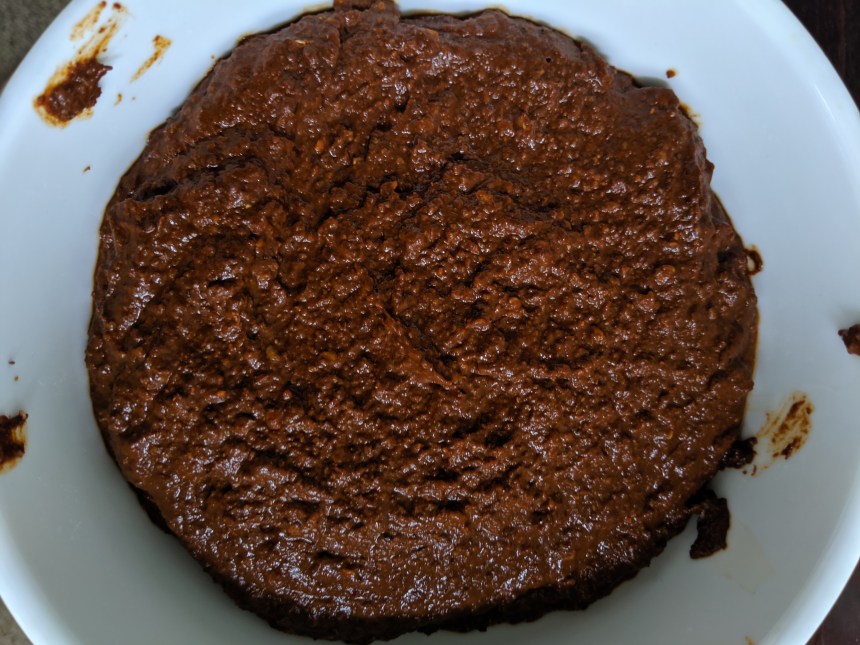
That being said, I am sure both are delicious in their own way.
With the upcoming feastival, I turned my focus on making mole as it’s been something I’ve always wanted to undertake and this seemed like the perfect time to do so. Its depth of flavor emanates an unexpected complexity despite its initially unappetizing appearance. A complexity in both color and flavor that I’d be hard pressed to recreate with any other dish.
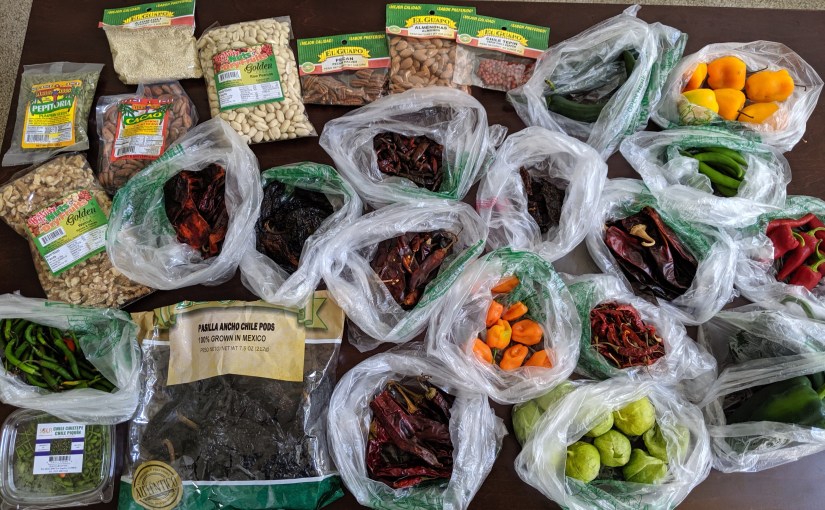
Now the ingredients that compose mole can largely be broken up into 5 different categories: chiles, sour ingredients (vinegars, tomatillos, etc.), sweet ingredients (fruits and other sugary foods), spices (garlic, cumin, etc.), and thickeners (nuts, tortillas, crackers, etc.). Going further, there are also different types, such as mole poblano and mole negro, but I have limited time to spend learning all these nuances so I opted to just taste all the chile varieties I could get my hands on and go from there.
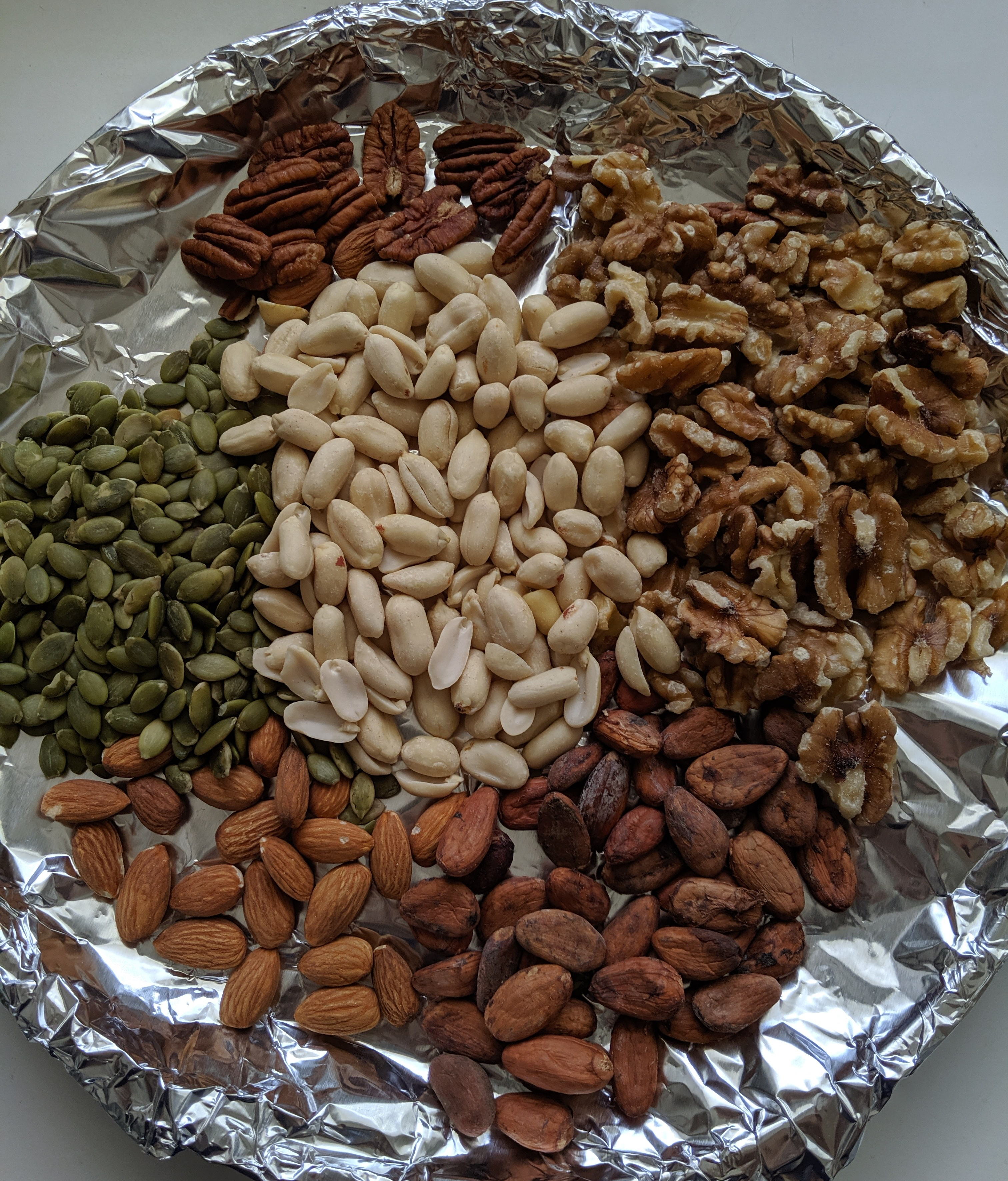
All this and I didn’t even get to testing out the different nuts and chiles roasted.
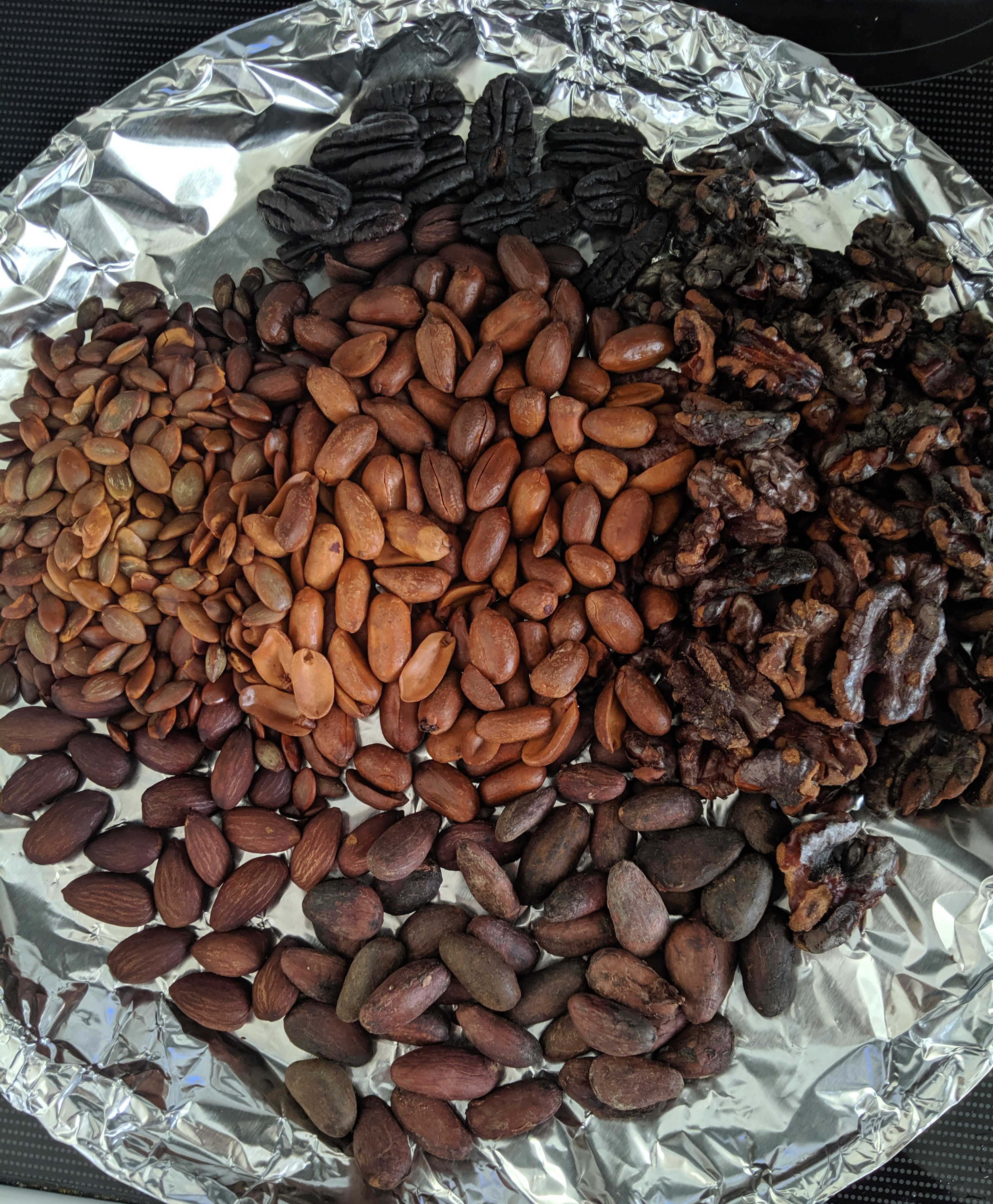
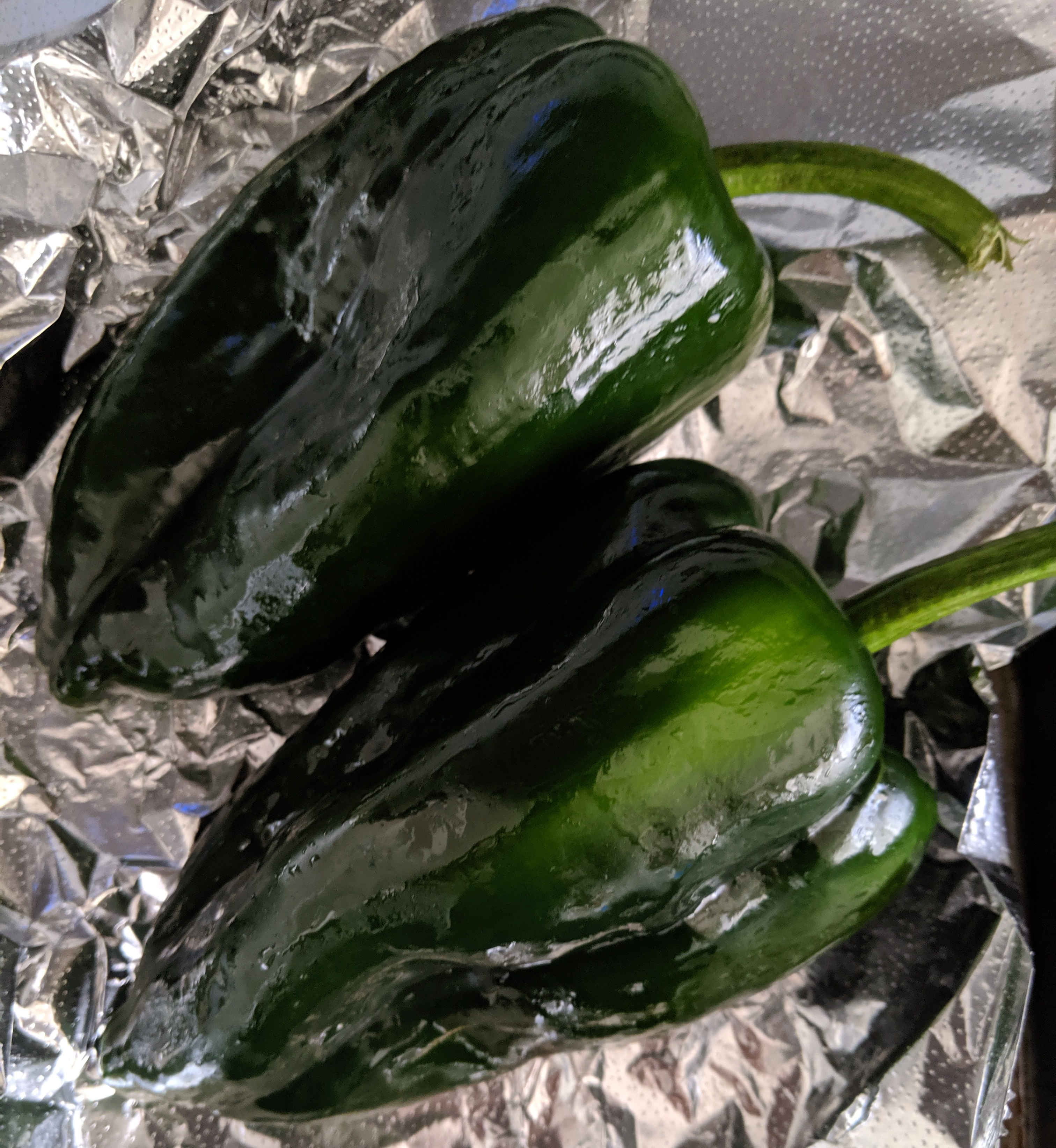
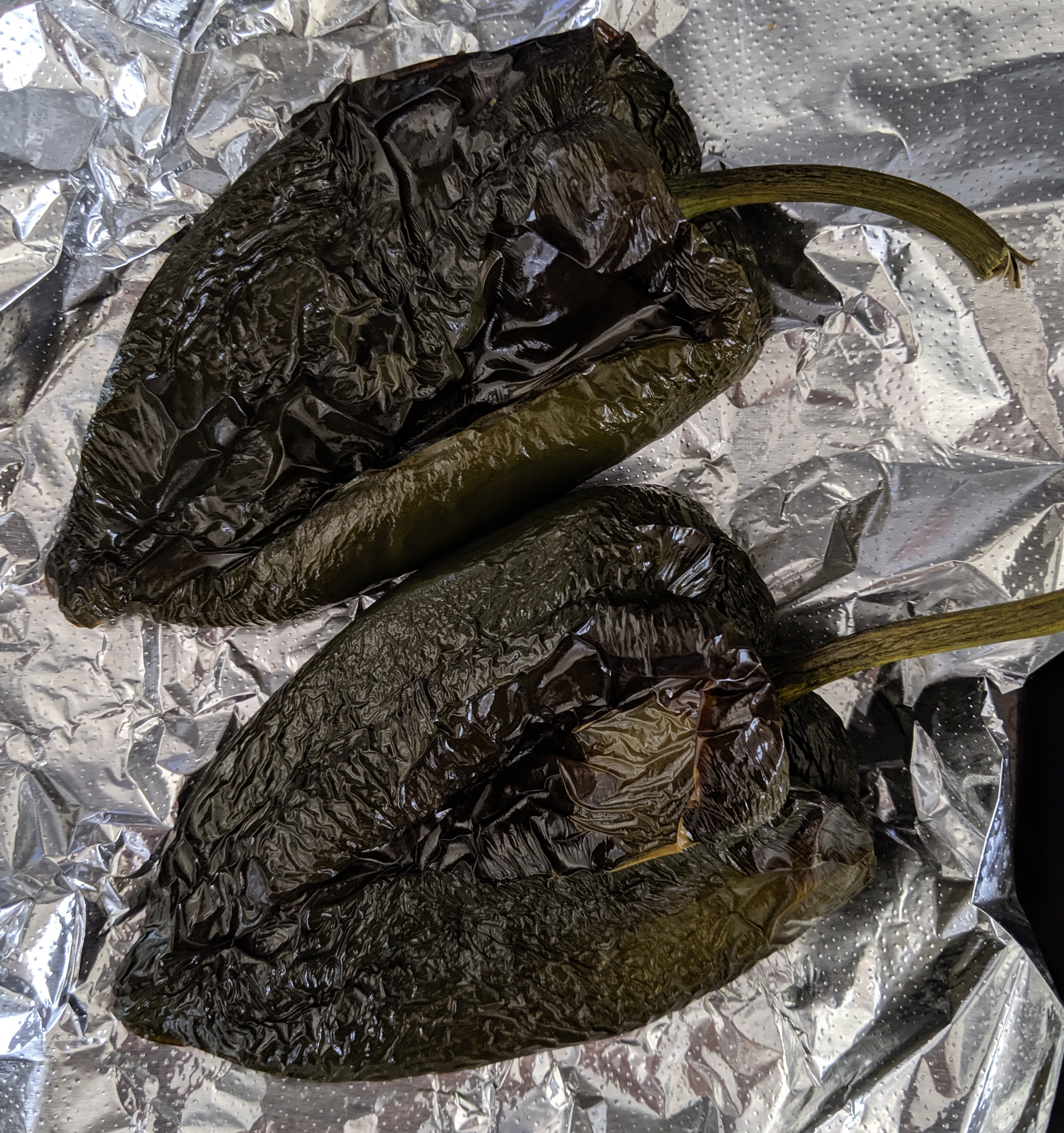
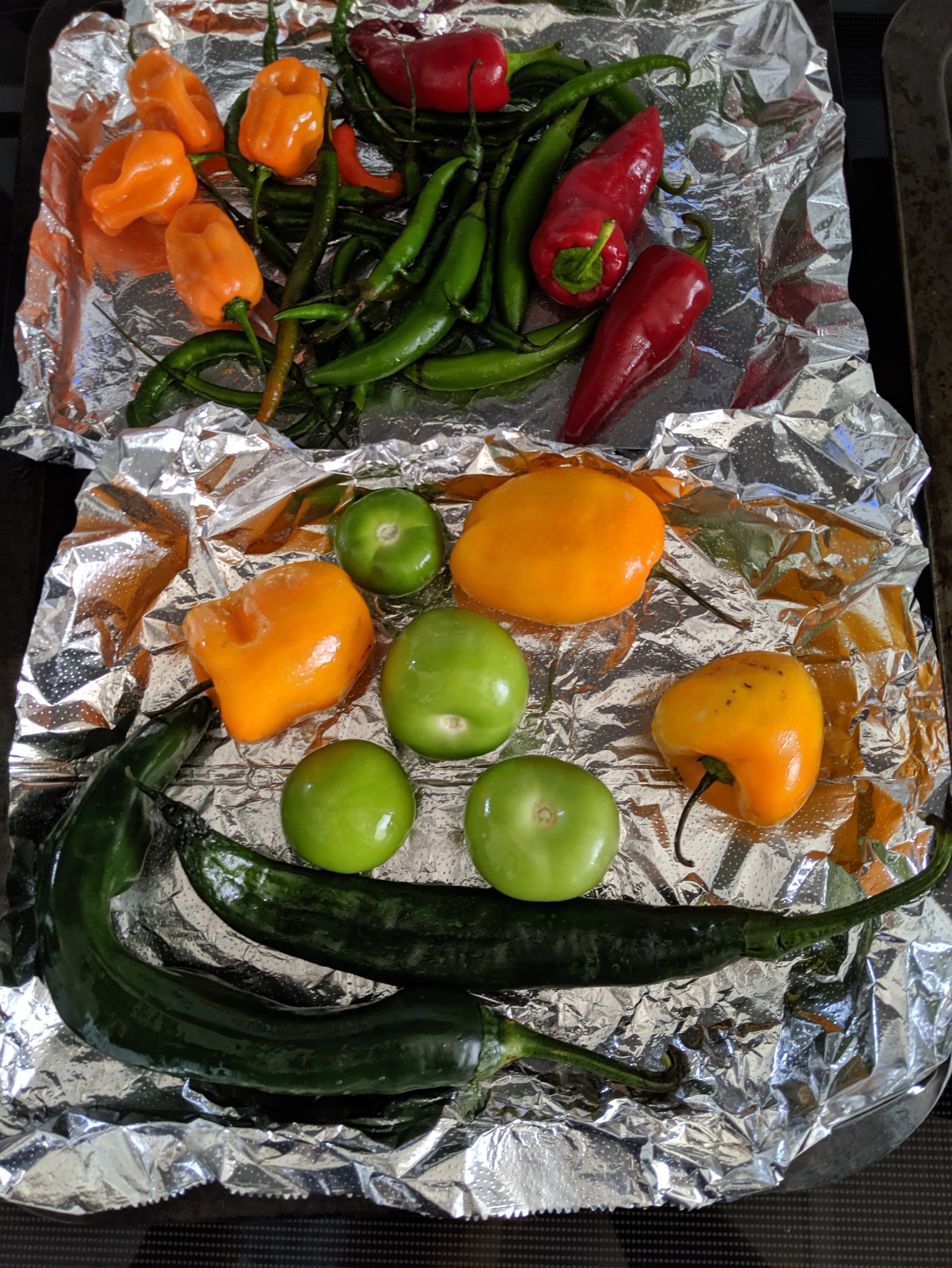
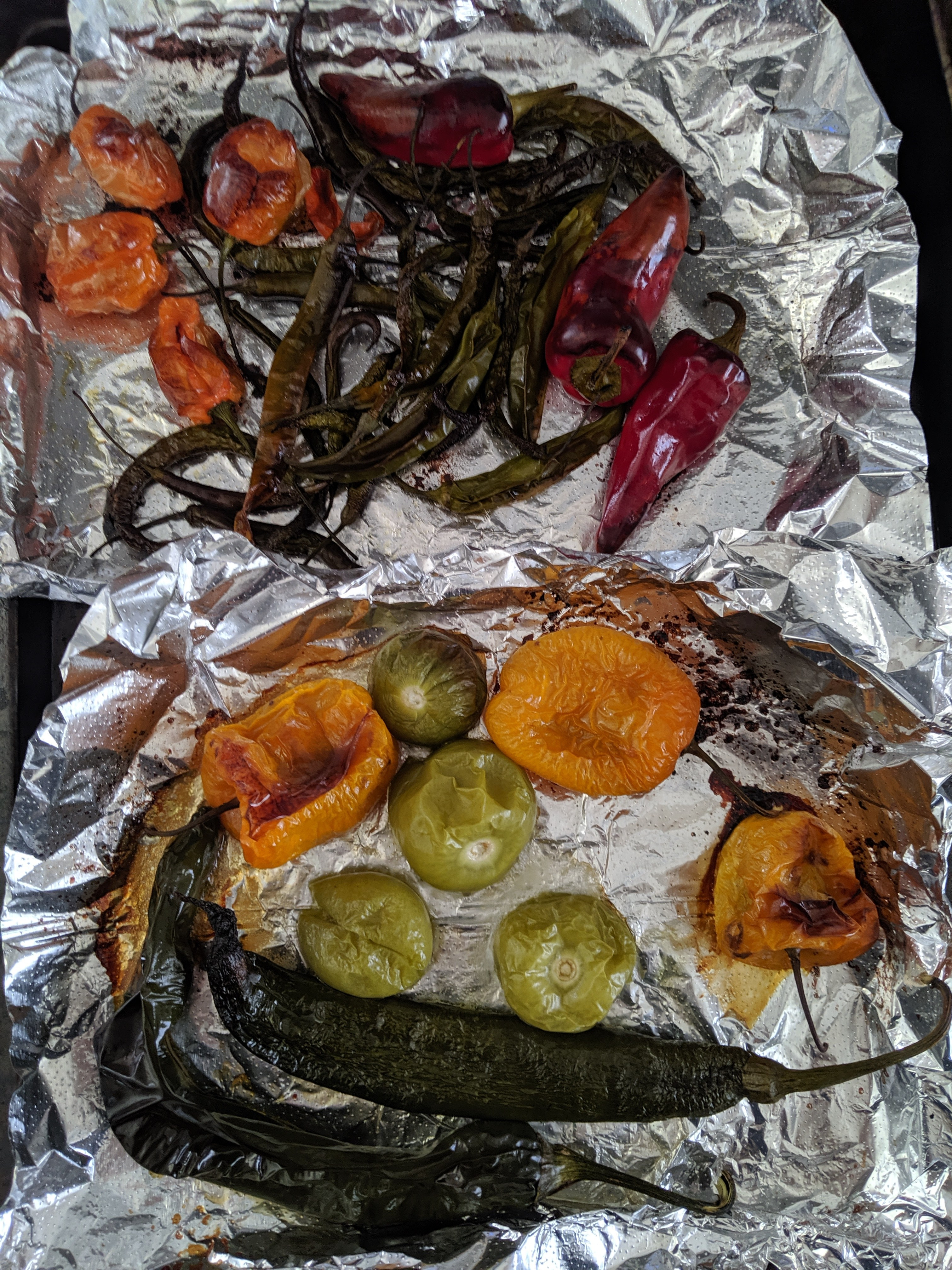
After a hour and half of tasting and trying to remember what each chile was called (keep in mind all the dried chiles I also had to taste), I settled on the following blend:
- Dried Chile De Arbol
- California Dried Chile
- Black Dried Chile
- Dried Ancho Chile
- Dark Amber Maple Syrup
- Apple Cider Vinegar
- Raw walnuts
- Roasted peanuts
- Roasted pumpkin seed
- Garlic powder
- Water
- Roasted chile pasilla
- Crema Oaxacena
- Aleppo pepper
- Lime
- Coriander
- Cumin
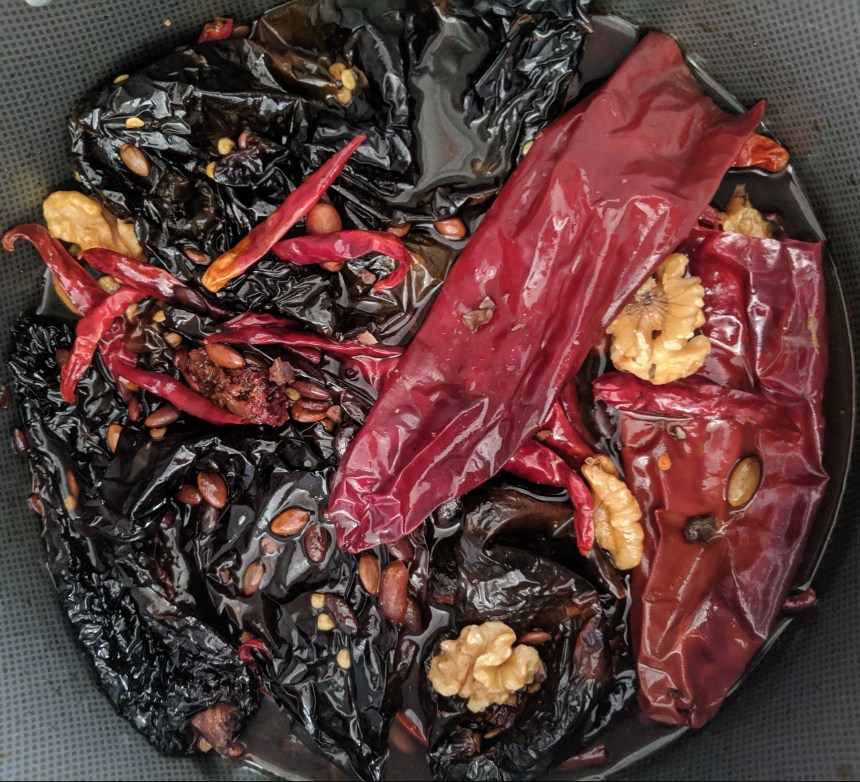
Now all that was left was to blend everything together with some tortilla and spend about 30 minutes tweaking ratios. It got to the point that even the smell of chiles made me nauseous, but I couldn’t stop and let all my efforts go to waste.
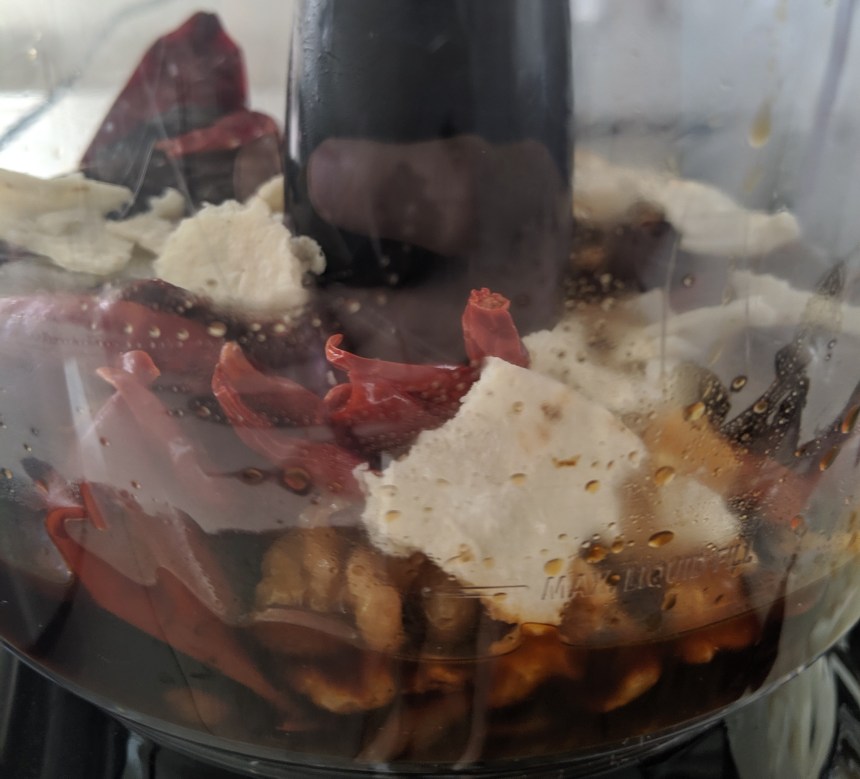
And finally it was over!
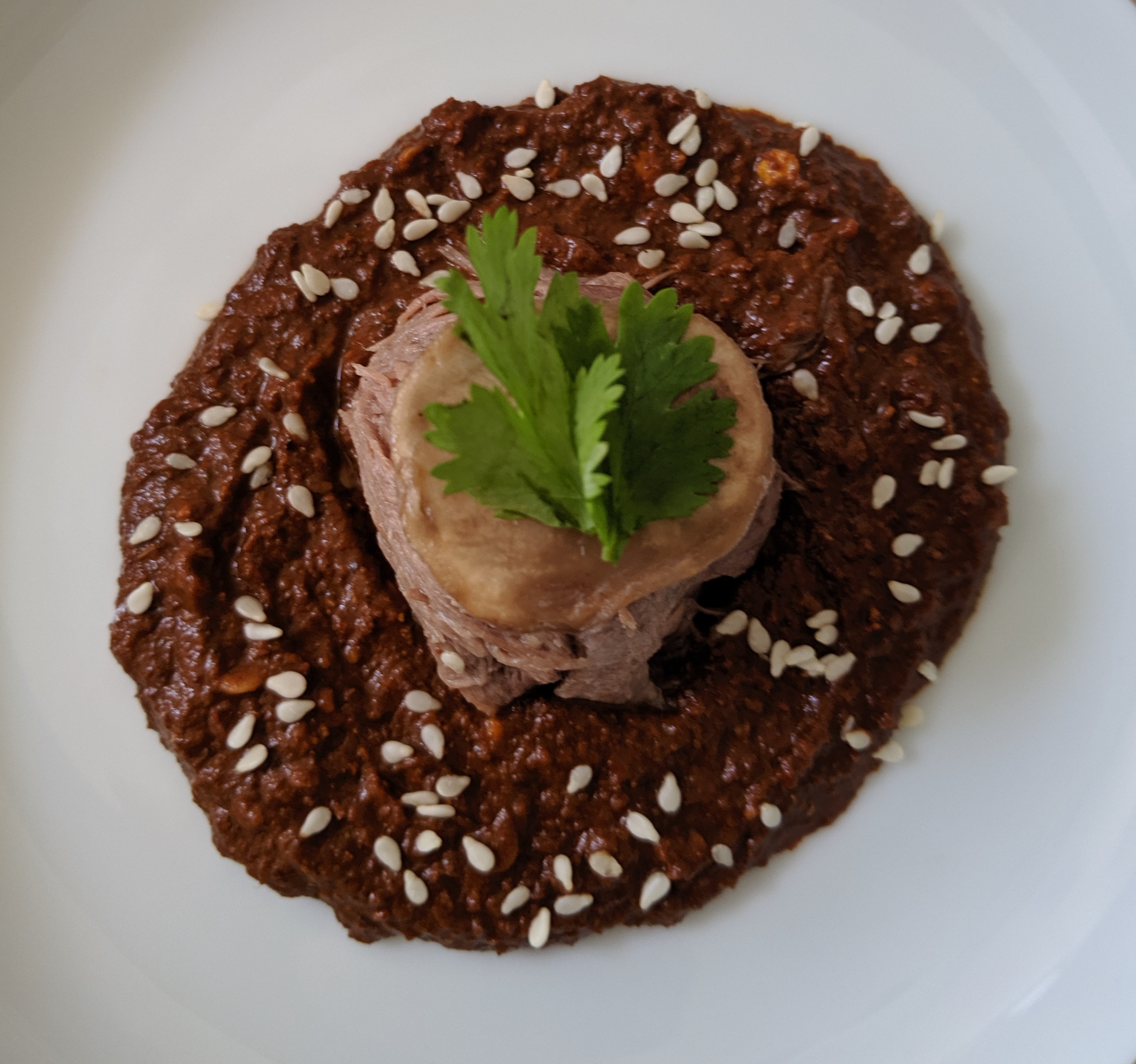
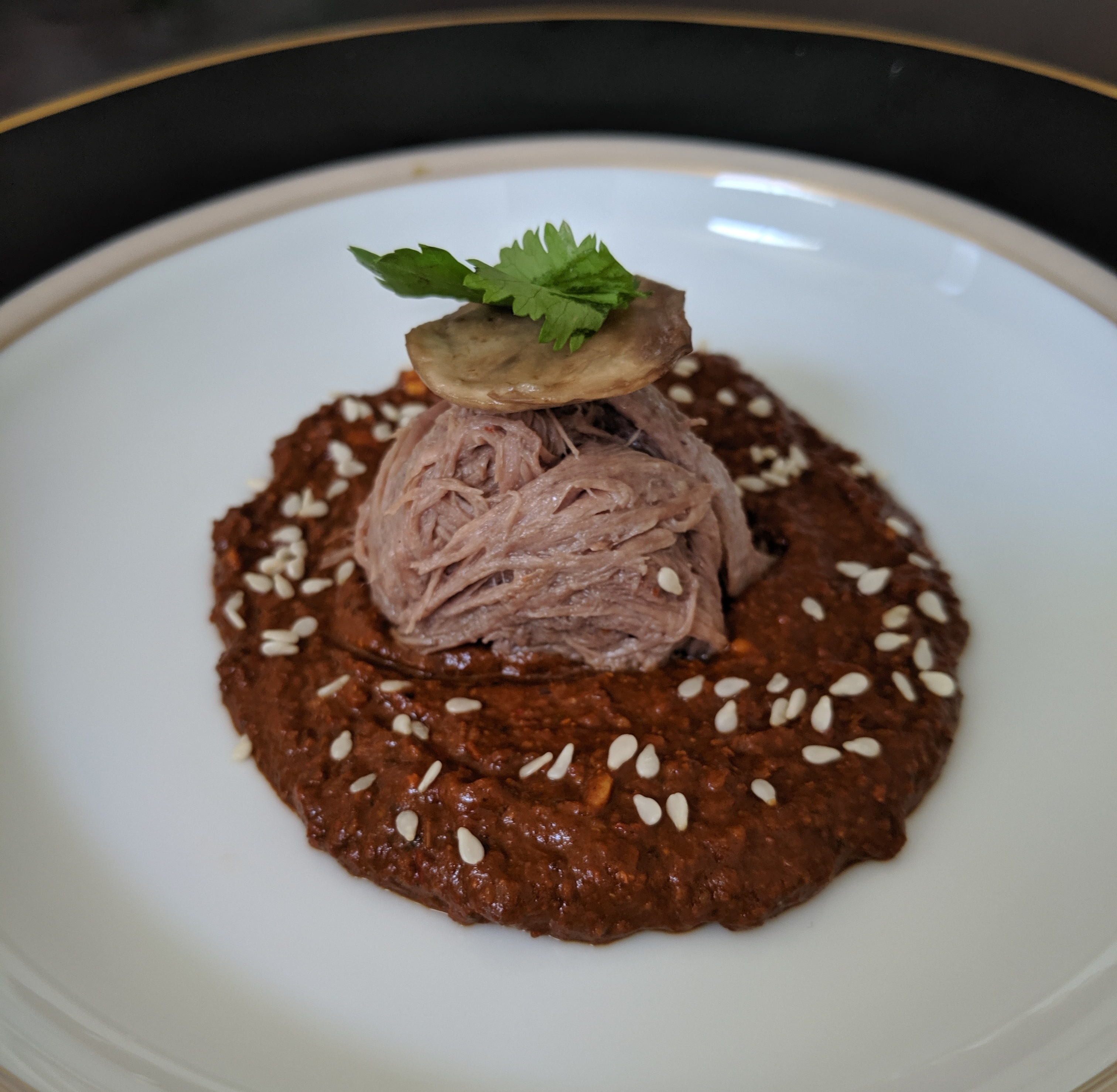
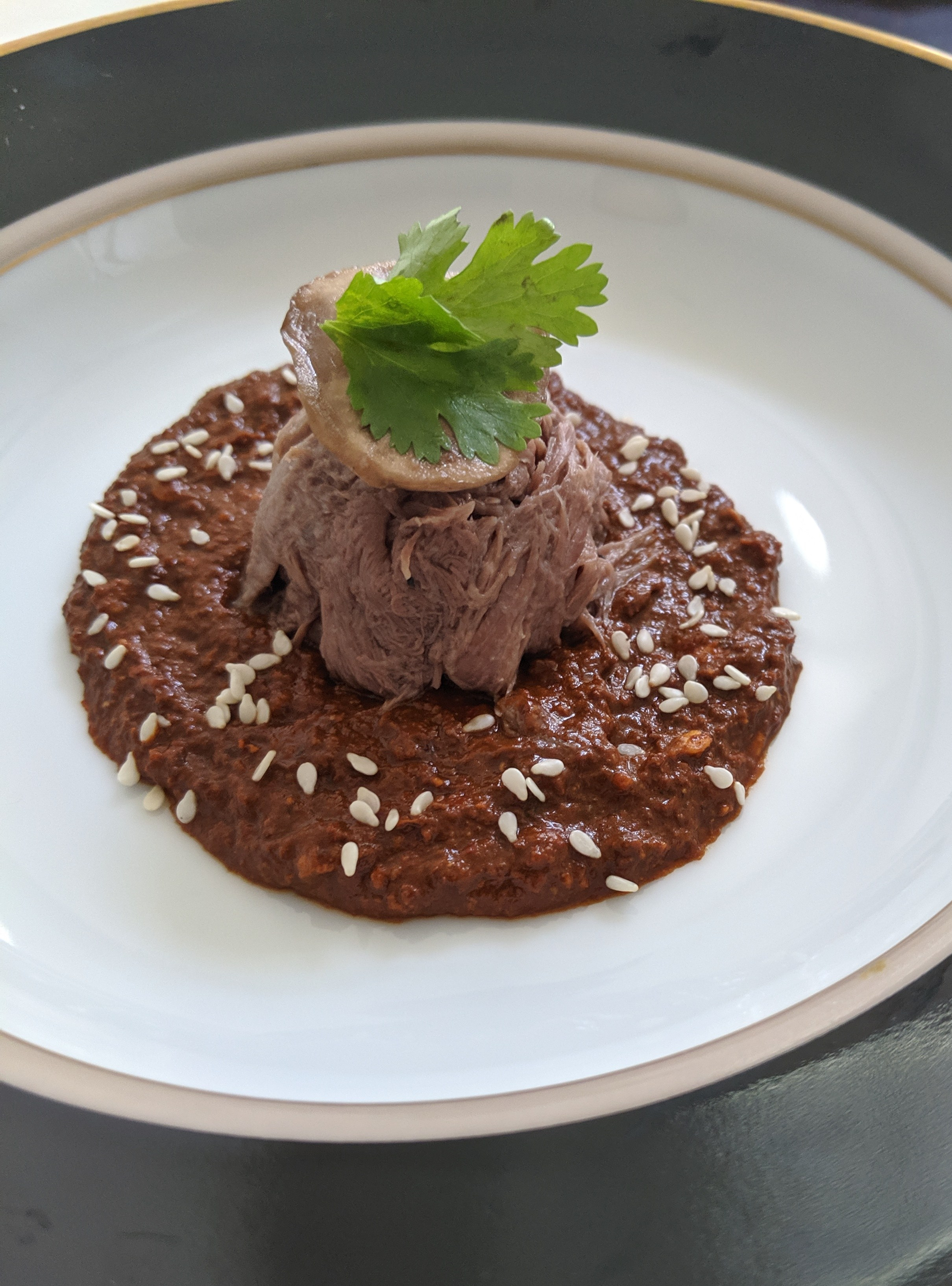
As you’ve just noticed, I didn’t want to just eat mole by itself so I took the opportunity to test out some accompaniments.
Beef tongue, thyme mushrooms, and some tacos
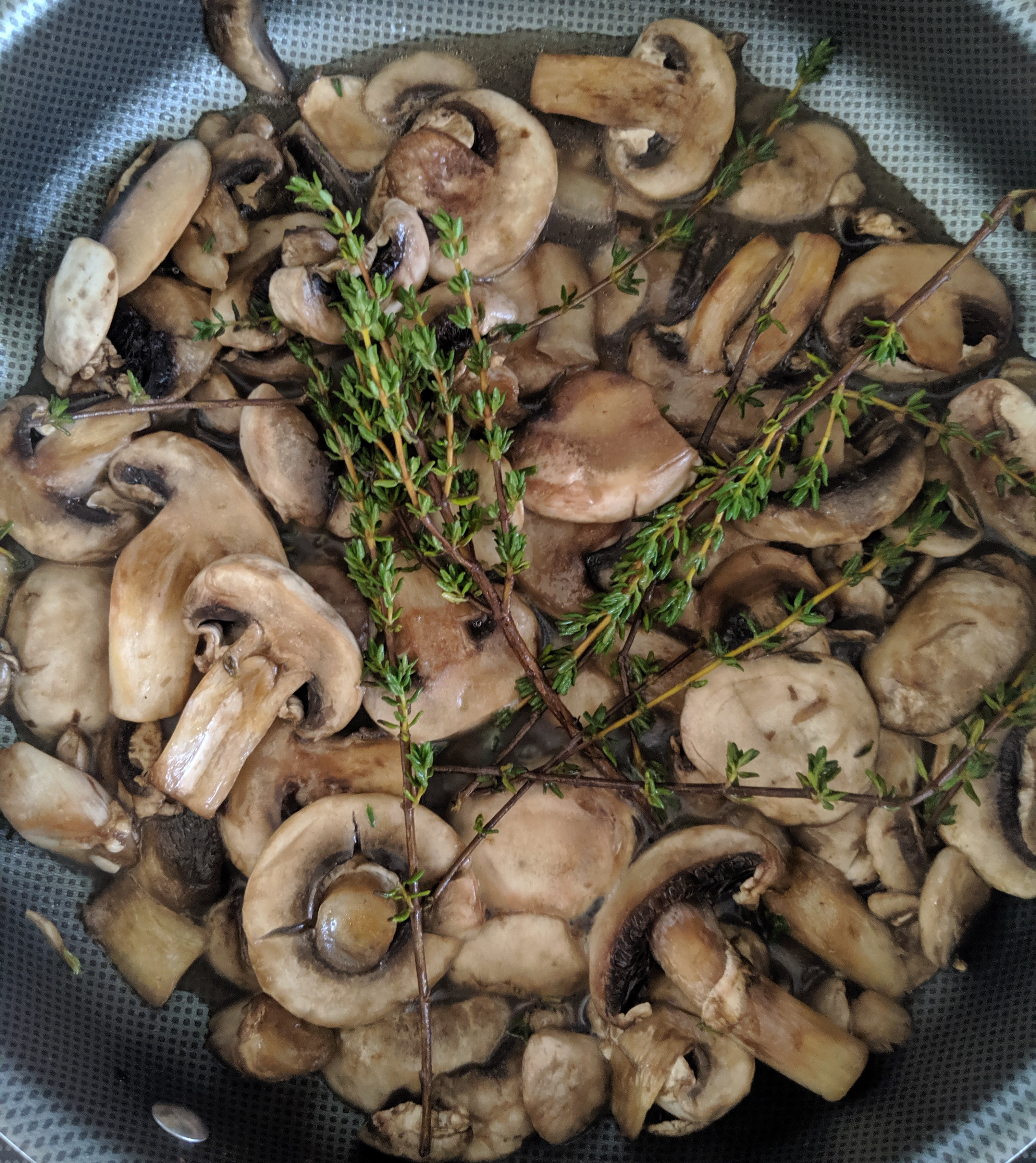
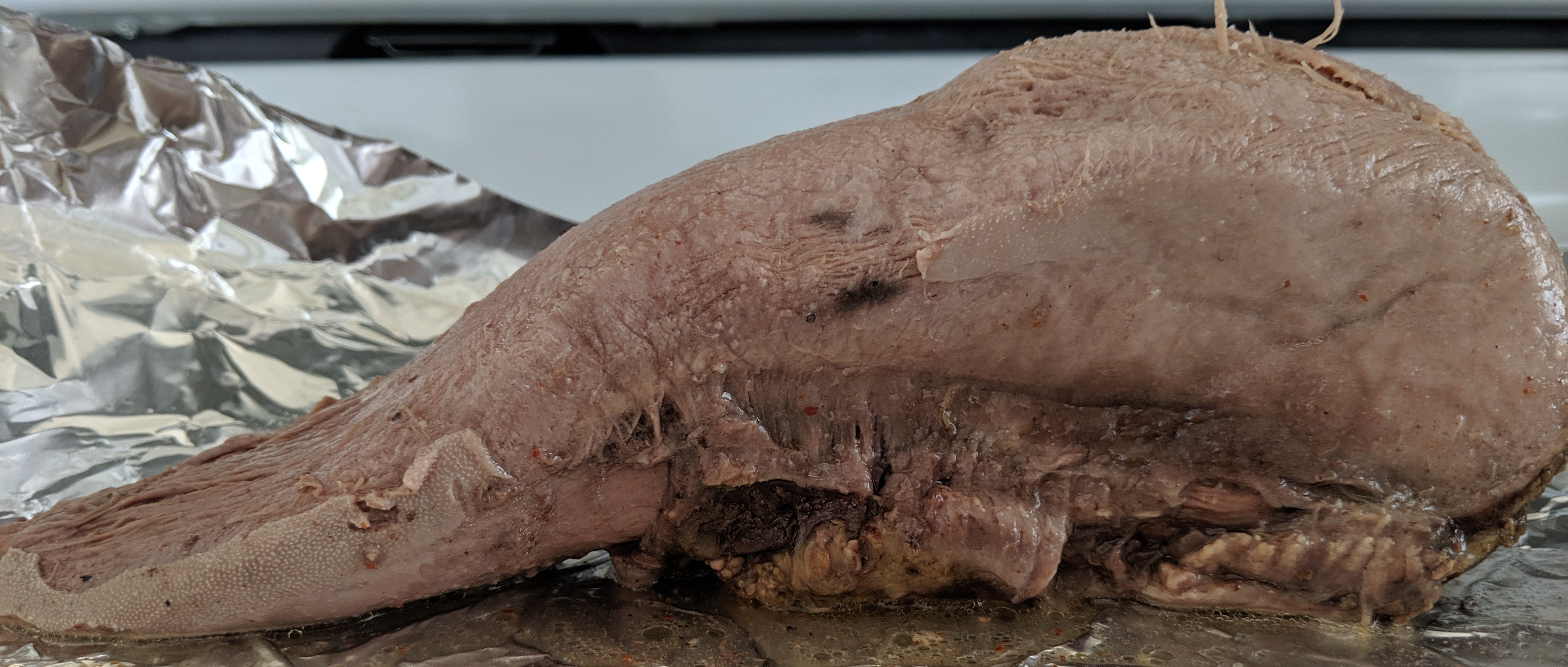
The first dish pictured above is cilantro, thyme mushroom, and slow cooked beef tongue with a drizzle of lime over a bed of mole that is sprinkled with sesame seeds. A sea of dry, smoky spice with a hint of dull sweetness (akin to the sweetness a raisin gives off) are interrupted only by brief moments of sesame as the meaty flavor of beef tongue comes in with its tender, shredded texture. The thyme mushroom then arrives to complement the tongue with notes of cilantro and lime to act as palate cleanser in between each wave of flavor.
Although pretty, it wasn’t quite filling enough for lunch so I went a little further.
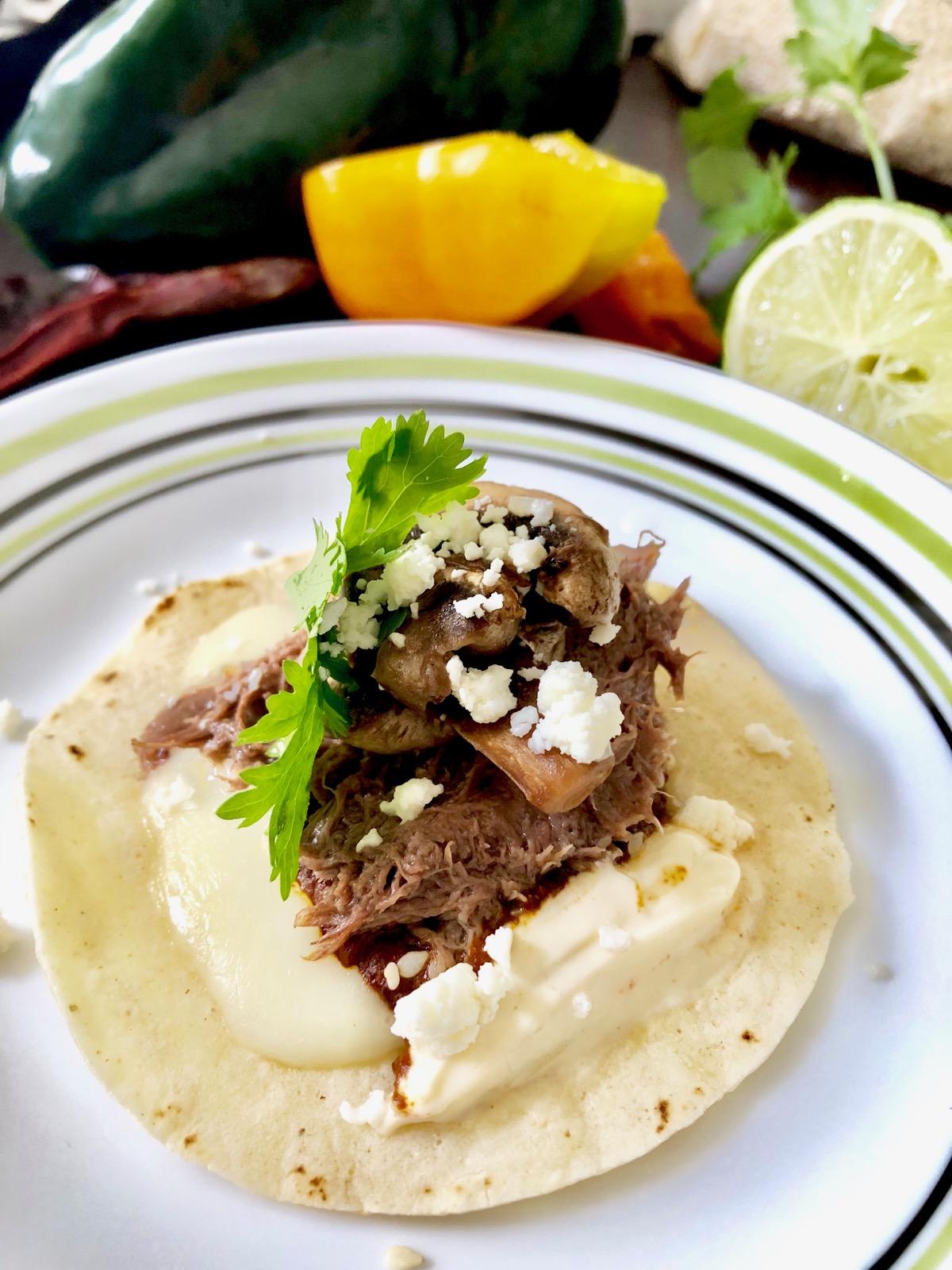
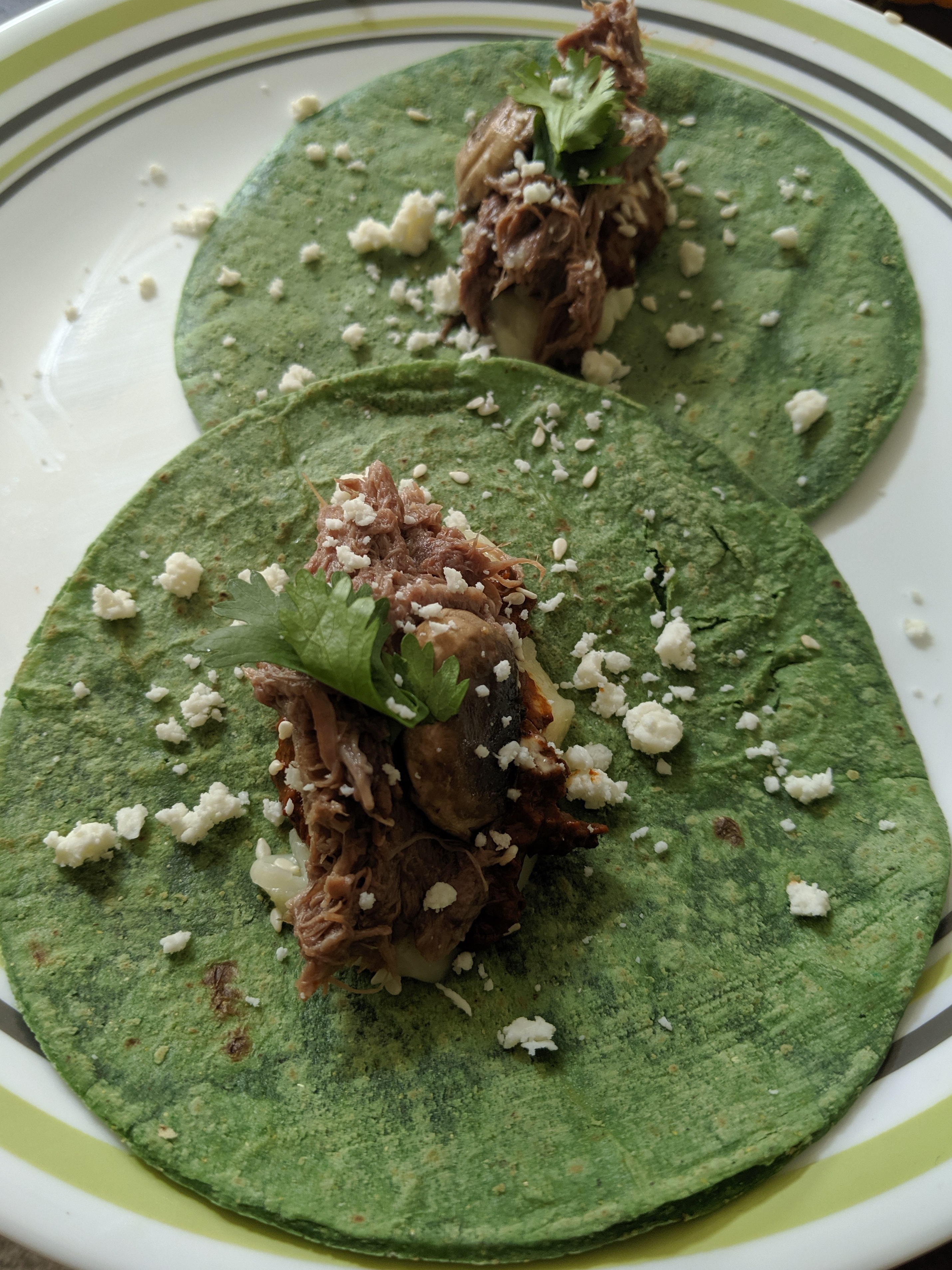
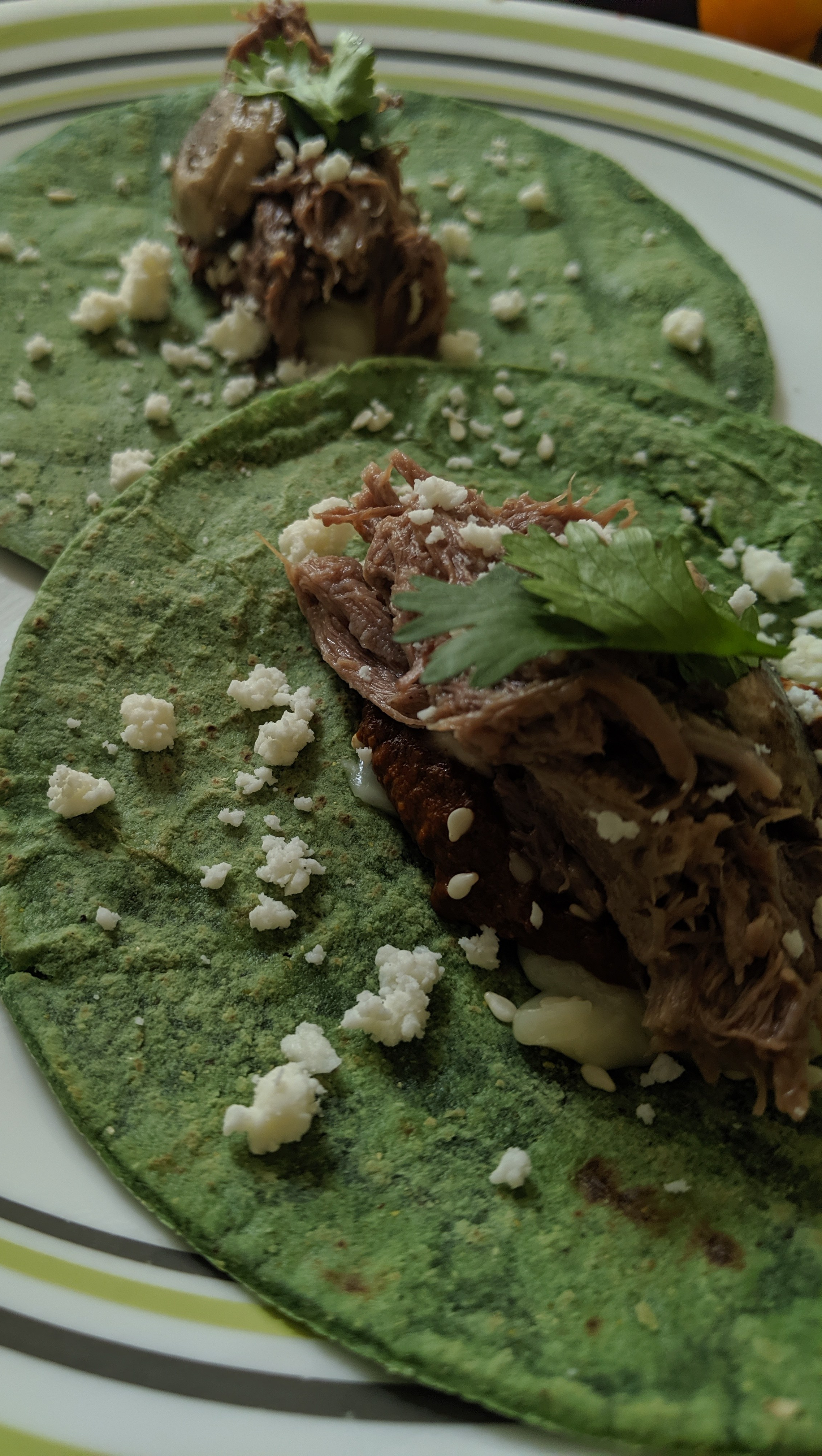
Same components as the previous dish, but served as a taco with tortillas (corn for the first and hatch chile flour for the second), Oaxacan cheese, crema oaxaquena, and queso cotija don francisco. The tortillas add good texture as the starchiness from corn and flour go with practically anything lacking that. Meanwhile, the crema and oaxcan cheese compliment the mole’s deep spice and dull sweetness with its creaminess, while the cotija adds much needed tinges of salt.
And now for anyone who wants to see a little more.
Some more behind the scenes
Follow me on Instagram (@valanthonyalvero) to keep up with all these experiments, events and more. And if you are interested in participating in anything like this in the future be sure to comment and/or DM me with your interest.

 Epicurean Experience