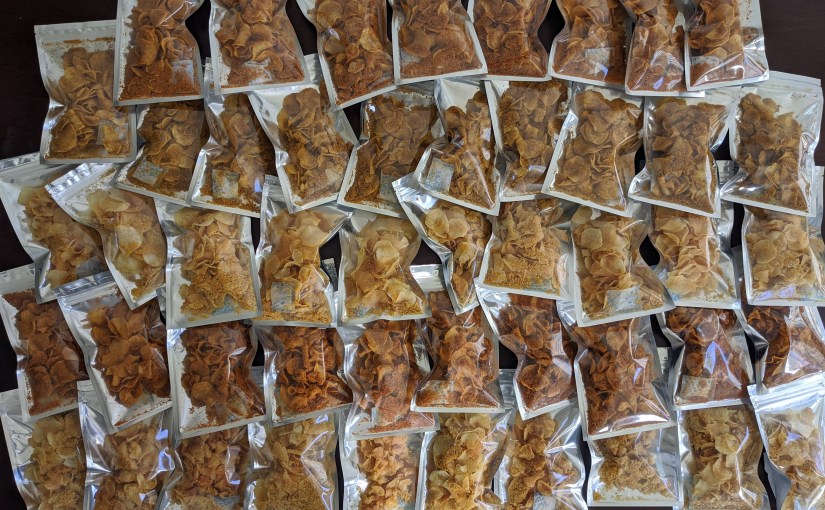
Cooking sucks. At its worst it is following a whole lot of steps with some mistakes resulting in a catastrophic failure (a friend told me a story of unintentionally making an exploding brownie) and at its best it is trying to achieve some creative vision by coming up with a whole lot of steps to follow with some mistakes resulting in a catastrophic failure. Those familiar with the craft may state that the probability of catastrophic failure goes down with practice or familiarity, but following a bunch of steps to achieve a known result sounds more like the domain of expertise of a robot than that of a human.
I know there are many that find therapy or joy in the process of precise mastery in culinary arts, but for me almost all the fun is in the creativity. Yes, that involves failure. Yes, that means there is greater risk. My biggest problems with cooking are not those of failure and risk, but of achieving something worthwhile only to have my stomach drop at the thought of manually reproduce that result. Maybe its my programming background speaking, but if I’m going to spend a portion of my life creating something great I sure as hell don’t want to spend the rest of it repeating that process. And no, I’d also rather not have someone else spend their time doing it in my place.
Cue Food Products
Now I don’t think making a food product solves any of the aforementioned problems completely at this time, but I do believe this is the right direction. My dream is to one day have robots produce recipes via 3D printers. This would allow free reign for the creator to specify their designs and let the computer handle the rest. That being said, those dreams are still a ways away and, if I’ve learned anything about achieving anything, its that moving in the right direction is better than spending significant amounts of time trying to figure out if its the best answer.
The idea of a food product does introduce a couple complexities that boil down to two short question: What? and How?
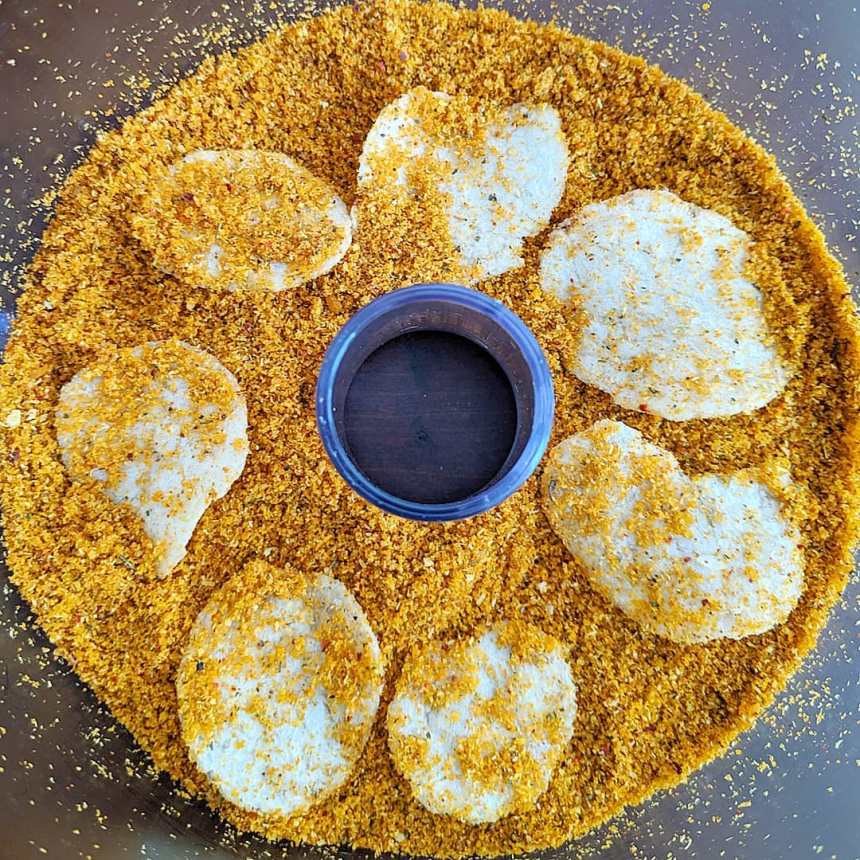
Think Simple and Effective
Luckily, I already answered the first question as I found out about an ongoing craze with no signs of slowing down over the years. Salted egg chips. They are relatively simple, have a market fit (almost everyone loves chips and Asian snack foods), and there is a gap in the supply and demand. All that’s left was the painstaking process of how to cook it. Just kidding, that’s the easy part.
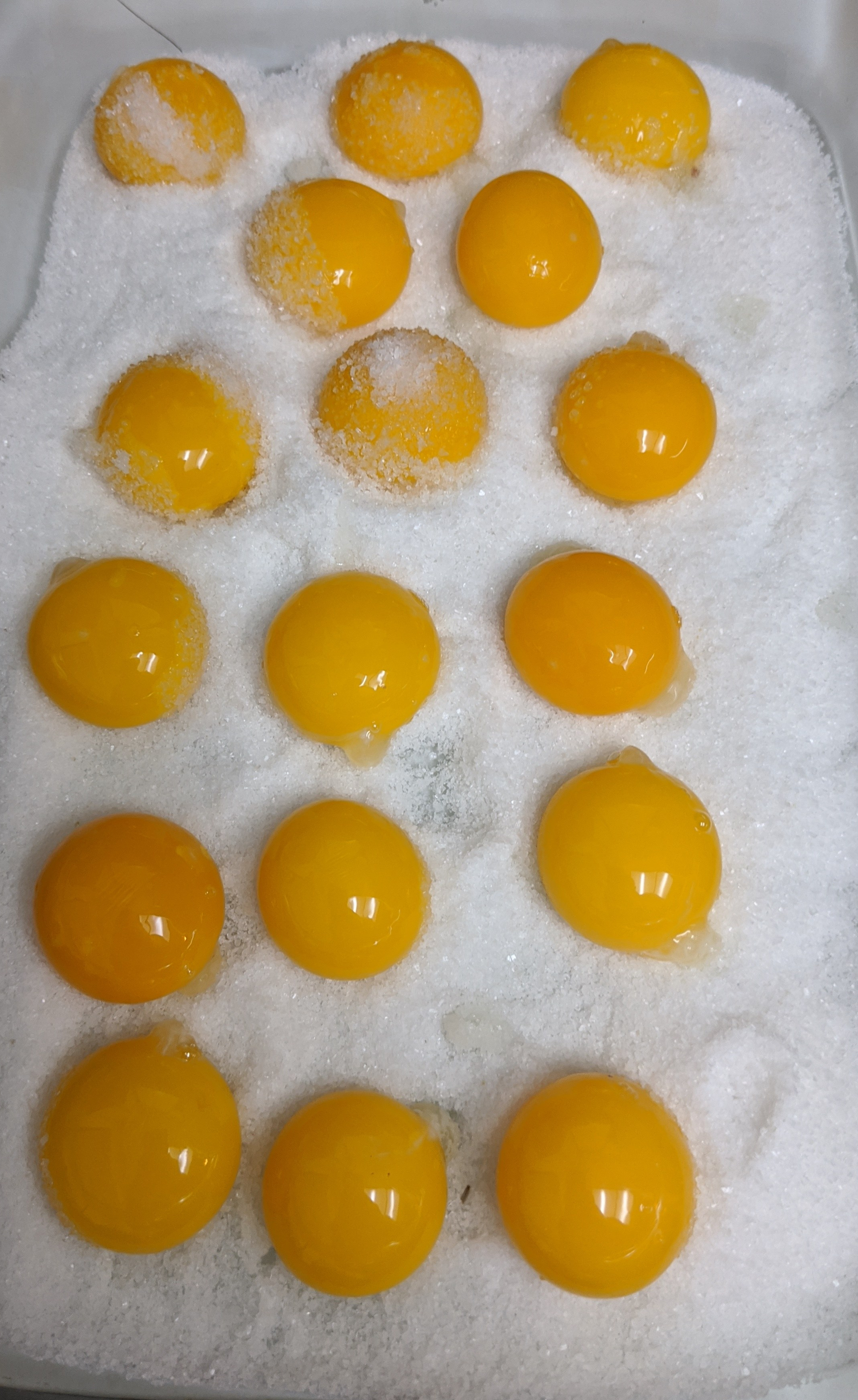
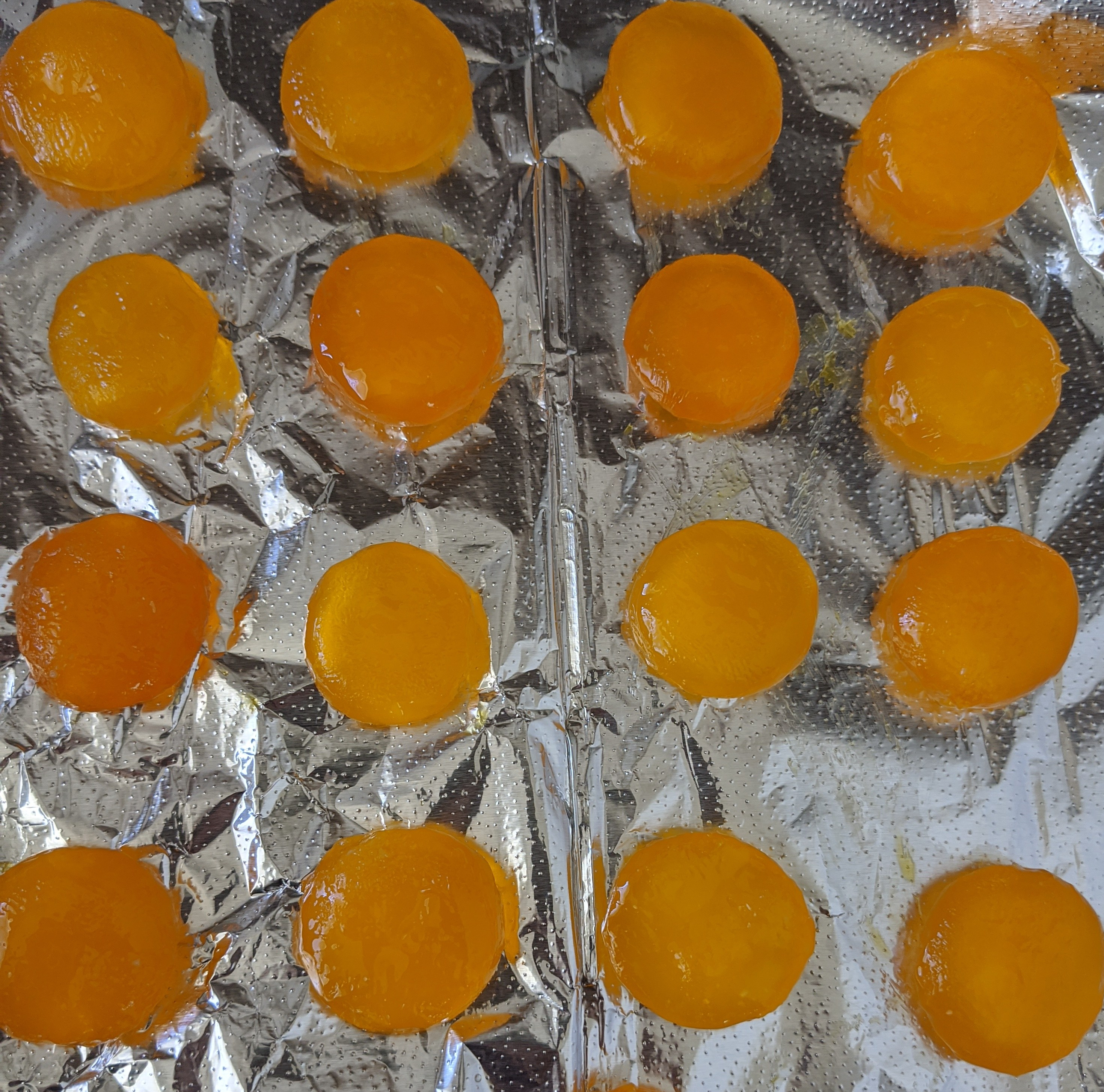
The rabbit hole of “How”
The first step is coming up with the recipe. This goes like creating any dish. Think of what you want to make and grab whatever ingredients you need to enable that vision. Rinse and repeat until you receive the desired outcome.
Now that the chips have been actualized, the real “fun” can begin. Have a successful prototype of the chips? Great, now break down every step to make it noting every ingredient, cost, measurement etc. Made it once? Excellent, now scale it. Have a bunch of chips? Time to figure out some packaging. Wow, that’s neatly packaged, but how much does it cost? How about last? Does it really last that long? What’s in it again? Will someone buy it? Can you actually sell it? No, I mean can you ACTUALLY sell it?
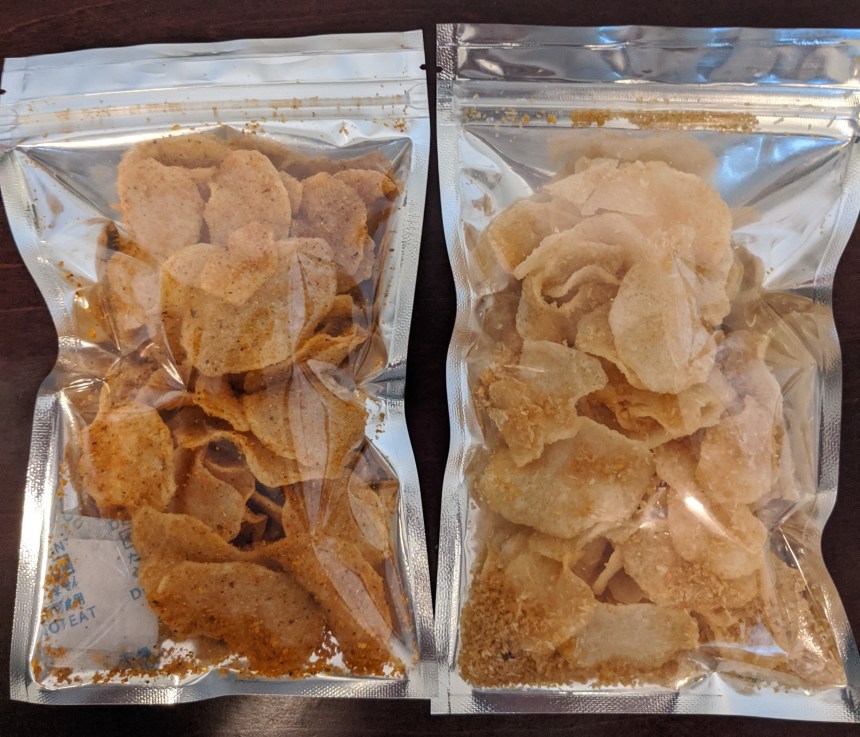
Now that I’ve brought up the many questions I’ve had to dwell on in many spirals of anxiety, the good news is there are answers to these questions. The bad news is that they don’t really make anything easier.
Some Logistics
I live in the U.S. and, like many countries, this means that food is regulated. More specifically, I live in California, which means that the regulations have regulations. So as you can imagine there are tons of processes in place and logistics to follow. All these requirements funnel into two officially approved approaches:
- Make the food product myself in an approved facility
- Formulate a recipe to have the production be done by someone else
By going through one of these two strategies, I’d have salted egg chips that I could officially sell to the general public. That of course was what I thought before my local farmers market aptly requested if “I had the necessary paperwork done.”
Bureaucracy at its finest
The paperwork associated with the selling and distribution of food boils down to a surprisingly focused set of requirements. Clearing the requirements to prepare food to sell means either having or renting a pre-approved space. Gaining approval sounds like a lengthy, tedious, and expensive process so I decided to find a commercial kitchen that I could sign up with.
Now, if I’ve learned anything about working with a commercial kitchen its that ghosting isn’t just some online dating trend. Seriously, I have had every kitchen I’ve tried to work with completely ghost me. And I don’t mean that they just never responded from the get go. It’s as if they brought my hopes up until the very moment things could begin taking shape before completely ignoring any means of communication with me. That being said, I was able to talk to one kitchen long enough to become aware that I’d need to visit the local health department before working with any kitchen. I could only hope that I’d have better luck there.
The local health department was actually a breath of fresh air as they have been the only food entity I could actually somewhat consistently get a hold of. They educated me on all the forms and processing fees that I’d need alongside the insurance/security deposit fees and hourly usage rate with the kitchen. Unfortunately it didn’t end there. Remember that one detail about making a salted egg chip food product a.k.a. a packaged food product? Apparently, it’s a bit different for that.

As many might guess, a packaged food product comes with a few more requirements compared to your locally prepared food stall sandwich. Most of these have to do with packaging standards and labeling accompanied with the caveat that processing this form takes at least 3-6 months. Not enough of a deterrent for you? Well, there’s more. It’s also by far the most expensive part of the process. At $500 paid up front just for the processing, it isn’t obscenely expensive, but you have to remember that, as an experiment or for the average person that can’t afford an unexpected expense over $400, its money sent without knowing when or IF that small investment would pay off. Also there’s still the initial cost of raw ingredients, security deposits, insurance, packaging, any additional tools, hourly rate, time, etc.
What are the other options again?
Get someone else to do it. I never really considered this as an option as I found myself finally in contact with a food business consultant agency to know more about the options out there (I should add this was 2 months after my initial inquiry to them). They told me most of the details I already figured out around the two approaches I outlined, but I actually got to find out exactly how expensive it would be to go with the second option (tens of thousands of dollars depending on how much of the process you wanted someone else to be involved in). Also, they confirmed my suspicion that I had already contacted all the major commercial kitchens available in my area. You can only imagine all the motivation this conversation gave me.
The agency eventually pointed me in the direction of a food scientist I could talk to about what it would look like to take the outsource approach. At least I assume that’s what he would have done if he didn’t ghost me when we were supposed to schedule a meeting. I had to cut him some slack though as it was the middle of a pandemic.
Honestly, I would never use any of their services anyway unless I was ready to go all in blindly staking everything onto the project. Networking is an invaluable asset at its best and a scam when done for the money. Unfortunately, it looks like I’ll probably never find out which side they were on.
This was solely an experiment I was planning to incrementally scale, but it was nice imaging having someone somewhat vested in my success.
Newfound Respect
I’ve been really humbled by the experience of trying to bring a food product to market. On one hand I’ve felt great pride in the packaged units I have produced, and on the other I feel like I never really got anywhere close to making an actual food product. It’s a great reminder of what many small businesses have to go through to just get up and running. I’d love to join them with this food product that I know can compete out there, but at this point I can’t say I have.
I originally wanted to release my experience as a success story of me overcoming the odds and having my own product out there, except I’m not quite sure where I want to go from here. I feel lucky to have had many people show interest throughout my various levels of prototypes, but mentally it’s hard being alone out there navigating through all these requirements and getting no responses with people you’re supposed to work with. And most of that was before the pandemic ravaged the food industry.
Once everything settles down I may find the perseverance I need to complete this project, but for now it looks like its just lessons learned to a better future. A future currently with a couple less salted egg chips.

 Epicurean Experience