The First Feastival Theme: Modern Mexican

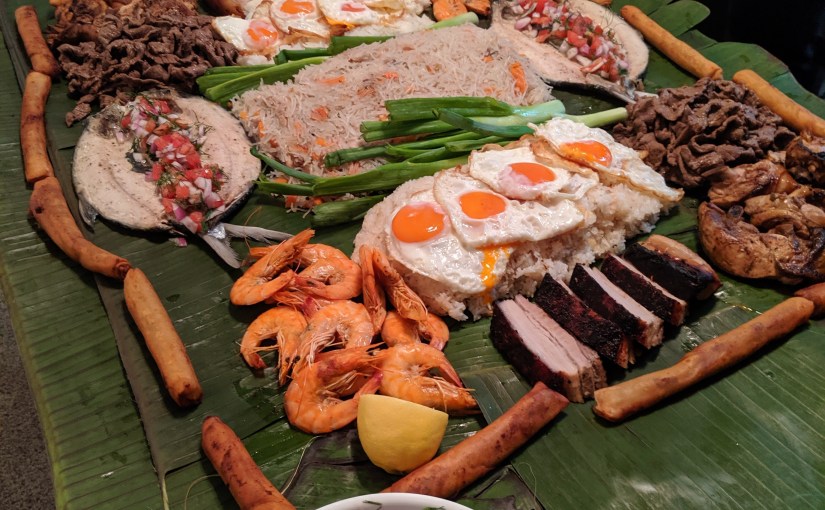
Although this would technically be my third recent feast, this will be the first officially hosted feast to mark my beginning documenting and giving access to the event itself via Instagram. That being said, I am a practical man and I like to build on the groundwork laid before me, so I decided to take inspiration from prior experiences making a kamayan feast and a giant quesarito by taking from the two concepts. The result is the concept of a large modern Mexican feast, or a “feastival” (aptly coined by one of the “staff” members) as I’d like to call it going forward.

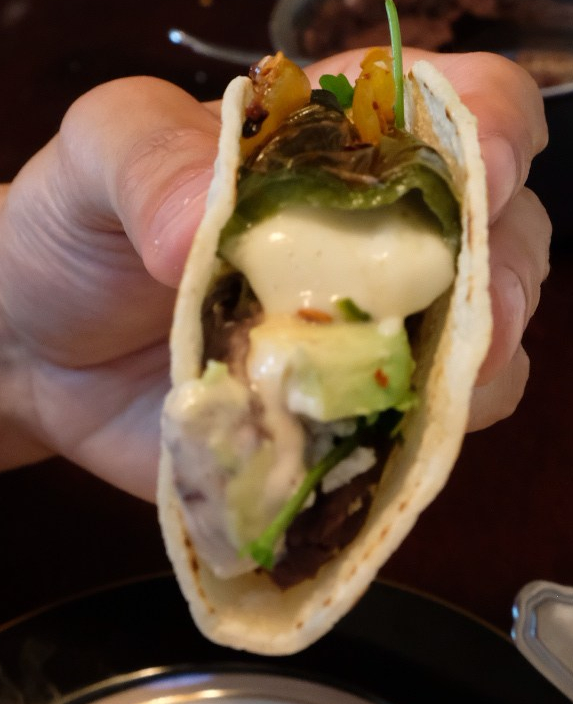
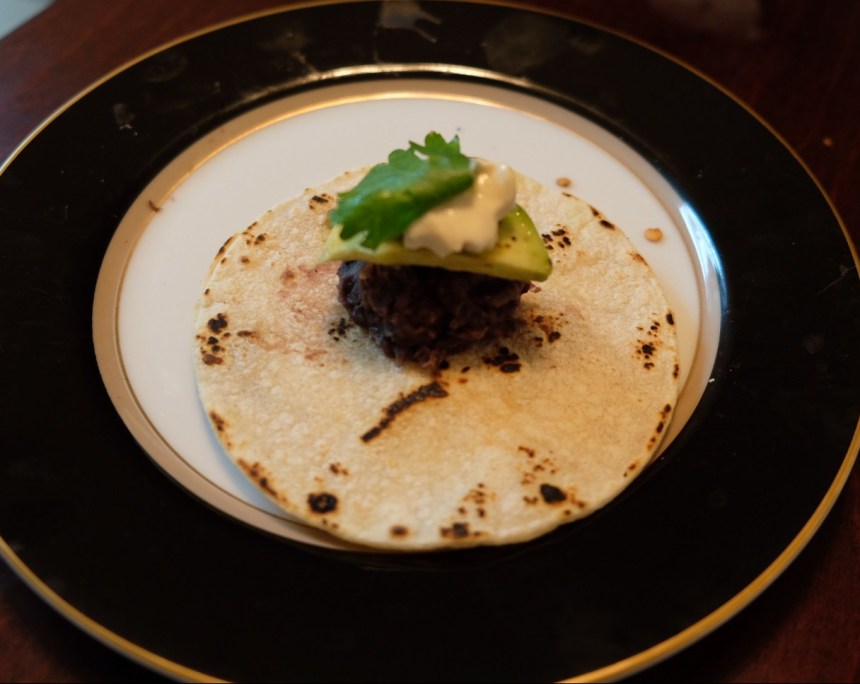
But first a test. What would taking some notes from popular Mexican ingredients and flavors yield when put against a little creativity. So with a couple leftover ingredients supplemented with a quick trip to a nearby grocery, I concocted a proof of concept for the framework that would support this upcoming feastival.

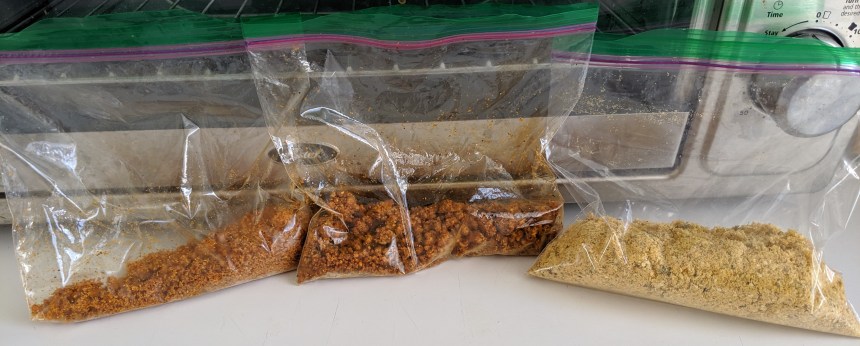
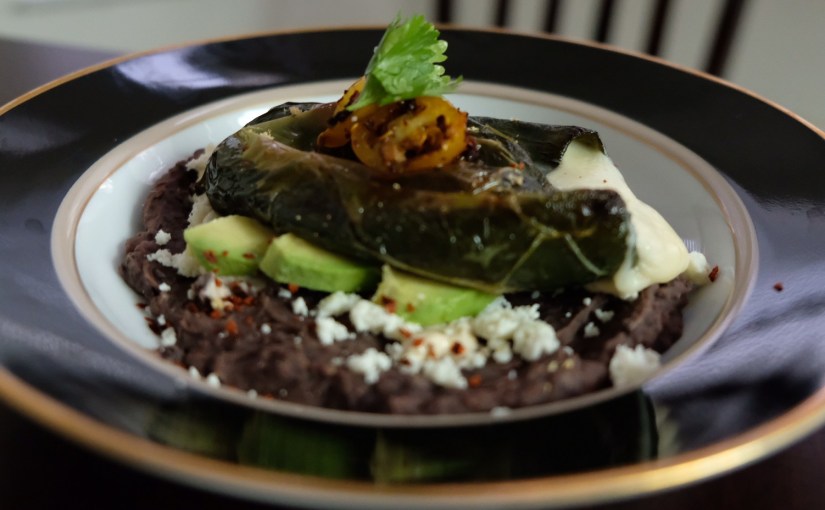
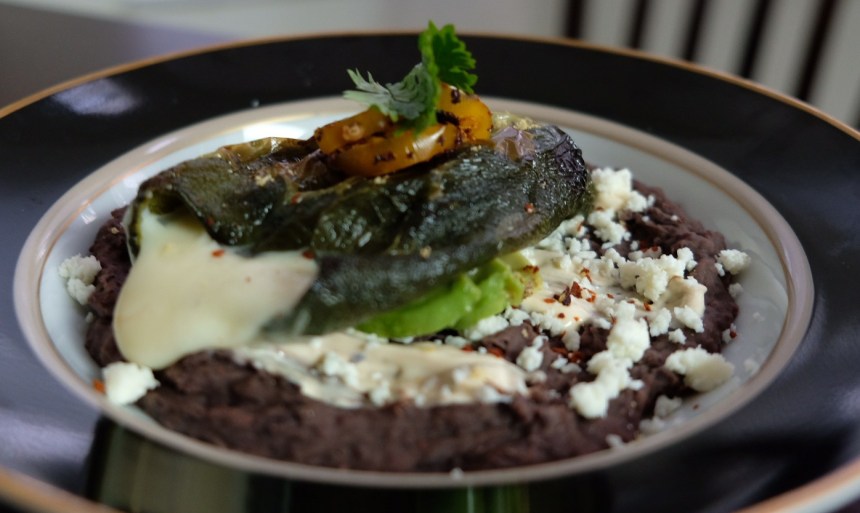
Nearly the same ingredients done three different ways.

The Components

  • Black bean puree – seasoned with dashi, yuzu, black pepper, dark amber, garlic, and Chile Morita Seco
  • Queso Fresco Pancho
  • Queso Cotija Don Francisco
  • Crema Oaxaquena blended with Chile Morita Seco
  • Lime marinated avocados seasoned with salt
  • Lime marinated cilantro
  • Sliced baby tomato rolled in Chile Morita Seco
  • Roasted Chile Pasilla stuffed with Oaxacan cheese
  • Aleppo pepper
  • Corn Tortilla

How Does It Taste?

The smooth starch of the black bean is blended with the depth in umami of dashi and garlic, while brightened with notes of yuzu and cut by peppery tones from the black pepper and chile morita seco as dark amber syrup rounds everything out.

Richness from the cheeses and avocado are cut by notes of lime and a creamy heat is brought forth from the smoky spiced crema Oaxaquena. Roasted chile pasilla adds a tinge of roasted bitterness and textural contrast as sweetness from the tomato and herbal cilantro keep it from getting overpowering.

When served with a semi-crunchy, roasted tortilla you get another layer of textural depth complemented by strokes of corn flavor. Take out the roasted chile pasilla and play with the ratios when served as a quesadilla, and now you have similar flavors yielding a subtly different result as milder tones take precedence.

The most successful aspect in this proof of concept was the showcase of the versatility of a few components. Everything works with everything else in different subsets within this limited set as every combination something new. Needless to say I am excited with the potential of scaling this up and adding more ingredients to cross match with while adding more notes from other cultures to provide unique flairs. Up next is planning the broader structure to this feastival.

Full Circle: A Return to the Giant Food Format

There is nothing quite as captivating as the sight of an abnormally giant dish and I am glad there are people out there (a.k.a. people like you who are curious enough to read this) that agree or else I’d have to become a competitive eater in order to justify creating gigantic food. The sense of community in sharing a meal has always been up there in the ranks of bonding activities, so it always made sense to me that sharing one huge dish as a meal would take that idea up a few notches. In light of this, as I reminisced over college days filled with ad hoc quesarito nights and random communal feasts, I decided to combine the guiding forces behind many nostalgic memories into a culinary creation fitting of my current expertise: a giant surf’n turf California quesarito that would feed 14 people.

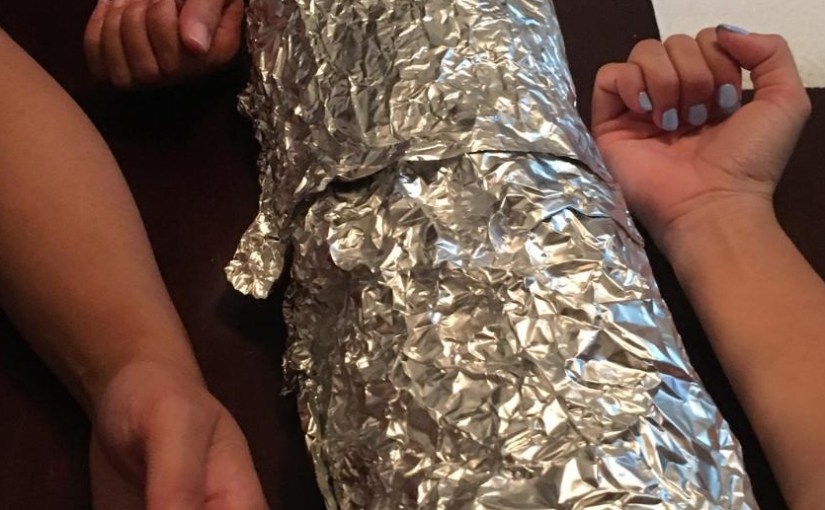
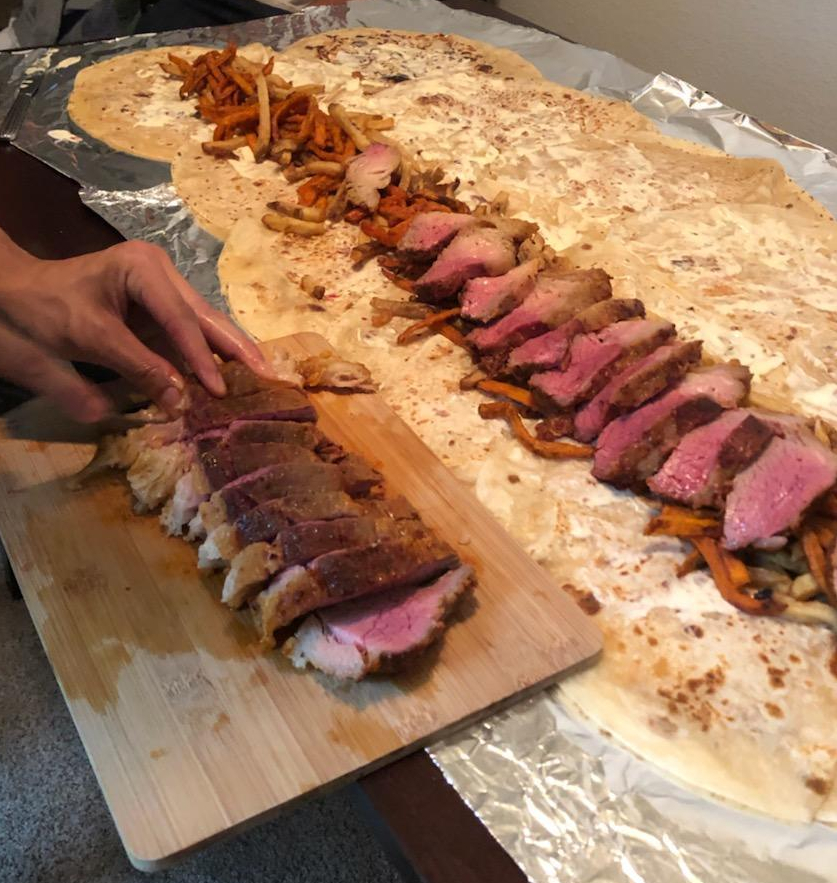
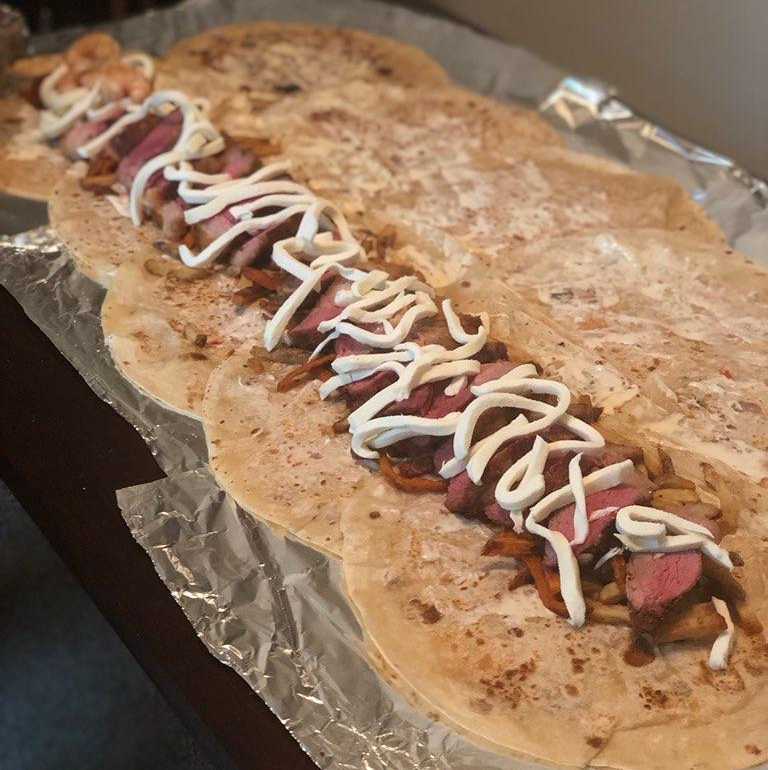
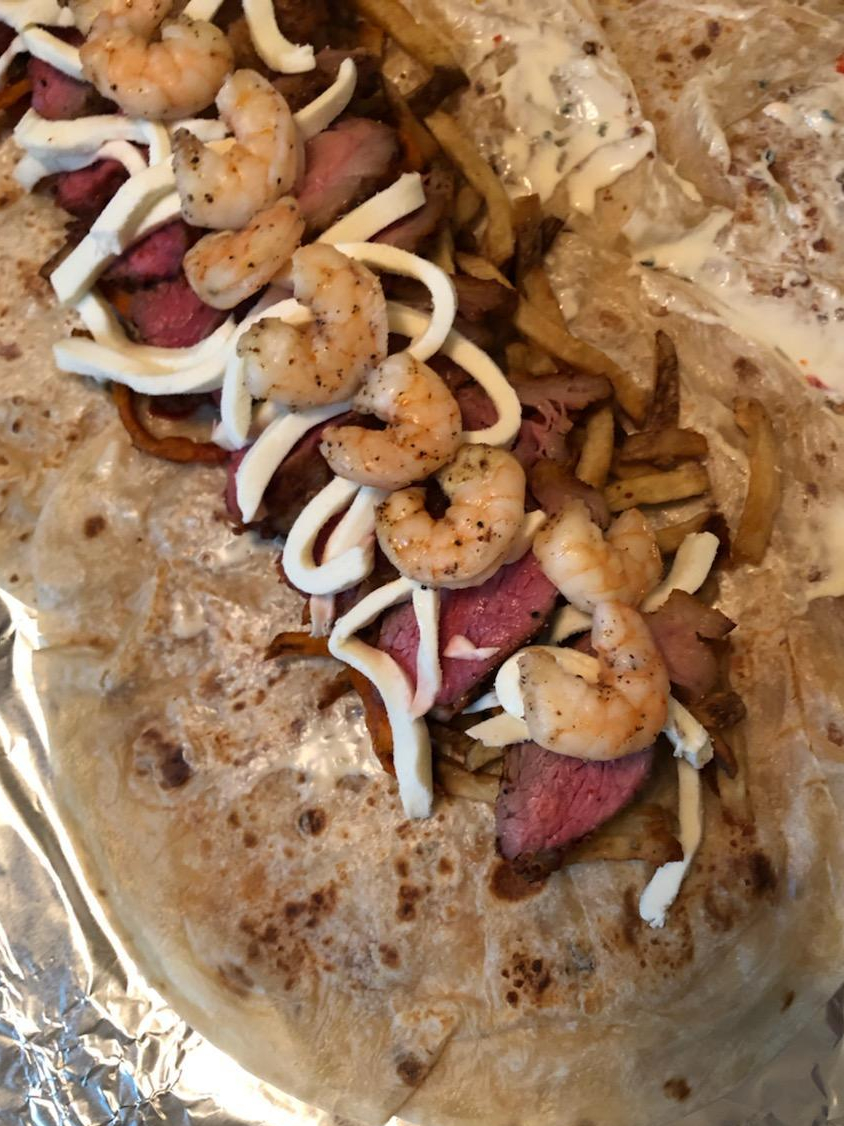
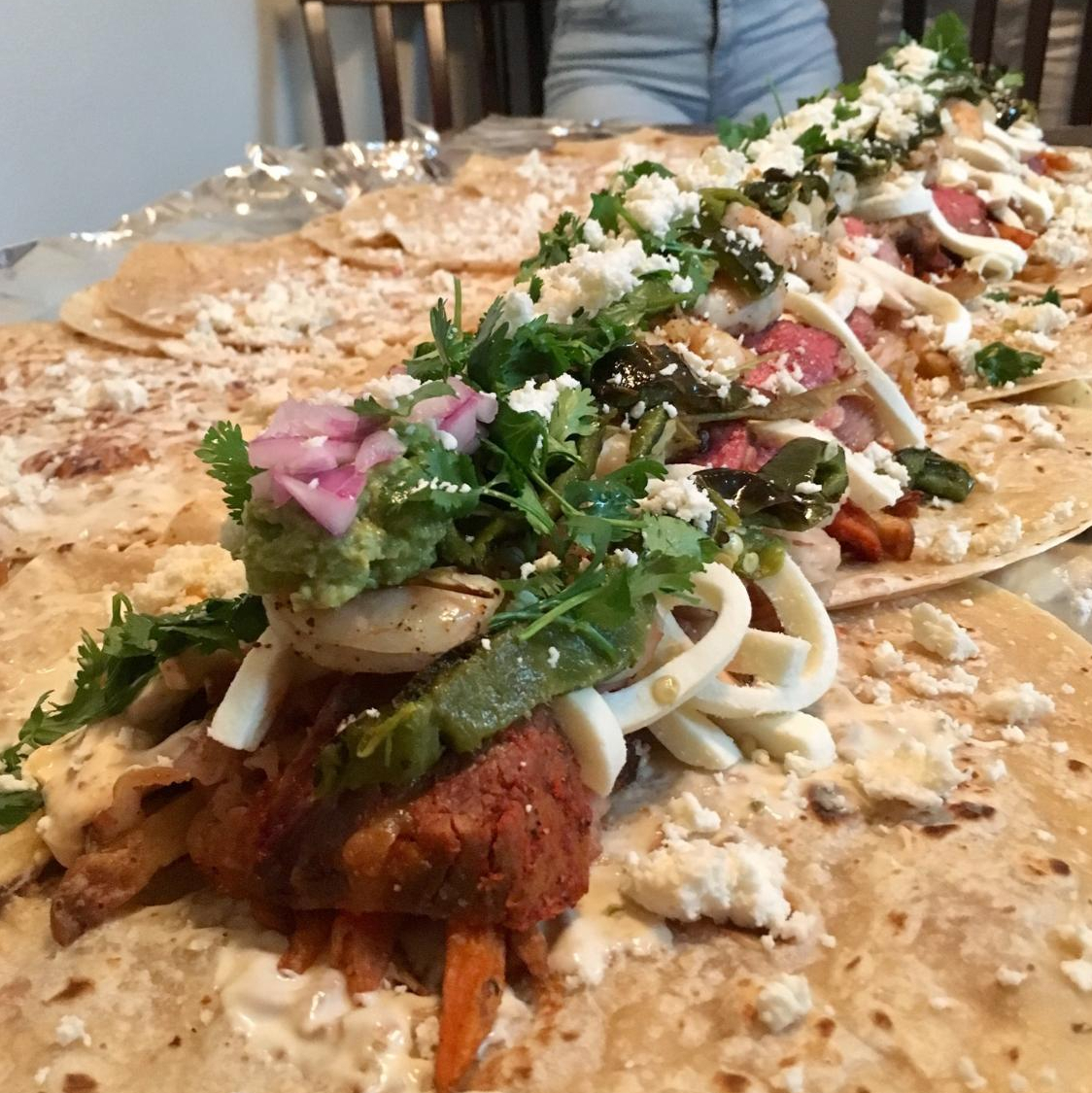
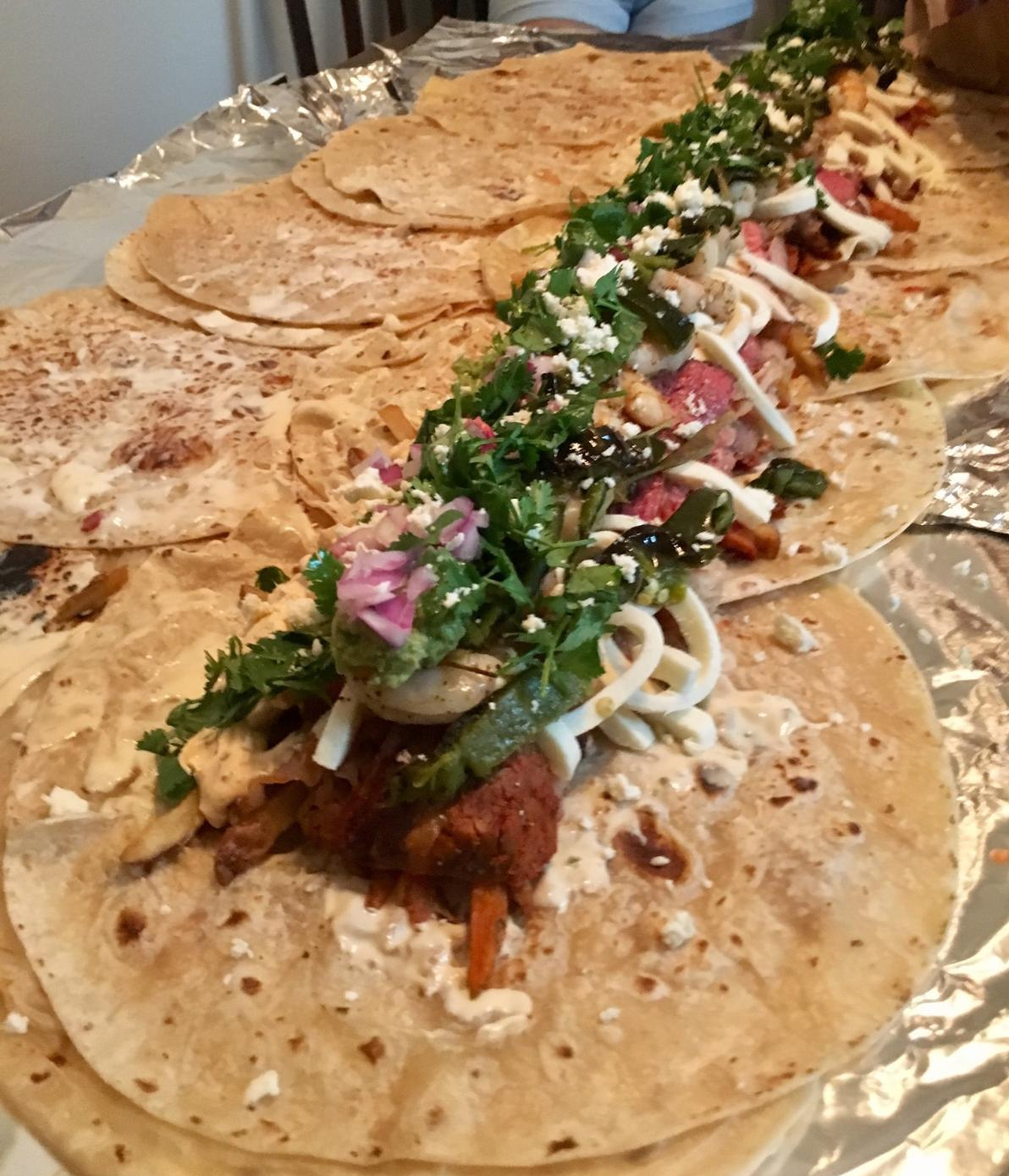
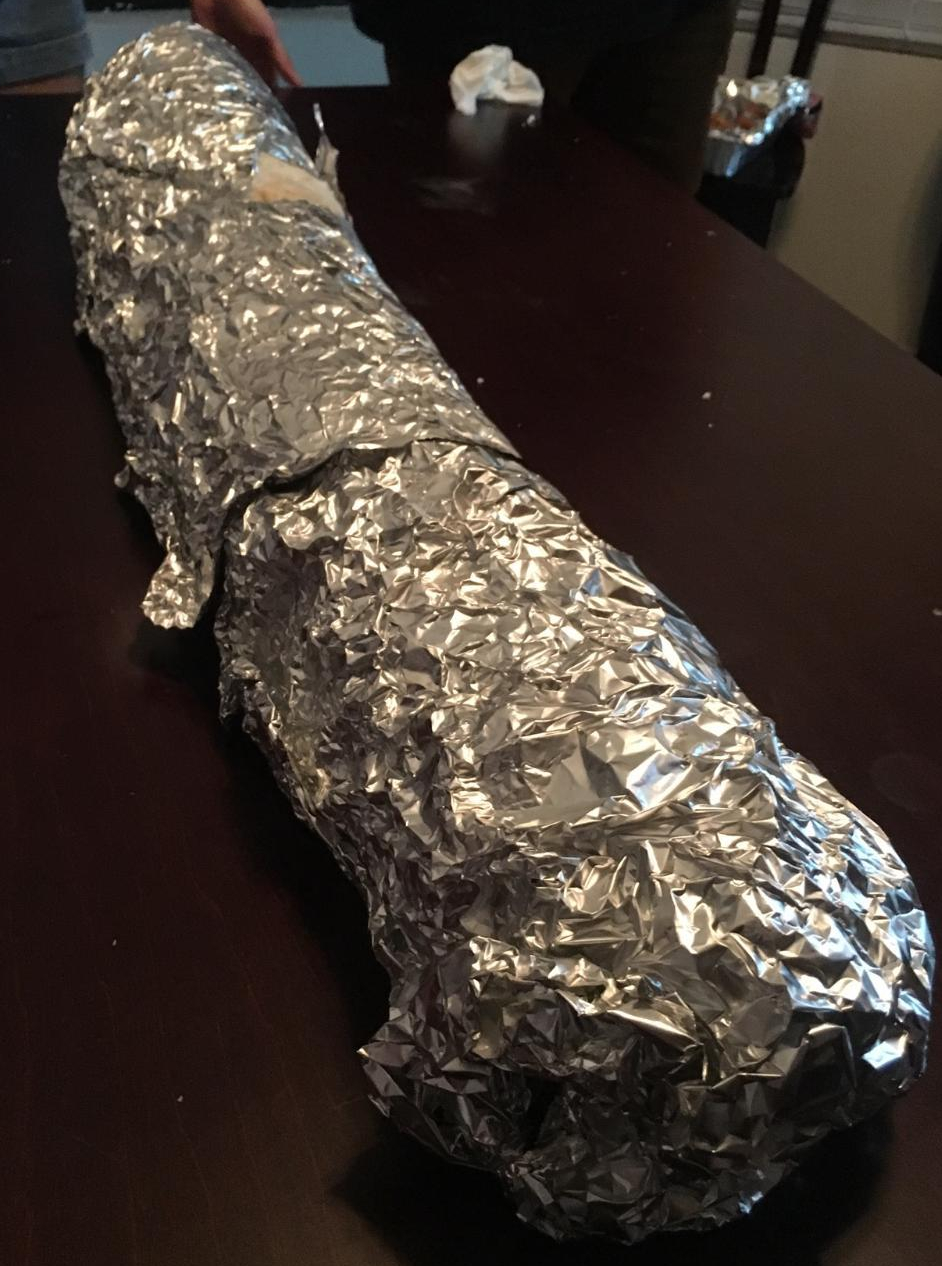
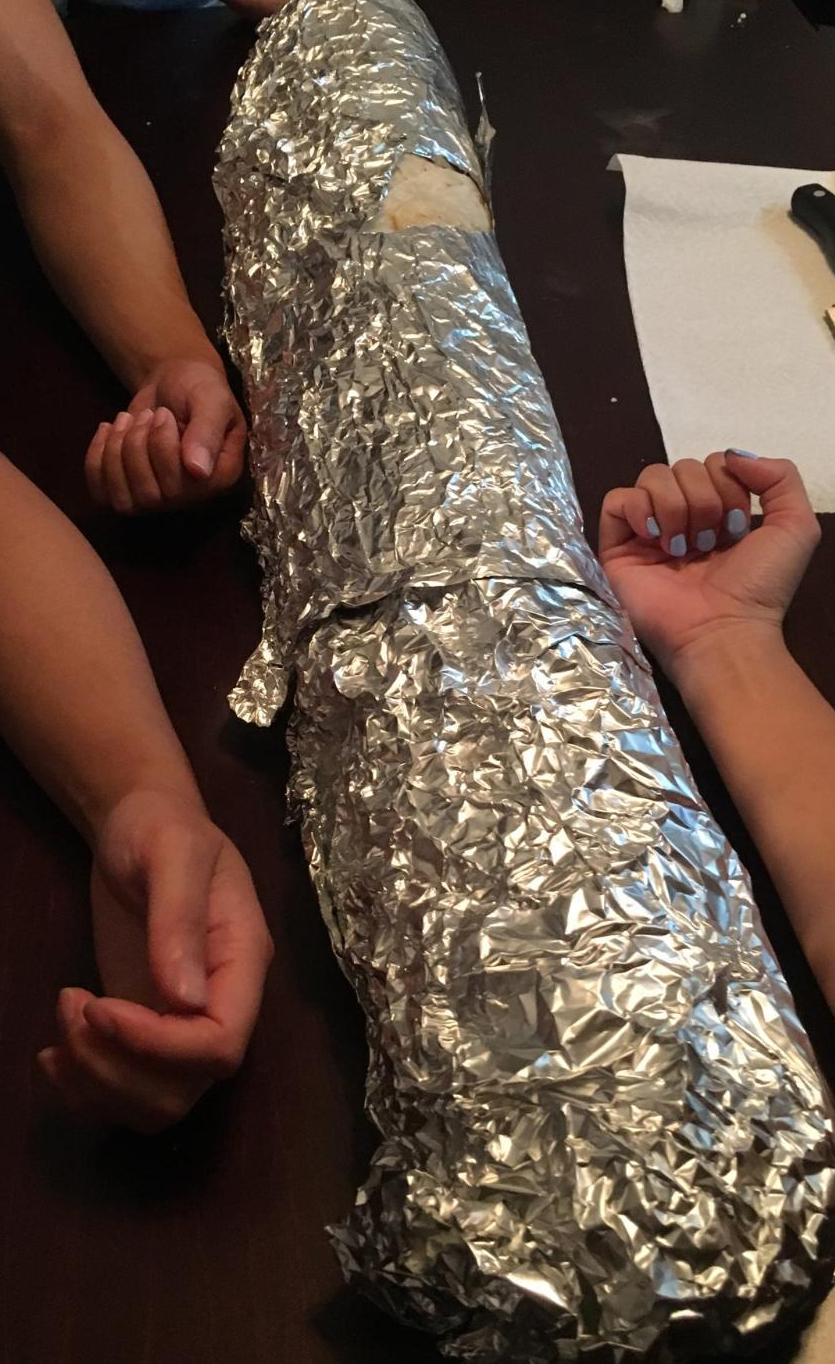
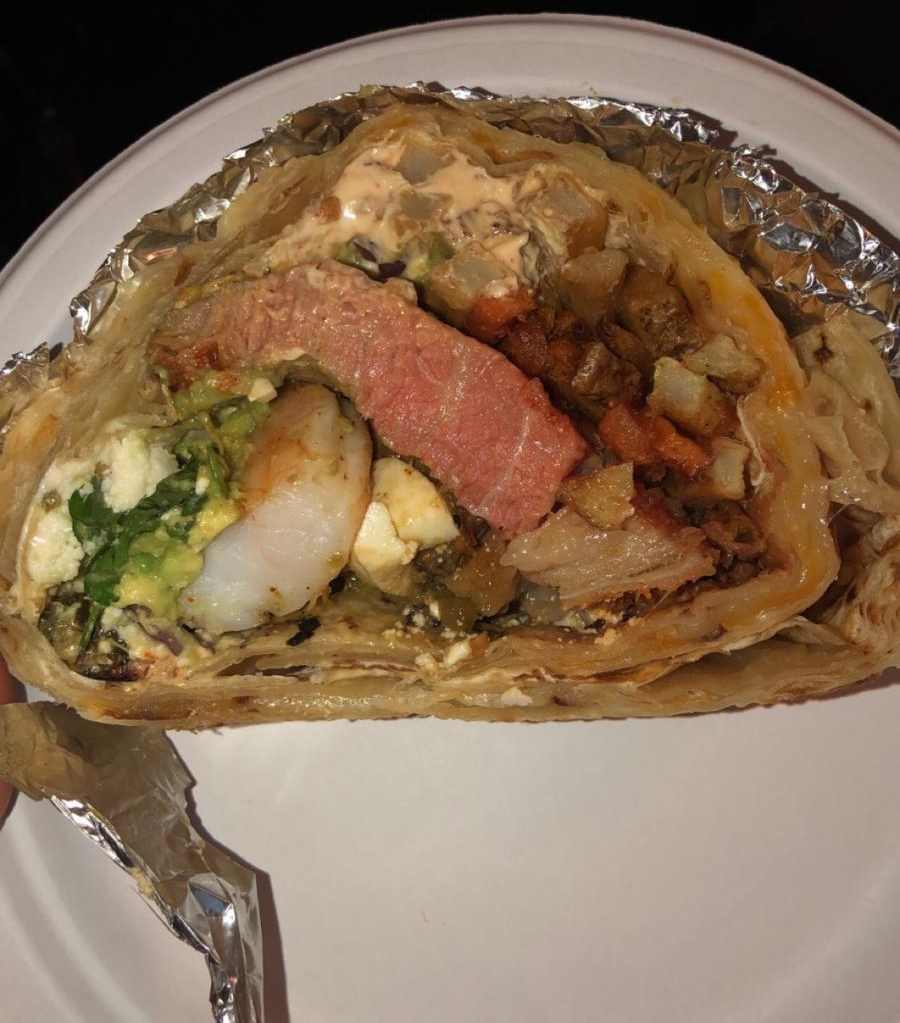
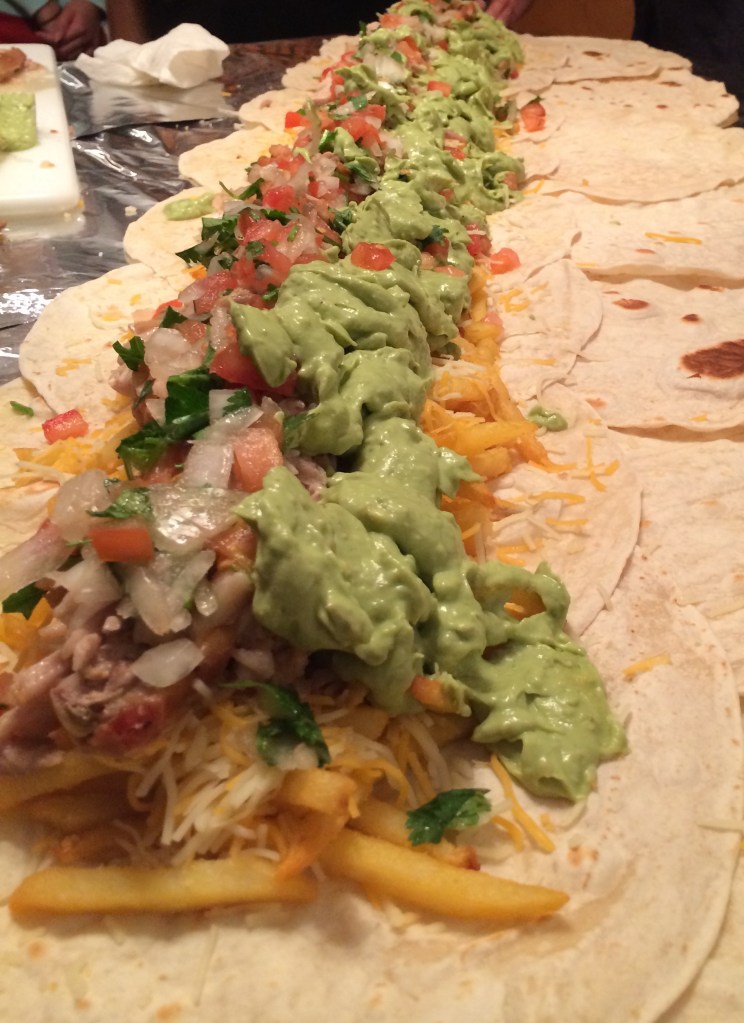
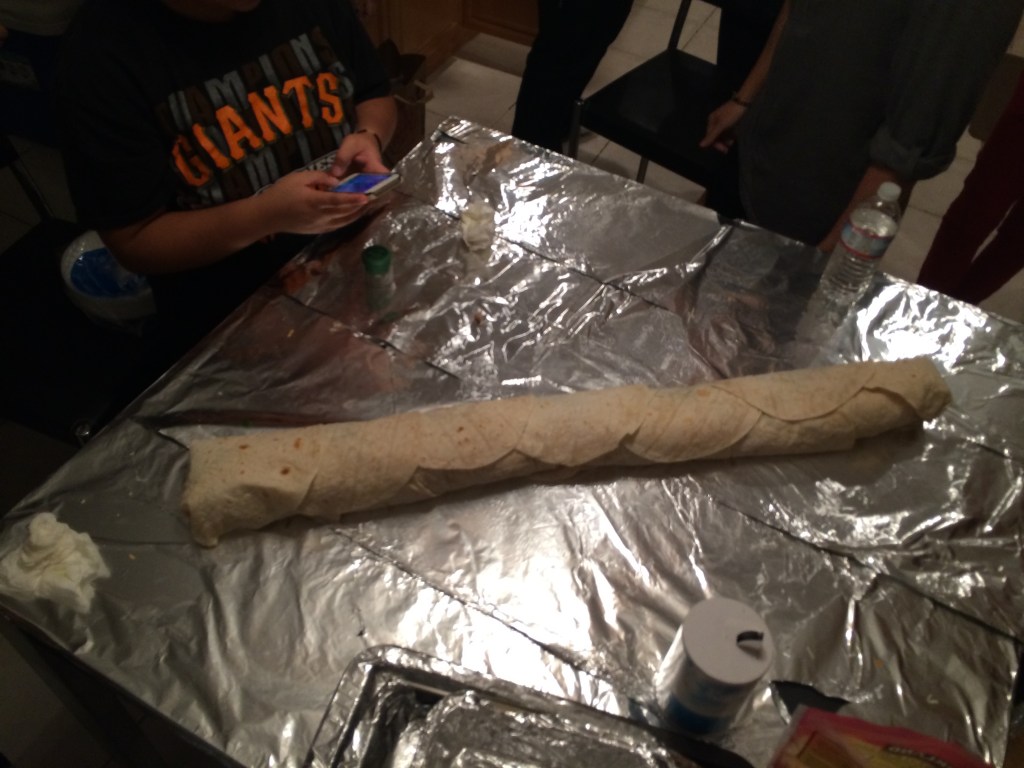
Making a quesarito large enough for 14 people

Upon making that decision, there were just a couple small details that I had to iron out. Details posing questions such as, “what would a quesarito that feeds 14 be like? If I were to come up with a quesarito to feed 14 people, would it even be possible to roll it? Can I give it enough girth that it would be impossible to take a bite out of, yet have each bite be every bit as amazing as the last? Assuming I was able to make this deliciously “thicc” monstrosity of a quesarito, how would I even serve it?” But before I began to second guess whether this was really a good idea, I reminded myself that A) this isn’t the first time I’ve been in this kind of a situation, and B) I never really know what I am doing until I actually do it anyway.

Now that I was calm and collected, I rushed over to the nearest Mexican grocery to fill in the ever so minor details of what would fill a quesarito large enough to satiate 14 people. And I really do mean it when I say rushed, as the event was taking place that evening. But hey, at least I knew how many people I was going to feed.

I figured this thing was going to be large, so there was no need to worry about whether I could fit everything in it as I let my imagination run wild. Here are the following components I settled on (listed from top to bottom of how the quesarito would be assembled):

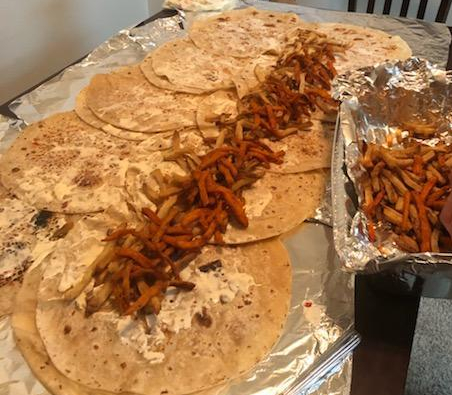
  • 10 super large quesadillas – 20 super large tortillas with a blend of quesadilla, oaxaca, asadero, and menonita cheese
  • A thin layer of green chile queso spread
  • Mooyah fries – a mix of sweet potato and Idaho
  • Roasted Tri Tip – marinated in spiced honey, aleppo pepper powder, red pepper powder, yuzu, black pepper, and garlic salt
  • Queso Oaxaca Pancho
  • Shrimp – marinated in sumac, yuzu, black pepper, and salt
  • Coconut Guacamole – avocado, dried coconut, coconut oil, garlic salt, lime, dark amber maple syrup, black pepper
  • Crema Oaxaquena blended with Chile Morita Seco and garlic powder
  • Roasted Chile Pasilla
  • Cilantro marinated in lime
  • Red onion marinated in lime
  • Queso Fresco Pancho
  • Queso Cotija Don Francisco
If you’re wondering how I thought of how much ingredients to get, the answer is I just thought in pounds. 14 people? 14 pounds seems like a good starting point. Cheese is important? Make sure you have a couple of pounds. I could go on, but I think you get the picture.

But how did it taste?

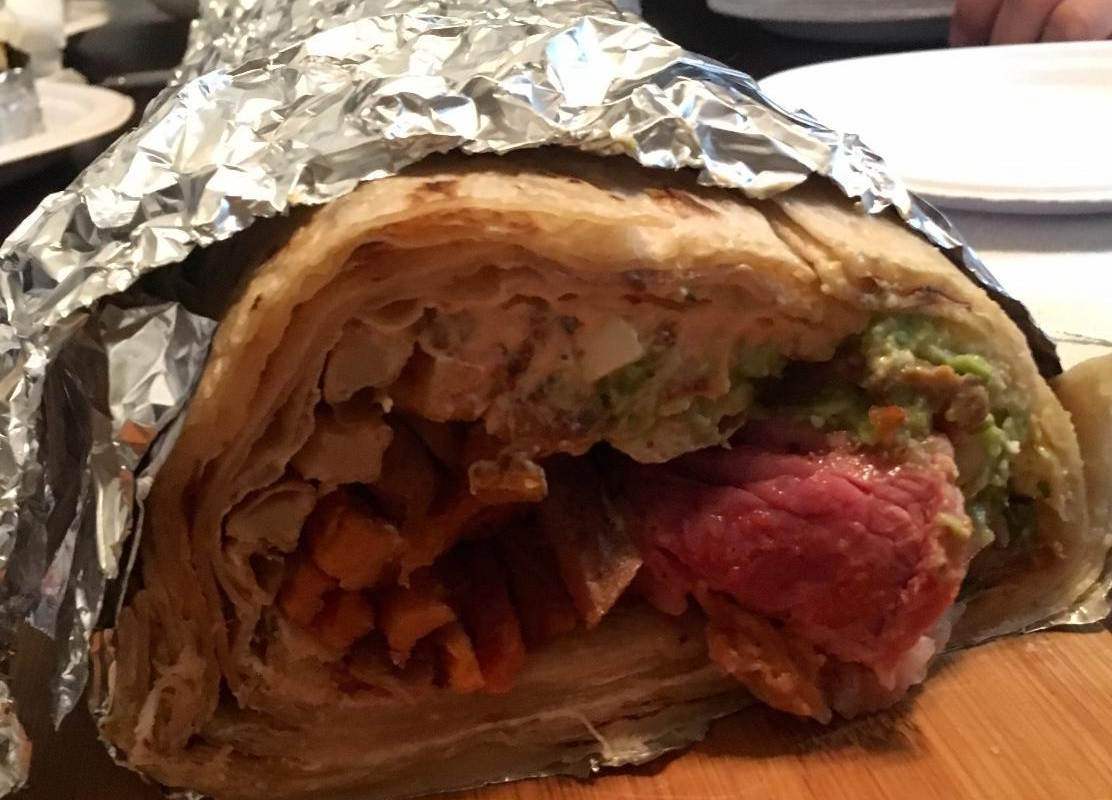
There were two things that needed to happen to make this a success, 1) whatever it ended up looking like, it had to be absolutely massive, and 2) each bite had to taste more amazing than it looked. I’d hope you’d agree that the first point was a success after looking through the pictures, so let’s get into why the taste surpassed its gorgeous looks.

The goal was for every bite to be decadent yet balanced; familiar yet unique. Given the girth of the quesarito, there was no way to take a bite of every component, so everything had to stand out while also being able to maintain a sense of cohesion. With each bite, the firm chew of the tortillas are met with the depth of flavor in the four cheese blend. This formed the foundation to compliment any combination of the quesarito’s inner workings: saltiness from the fries, peppery meat flavor from the tri tip, a citric shrimp to accent the meat and cut all the fattiness, coconut guacamole to bring a mildly sweet richness that would cement the marriage between the shrimp and tri tip, blended sour cream to bring a creamy heat, a myriad of cheeses throughout to ensure a strong Mexican cheese shines throughout the bites with the variety keeping everything interesting, herbal familiarity from the citrus forward marinated cilantro, a slightly bitter roasted spice from the chile pasilla, and some fresh crunch from the lime marinated red onion.

And if you are wondering how this all came together:

A true communal event

As I stared at the dwindling remains of the behemoth quesarito wondering how much it could have weighed (in case you’re wondering, like many other legends, I don’t actually know), I truly felt that I had accomplished something special. I had revisited the format that marked my early beginnings while attaining a level of quality I could really be proud of. But more than anything, I realized I had come full circle and I couldn’t think of a more genuine way for me to begin my newest chapter in my never ending pursuit for a more thought-provoking epicurean experience.

Solo Dining

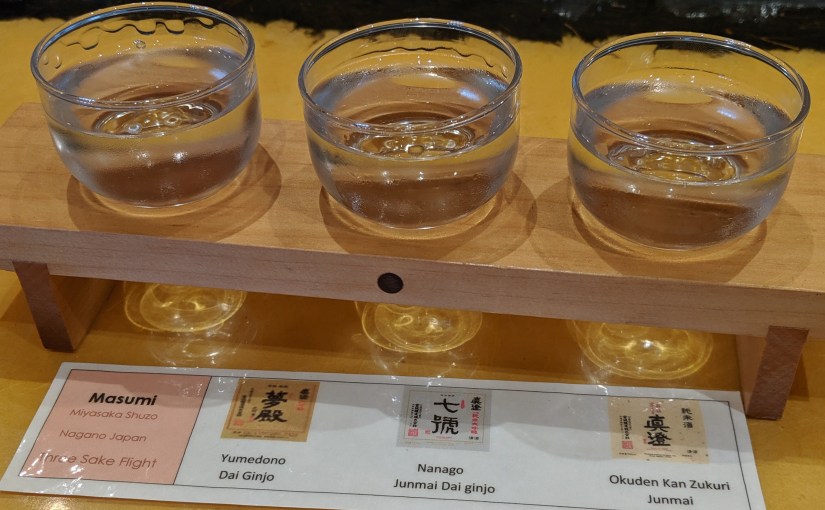
I tend to limit my higher end fine dining experience to a handful of times a year and this warm Wednesday evening was one of those occasions. The Michelin guide had just come out for LA, and being located in OC, I had taken it upon myself to make sure I had visited the two rated restaurants near me. One was Taco Maria, a modern Mexican restaurant I had frequented in the past, and the other was Hana Re, a Japanese restaurant I had never even heard about. Thinking I ought to beat the rush as more people read about the newly minted list of starred restaurant, I had quickly contacted Hana Re for their most recent available reservation for one.

This dinner marked would be my first foray into having a fine dining meal by myself. I am no stranger toward grabbing a bite (or several) to eat by myself, but this was a full on, multi-hour fine dining experience. A first that I would quickly find meant anything but dining solo.

I had heard about the concept of solo dining at a gourmet establishment as an idea that contrasted the popular notion that meals are always meant to be enjoyed with an intimate party of two or more. The core of solo dining follows the principle that food is the focus and, as with many solo experiences, your mind opens up to both the experience at hand and the environment around you when there is less to focus on. No need to divert your attention and energy towards any accompanying participant. Just you, the food, and your environment.

The irony is that, although you do focus on the food and its preparation more so than not, in these solo dining situations you also find yourself engaged in a much more social experience than you had otherwise planned. One that’s organic in a way I rarely experience with my more introverted tendencies.

Dining at Hana Re’s 10 seat sushi bar, I found myself naturally engaging in conversations with the other diners as the picturesque plates rolled in throughout the evening. The whole restaurant gradually felt as one group sharing in the experience created by Chef Atsushi Yokoyama united in their pursuit and partaking of such a grand meal. Nothing brings together people quite like food and none other is that further amplified than by being in a room filled solely of people who go through such great lengths to get food at its best.

It dawned on me that the social experience unfolding before me in that room was one based on the shared interest in the culinary spectacle being put before us. The common ground created a sense of trust as we were all there spending a couple hundred dollars to have a meal spanning a couple hours. In other words, there was more to each of our visits than just looking for something to do on this particular Wednesday evening.

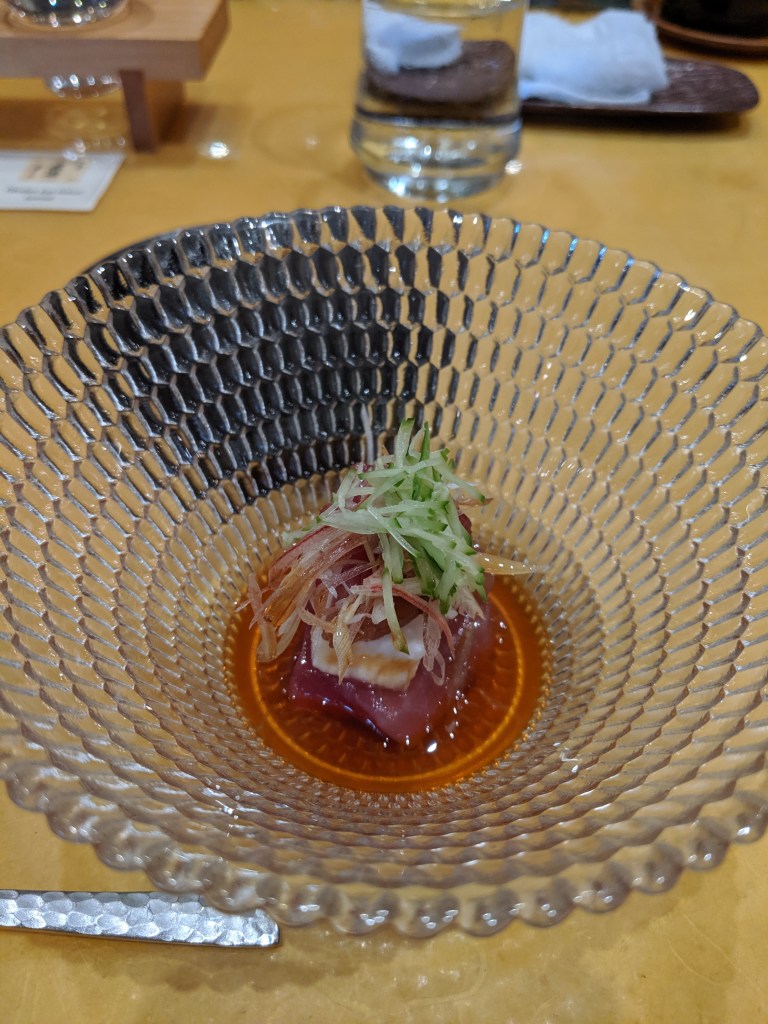
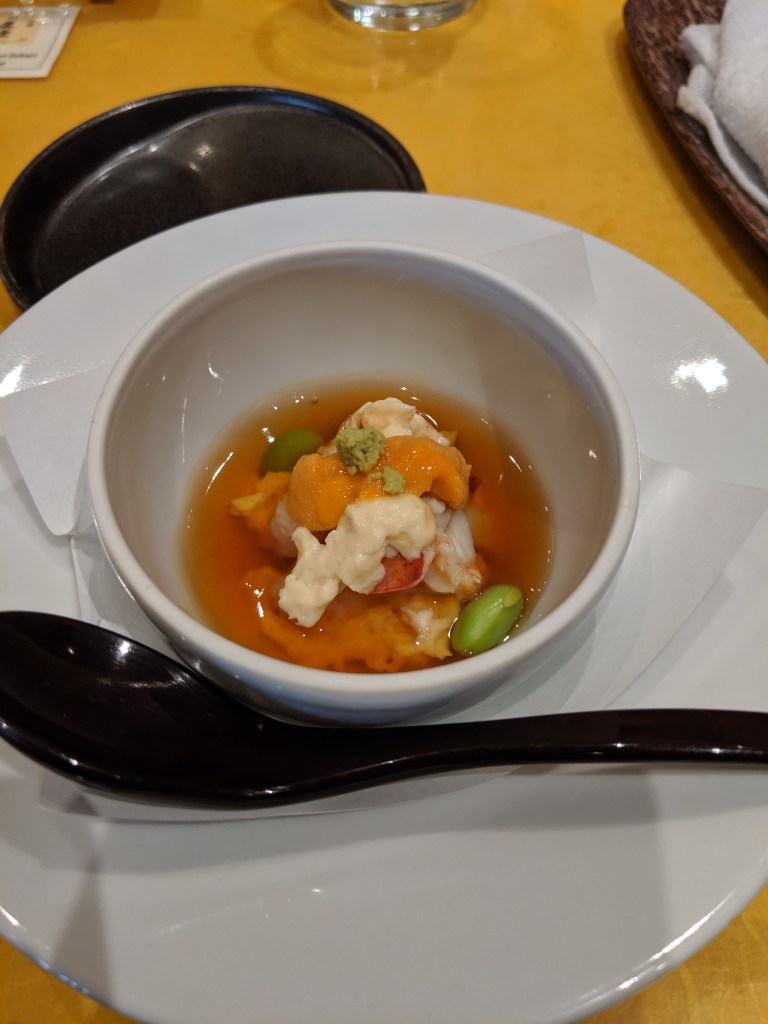
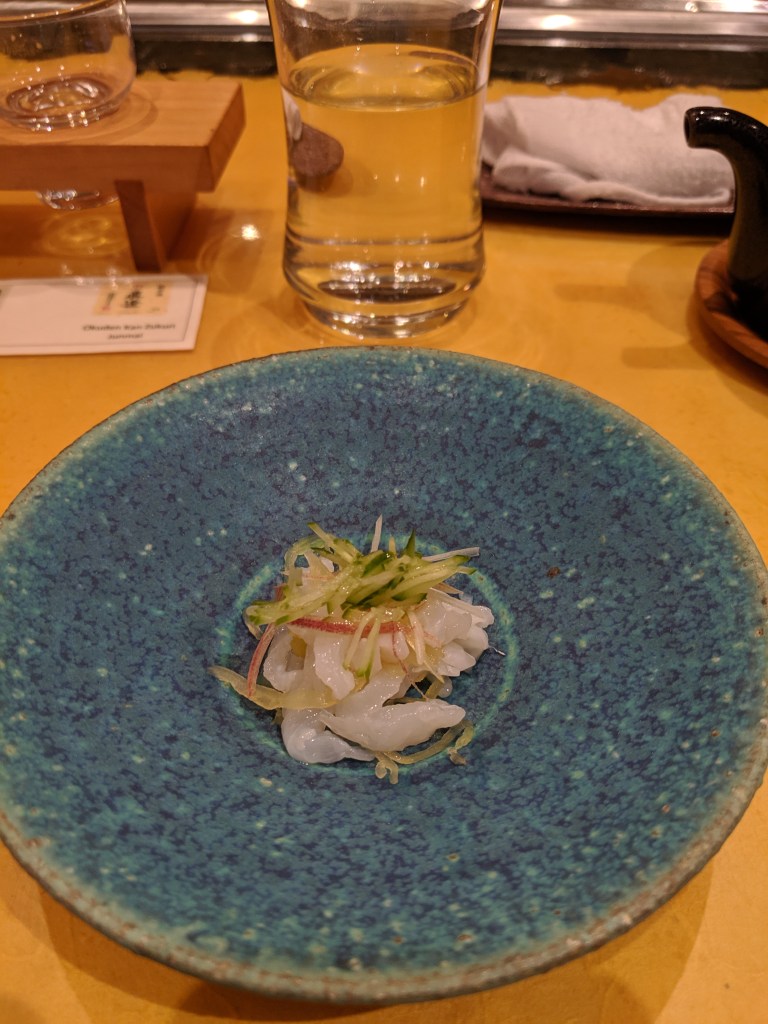
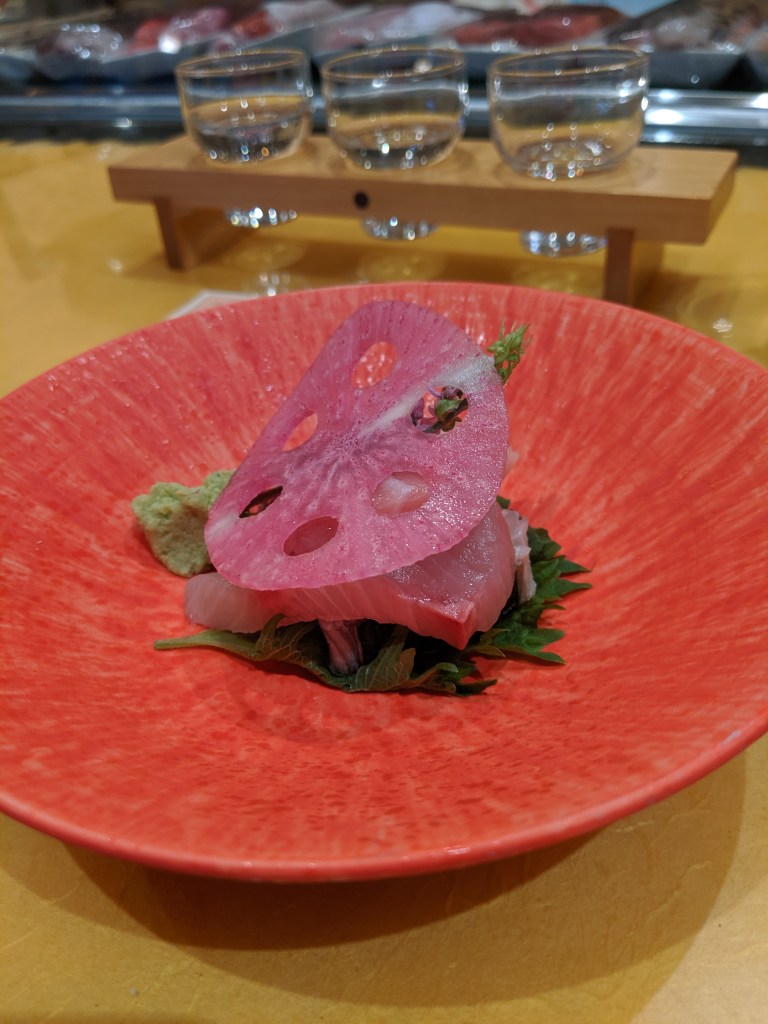
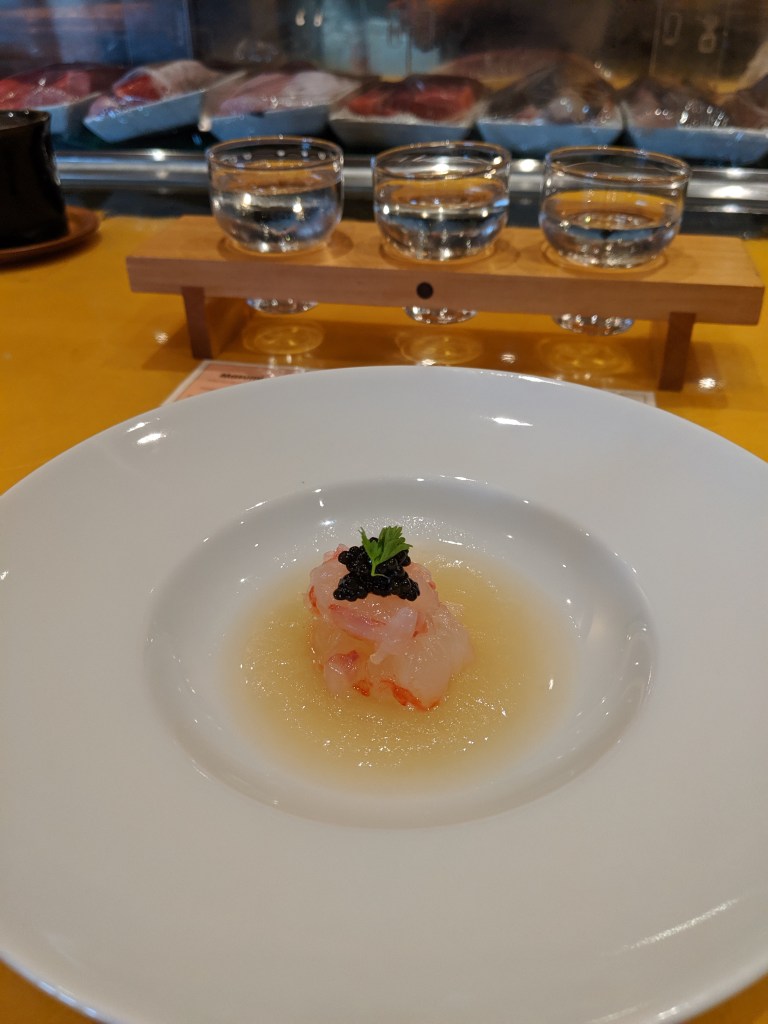
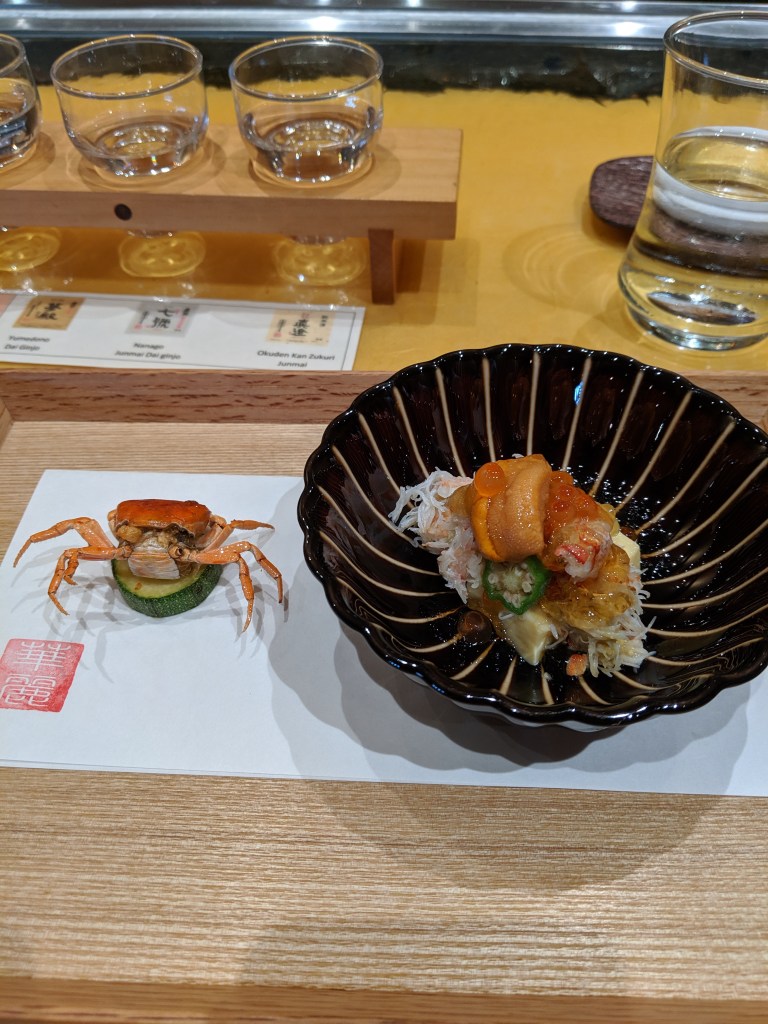
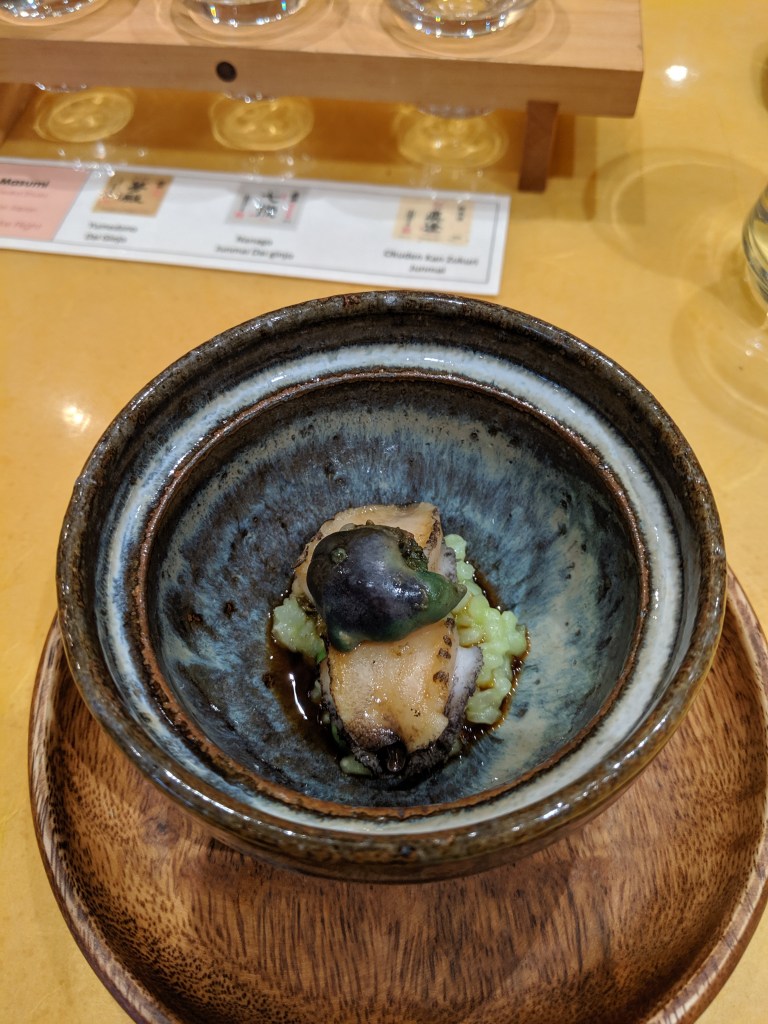
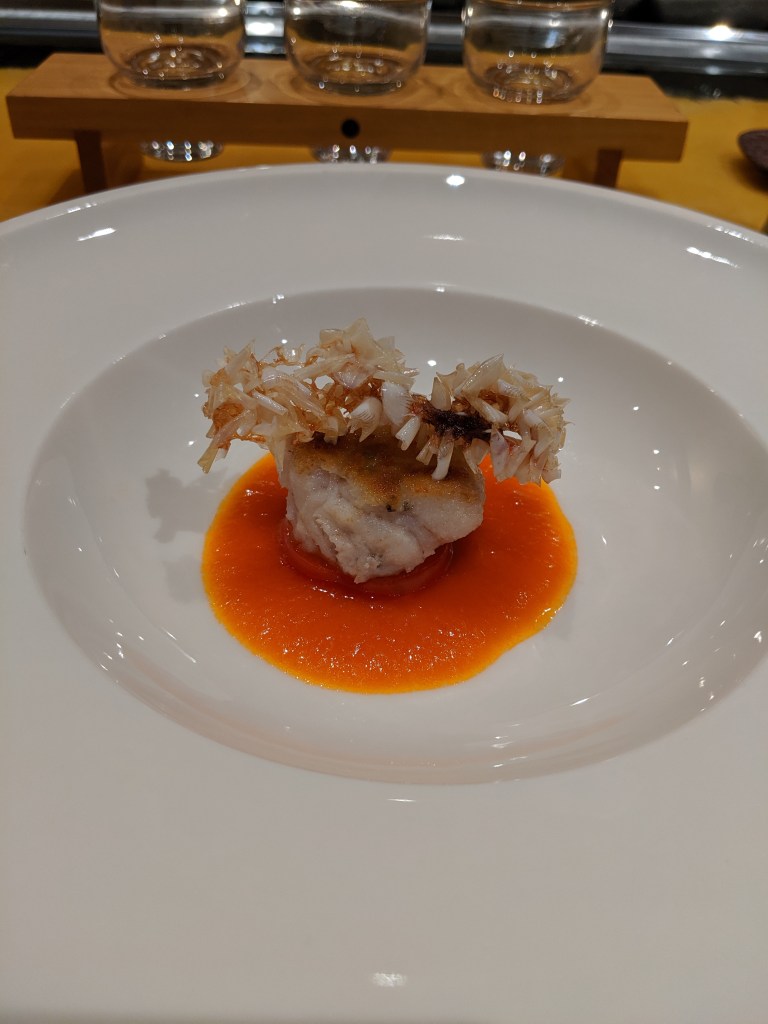
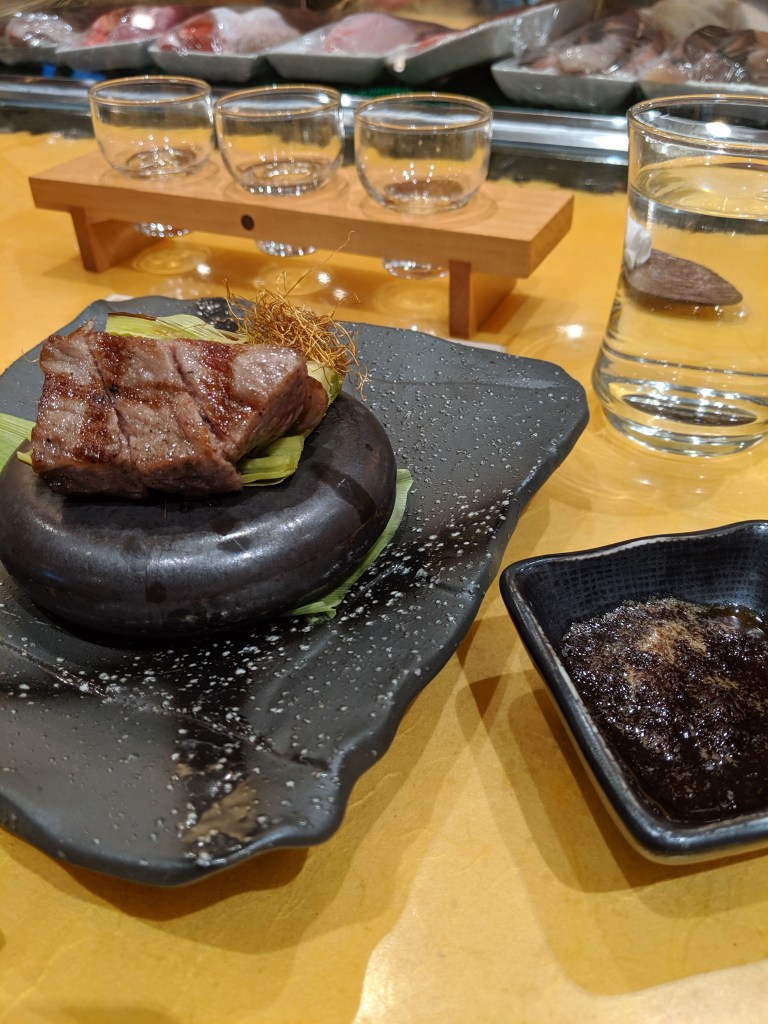
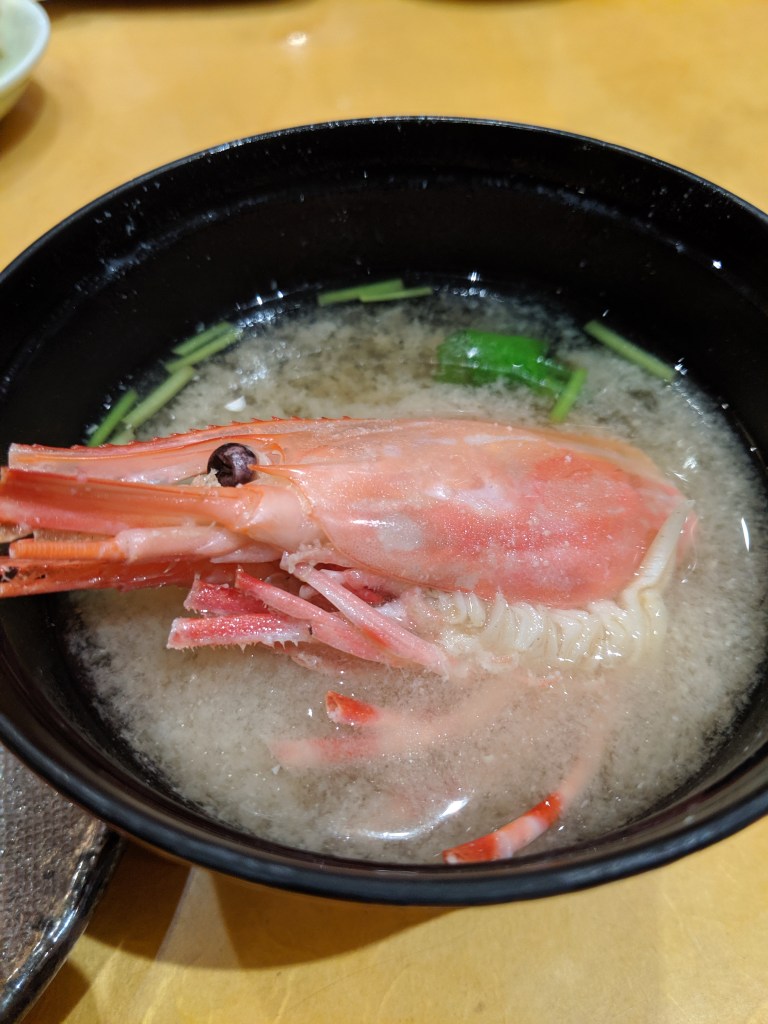
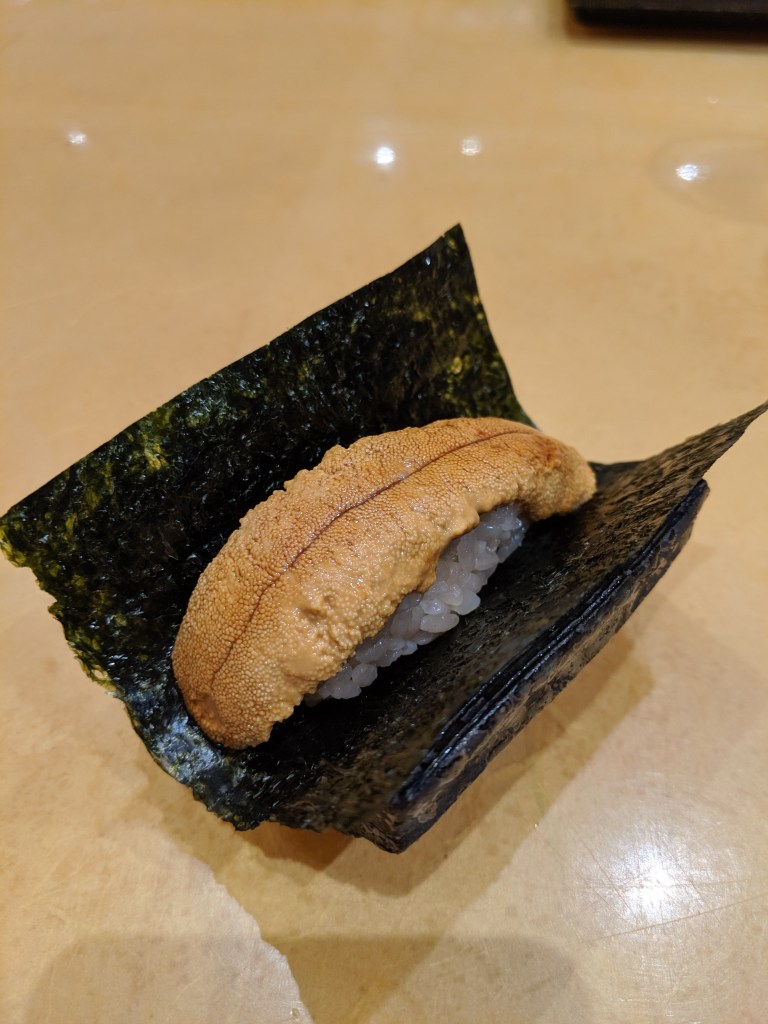
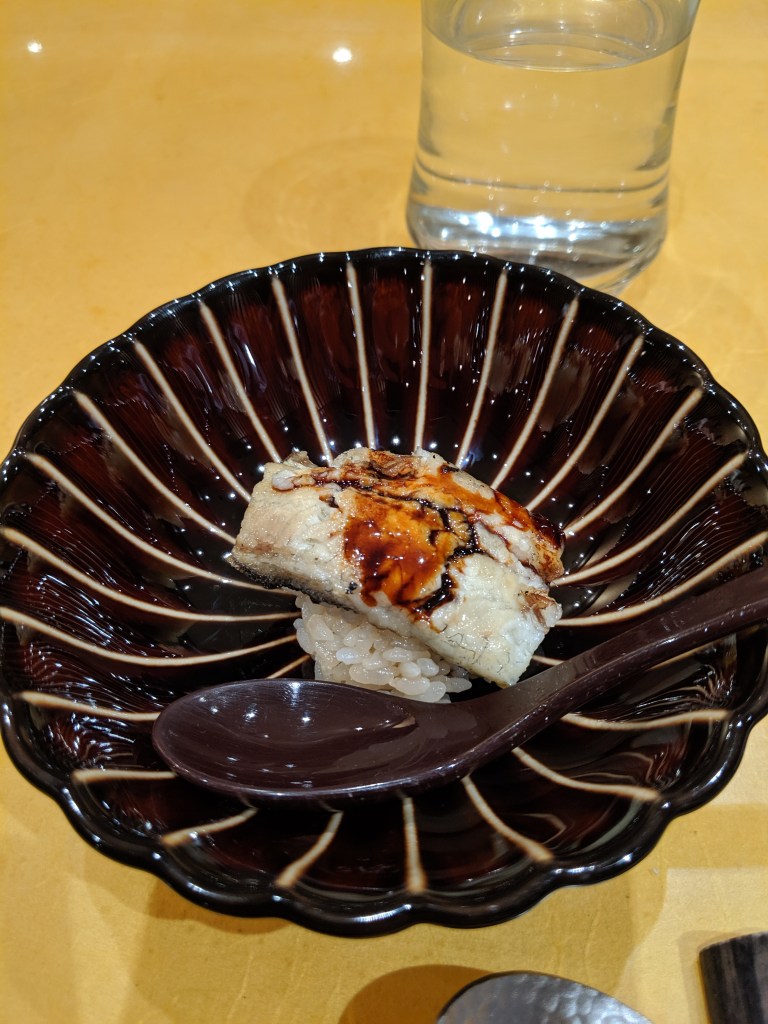
All of the different courses from my dining experience at Hana Re (minus the sushi courses and the panna cotta dessert).

In between each culinary concoction, I’d notice the uniqueness of my fellow diners through conversation and their interactions with the chef. For example, one of the couples to my immediate right were fellow food connoisseurs (I’m fully aware of how stuck up this sounds, but hey it’s better than the word “foodie”) of the same alma mater and software background with the husband turned entrepreneur. I learned everything from the restaurants they frequented, their travels, the differences in starting a career in software today and over twenty years ago, and even various startups ventures. The most interesting being how he sold a cloud business before the dotcom bust, re-purchased it afterwards for pennies on the dollar, and finally sold it again before the great recession in 2007. All these stories I probably would have never heard had I been with another person and it didn’t stop there. By the end of the night I even learned of another restaurant closer to me that I now frequent.

There was even more details in just taking in the environment: a group to my left consisting of a relatively young couple that frequented the restaurant entertaining a guest from abroad as they drank with Chef Atsushi, the couple to my right sharing stories with Chef Atsushi having followed him around for the better part of two decades, and the couple to the far right talking of their various other affluent dining experiences. There was so much to take in that it acted as a welcomed pause in between each exquisite dish. One where I can focus on both food quality and everything around me by not being distracted by having to entertain a companion.

In another account at a different sushi bar, a similar experience awaited me. I was having an omakase course at a restaurant I hadn’t been to in over 5 years, but this time enjoying the meal by myself as I was conveniently nearby for lunch. After watching the sushi chefs at work for the majority of the meal and savoring in the experience, I eventually ended up in conversation with the older man dining next to me after it was clear we were both thoroughly enjoying our meals. I learned details and recommendations from everything from business, to ingredients, and even other restaurants. Interestingly enough I found out that he was also more introverted and equally intrigued by the fact that he would not normally engage in conversations with a stranger like this. That’s the magic that comprises solo dining or really any solo experience.

By isolating yourself you find yourself drawn to more natural actions as you focus on what you want to do and what you’re interested in. Humans are social creatures and ones that find interest in shared experiences and beliefs. Going into a fine dining restaurant by yourself may first sound like a waste, but it really just gives way to that raw desire to connect with those who feel similar. There is also a sense of respectful understanding given to someone who chooses to dine alone as they are going against the typical status quo with the sole intention of enjoying that meal first and foremost. All this enables a social behavior to, at a first glance, a seemingly anti-social move. I gave into this notion to test out the theory of whether I really would enjoy fine dining by myself and I leave each experience feeling more validated in that theory. Had I not had any of these conversations I wouldn’t find the time a waste because I thoroughly enjoyed the meals and the environment that houses all the chefs and workers at work. But there is nothing like the unexpected benefit of walking away with learnings, recommendations, and a good old organic conversation with someone who has no reason to engage in such.

Now with all this glowing praise for the experience of solo dining, I’m not going to tell you to go have as many meals as you can by yourself or that I now dine alone as much as possible. These two examples were optimal situations given the nature of direct contact in sushi restaurants with the chef and the parties next to you. There are definitely establishments and moments that may not lend themselves as well to going by yourself, though I am pleasantly surprised in these sub-optimal situations by the tidbits in even the most mundane settings and moments when given some extra attention and focus. What I will say is that, when you do get a good opportunity to go try that restaurant you always wanted, consider that you may not have to work around anyone but your own schedule and that you just might have a better experience by doing so.
Food Thoughts

Just to clear this up from the beginning, this is not about the thoughts you get where you are hungry or scrolling through the pictures of that restaurant you have been wanting to go to. By “food thoughts” I am referring to all that encompasses the conversation of food and its cultural, social, and artistic influence on human life. At a glance this may seem like a melodramatic analysis, but I’ve always seen food as this multi-sensory art form to express and ingest an individual’s creativity. A multi-medium canvas that spans even more mediums in its communication (pictures, artworks, writing, etc.). Being such a layered concept and one that draws the attention of my own creative expression, I feel it fitting that I have this category to analyze and detail the higher concepts involving different food mediums and formats. A place where I can delve into my own thoughts on the complexities that is the expression of food.
Here you’ll see my take on the importance of extremes, views on where the food world has, is, and will be, and any other meaningful impact I could possibly analyze for any label you could give to any set of culinary distinctions. With a hint of irony, I title this category of posts as “food thoughts,” but, as with anything, there is more than what’s on the surface and this allows me to avoid the semantics of some fancy title. These are my food thoughts and, although I can’t guarantee you’ll agree with what I have to say, I will guarantee the topics will serve as good starting point for some food reflection.

A Beginning in Product Iteration: Curry Salted Egg Yolk

Salted egg is a traditional staple in Asian cuisine for having a rich, umami flavor from egg yolk that is accompanied by the saltiness of your curing method of choice. This delicacy has been on a recent rise with the likes of Irvin’s salted egg fish skin in Singapore along with several other variations of salted egg chips across various brands from Asia. Despite that strong affinity with the Asian population, its presence in America has been little to none with foreign makers largely being unable to meet their own domestic demand. As with anything production restricted, this leads to rampant premiums on third party sites like Amazon. All this sounded like a recipe for a good product, so I embarked on the journey of having my own take on the traditional meets contemporary craze.

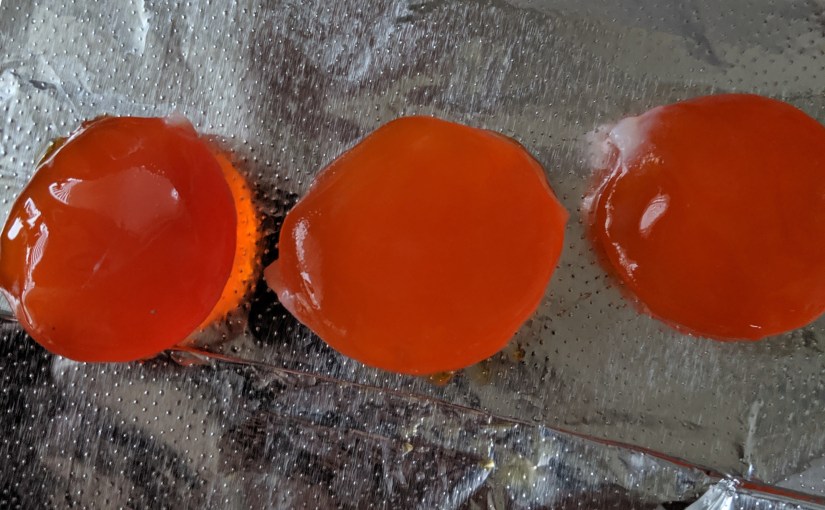
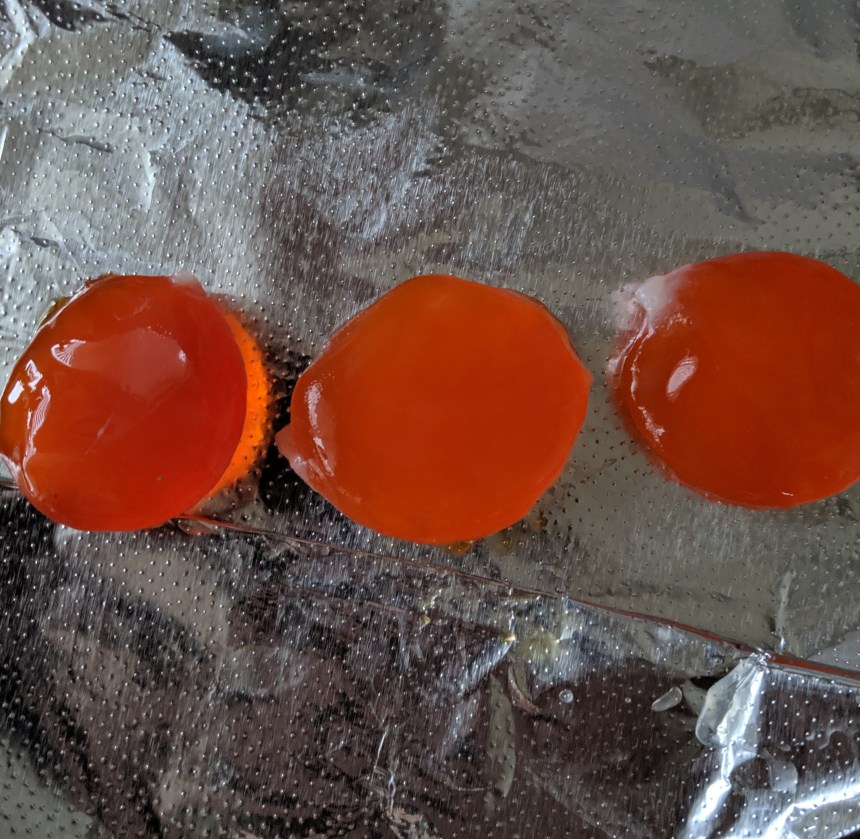
Chicken Egg Yolks cured in salt overnight

The base comprised of salted egg yolk and, because tradition should always be challenged when given an opportunity, I opted for high quality chicken egg yolks (golden egg yolks provide near incomparable flavor). Then I chose the quickest method of curing by dropping the yolks in a vat of salt overnight. Afterwards, I removed the excess moisture via low temperature baking.

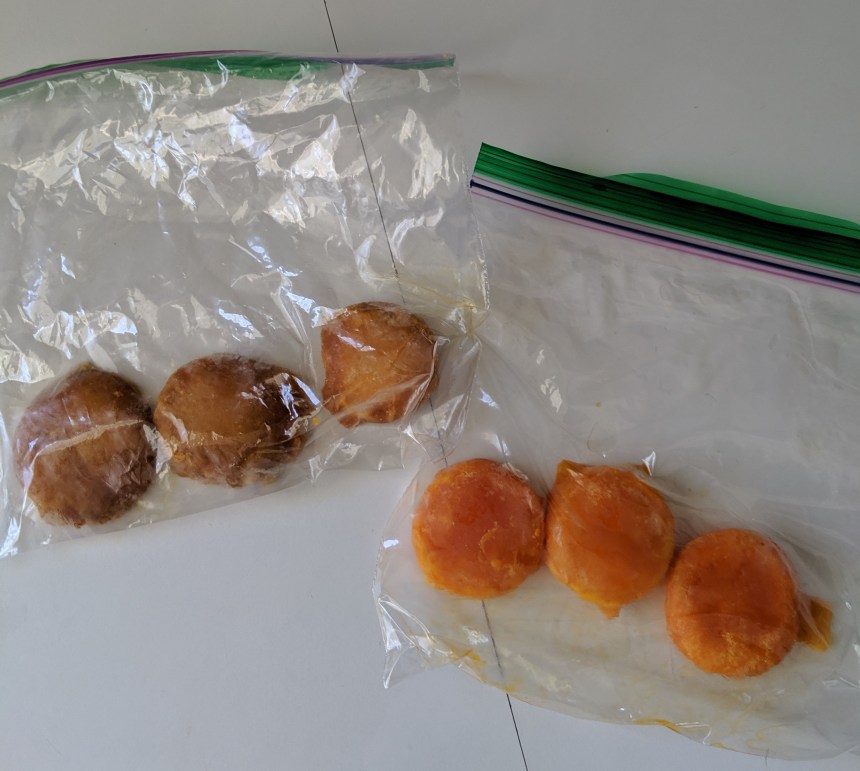
The salted egg yolks after being baked at 175 degrees for 3 hours on the right and 6 hours on the left. The difference in color due to the cooking time, but they actually taste almost identical.

The result was something that tasted nearly identical to salted duck yolks. Now having the foundational component, it was time to integrate it into its medium as a seasoning. This would provide the most flexibility to both pick up on the salted egg chip craze and allow for other adaptations to any opportunities.

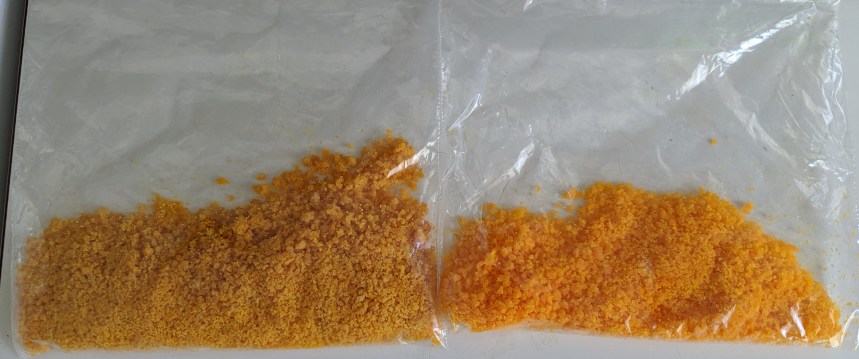
The same salted egg yolks as before after being put through a food processor

With this golden powder in hand, it was time to blend and balance flavors. One of the most popular salted egg chip flavors is curry so, hoping to improve upon the pairing, I stuck with that as my flavoring of choice. Though unlike my other cooking experiments, the goal was to create a product which meant embarking on the side excursion of learning what it takes to make curry from scratch. Fortunately, I had a close Indian co-worker deeply familiar with the topic that walked me through what was used and in what way. After a little trial and error, my newfound knowledge gave way to my own curry blend. The umami from the egg is fortified by notes of coconut, accented by a dull sweetness from brown sugar, spiked with tones of spice from common curry spices, and rounded out with herbs. Fully flavored yet enticingly mild, but I noticed a particular flavor lacking (as with all similar products) so I took things a little further by adding some citrus to the mix with yuzu.

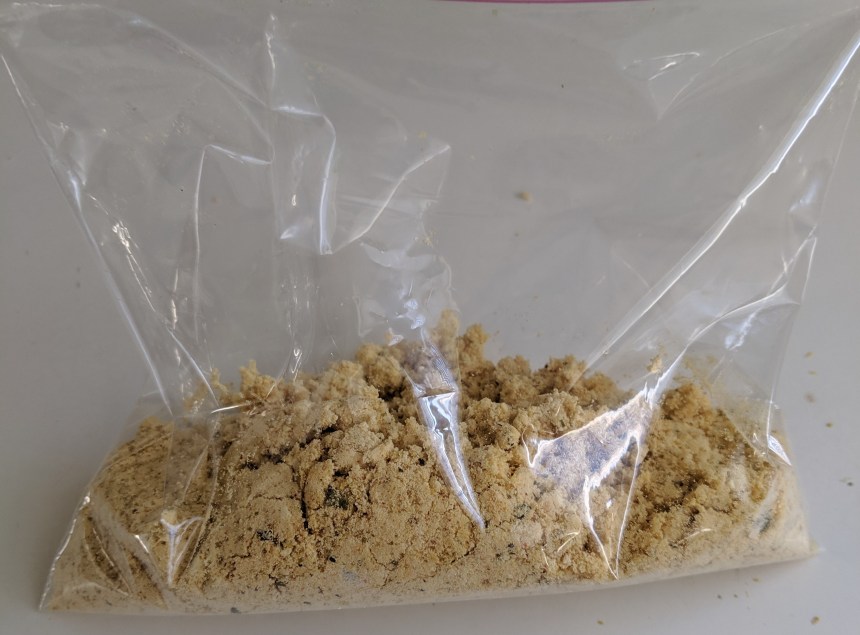
The curry powder flavor blend without salted egg on the left.
The curry powder with salted egg yolk compared to without it.

The goal of this exercise was to derive a fully flavored curry salted egg seasoning, that I could apply to something like chips, and was made from the ground up using a combination of my knowledge from other products and people with some personal intuition. After a couple of iterations and adjustments, I arrived at a solution that now needs to be put through the ringer to beget scale, but after several tastings I am confident that I have familiar flavors with just a touch of unique twists that grasp beyond just appeasing to this modern sensation.

Ultimately, it looks like my first food product endeavor will be this blending of new and old in an up and coming craze that I iterated on with what I feel to be a unique personal touch to satisfy those with similar yearnings. In other words, a similar beginning to my motivations for cooking in the first place. I guess some things never change.

Sorbets In Savory Dishes

My first real experience with sorbets in a non-dessert scenario was yellowtail paired with a mango habanero sorbet and I still to this day don’t understand why this concept is not more prominent. The textural and thermal play between components is unique to this medium as transitions from solid to liquid entertain your palate, while flavors burst in every direction. There is also the added benefit of having a dish adapt to the sweetness most sorbets provide, making for increasingly addicting bites between individual ingredients.

A variety of dishes I created around the concept of utilizing sorbets in appetizers.
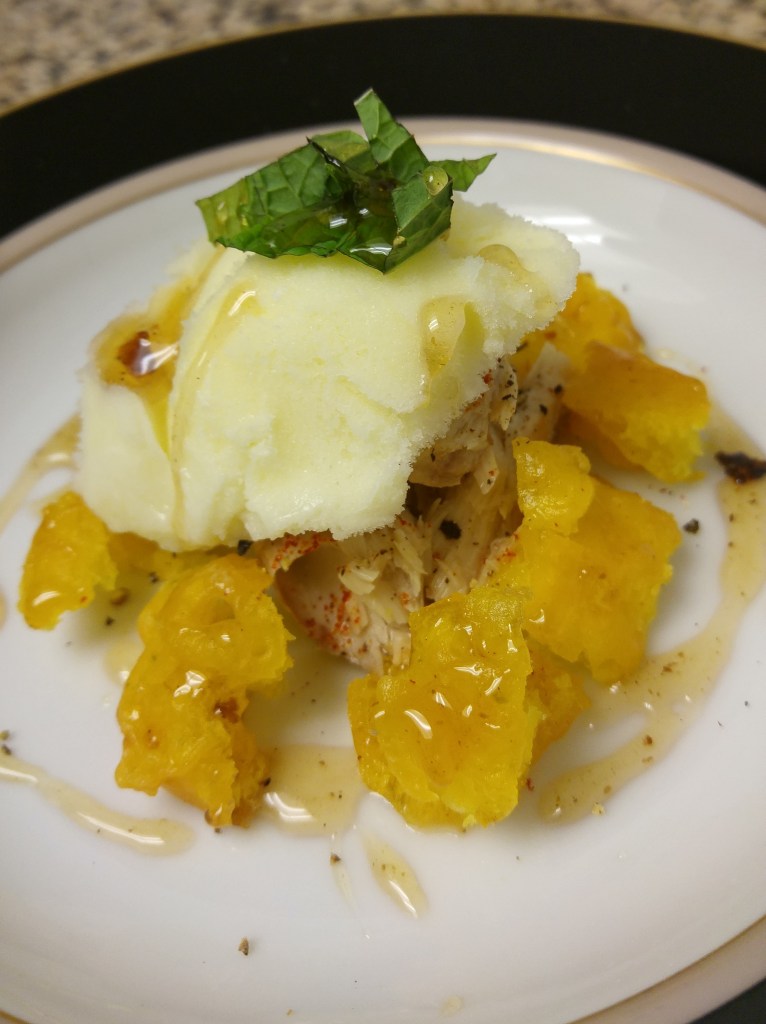
First Slide: Mackerel seasoned with cayenne and black pepper, surrounded by saffron tempura, topped with yuzu sorbet, garnished with mint, and drizzled with truffle honey
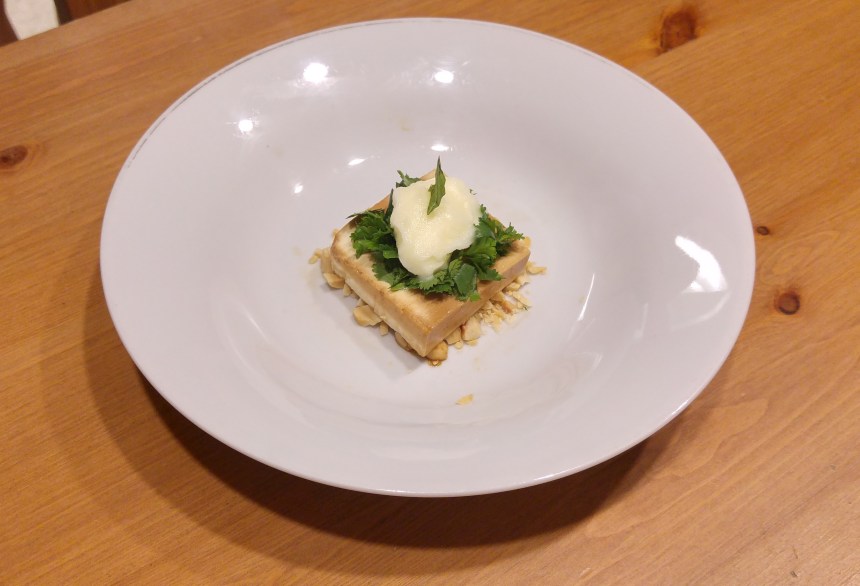
Second Slide: From the bottom up this dish is composed of unsalted crushed peanuts, soft tofu marinated in soy sauce and fish sauce, a layer of cilantro and parsley, yuzu sorbet, and a garnish of mint.
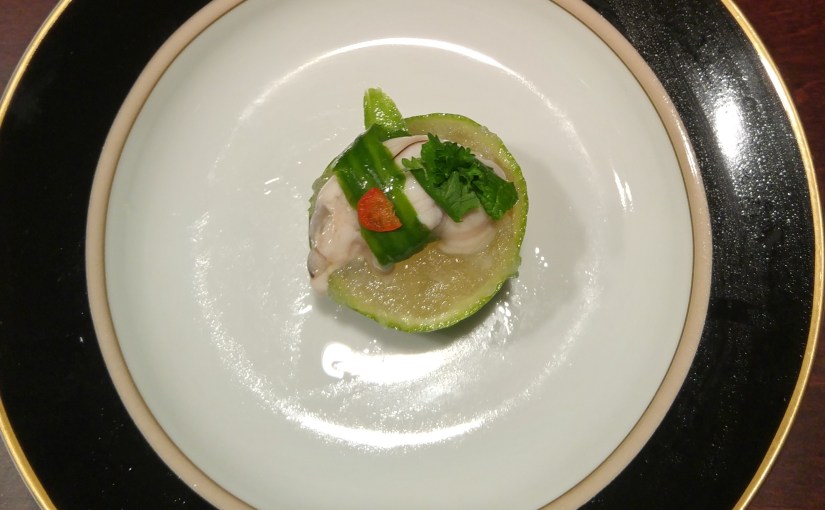
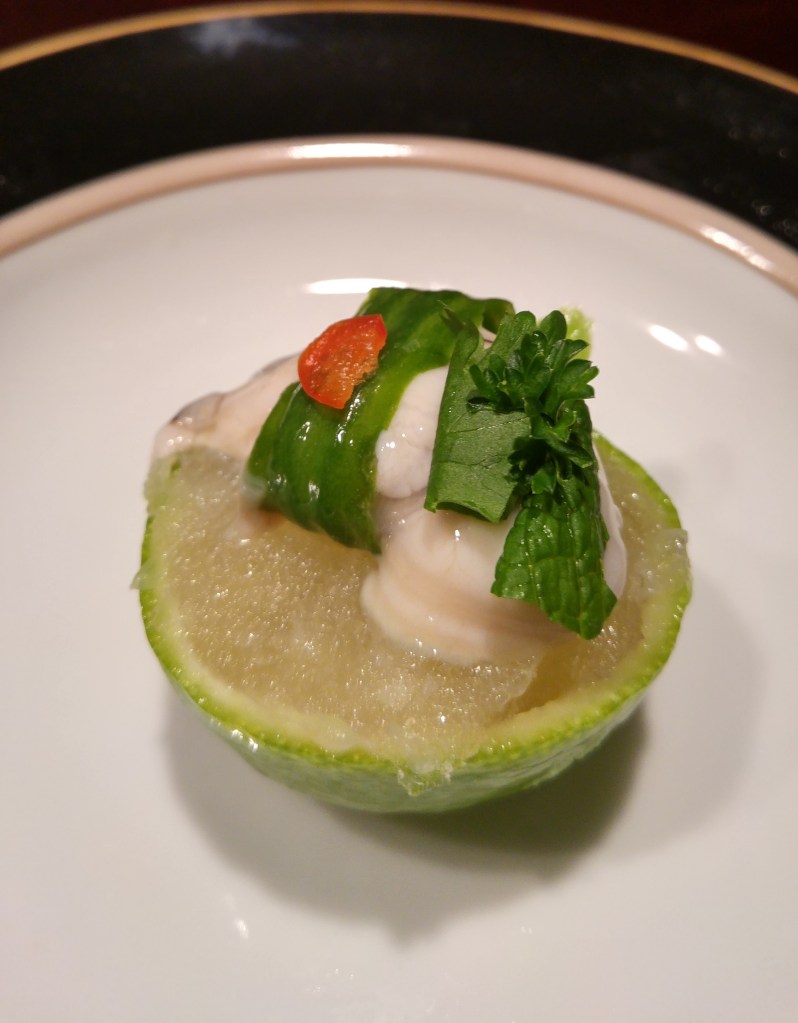
Third Slide: Lime sorbet lightly sweetened with dark amber maple syrup, fresh oyster wrapped in mirin and yuzu marinated cucumber skin, and garnished with red chili, cilantro, parsley, and mint.

The dishes above utilize a myriad of textures and sharp, savory flavors that create a balance like no other. Each composed to open with the depth of a slightly sweet, citric sorbet that acts as both a palate cleaner and centerpiece where each bite prepares you for wave upon wave of sensational onslaught. Maybe its just the novelty of not having it often or maybe I just love ice cream related foods, but I feel that building around sorbets is a sure-fire method of creating an amazingly unique experience.

Modern Filipino Inspired Cuisine

For a long time I had put off the day I attempted the challenge of integrating the bold flavors of a cuisine I had once discounted of providing any meaningful value to the food world. I had grown up with this food my entire life, but never perceived much other than distant nostalgia that I felt would never be appreciated by the masses. A culinary culture much drawn to Spanish influence, thus one I dismissed as being an inferior knock off. The theme for this dinner was to prove otherwise with the loud and raw inspiration of Filipino food.

For those unfamiliar, Filipino cuisine is composed largely of one noted wonders. If a dish is sweet, salty, sour, or anything in between then you can be damn sure that’s what you’ll get. This being what led to both my ire and commendation for its culinary composition. Food that exhibits one aspect boldly is a shock to the senses that is confident in its approach, but for those less exposed it’s a rude forcefulness left unrestrained in its unrelenting assault. After several years in delay, I finally had the experience, understanding, and answers necessary to tame the forces available in Filipino food. This would be achieved by pairing delicate, accenting flavors to refine and bolster the raging wildness it exudes.

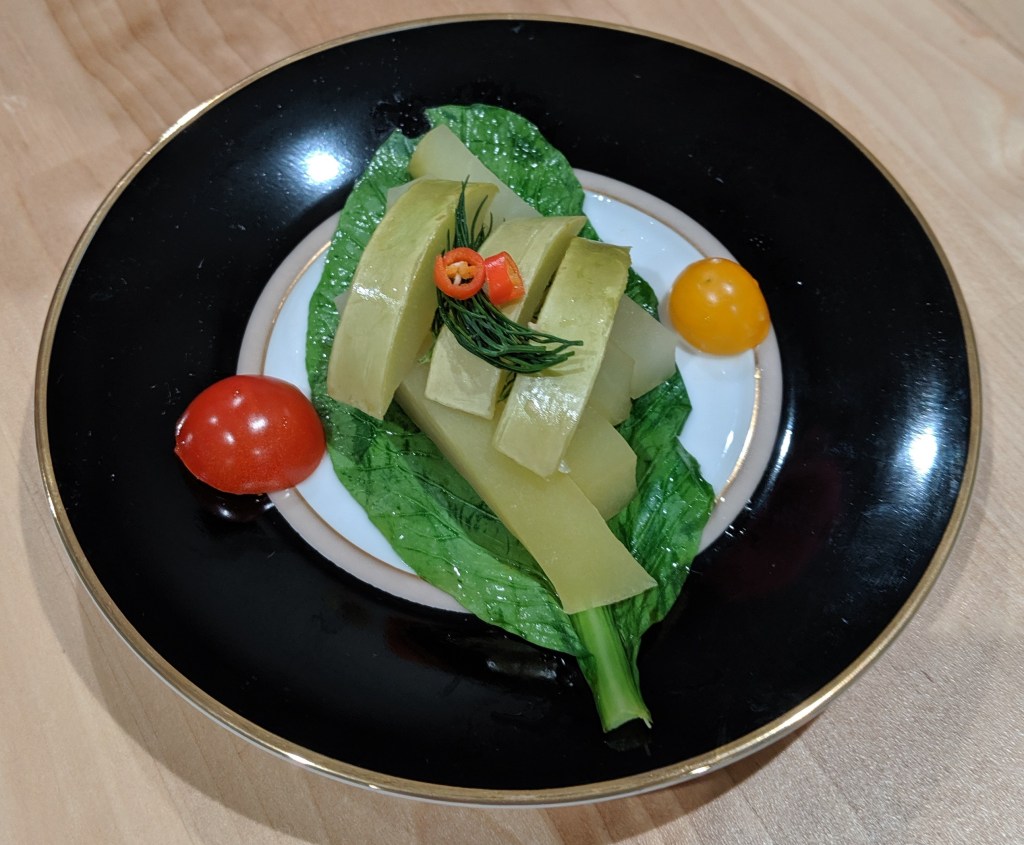
Filipino Citric “Salad”: Thai Chili and Dill topped Upo, Papaya, and Pechay boiled in white vinegar, yuzu, lime, fish sauce, apple cider vinegar, and dark amber maple syrup, and served with cherry tomatoes

First up was a salad take on the classic upo side dish assigned the purpose of highlighting sourness. Amongst varying degrees of firmness from the upo and papaya, a myriad of citric flavor from the vinegars, yuzu, and lime would hit while being intermingled with a round of dull sweetness from the syrup. The intense acidity is further complimented by a mild bitterness from the pechay, heat from the Thai chili, and freshness from the dill. Accompaniments of cherry tomatoes then chime in to function as a palette cleanser between bites.

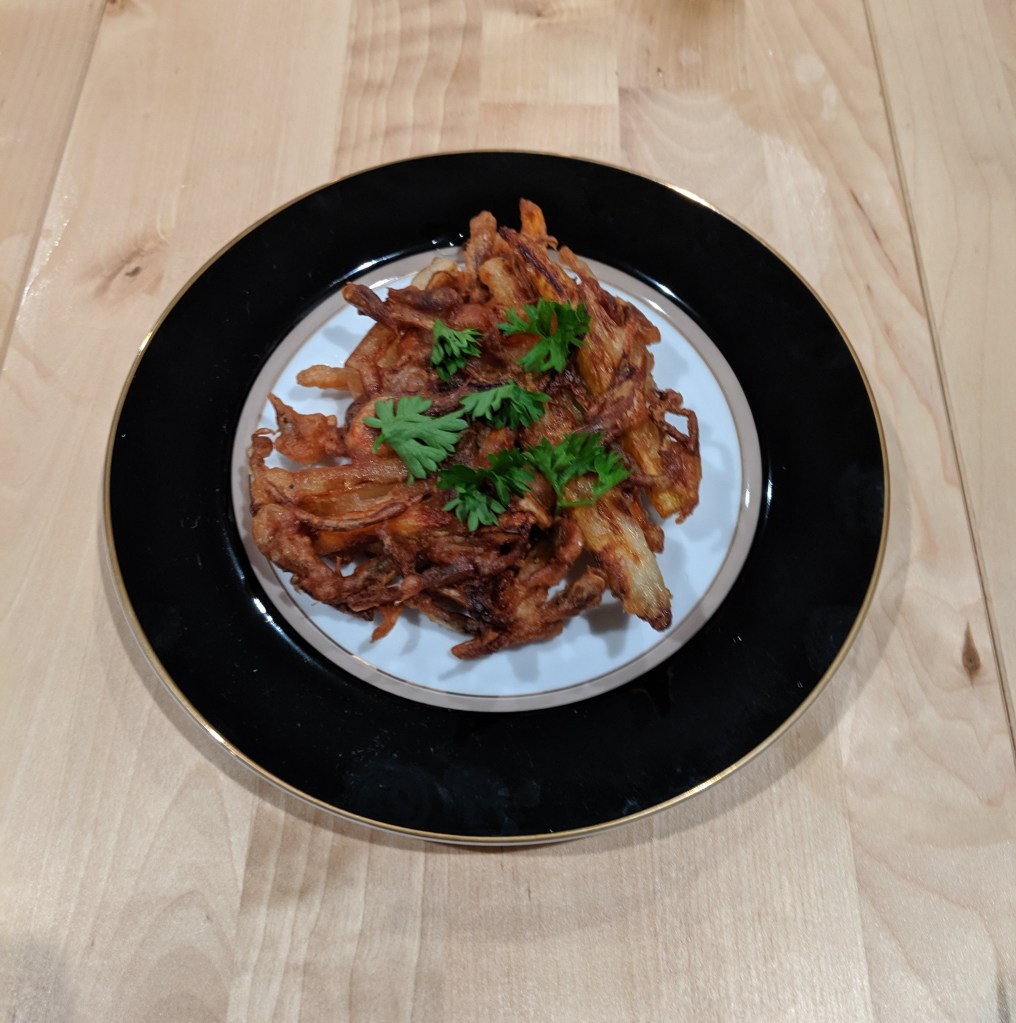
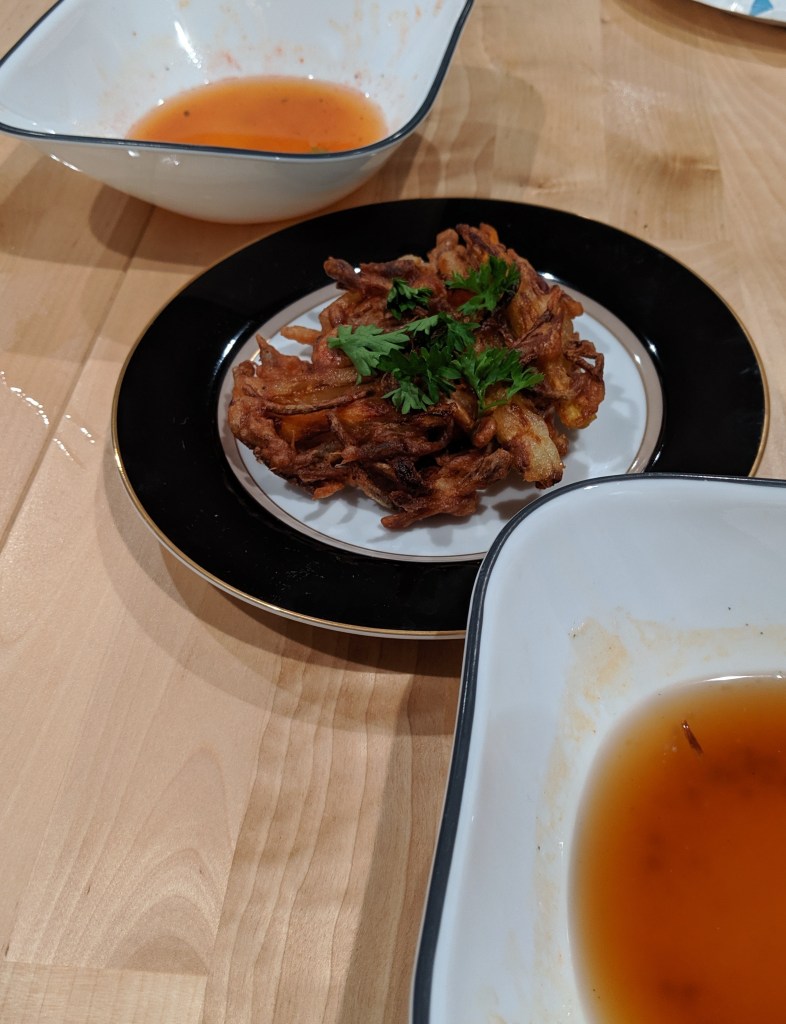
Ukoy: A mixture of papaya, carrot, bean sprouts, and yuzu and hot sauce marinated small shrimps coated in corn starch, flour, fish sauce, brown sugar, garlic salt, black pepper, and lime that’s deep fried, garnished with parsley, and served with a grapefruit hot sauce mixed with soy sauce and white vinegar

Next was ukoy, a classic Filipino fried fritter appetizer. It is typically relatively unseasoned and optionally served with soy sauce, vinegar (spiced or plain), or a combination of the two. For this dish, yuzu and heat accompany the shrimps while fish sauce, garlic, and brown sugar bring a sweet wave of deep umami to the crunch of the fritter, then followed by sourness from the lime and herbal flavor of the parsley aiding to disperse the oily richness. The sauce is also an intensified variant of the traditional sauce with more spice amidst complexity from the grapefruit.

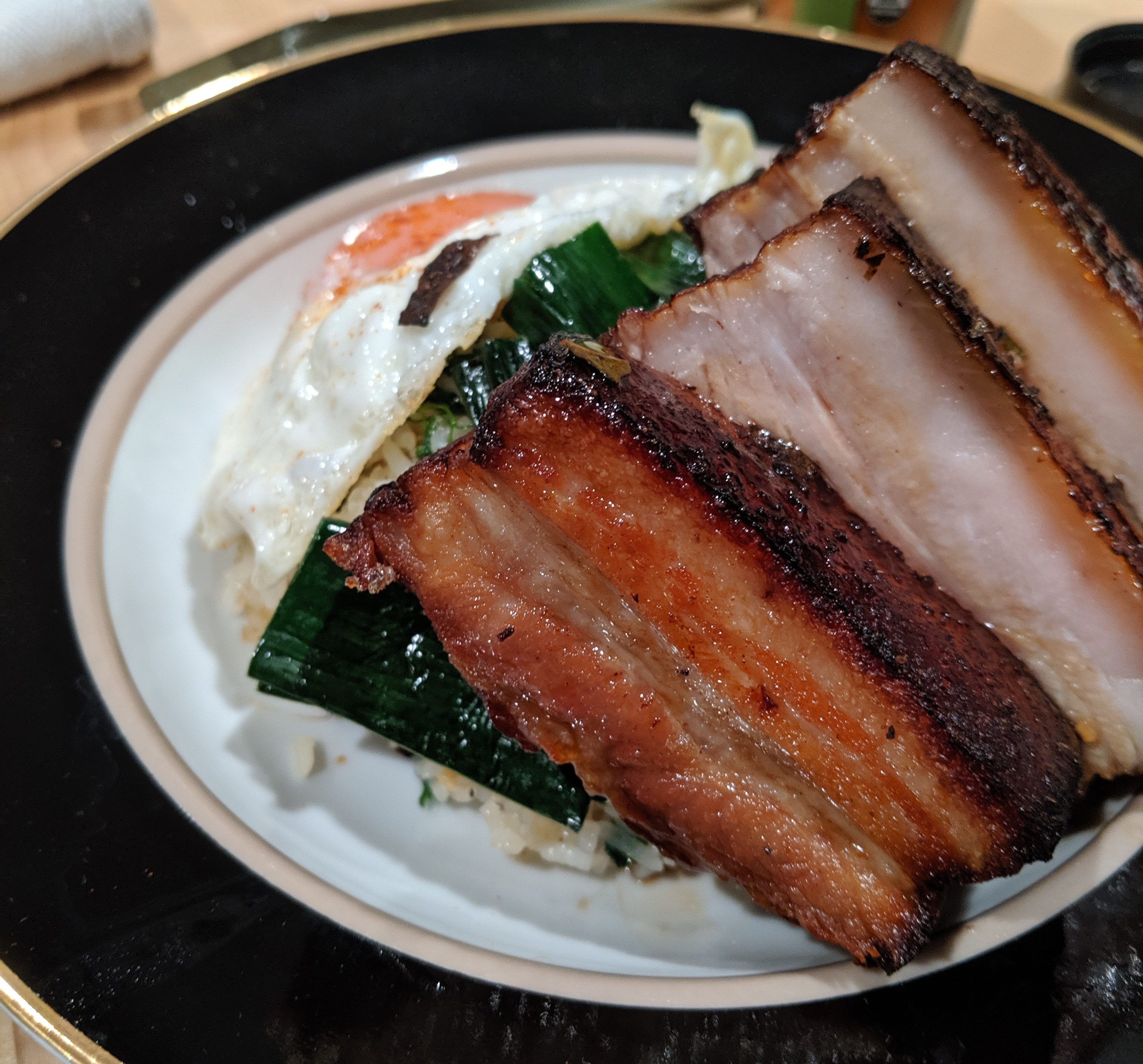
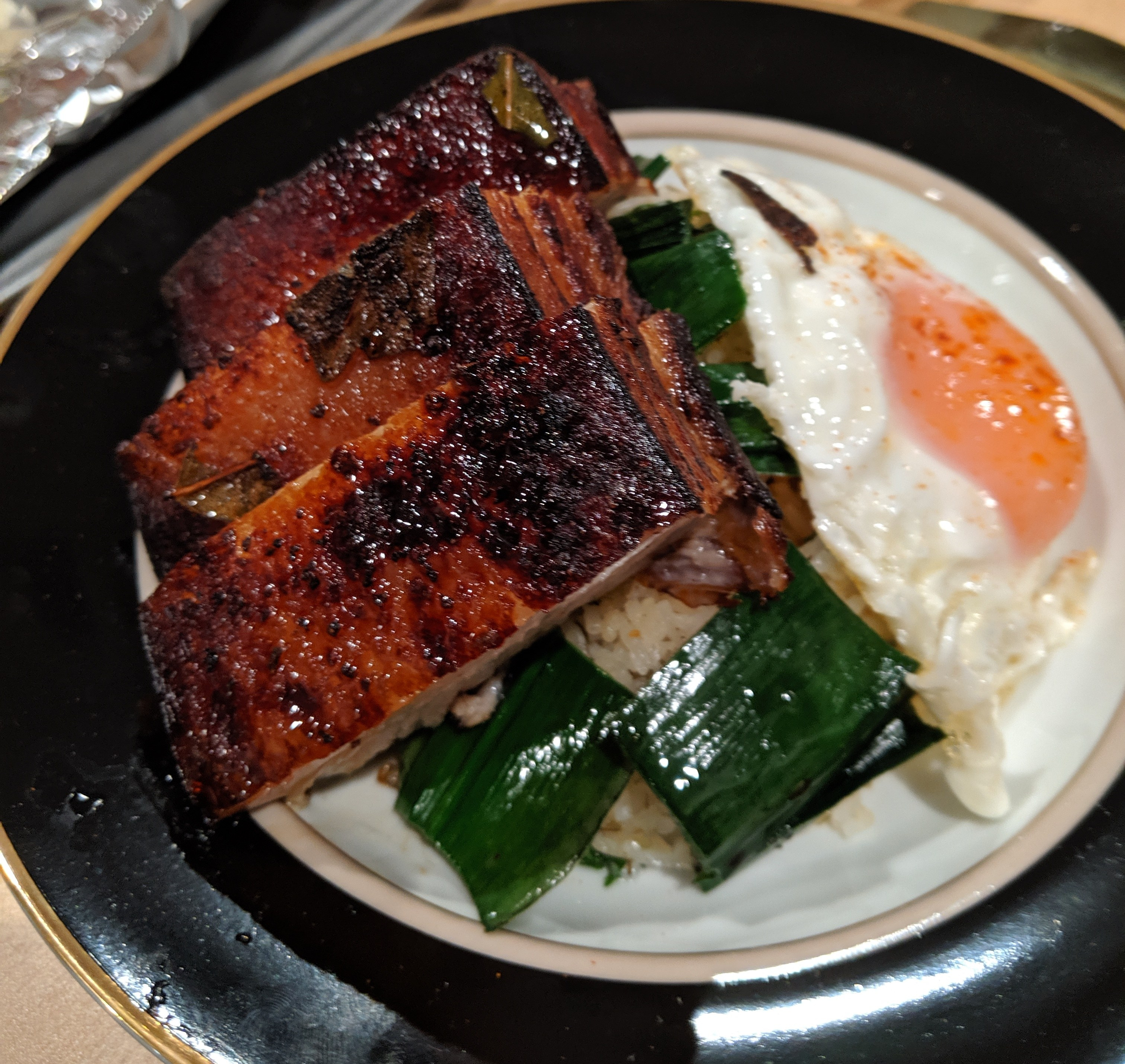
Honey Adobo Fried Pork Belly Over Herbal Garlic Rice:
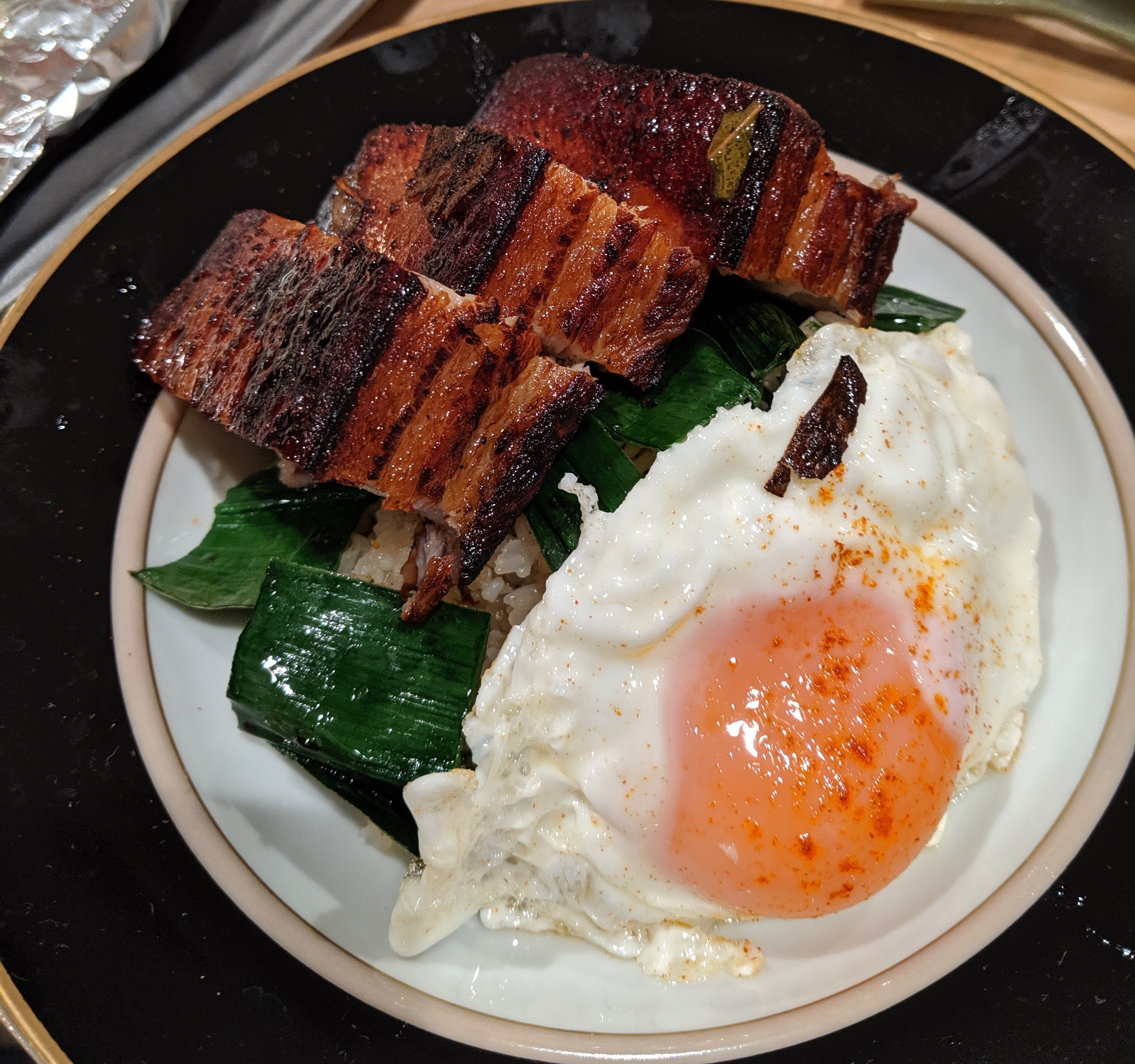
slow cooked honey adobo pork belly that is deep fried and served over sauteed leeks and herbal (lemon grass, cilantro, and white pepper) garlic fried rice with a side of cayenne seasoned egg

The main entree brings one of the most well known Filipino food terms in adobo and plays with it as a component of something greater. Honey is utilized to accent the base adobo flavor (composed of soy sauce, white vinegar, garlic, and bay leaves) as well as bridge the gap between the fried, slow cooked pork belly and fried rice. The rice brings in Asian herbal notes from lemon grass and cilantro with a touch of white pepper to an otherwise standard garlic rice. Sauteed leeks add texture while furthering the play between the pork belly and herbs in the rice. With each bite of pork belly, the intense adobo flavor is met with soft notes of honey as flavors from the rice clean the palette and inhibit a sense of heaviness from all the oils. Finally, an egg with cayenne is added for good measure to provide a rich, creamy mouthfeel.

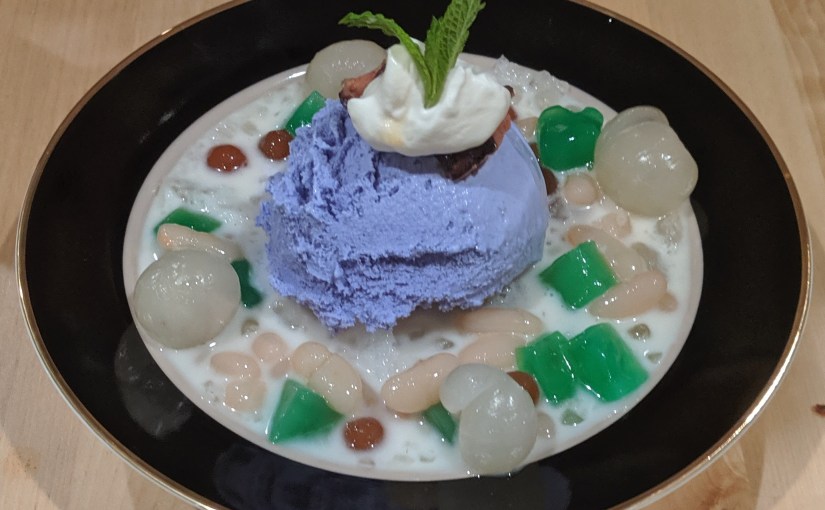
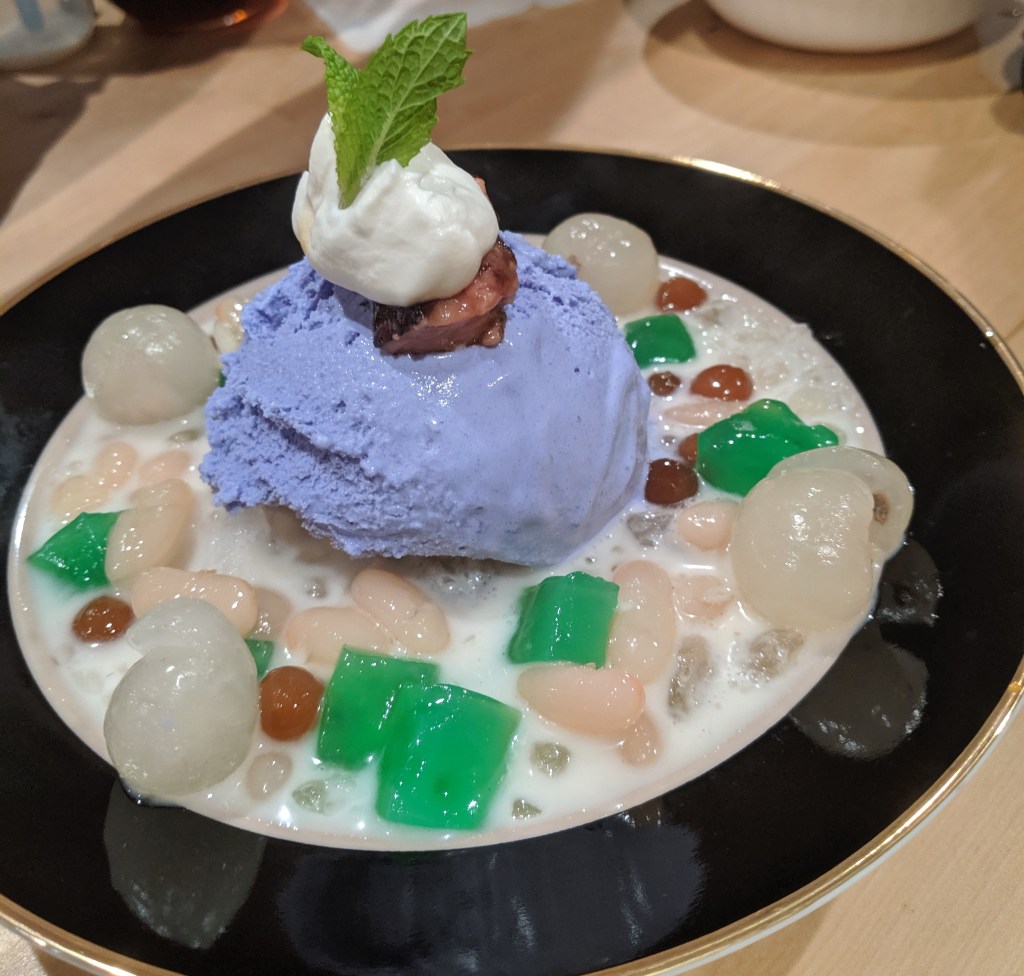
Foie Gras Halo Halo: Mint, yuzu whipped cream, foie gras, salt, ube macupuno ice cream, longan, white bean, tapioca, jelly, honey, crushed ice, and condensed milk mixed with foie gras fat

Finishing up the night was the iconic Filipino dessert Halo Halo. Deriving from the Tagalog term for mix (lit. mix mix), the dish is typically composed of ice, ube flavor, condensed milk, and sweetened jellies, beans, and/or tapioca. In other words sweet, sweet, and more sweet. Therefore the optimizations on this medium were to keep its strength as a sweet dish, while mixing in all the other flavors it was missing. Nostalgic to its roots, while functioning as a complete overhaul to the original concept. Bold savory notes are met by waves of varying iconic sweetness with unassuming citric and fresh herbal tones. A dish that represents the ideal mash up for bringing Filipino flavors into a modern world view. The bottom consists of crunchy crushed ice blended with intense umami from the foie gras greased condensed milk met with traditional pairings of tapioca, white beans, and jelly steeped in honey. The sweetness from the honey accommodates fresh yuzu cream and mint as salty bits of foie arrive with ube macupuno ice cream. Between bites, longan brings fresh fruit into the mix as a palette cleanser.

With that, my first foray into the use of Filipino flavors culminated in success. Each dish brought classic elements to the table that were well fortified by diverse cultural influences. All this resulting in an eventualized medley of Filipino staples amplified by variety in flavor, yet kept true to its iconic, aggressively bold notes. A worthy mark of my serious beginnings with a new culinary asset.

An Exercise in Versatility: Vietnamese Style Chow Mein 4 Ways

The process of creating anything is always an amazing feat as you can start with seemingly arbitrary components and end with a thoughtfully composed master piece. Well, at least that’s the goal. Going in reverse, you can recursively break down any item, while each time being able to marvel at the mess in front of you. Every moment I lay out the raw ingredients for a dish, I ask myself, “Wait, am I really able to turn all these random ingredients into the coherent concept in my mind?” The answer is usually yes, so I took the thought a step further and decided to create a dish that would be used to create another dish. I call it “dishception” (I don’t really call it that, so please don’t quote me). But all that didn’t sound like enough of a challenge, so I used the dish three different ways.

Cue Vietnamese Style Chow Mein. I was still brimming with inspiration from prior experimentation with fish sauce, so a fusion of Chinese Chow Mein with Vietnamese flavors had been occupying the back of my mind for months. Growing up in a predominately Chinese neighborhood, I had a solid idea of chow mein, but always felt there were areas for improvement. The dish was hearty, but lacked variety in flavors and textures. Vietnamese cuisine was the answer to the lack of flavors, while its role as being a part of something greater would improve its textural complexity.

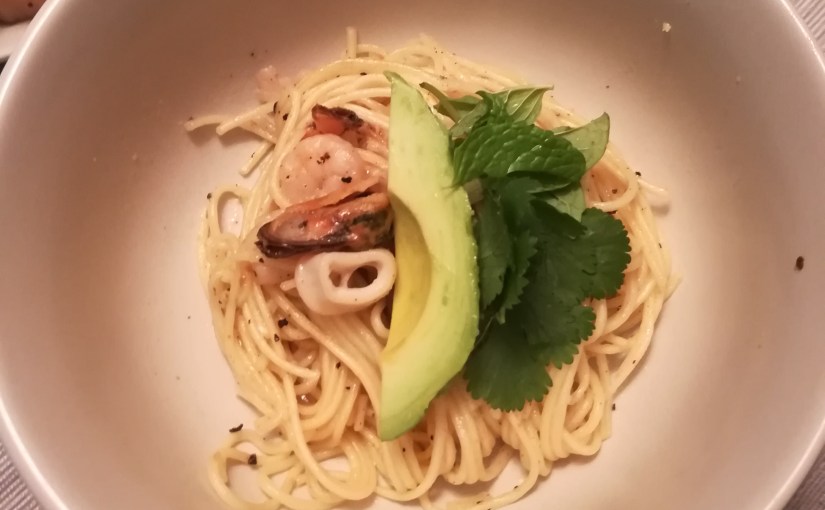
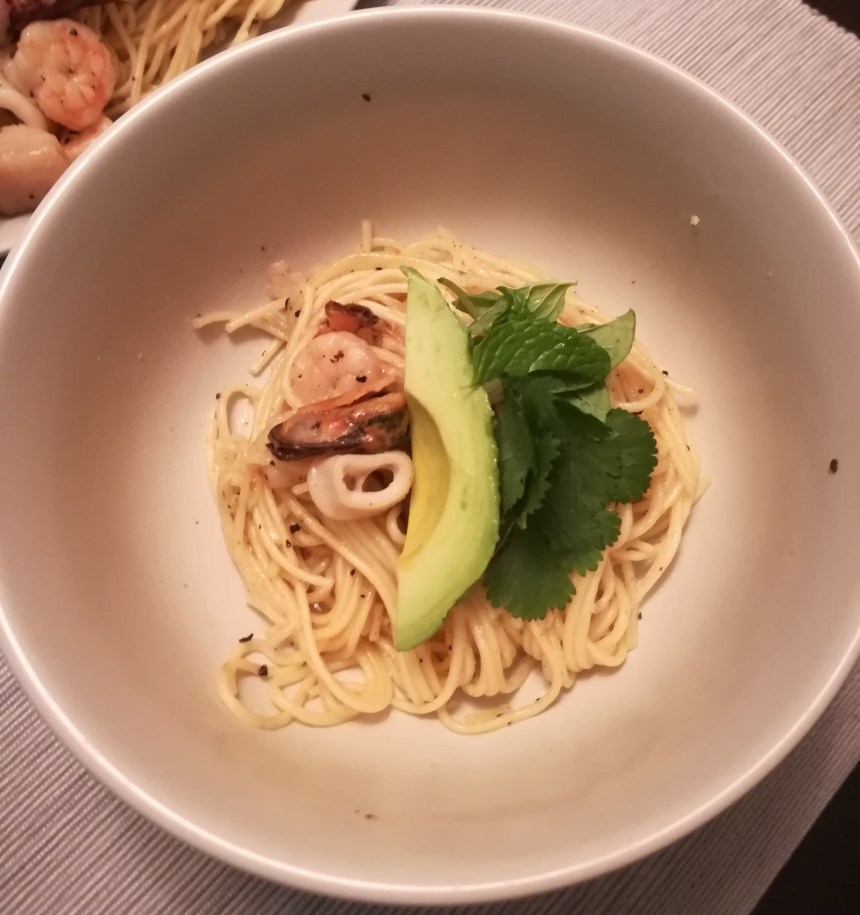
Vietnamese Style Chow Mein: chow mein Noodles, Seasoned (fish sauce, oil, sugar, white pepper, black pepper, soy sauce, lime) seafood medley, avocado, mint, cilantro

Fish sauce brought in an extra layer of depth to the seafood umami, aside herbal contrast from the herbs, avocado for a rich, creaminess, and the whole package lightened by the presence of lime. Without the aforementioned components, the dish would be reduced to a relatively light seafood chow mein. This laid the groundwork for the next three dishes that would utilize it: a slider, a lettuce wrap, and a sushi roll.

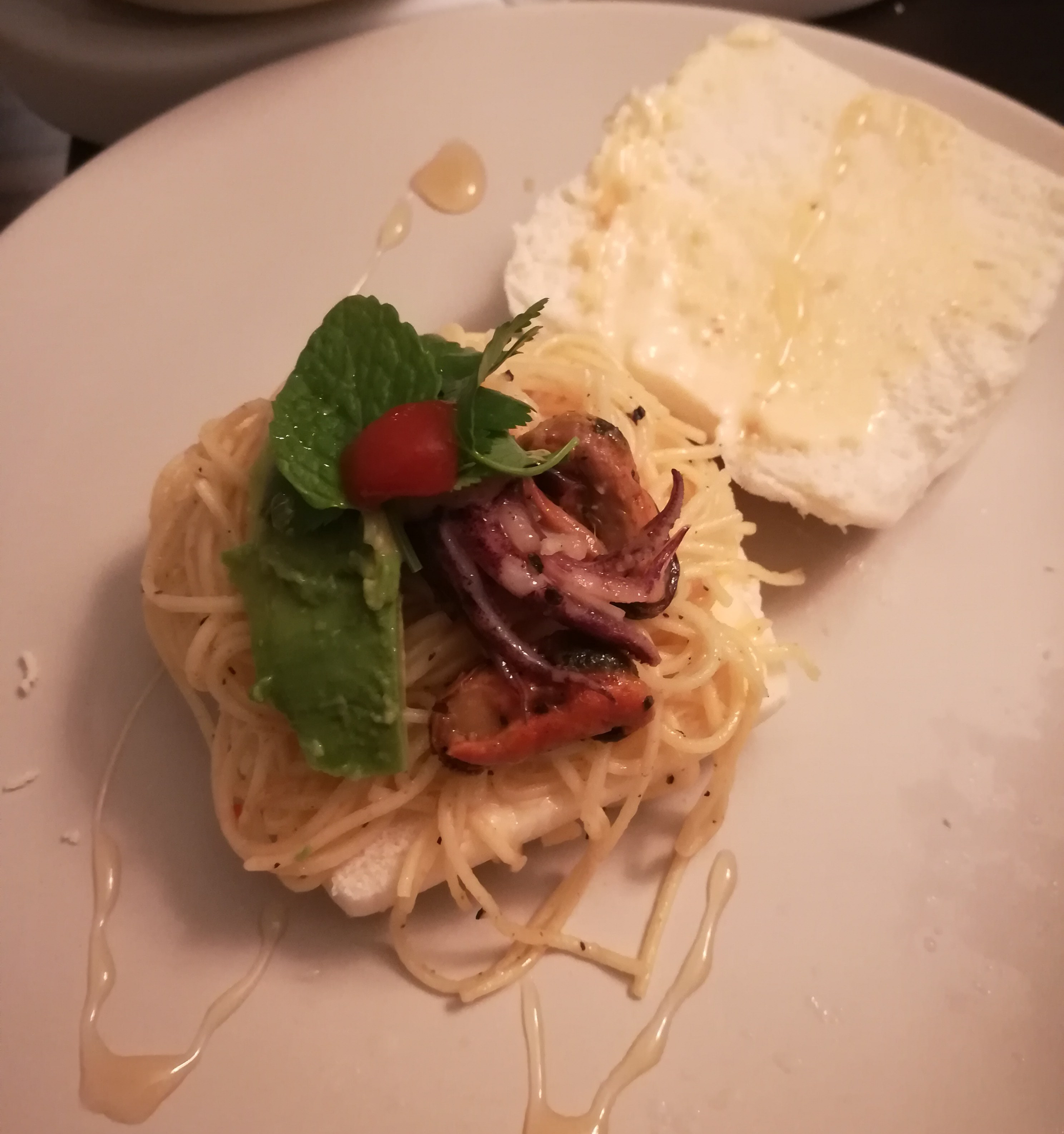
First Slide: A slider version with bao bread, Zombie apocalypse hot sauce with mayo, honey and a touch of sriracha.
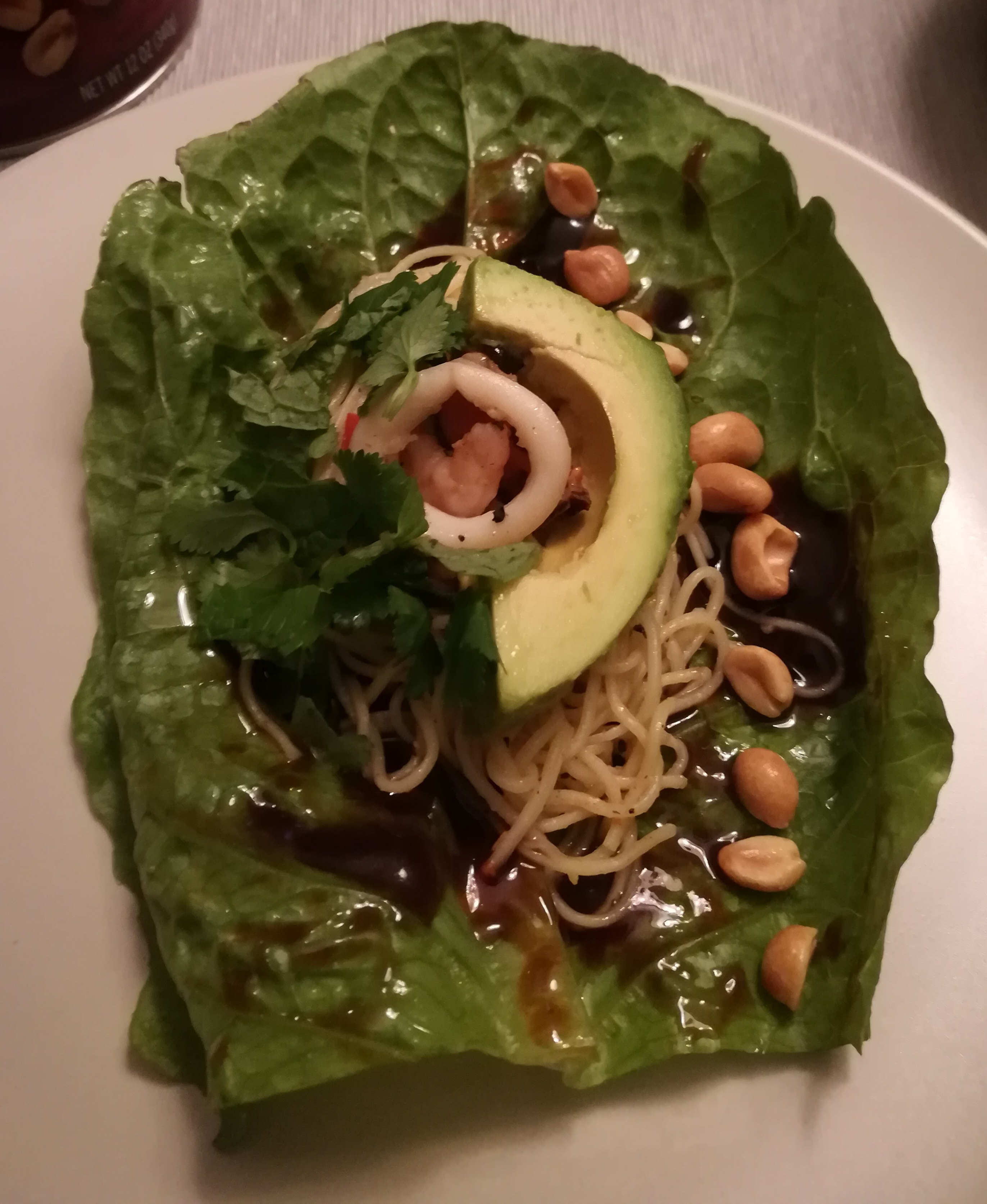
Second Slide: A wrap version with sriracha, hoisin, and peanuts.
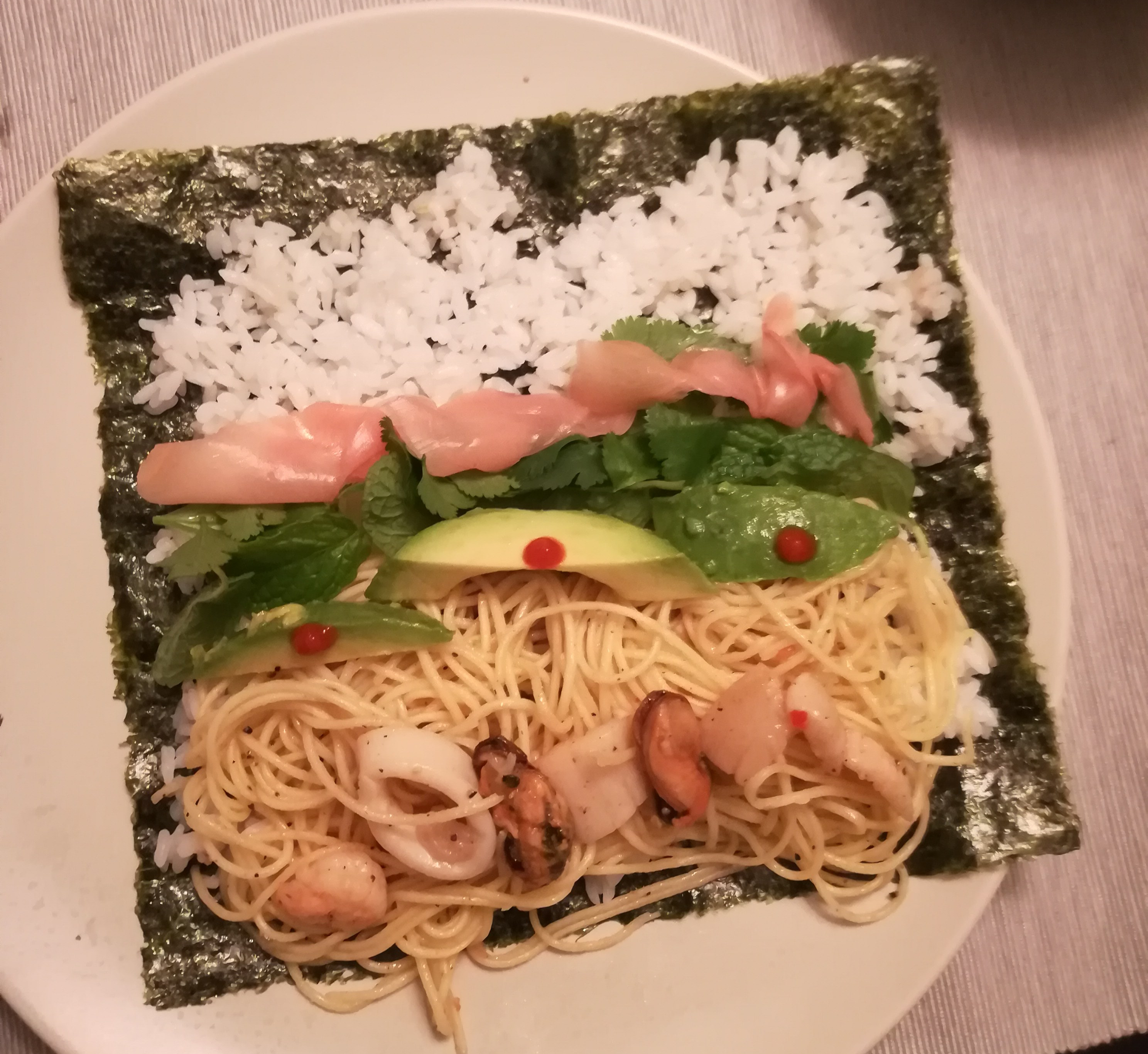
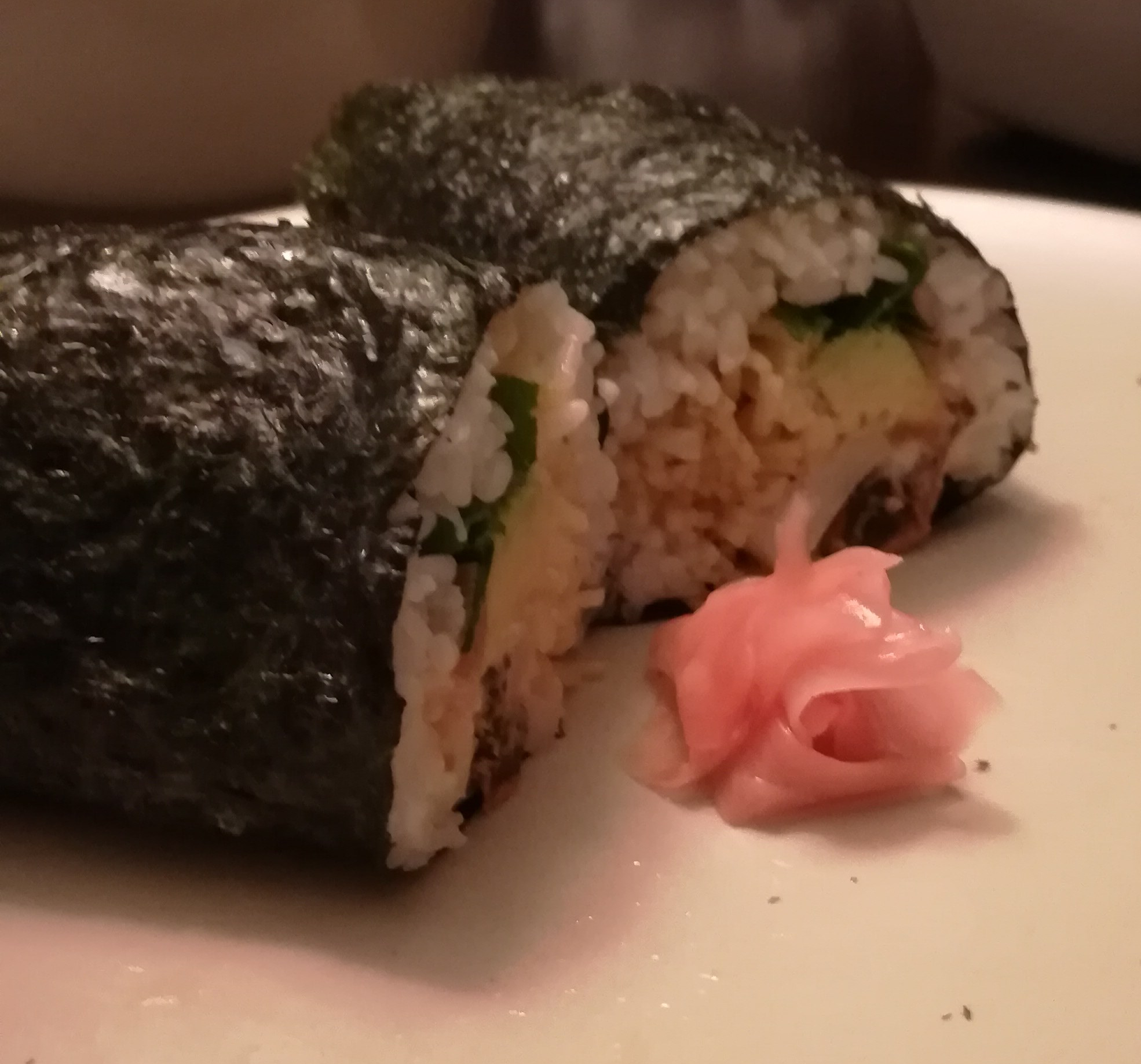
Last Two Slides: A sushi roll version with ginger, sriracha, rice, and seaweed.

Each dish was a different experience formed by the little details surrounding the integration between the format and chow mein. Bao bread demanded more flavor, which allowed for more spice and sweetness in the slider. Meanwhile, the vibrant butter lettuce’s water content called for more salt and textural variance, leading to the use of hoisin and peanuts. Finally, the sushi roll was more about bridging the gap to have the noodles feel at home in its new role by accenting the rice and seaweed with a common pairing in ginger.

Variety is the spice of life and variety within formats and small details dictated the change in experience of these noodles. With each combination of detail, the chow mein morphed until it appeared unreminiscent of its beginnings, while evoking nostalgia of its original flavor profile. The night was a successful reminder that the recursive process of creation goes in both directions. A reminder that food has more to it than what is initially seen and, like anything else, is as much the sum of its parts as it is the part of something greater.

Feasts And A Story Of Giant Dishes

I’ve always been drawn to the sight of a large feast. Dishes sprawling as far as the eye can see. A plethora of aromas. The sensory overload. Throughout history feasts were always used as a hallmark of commemoration. Think of any large scale celebration and you’ll find it largely centered around food and drink. It seems only natural to also be captivated by the concept of gigantic food. An equivalent to the concept of a feast, but with one dish as opposed to many. Or as I like to think of it, one dish that would feed the many.

There’s a certain comfort in a massive shared dish by knowing there is more than you can eat. A comfort incited by the looming certainty that your appetite will be satiated by what you see in front of you. Now amplify this satisfaction by having this experience be shared by those around you. What would have been a normal meal now becomes a communal event, and finishing that meal turns into a goal for that community to accomplish (unless of course, you’re a competitive eater). This is the magic of a gigantic dish. Together you marvel at the experience you are about to partake, indulge in its assault on your senses, and relish the goal of consuming the entirety of the creation in front of you. Call it communal eating, a big dish, a one meal feast, or whatever. Its fun in one of the most primal senses, and one in which food is truly an experience.

I first stumbled upon this format being inspired by the fusion fries craze blowing up around the time I was in college. Starting with Mexican American California fries and ending up with every ethnic french fry combination you could possibly think of. Take a meat, one or more cheeses, fries, some sauce, a garnish or two, and voilà, you have a solid concept for some fusion of fries. That sounded easy so I tried my own and shared it with all my friends. Except it didn’t make sense to make ten separate portions, so I just made one big one.

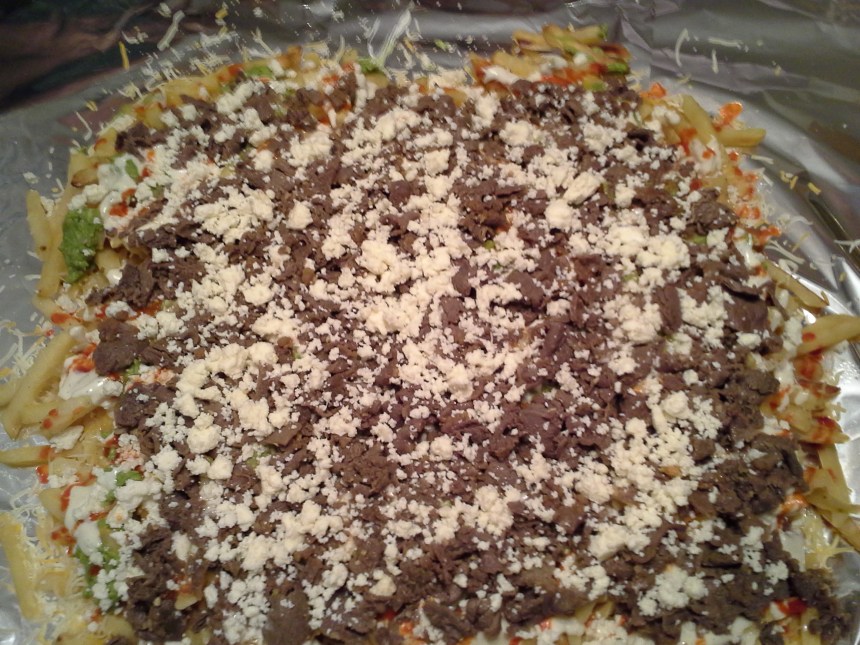
A table full of Korean fries: Queso fresco, bulgogi, homemade guacamole, sriracha, Mexican cheese, french fries

I don’t know about you, but not many things gets me quite as excited as the sight of filling the top of a table with a mountain of food. So, with the momentum going and a tad more creativity, I did it again.

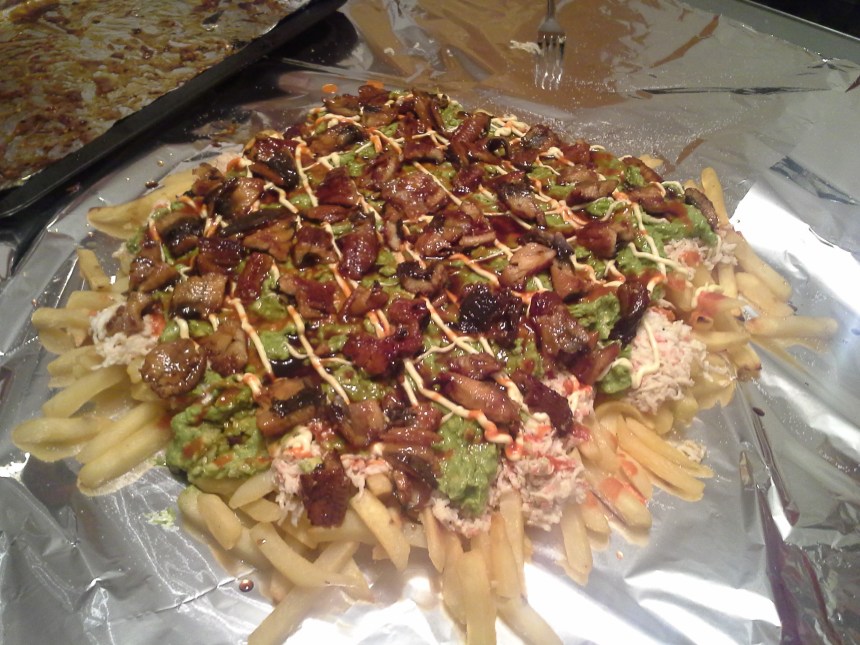
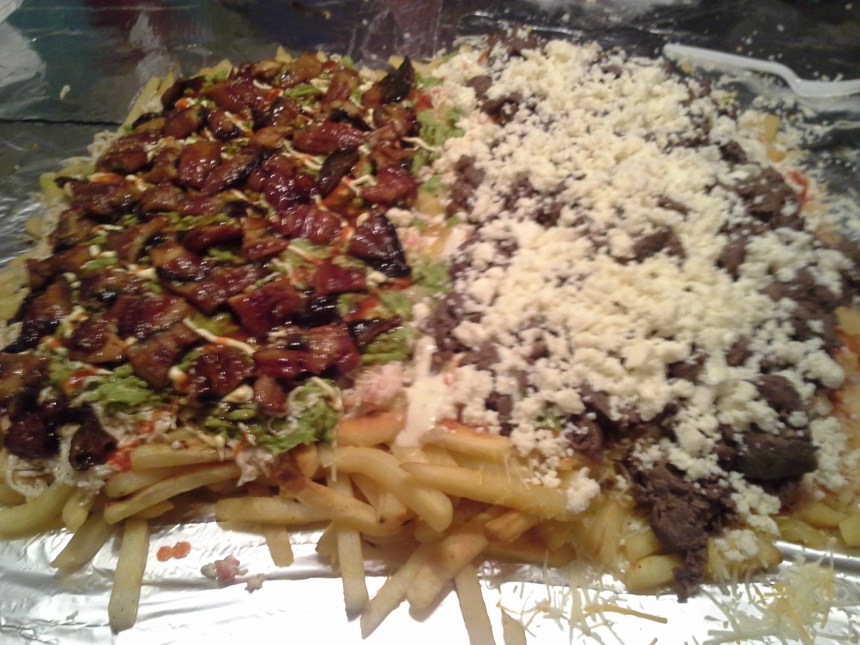
Bigger than a tray portion of Japanese Fries: Japanese mayo, unagi sauce, sriracha, homemade guacamole, seasoned imitation crab,

And, because once is not ever enough, why not have both?

Korean AND Japanese Fries (such genius)

Now getting back to doing something a little more creative…

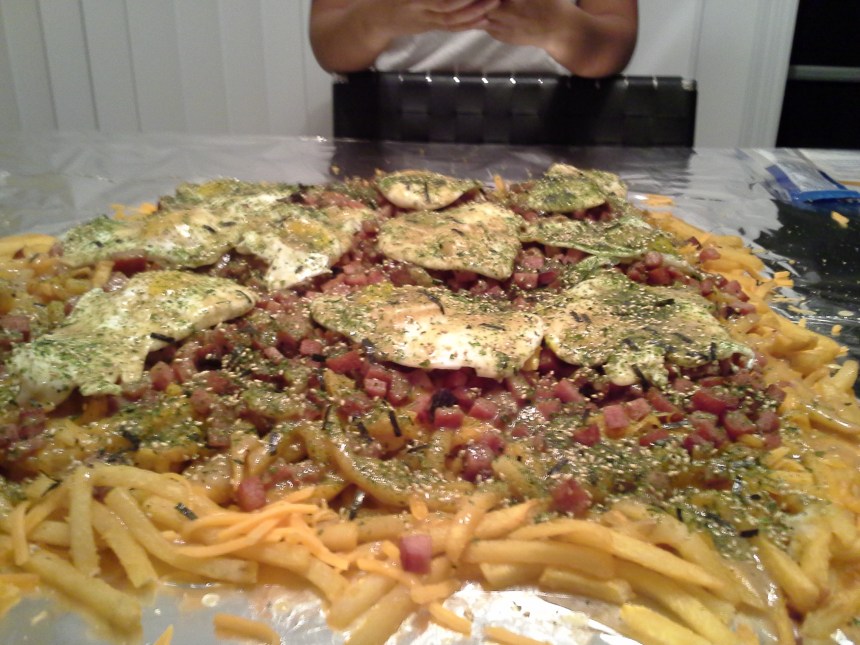
A tabletop of Hawaiin Fries: Furikake, fried eggs, small chunks of spam, homemade pineapple gravy, cheddar cheese, and fries

Then I heard of sushirittos that I envisioned being these massive sushi rolls. You can only imagine my disappointment so I had to make things right.

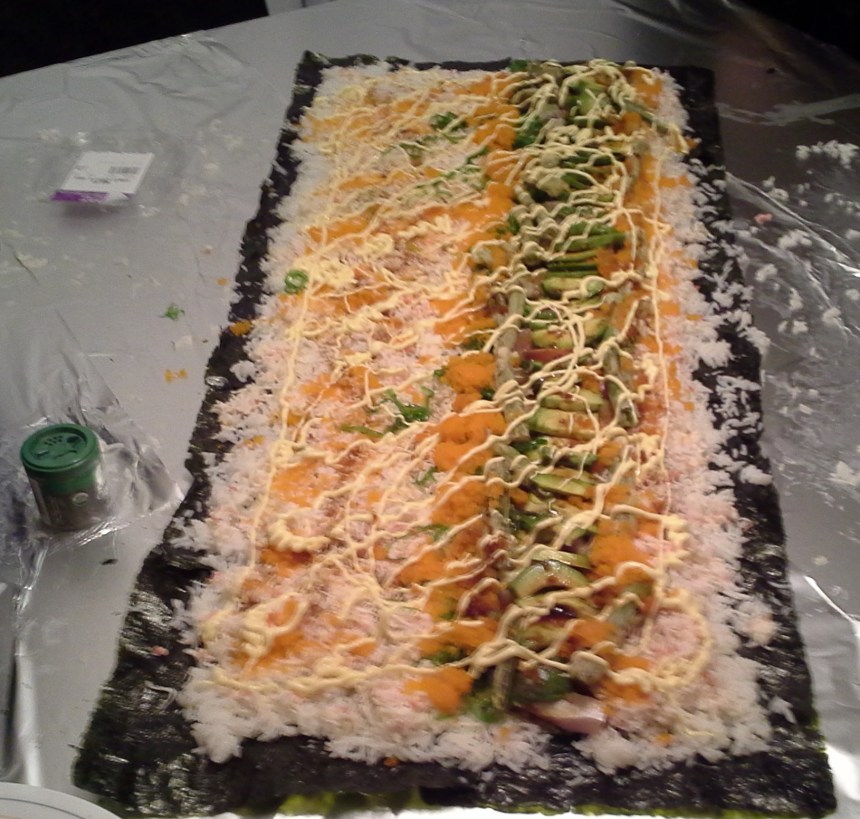
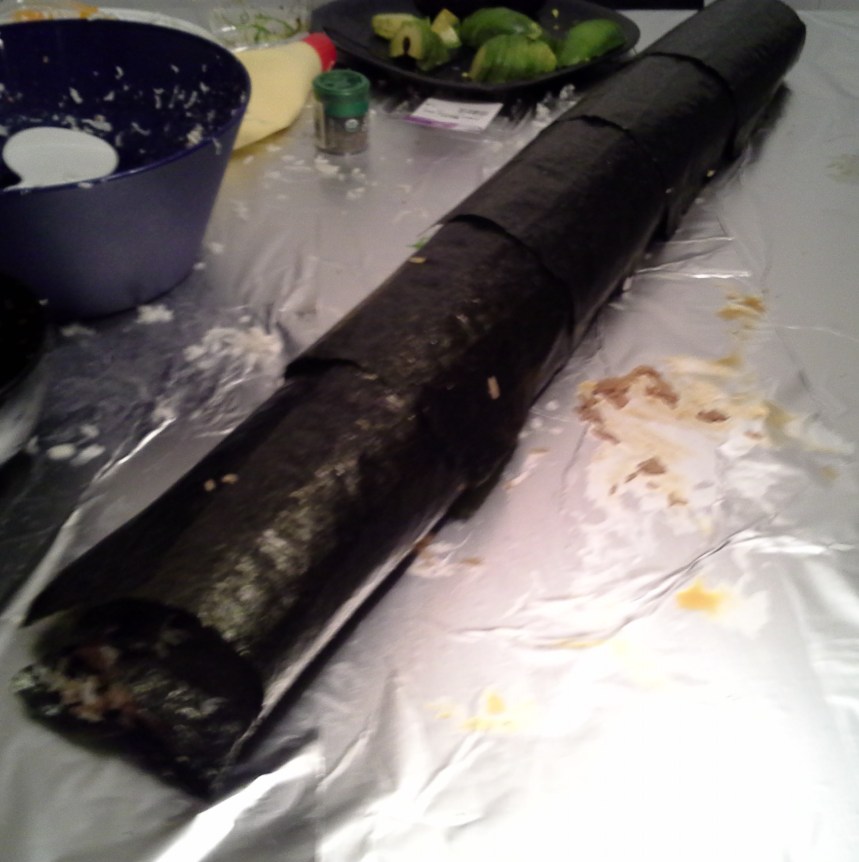
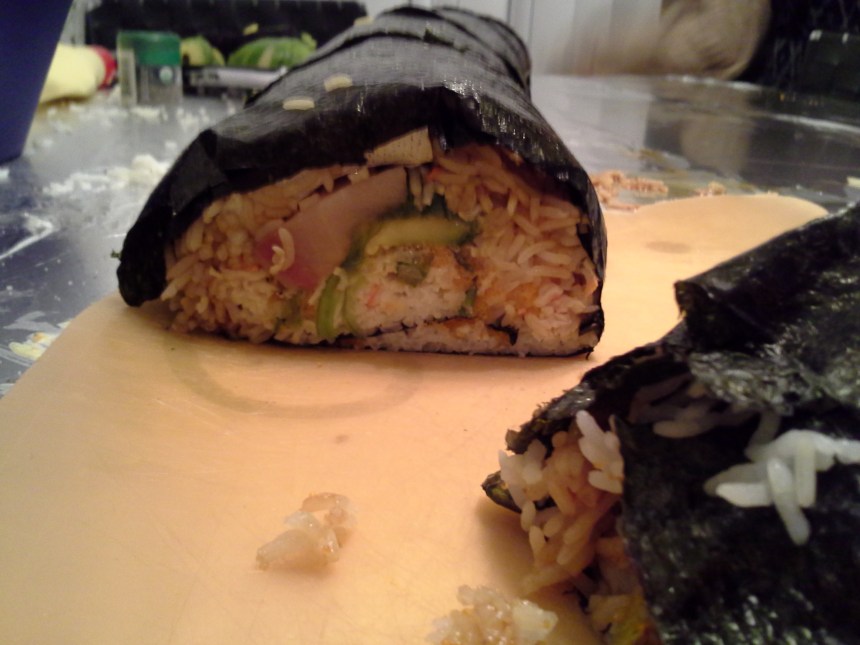
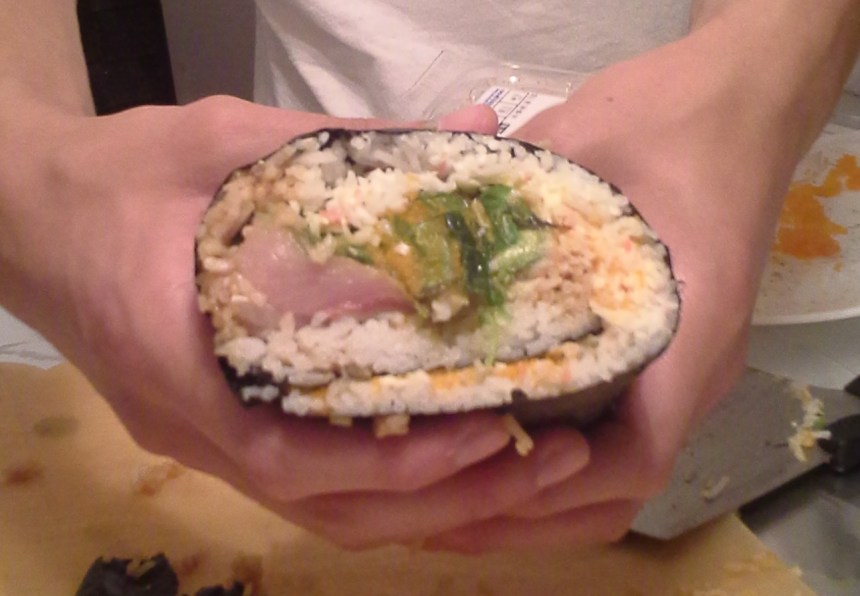
Several feet long sushiritto: Seaweed, rice, seasoned imitation crab, masago, Japanese mayo, yellow tail, tempura fried green onions, and unagi sauce

And it dawned on me I needed my entry in the giant burrito craze…

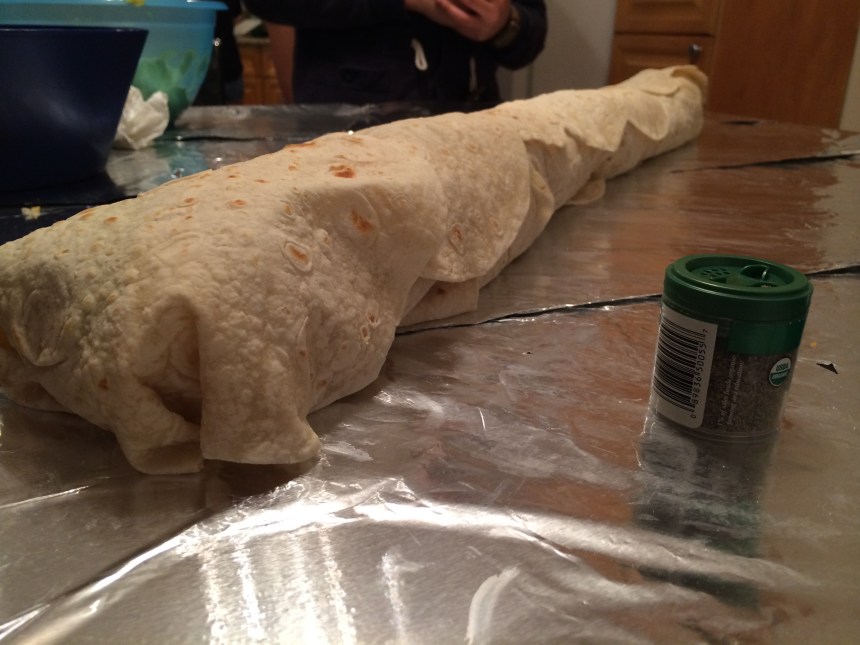
Several feet long Pork Belly California Burrito

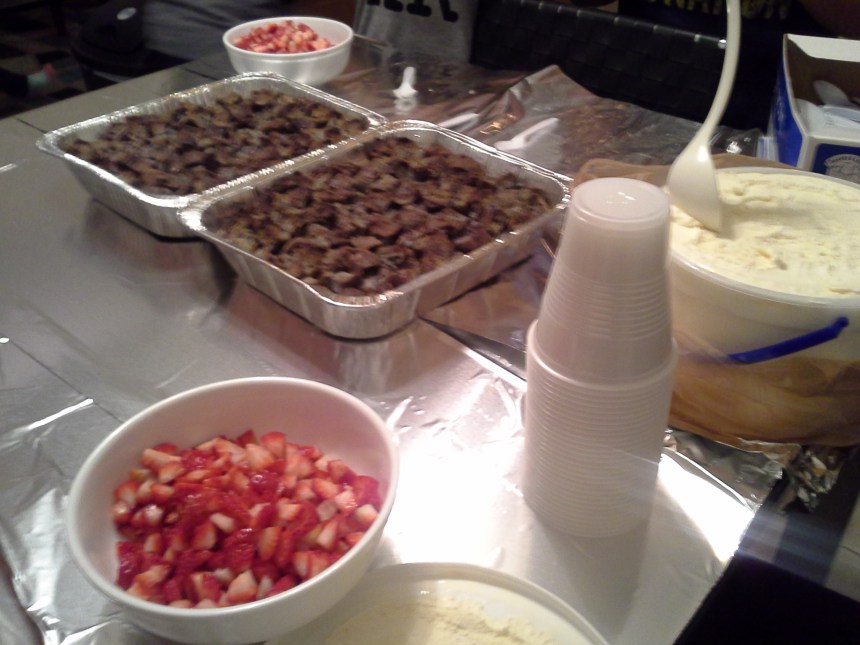
The format was quickly becoming natural instinct, which came in handy when I had too many leftover blueberry donuts (pro-tip: people don’t realize how many donuts they eat when you turn it into bread pudding).

Blueberry Donut Bread Pudding with strawberries and vanilla ice cream

As you can tell from the pictures, these were all taken during more nascent periods of my culinary endeavors and, as such, some records of these events have been lost (R.I.P. giant sundae left unfinished by a record attendance of twenty-eight people, your legend lives on in my heart). But these giant food events became a semi-regular occurrence that somehow evolved into me making coursed meals with my “staff” and the rest became history. Although I don’t frequent this format these days, there is nothing quite like throwing together one large dish onto a table and tackling it with some close friends. So, instead of having your next potluck with a million dishes, remember that sometimes less is more. You can have a million items filling that table or a table filled with one huge item. The choice is yours.

The First “Staff” Dinner

I first began making coursed after a couple events doing gigantic dishes for large groups of friends. Giant burritos, sundaes, nachos, sushirittos, fries. You name it and I did it (because who doesn’t love ridiculously sized food). But I wouldn’t be cooking if I was doing the same type of thing over and over again, so eventually it came time for a change.

I had grown enamored with the idea of doing a multi-coursed meal after seeing them in videos. Making small, detailed creations that culminate in an overarching dining experience spanning several courses just looks and feels like the apex of culinary creativity. So I embarked on this journey with a group of friends that helped me organize the aforementioned gigantic food meals. A group we endearingly called “staff”, thus giving rise to our first “staff dinner.”

My decisions for the courses were relatively straightforward. The basic thought process was to create dishes by combining ideas, processes, and ingredients I enjoyed across prior meals. All this would result in innovations on known mediums that were relatively familiar, yet distinct. Much of these early creations were also highly Asian in influence, so akin to a unique Asian fusion. Be warned that these pictures were from much more inexperienced times in late 2013 so they don’t look anywhere near the quality of something you’d see ten iterations in.

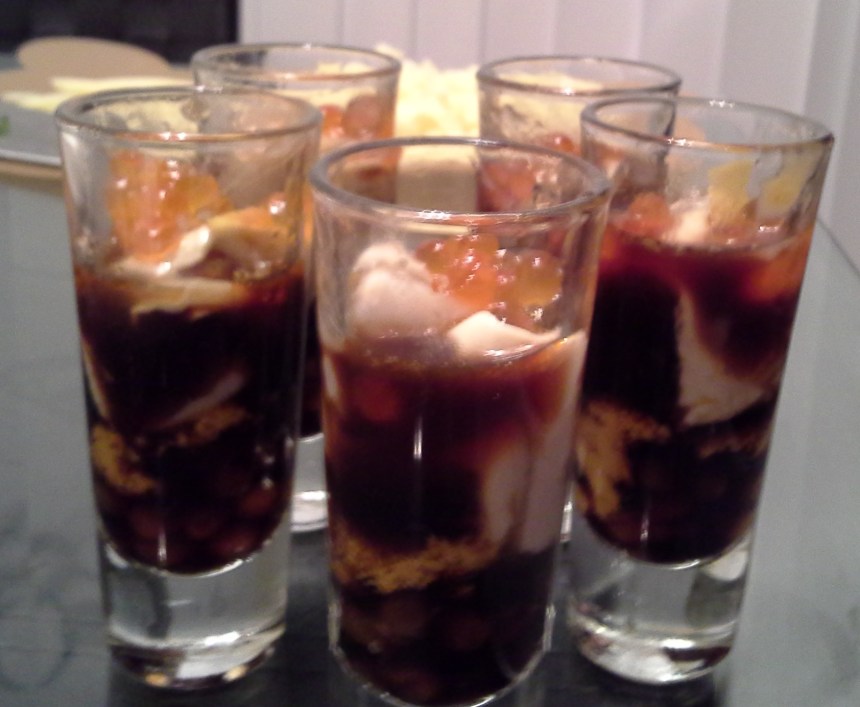
First Course: Seafood Shot

Up first was my take on the seafood shot. A staple in omakase dinners I had at the time. Oyster, salmon roe, sea urchin, and lemon rind in a glass rounded up by lightly diluted soy with a touch of sugar. The idea was to emulate each component being lightly seasoned with soy, eaten at the same time, and having all those strong sea flavors be tempered by a touch of sweetness coupled with citric bitterness coming from the rind.

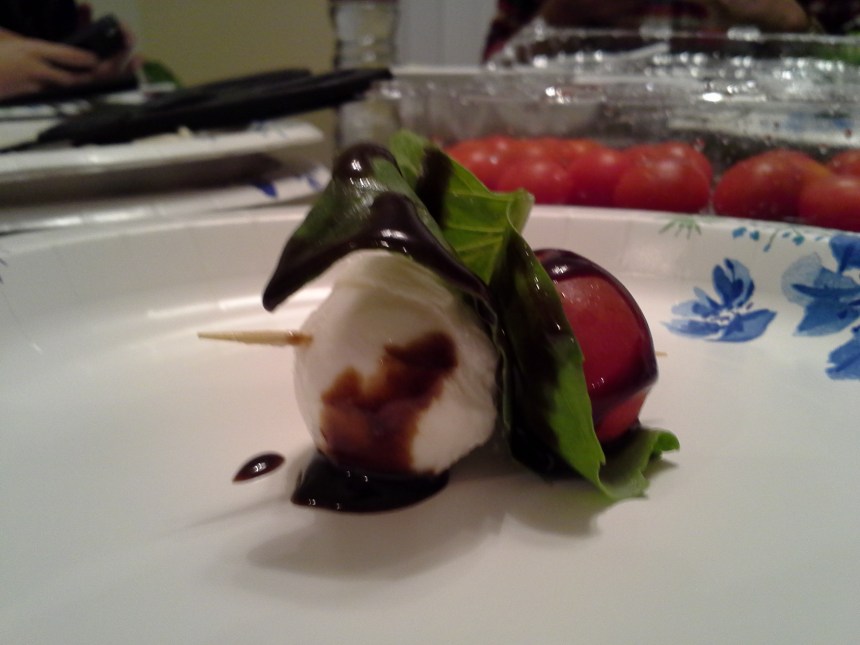
Second Course: Balsamic Hoisin Caprese

Next was a salad appetizer. Given the smaller nature of these dishes, I chose the most commonly used salad type appetizer, caprese. The dish needed a unique spin on it, so I blended some hoisin with some balsamic to create a sweeter sauce that accented the tomatoes while still complementing the basil and mozzarella. All this resulted in a familiar take on the classic Italian combination, but with a strong tug of Chinese flair.

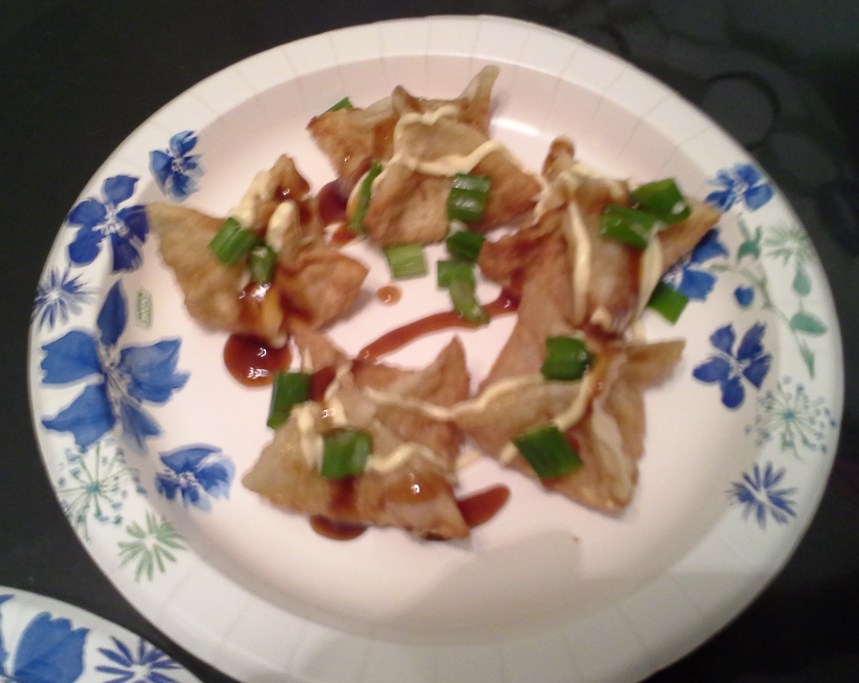
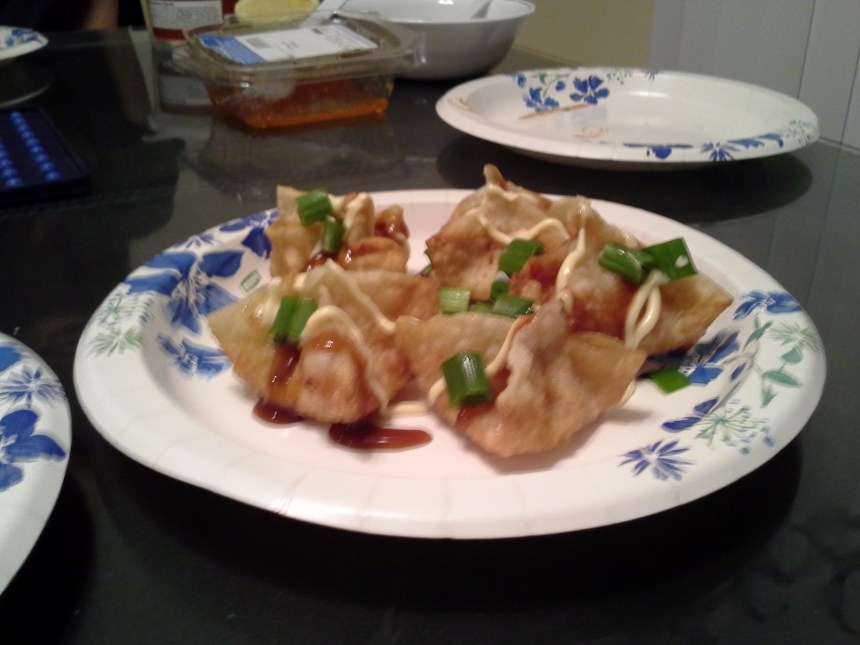
Third Course: Curry Cream Corn Wontons

The third course would be the most memorable creation of the night. I had loved the curry creamed corn I had multiple times at Tokyo Fried Chicken Co and knew I wanted to take that dish further. Packaging all of it in a crispy layer seemed like the best way to bring a nice textural contrast, so I decided on filling a fried wonton with the mixture. In my mind, I felt like sauce was necessary to tie the whole thing together. Being that it reminded me of takoyaki, it was only natural that I topped with takoyaki sauce, Japanese mayo, and green onion. Reaching beyond its components, the overall package was compact and pleasing as the toppings would bring to mind takoyaki, while the filling would bring to mind a Japanese Southern experience. With each bite, strong notes of creamy curry would come bursting out of the crunchy wonton as granules of corn burst with sweetness.

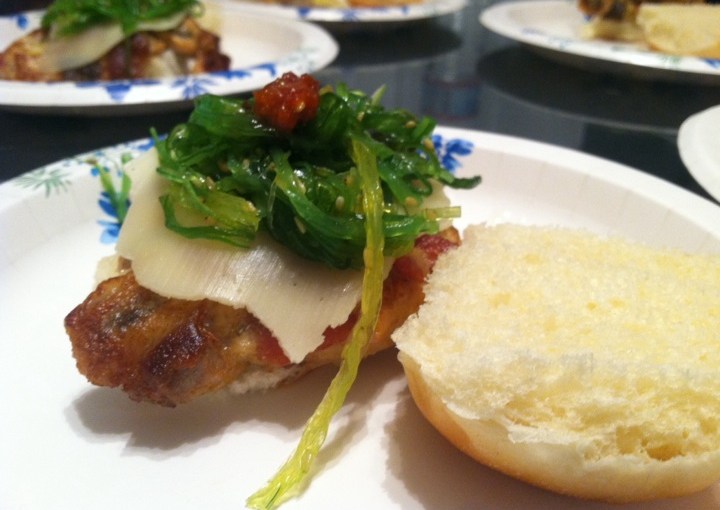
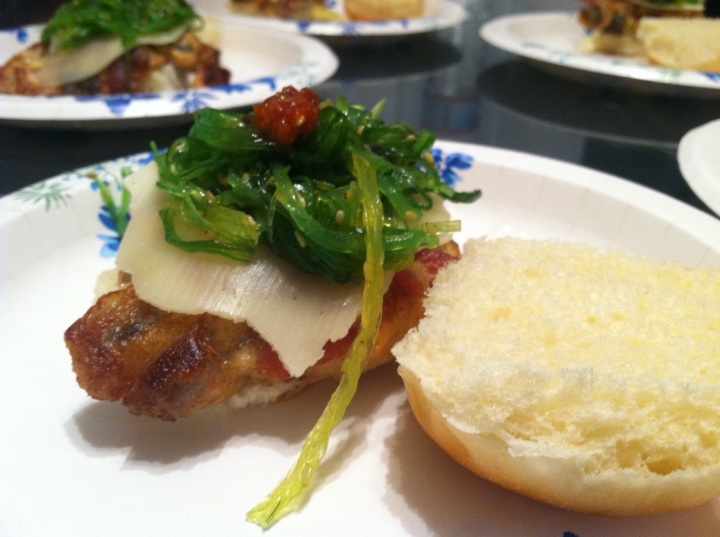
Fourth Course: Salmon Patty Sliders

Following the wontons was the main course, the salmon patty sliders. Burgers are an iconic staple of heartiness and filled with so much possibilities given their versatility. A slider was the smaller version of burgers that would fit more neatly into this coursed format. I settled on salmon skin being the centerpiece as it was a tasty, cheap part of the fish that I had been enjoying throughout my college days. To amplify the richness of the fish, I formed a patty that combined the fish with crispy bacon using egg. Completing the slider was provolone cheese to bring the creaminess, seaweed salad representing the greens, and a touch of sriracha to add some heat as the sauce of the dish. All this was contained by a sweet Hawaiian roll. With each bite, the crunchy multi-meat patty would be accented with the salt of seaweed , balanced by creamy cheese, spiced by the sriracha, and finished with the starchy, sweetness of the roll.

Fifth Course: Tempura Brownie Covered Vanilla Ice cream

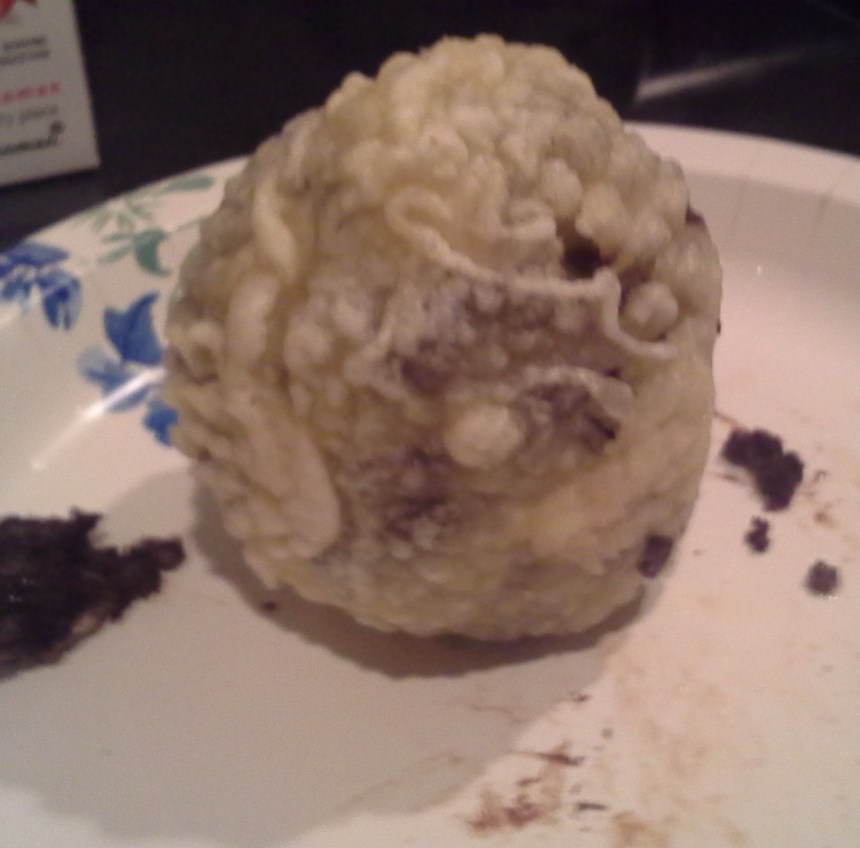
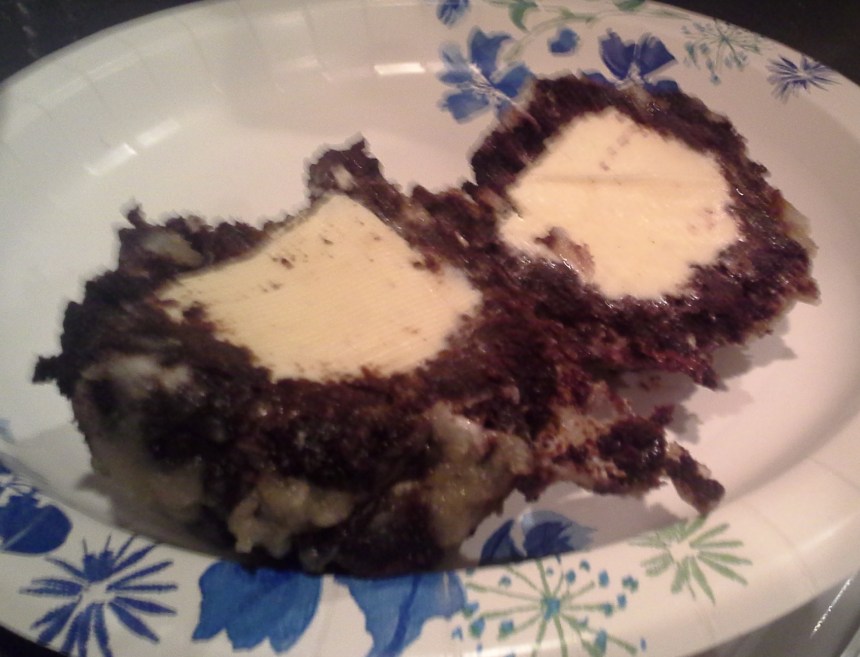
Ending the meal was a combination of things I loved the most. Brownies, ice cream, and fried things. In typical fashion, I had decided I wanted it all. So I got vanilla ice cream, wrapped it in a rich, dark chocolate brownie, and fried it in tempura batter (sometimes simplicity really is the answer). Given my inexperience with frying ice cream and making tempura, the result was the monstrosity you see here. Airy tempura meets dense brownie with a cold creamy filling. A bit crude, but you can’t go wrong with this.

And that concluded the first chapter on my journey of making coursed meals. I had completed the challenge I set for myself, and looked forward to improving on my ability to deliver within the format. It was rough around the edges, but true to my desire to make new things I wanted to eat based on dishes I have enjoyed. Next up was to create a multi-coursed meal that would be unified under a theme.