Making a Food Product

Cooking sucks. At its worst it is following a whole lot of steps with some mistakes resulting in a catastrophic failure (a friend told me a story of unintentionally making an exploding brownie) and at its best it is trying to achieve some creative vision by coming up with a whole lot of steps to follow with some mistakes resulting in a catastrophic failure. Those familiar with the craft may state that the probability of catastrophic failure goes down with practice or familiarity, but following a bunch of steps to achieve a known result sounds more like the domain of expertise of a robot than that of a human.

I know there are many that find therapy or joy in the process of precise mastery in culinary arts, but for me almost all the fun is in the creativity. Yes, that involves failure. Yes, that means there is greater risk. My biggest problems with cooking are not those of failure and risk, but of achieving something worthwhile only to have my stomach drop at the thought of manually reproduce that result. Maybe its my programming background speaking, but if I’m going to spend a portion of my life creating something great I sure as hell don’t want to spend the rest of it repeating that process. And no, I’d also rather not have someone else spend their time doing it in my place.

Cue Food Products

Now I don’t think making a food product solves any of the aforementioned problems completely at this time, but I do believe this is the right direction. My dream is to one day have robots produce recipes via 3D printers. This would allow free reign for the creator to specify their designs and let the computer handle the rest. That being said, those dreams are still a ways away and, if I’ve learned anything about achieving anything, its that moving in the right direction is better than spending significant amounts of time trying to figure out if its the best answer.

The idea of a food product does introduce a couple complexities that boil down to two short question: What? and How?
Think Simple and Effective

Luckily, I already answered the first question as I found out about an ongoing craze with no signs of slowing down over the years. Salted egg chips. They are relatively simple, have a market fit (almost everyone loves chips and Asian snack foods), and there is a gap in the supply and demand. All that’s left was the painstaking process of how to cook it. Just kidding, that’s the easy part.
The rabbit hole of “How”

The first step is coming up with the recipe. This goes like creating any dish. Think of what you want to make and grab whatever ingredients you need to enable that vision. Rinse and repeat until you receive the desired outcome.

Now that the chips have been actualized, the real “fun” can begin. Have a successful prototype of the chips? Great, now break down every step to make it noting every ingredient, cost, measurement etc. Made it once? Excellent, now scale it. Have a bunch of chips? Time to figure out some packaging. Wow, that’s neatly packaged, but how much does it cost? How about last? Does it really last that long? What’s in it again? Will someone buy it? Can you actually sell it? No, I mean can you ACTUALLY sell it?
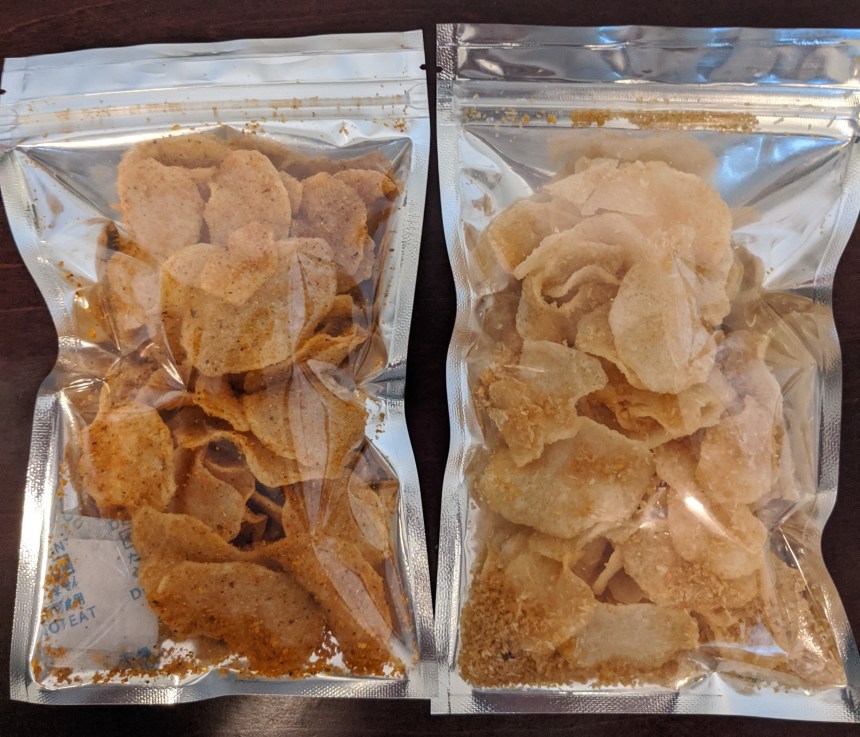
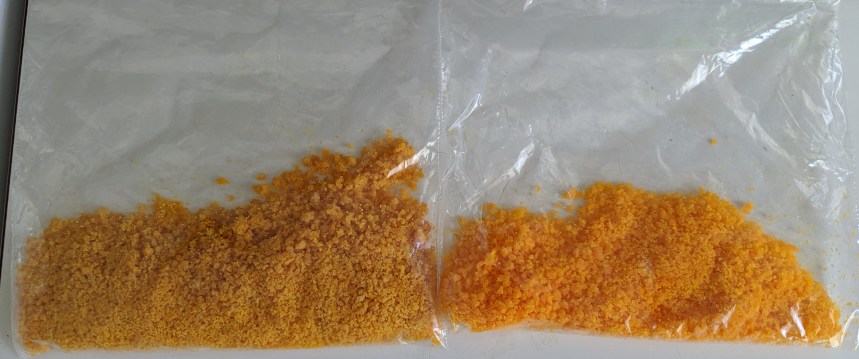
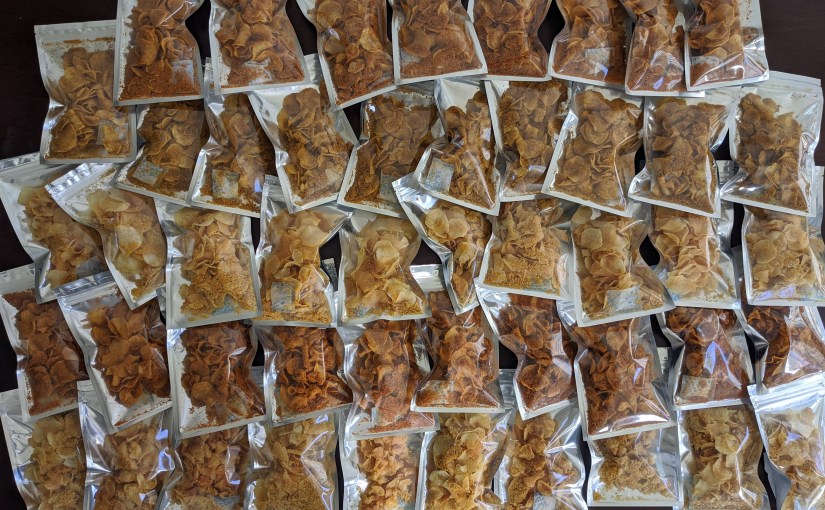
The first two packaged units: Curry Salted Egg on the left and Original (coconut yuzu) Salted Egg on the right

Now that I’ve brought up the many questions I’ve had to dwell on in many spirals of anxiety, the good news is there are answers to these questions. The bad news is that they don’t really make anything easier.

Some Logistics

I live in the U.S. and, like many countries, this means that food is regulated. More specifically, I live in California, which means that the regulations have regulations. So as you can imagine there are tons of processes in place and logistics to follow. All these requirements funnel into two officially approved approaches:

  1. Make the food product myself in an approved facility
  2. Formulate a recipe to have the production be done by someone else

By going through one of these two strategies, I’d have salted egg chips that I could officially sell to the general public. That of course was what I thought before my local farmers market aptly requested if “I had the necessary paperwork done.”

Bureaucracy at its finest

The paperwork associated with the selling and distribution of food boils down to a surprisingly focused set of requirements. Clearing the requirements to prepare food to sell means either having or renting a pre-approved space. Gaining approval sounds like a lengthy, tedious, and expensive process so I decided to find a commercial kitchen that I could sign up with.

Now, if I’ve learned anything about working with a commercial kitchen its that ghosting isn’t just some online dating trend. Seriously, I have had every kitchen I’ve tried to work with completely ghost me. And I don’t mean that they just never responded from the get go. It’s as if they brought my hopes up until the very moment things could begin taking shape before completely ignoring any means of communication with me. That being said, I was able to talk to one kitchen long enough to become aware that I’d need to visit the local health department before working with any kitchen. I could only hope that I’d have better luck there.

The local health department was actually a breath of fresh air as they have been the only food entity I could actually somewhat consistently get a hold of. They educated me on all the forms and processing fees that I’d need alongside the insurance/security deposit fees and hourly usage rate with the kitchen. Unfortunately it didn’t end there. Remember that one detail about making a salted egg chip food product a.k.a. a packaged food product? Apparently, it’s a bit different for that.

Accurate representation of what all the paperwork and documents feel like.

As many might guess, a packaged food product comes with a few more requirements compared to your locally prepared food stall sandwich. Most of these have to do with packaging standards and labeling accompanied with the caveat that processing this form takes at least 3-6 months. Not enough of a deterrent for you? Well, there’s more. It’s also by far the most expensive part of the process. At $500 paid up front just for the processing, it isn’t obscenely expensive, but you have to remember that, as an experiment or for the average person that can’t afford an unexpected expense over $400, its money sent without knowing when or IF that small investment would pay off. Also there’s still the initial cost of raw ingredients, security deposits, insurance, packaging, any additional tools, hourly rate, time, etc.

What are the other options again?

Get someone else to do it. I never really considered this as an option as I found myself finally in contact with a food business consultant agency to know more about the options out there (I should add this was 2 months after my initial inquiry to them). They told me most of the details I already figured out around the two approaches I outlined, but I actually got to find out exactly how expensive it would be to go with the second option (tens of thousands of dollars depending on how much of the process you wanted someone else to be involved in). Also, they confirmed my suspicion that I had already contacted all the major commercial kitchens available in my area. You can only imagine all the motivation this conversation gave me.

The agency eventually pointed me in the direction of a food scientist I could talk to about what it would look like to take the outsource approach. At least I assume that’s what he would have done if he didn’t ghost me when we were supposed to schedule a meeting. I had to cut him some slack though as it was the middle of a pandemic.

Honestly, I would never use any of their services anyway unless I was ready to go all in blindly staking everything onto the project. Networking is an invaluable asset at its best and a scam when done for the money. Unfortunately, it looks like I’ll probably never find out which side they were on.

This was solely an experiment I was planning to incrementally scale, but it was nice imaging having someone somewhat vested in my success.

Newfound Respect

I’ve been really humbled by the experience of trying to bring a food product to market. On one hand I’ve felt great pride in the packaged units I have produced, and on the other I feel like I never really got anywhere close to making an actual food product. It’s a great reminder of what many small businesses have to go through to just get up and running. I’d love to join them with this food product that I know can compete out there, but at this point I can’t say I have.

I originally wanted to release my experience as a success story of me overcoming the odds and having my own product out there, except I’m not quite sure where I want to go from here. I feel lucky to have had many people show interest throughout my various levels of prototypes, but mentally it’s hard being alone out there navigating through all these requirements and getting no responses with people you’re supposed to work with. And most of that was before the pandemic ravaged the food industry.

Once everything settles down I may find the perseverance I need to complete this project, but for now it looks like its just lessons learned to a better future. A future currently with a couple less salted egg chips.
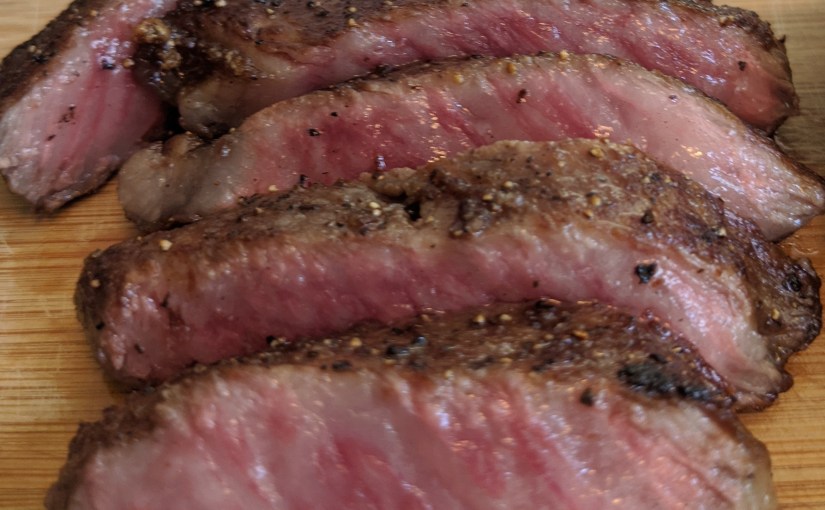
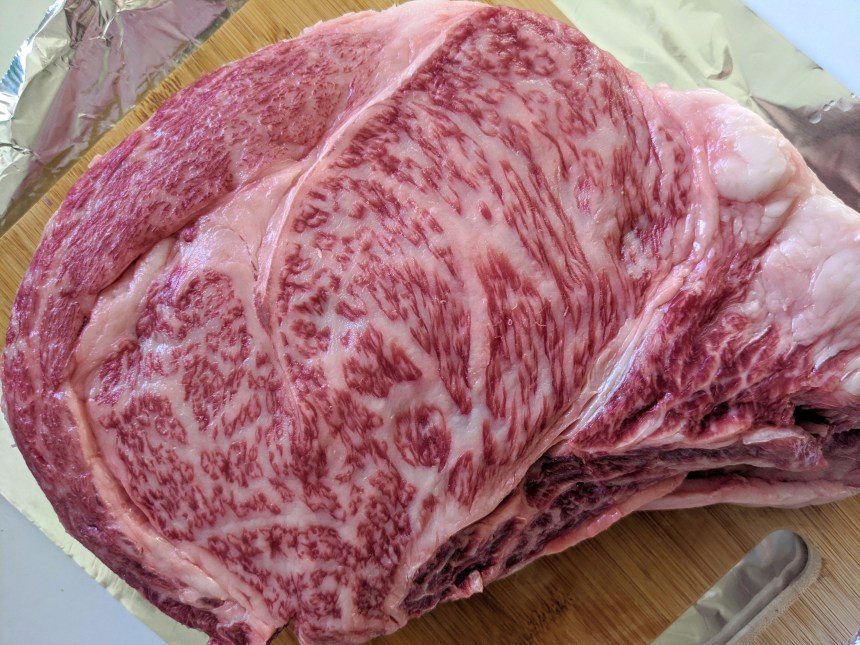
Decadence In the Rough: A5 Wagyu Beef

March 2020 marked the beginning of an unprecedented pandemic and with it came a flurry of repercussions. Difficult times call for clever adaptations and never was this more true than with the food industry. Restaurants were shuttering with many not knowing when or if they would open again, but amongst the plethora of problems came a forced evolution. Businesses now looked for every opportunity to survive. Suppliers of the now shut down fine dining establishments began delivering their wholesale products to the average consumer.
Death By Wagyu

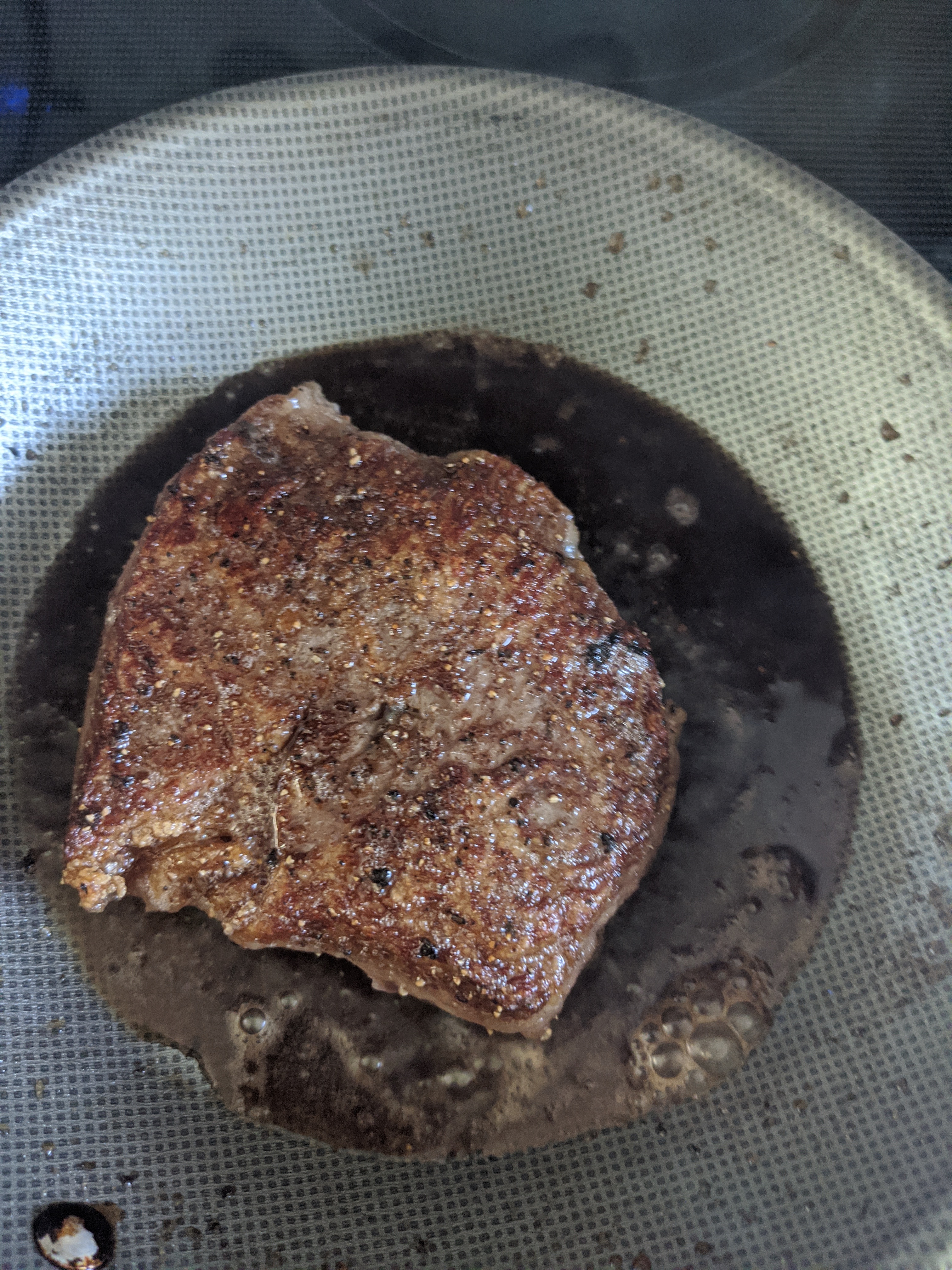
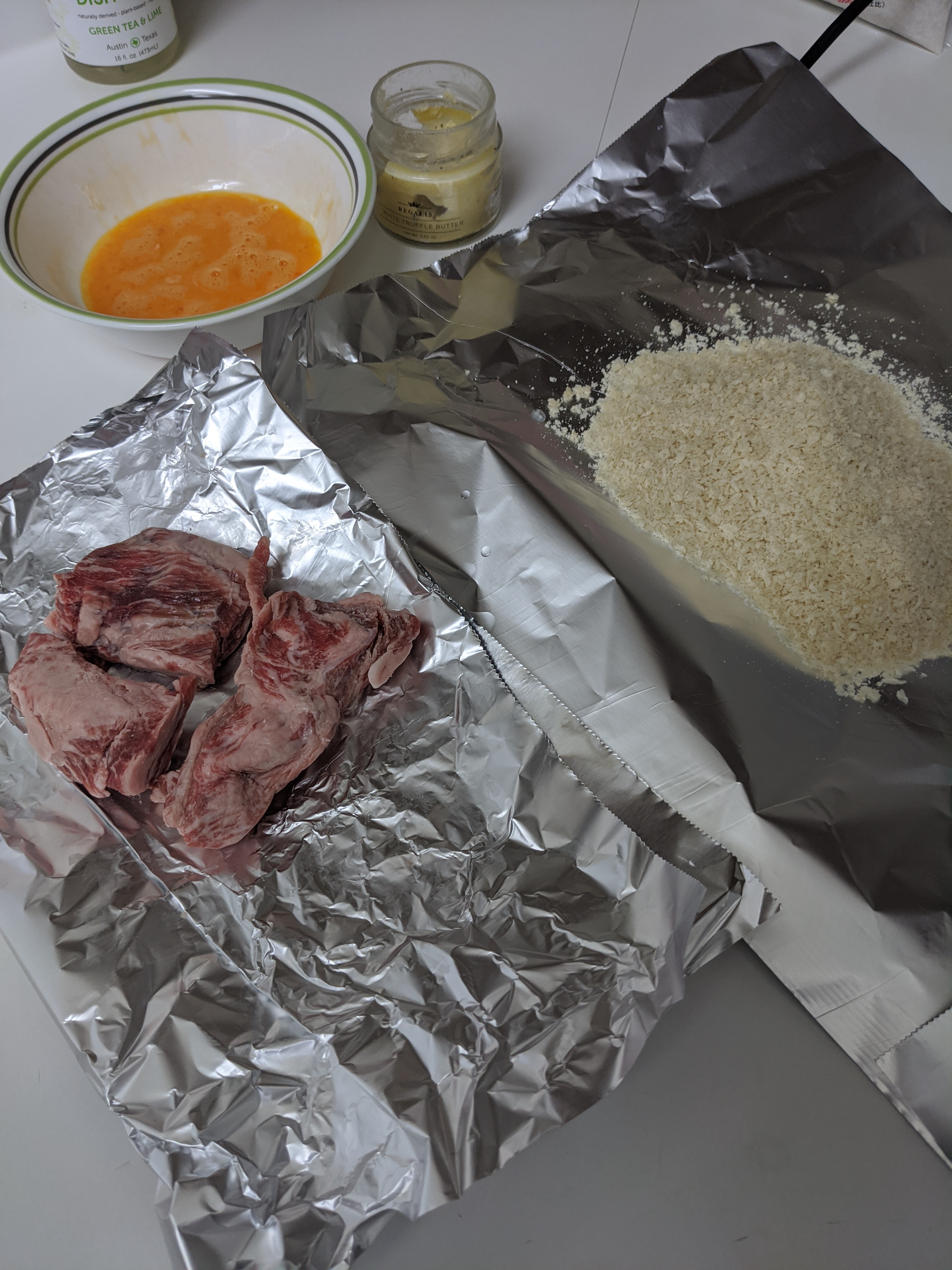
5 pounds of A5 Miyazaki Wagyu

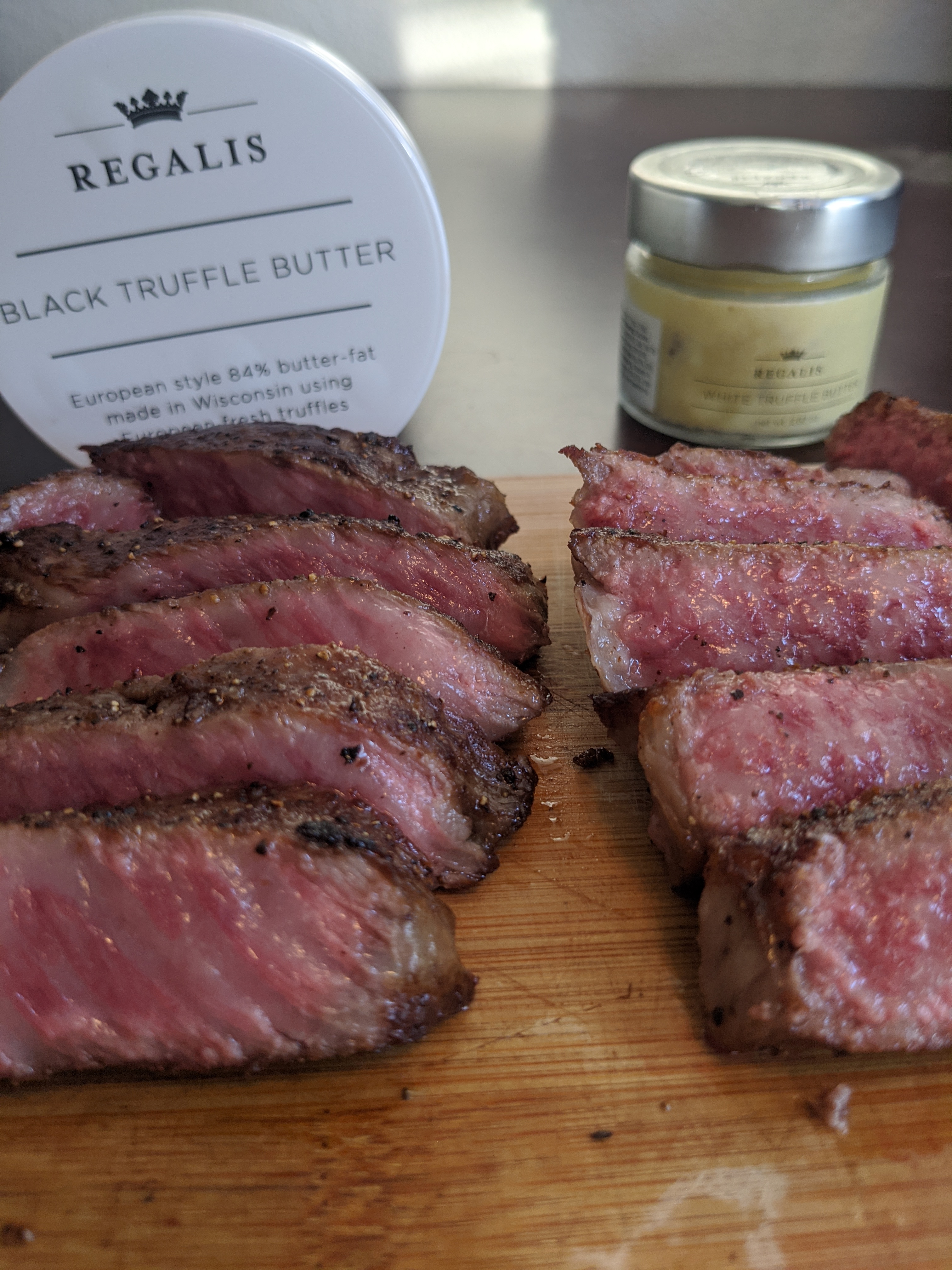
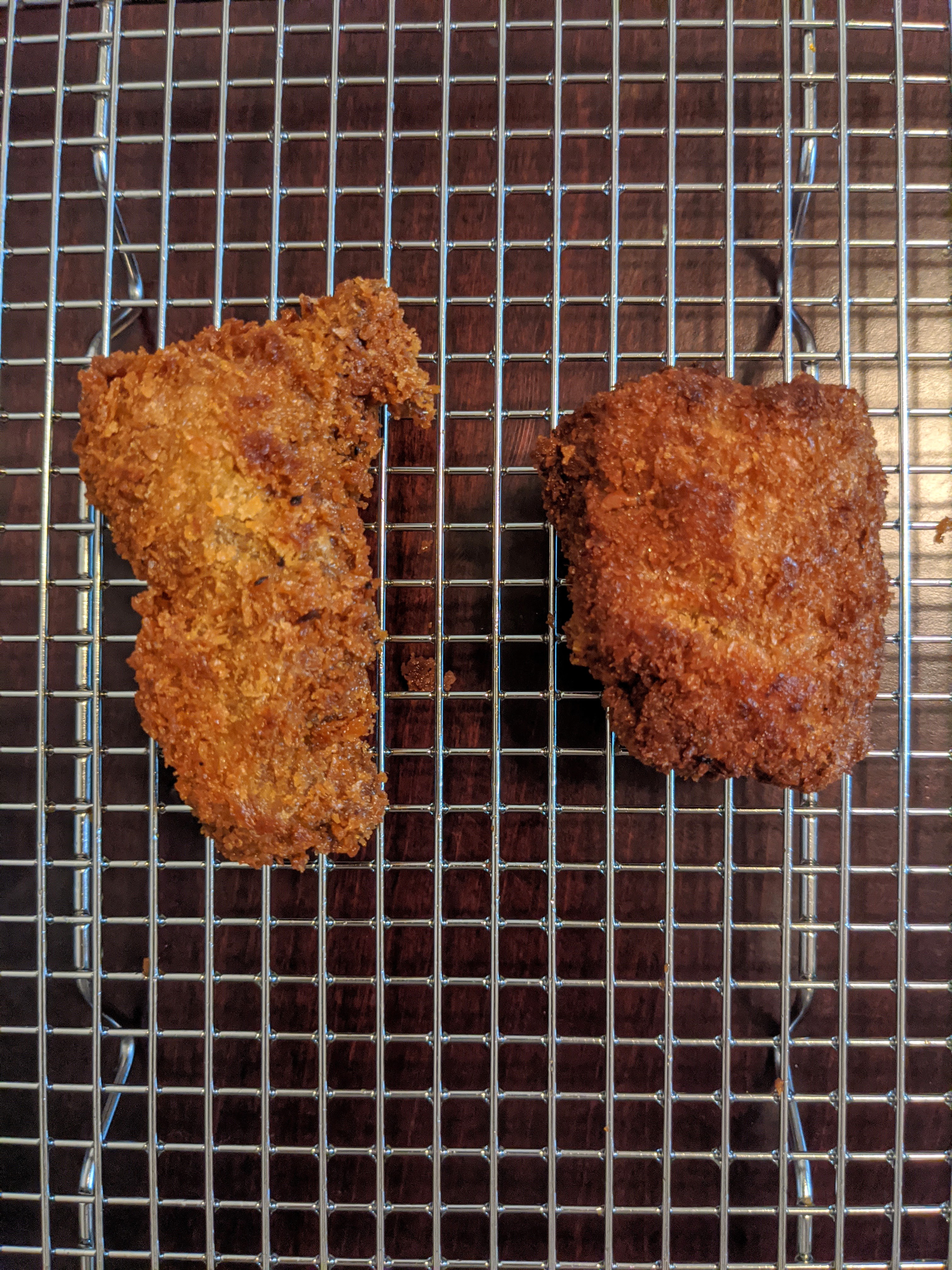
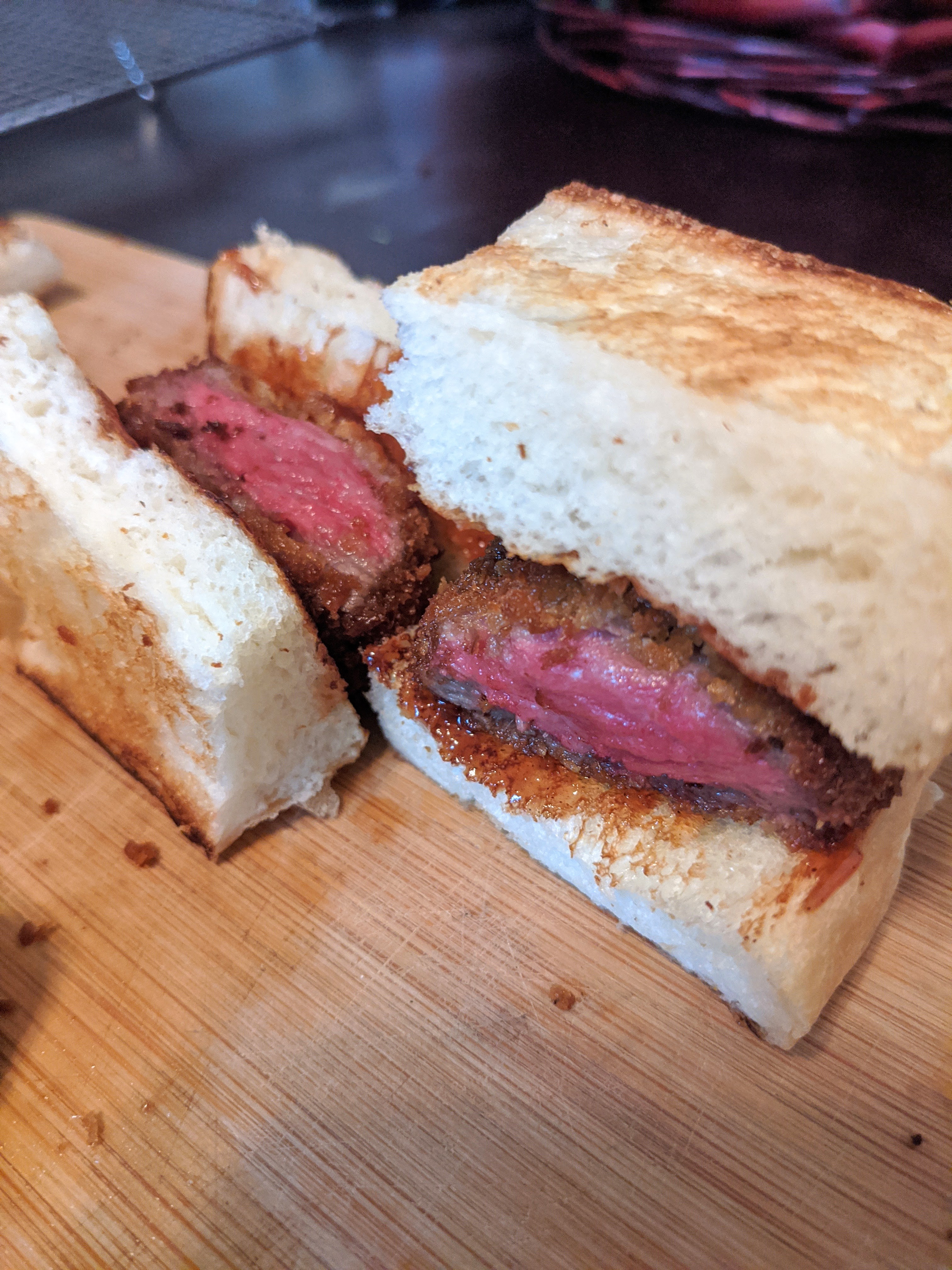
Ok, maybe not death and more the actualization of a dream to answer the most crucial of questions. How much A5 Wagyu is too much? Does black truffle butter or white truffle butter complement A5 Wagyu better? What happens when I replace a normal beef in X dish with A5 Wagyu? Is A5 Wagyu Katsu really as great as it looks on Youtube?

My dreams may be weird, but at least they’re delicious.

And if you’re wondering about the answers to those questions:

  • 8 oz before I somehow feel too full to eat
  • white truffle butter and it’s not even close
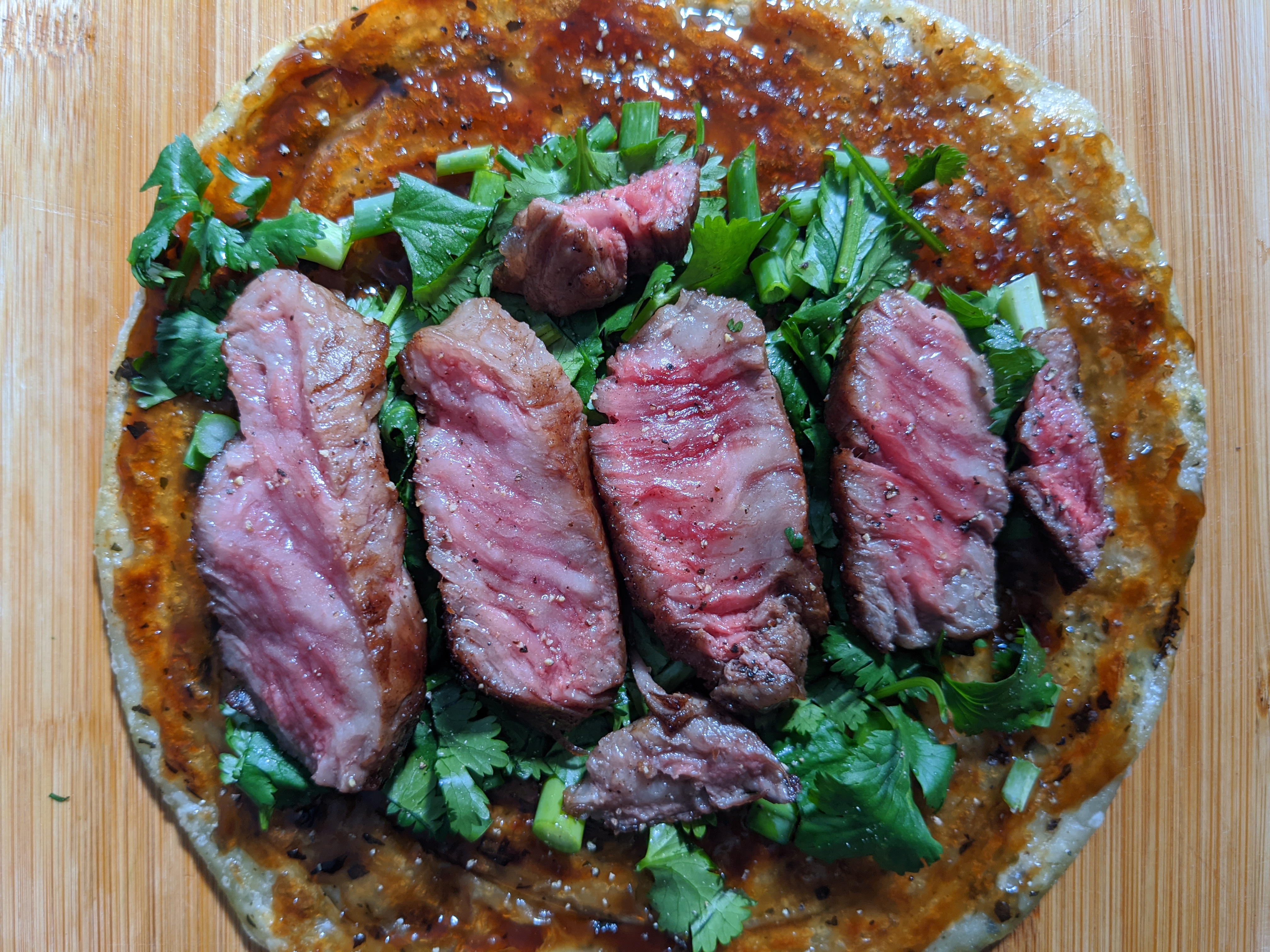
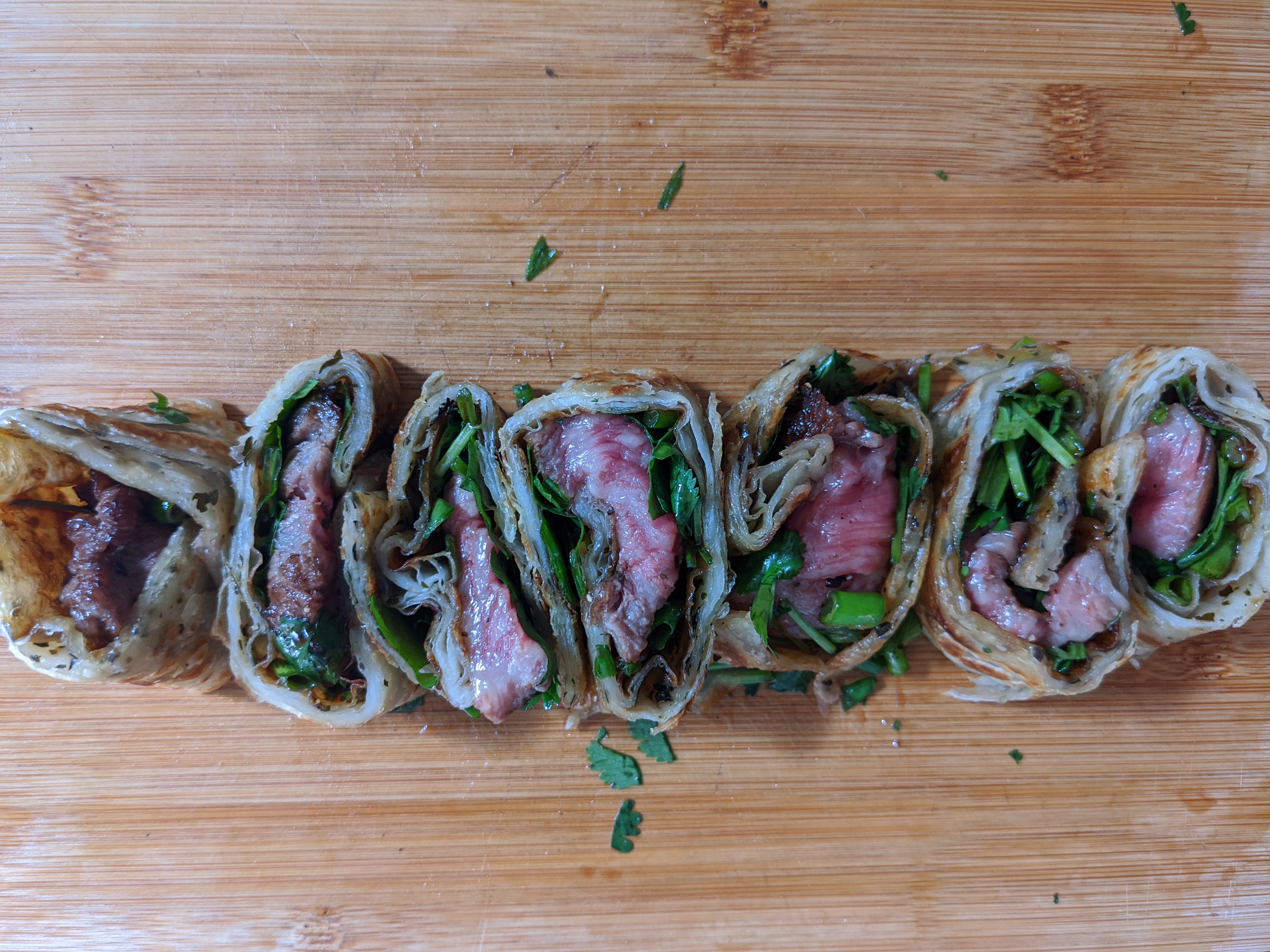
  • unsurprisingly it does indeed make dishes better
  • I now think Wagyu katsu is pretty overrated

To some these answers may be pretty obvious, but there’s not much that’s more satisfying than concrete evidence. And if I’m being completely honest, I actually thought black truffle butter would suit A5 Wagyu more and that Wagyu katsu would be pretty special. Well I don’t know if that should be obvious, but it was a surprise to me personally.

Besides having some fun with all the extravagant decadence in all this, it also served as a reminder to make the most out of a bad situation and to attend to personal curiosity and creativity to take a mind off the difficulty of a situation. In the future this might all be a speck in the past, but for now its a silver lining of the present.

Making Moles

Making moles is a relatively complicated process involving many components and a lot of trial and error. And just to be clear, not this mole:

But this one:

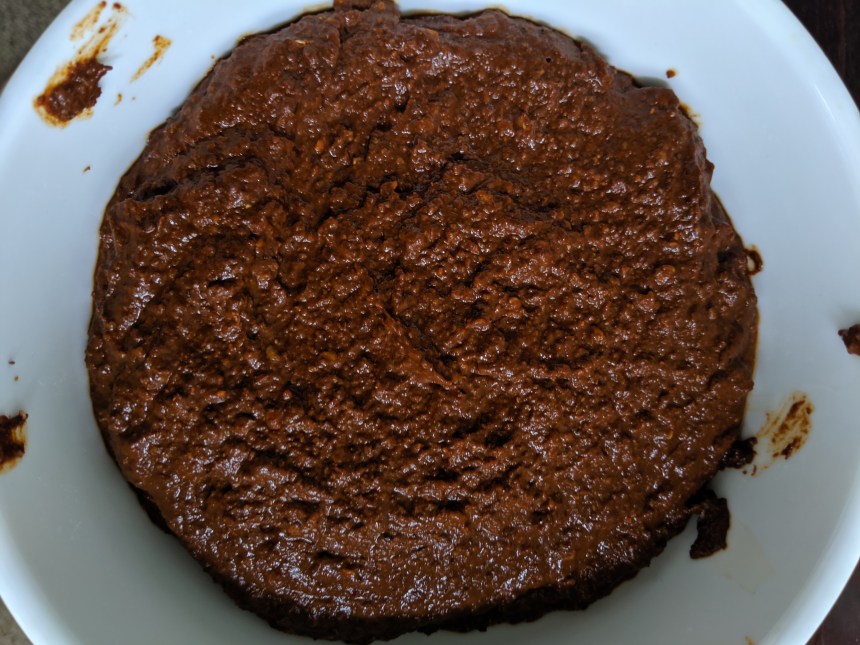
This is the mole I made throughout the process described below.

That being said, I am sure both are delicious in their own way.

With the upcoming feastival, I turned my focus on making mole as it’s been something I’ve always wanted to undertake and this seemed like the perfect time to do so. Its depth of flavor emanates an unexpected complexity despite its initially unappetizing appearance. A complexity in both color and flavor that I’d be hard pressed to recreate with any other dish.

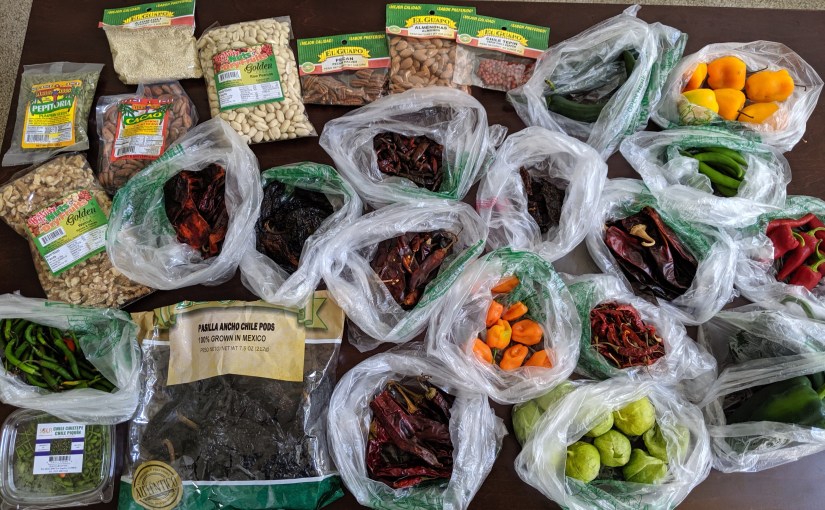
Now the ingredients that compose mole can largely be broken up into 5 different categories: chiles, sour ingredients (vinegars, tomatillos, etc.), sweet ingredients (fruits and other sugary foods), spices (garlic, cumin, etc.), and thickeners (nuts, tortillas, crackers, etc.). Going further, there are also different types, such as mole poblano and mole negro, but I have limited time to spend learning all these nuances so I opted to just taste all the chile varieties I could get my hands on and go from there.

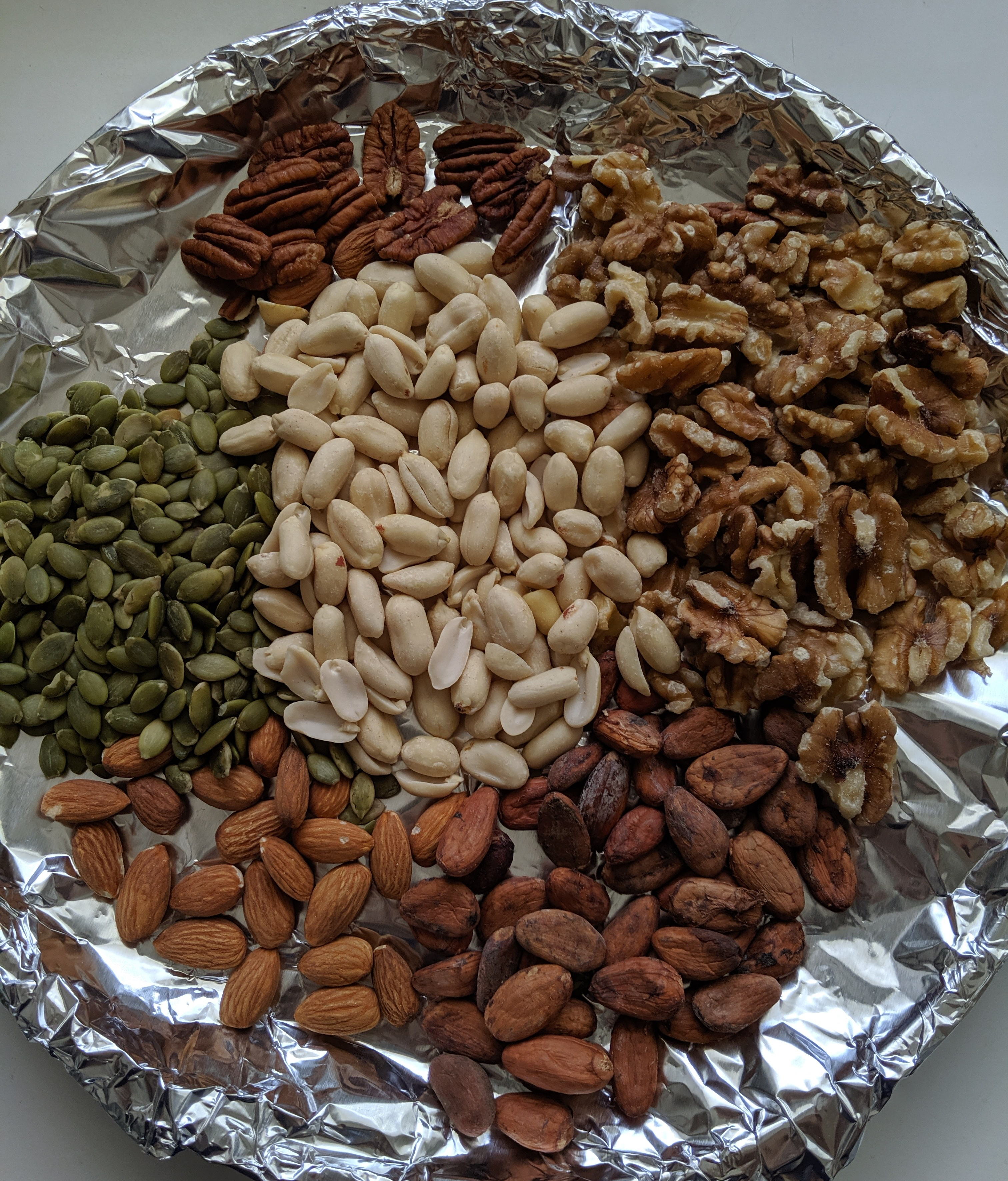
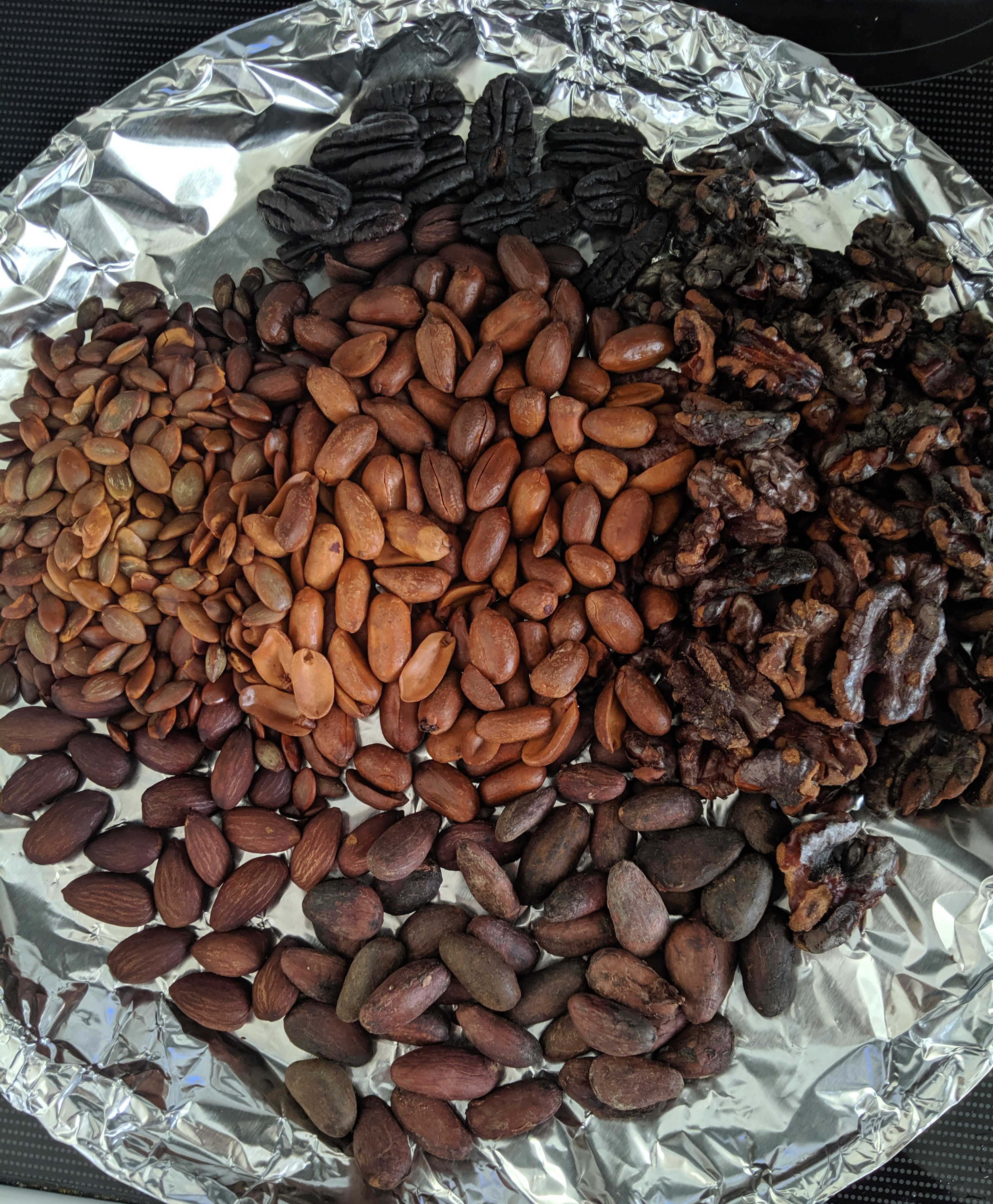
All this and I didn’t even get to testing out the different nuts and chiles roasted.

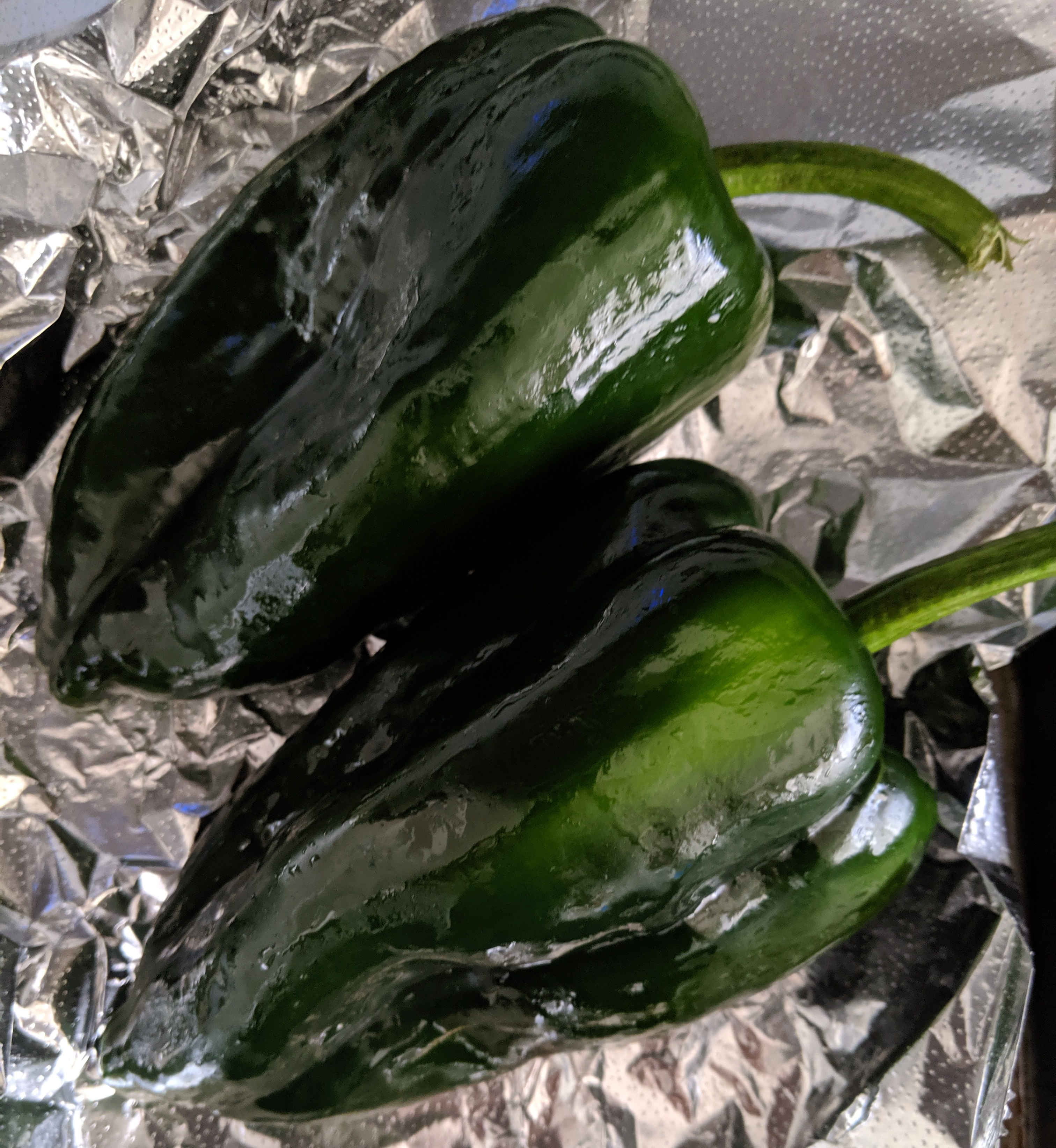
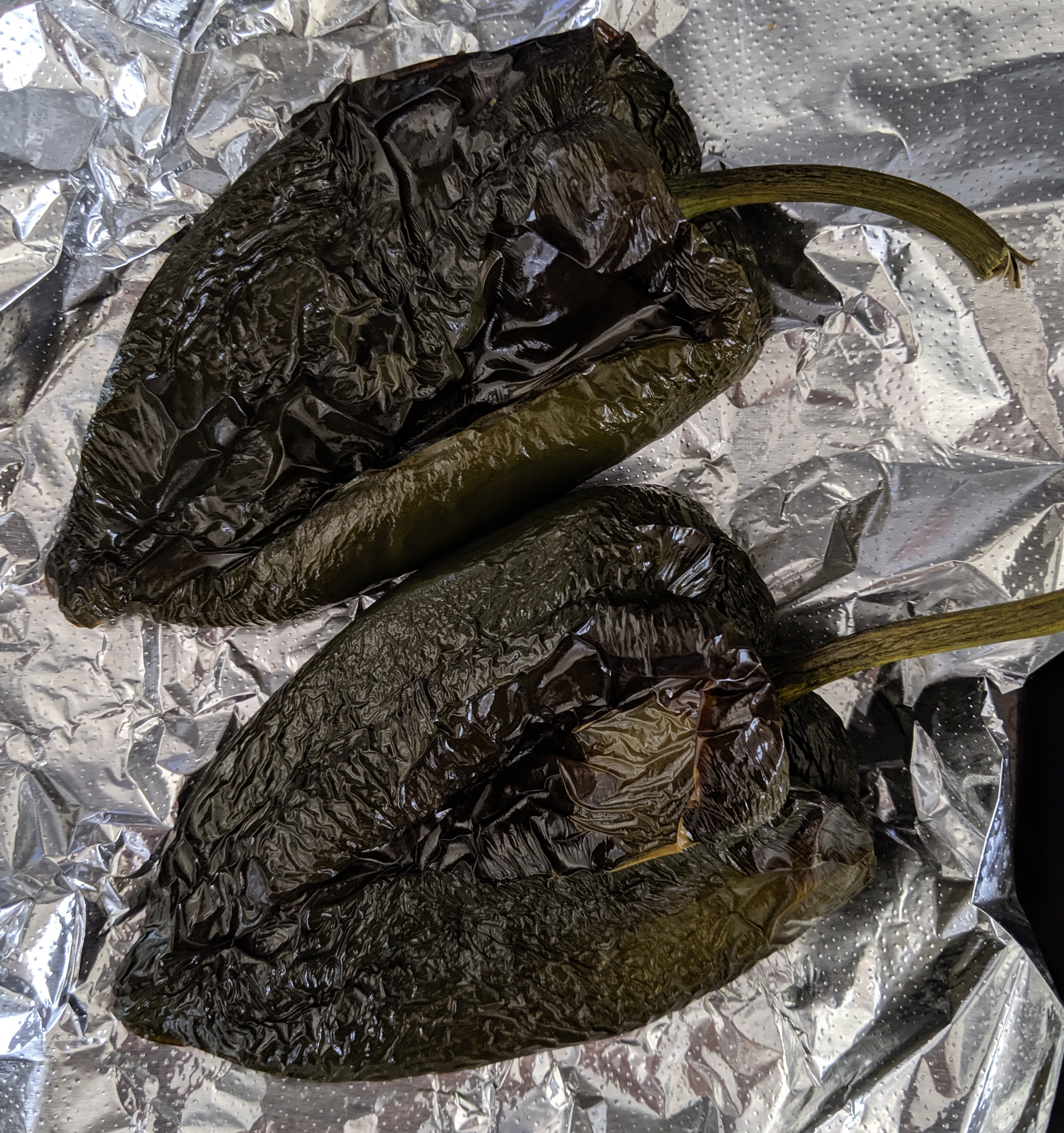
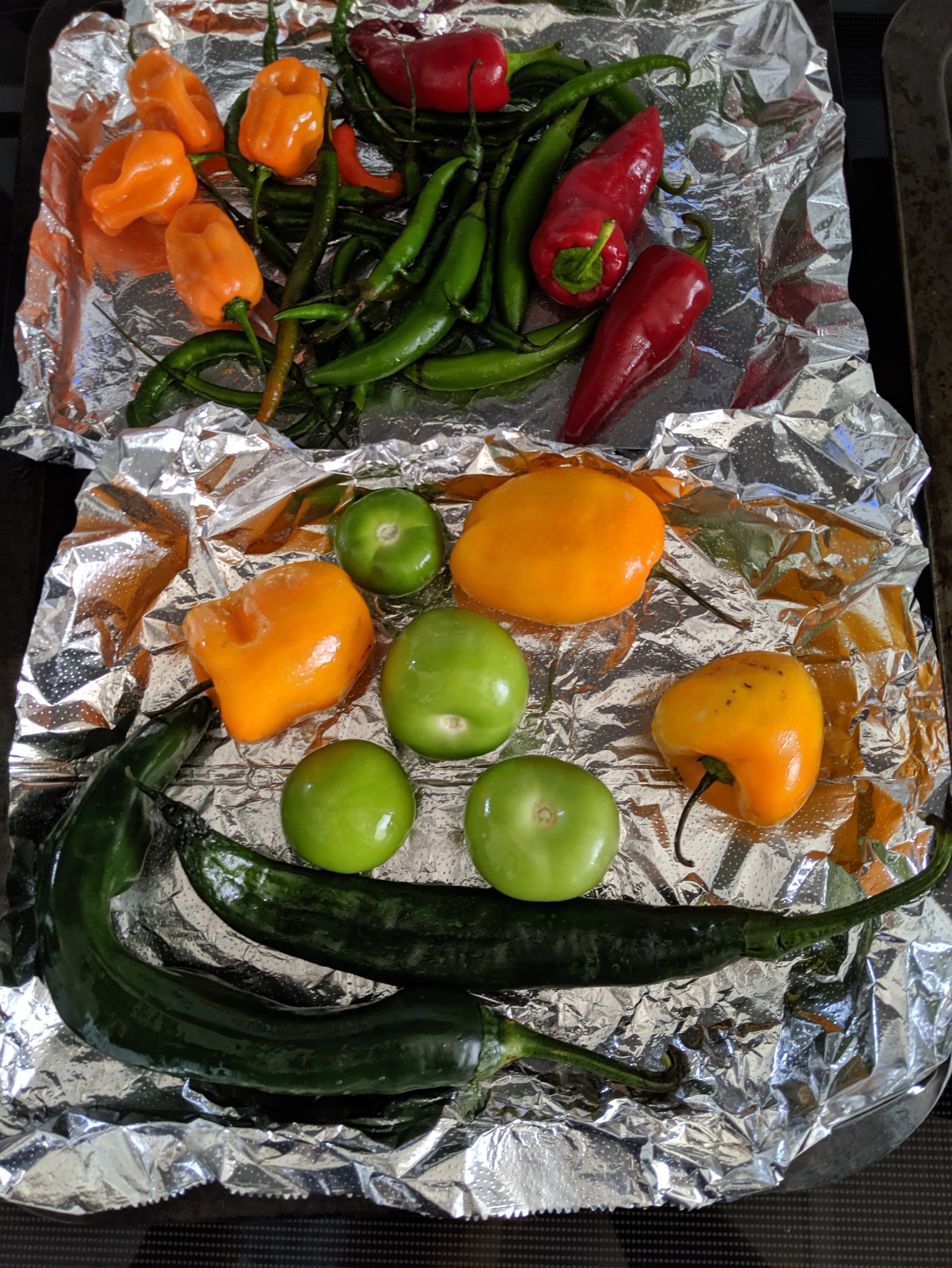
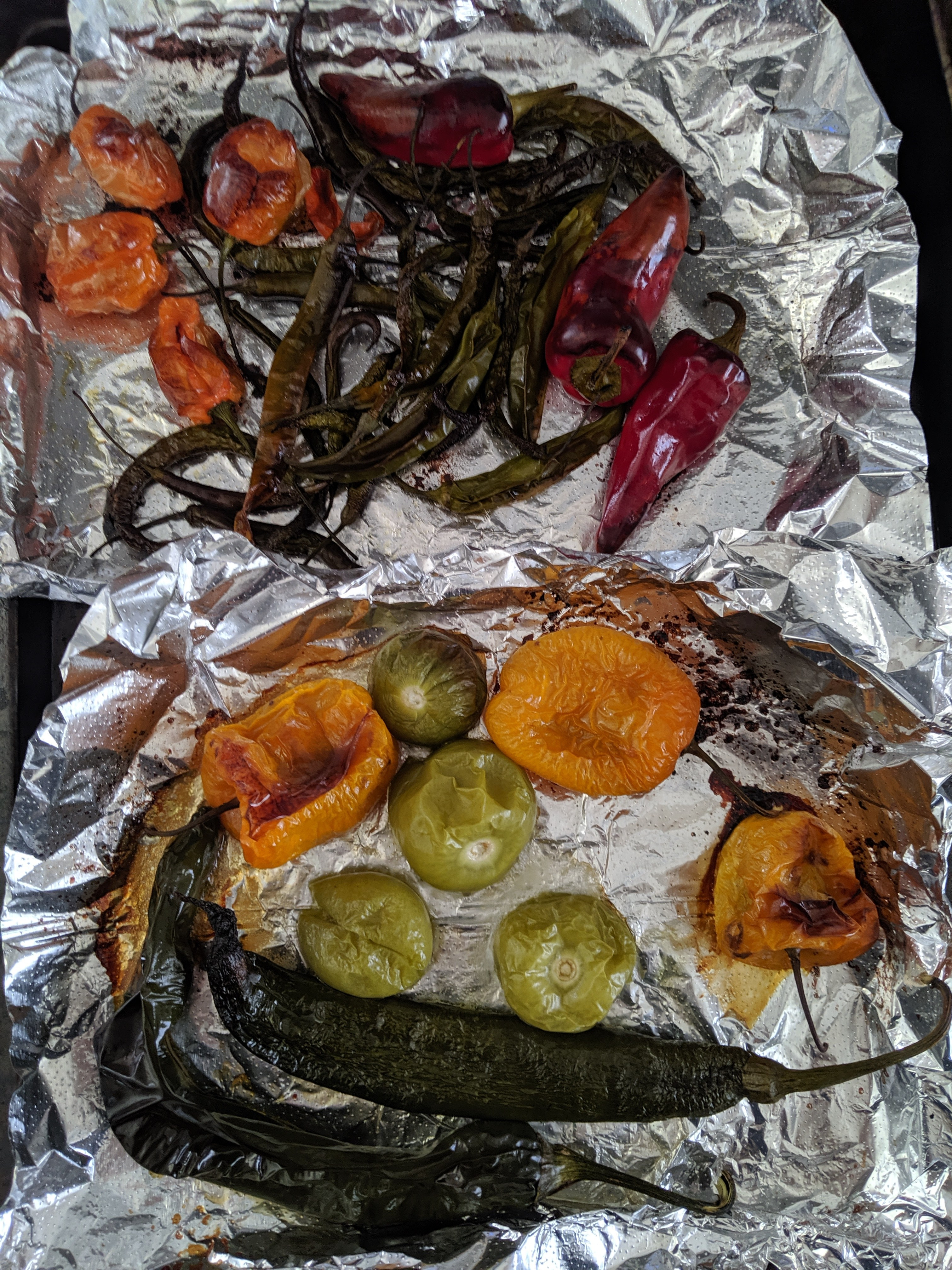
Roasting nuts (pecans, walnuts, peanuts, cacao, and pumpkin seeds) and chiles (chile pasilla, serano, habanero, manzano, and chile de arbol, and more) and tomatillo

After a hour and half of tasting and trying to remember what each chile was called (keep in mind all the dried chiles I also had to taste), I settled on the following blend:

  • Dried Chile De Arbol
  • California Dried Chile
  • Black Dried Chile
  • Dried Ancho Chile
  • Dark Amber Maple Syrup
  • Apple Cider Vinegar
  • Raw walnuts
  • Roasted peanuts
  • Roasted pumpkin seed
  • Garlic powder
  • Water
  • Roasted chile pasilla
  • Crema Oaxacena
  • Aleppo pepper
  • Lime
  • Coriander
  • Cumin
If you’re wondering what criteria I chose for the ingredients, it was mostly about creating a deep, dry spice flavor with a splash of smoke and tones of dull sweetness and nuttiness throughout to keep things interesting.

Now all that was left was to blend everything together with some tortilla and spend about 30 minutes tweaking ratios. It got to the point that even the smell of chiles made me nauseous, but I couldn’t stop and let all my efforts go to waste.

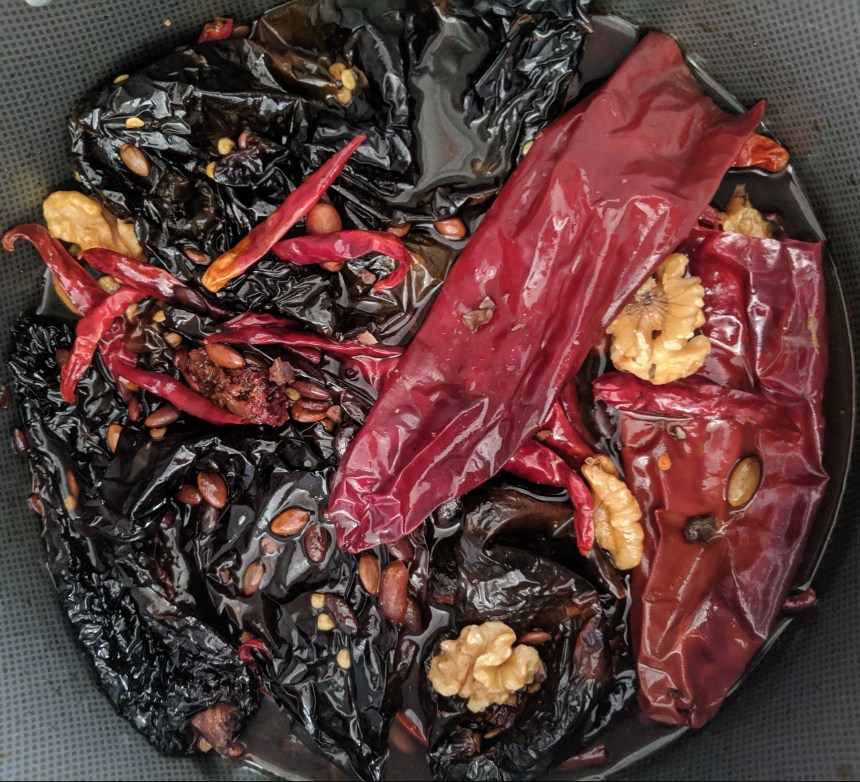
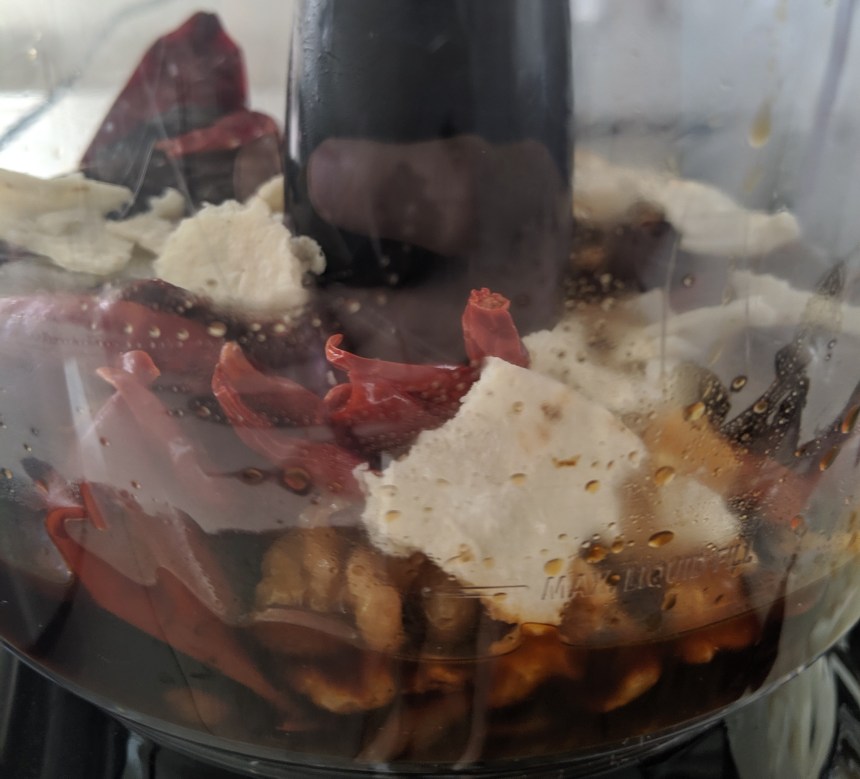
The mixture before it was run through the food processor.

And finally it was over!

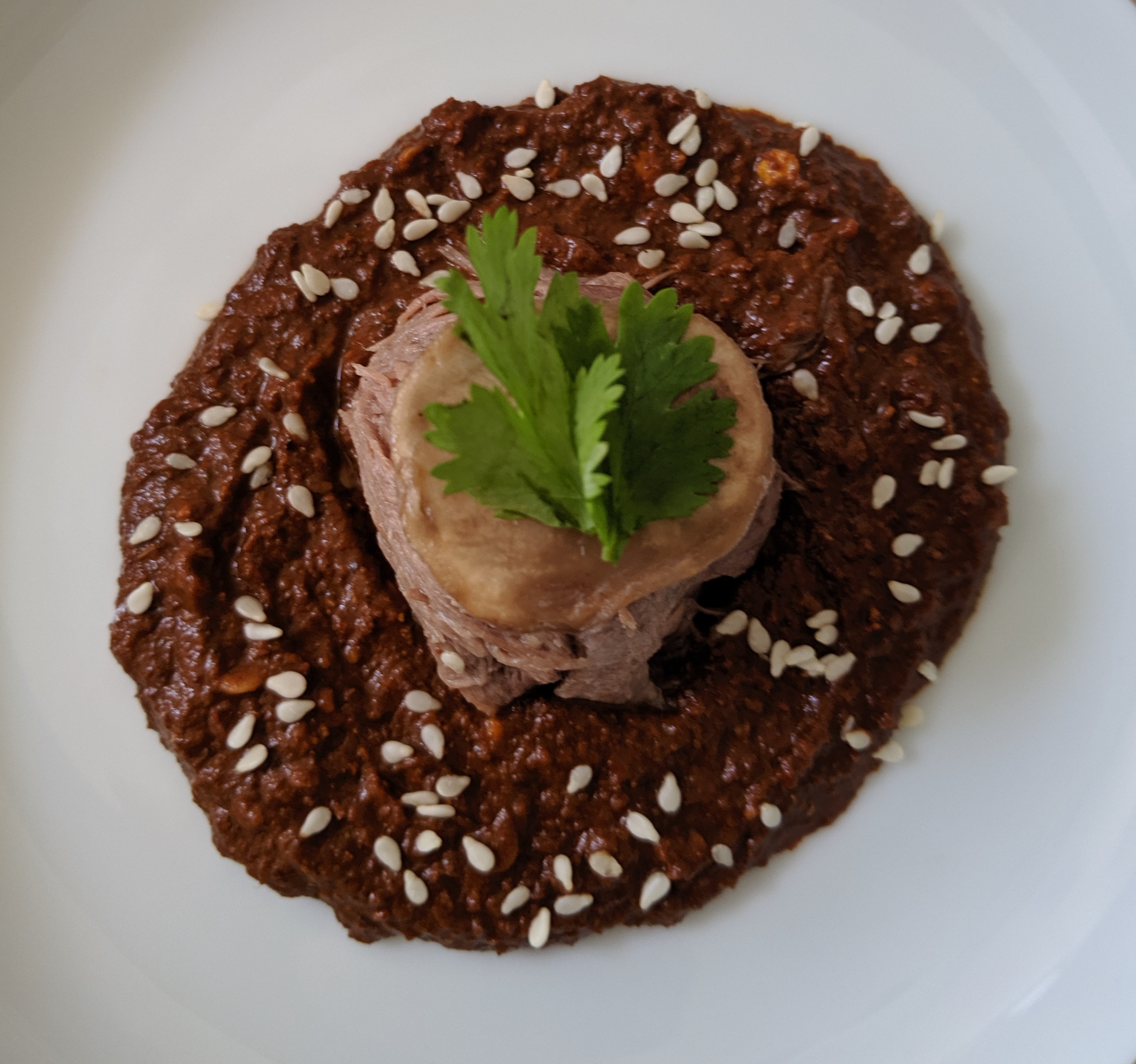
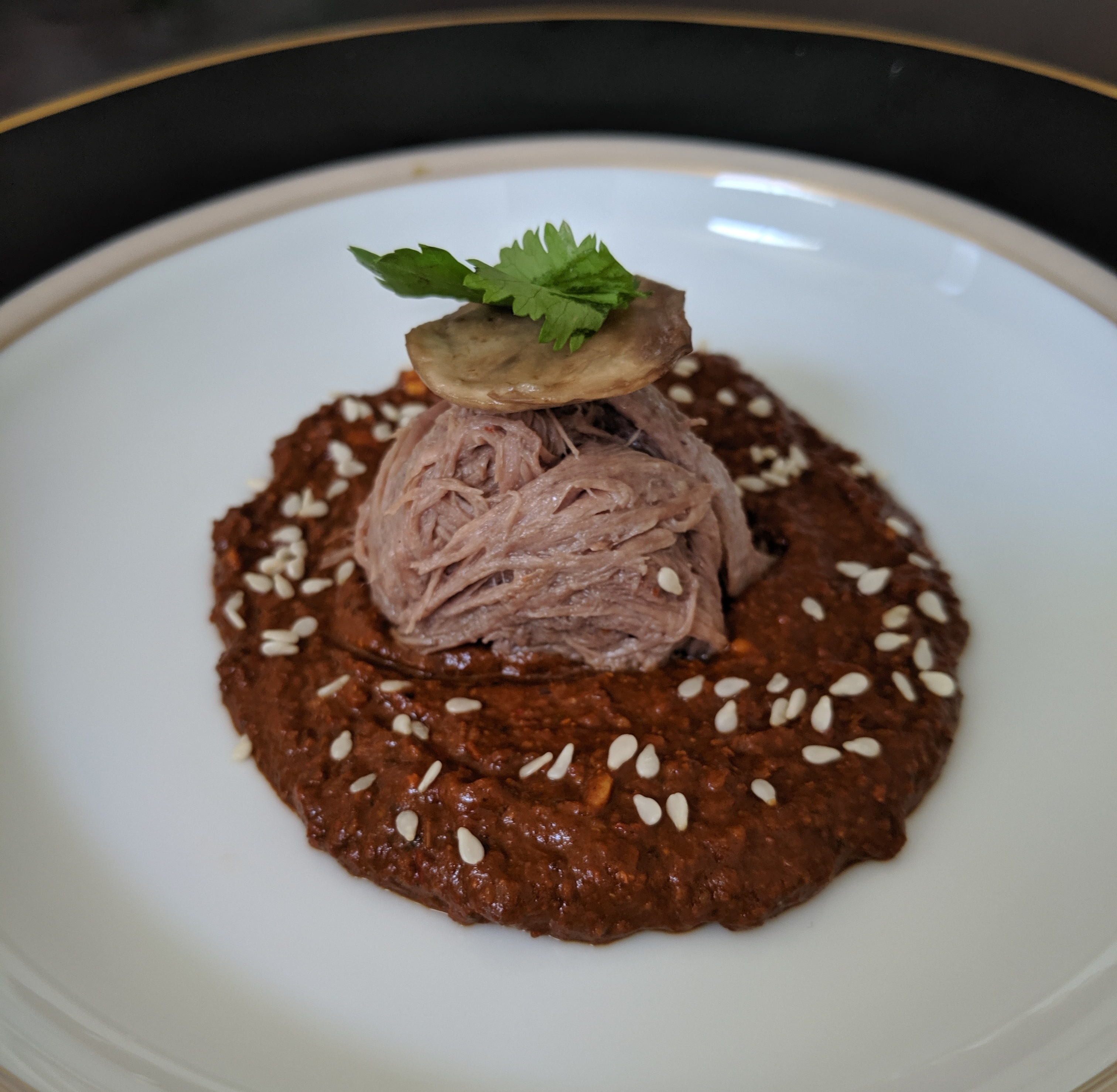
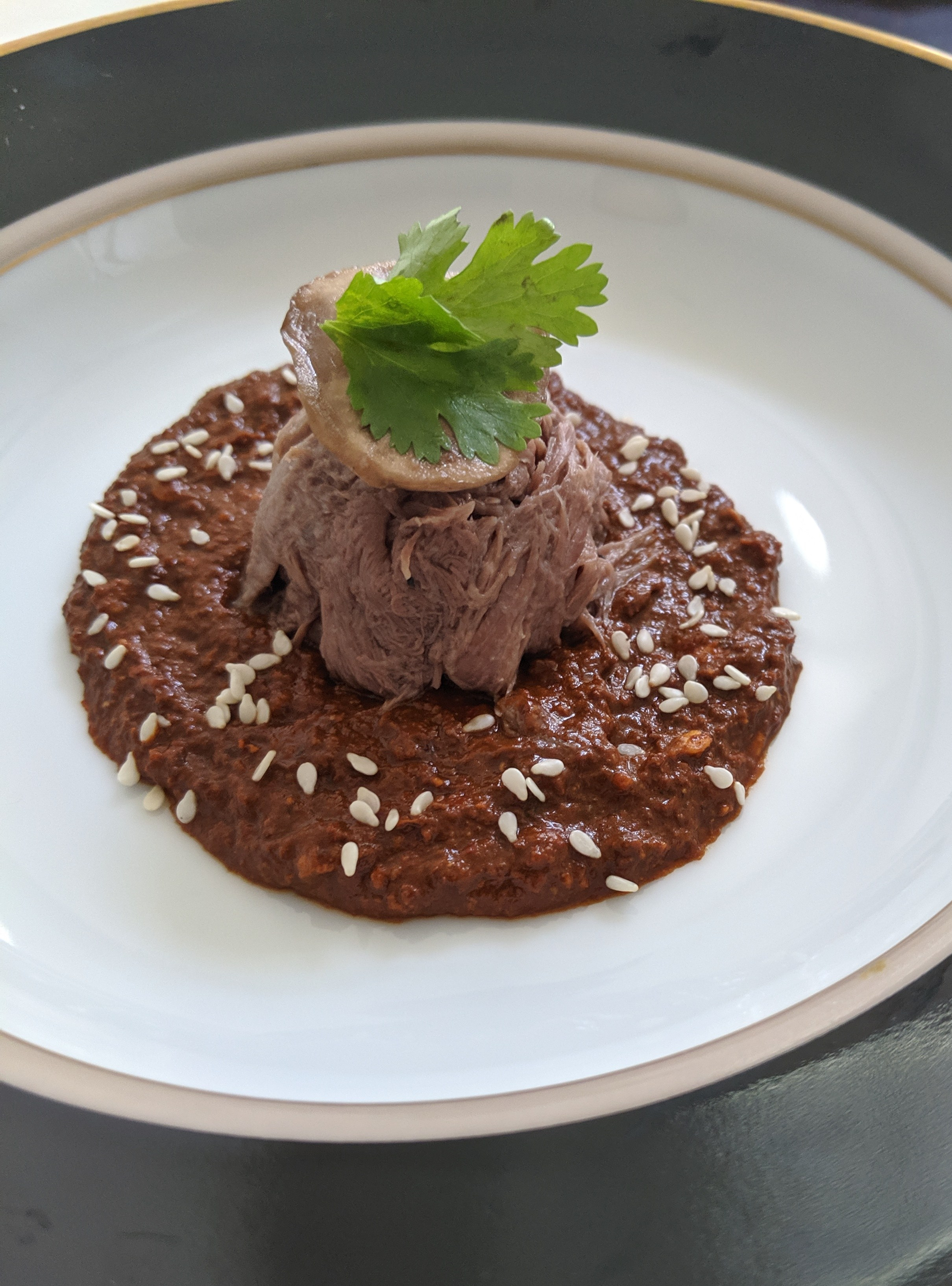
The resulting dishes using the aforementioned mole.

As you’ve just noticed, I didn’t want to just eat mole by itself so I took the opportunity to test out some accompaniments.

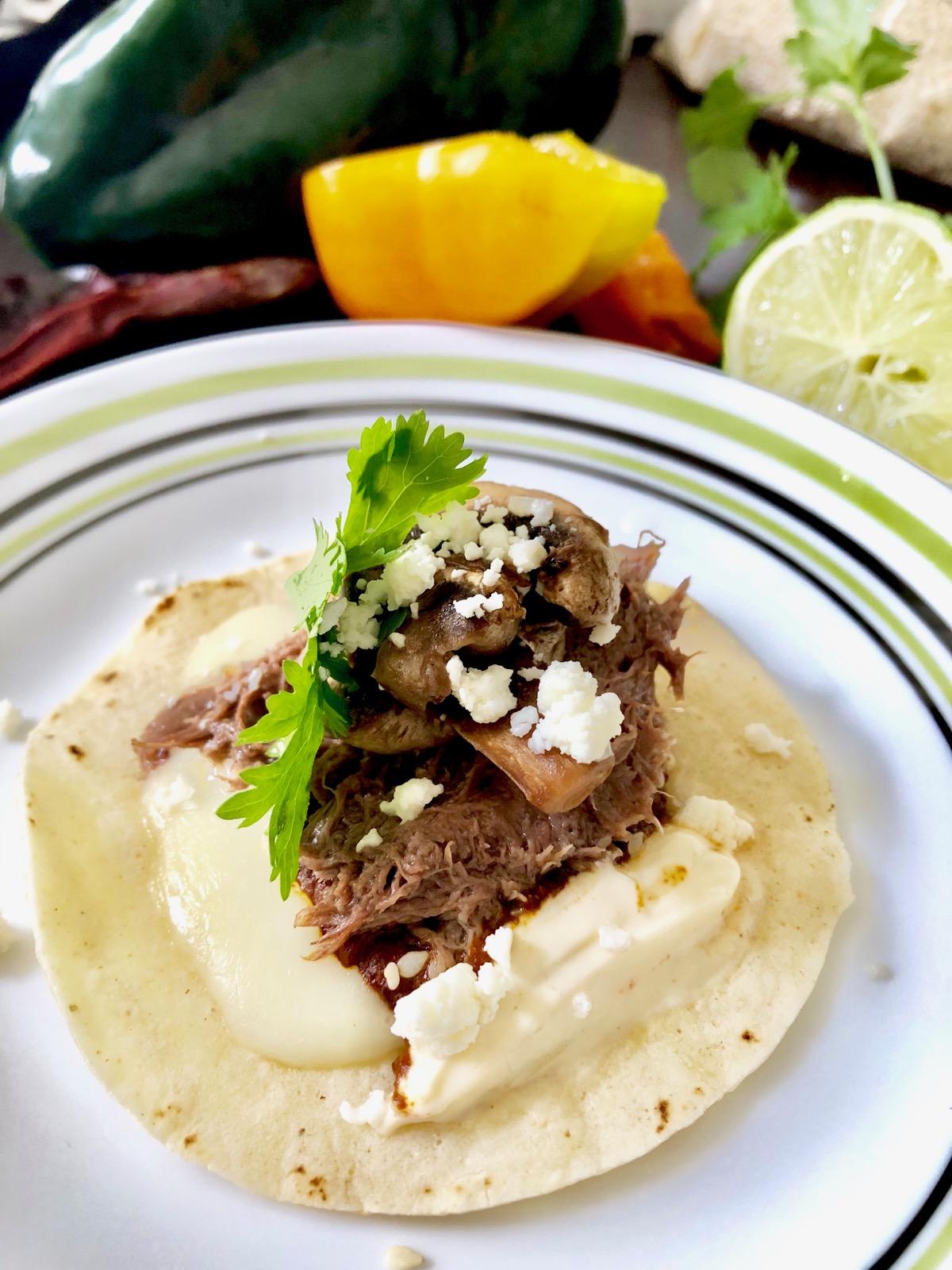
Beef tongue, thyme mushrooms, and some tacos

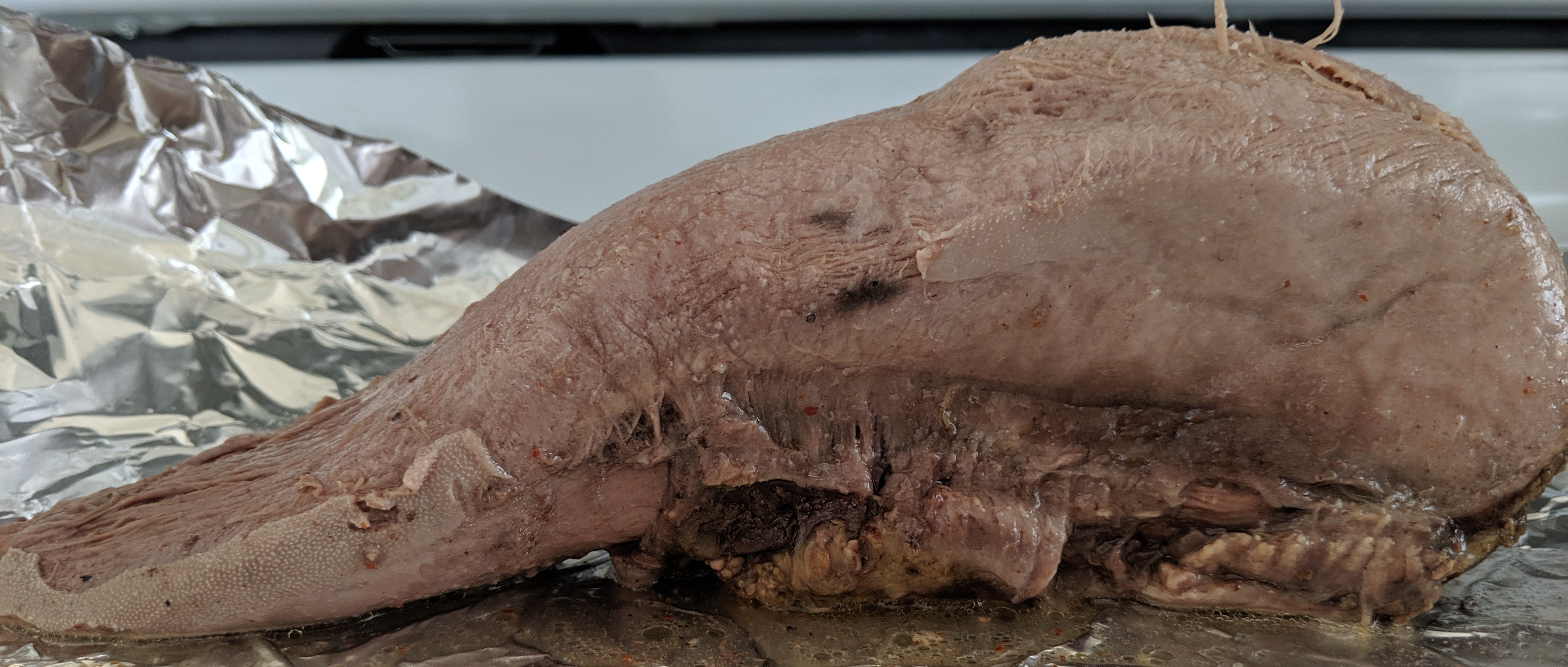
The first dish pictured above is cilantro, thyme mushroom, and slow cooked beef tongue with a drizzle of lime over a bed of mole that is sprinkled with sesame seeds. A sea of dry, smoky spice with a hint of dull sweetness (akin to the sweetness a raisin gives off) are interrupted only by brief moments of sesame as the meaty flavor of beef tongue comes in with its tender, shredded texture. The thyme mushroom then arrives to complement the tongue with notes of cilantro and lime to act as palate cleanser in between each wave of flavor.

Although pretty, it wasn’t quite filling enough for lunch so I went a little further.

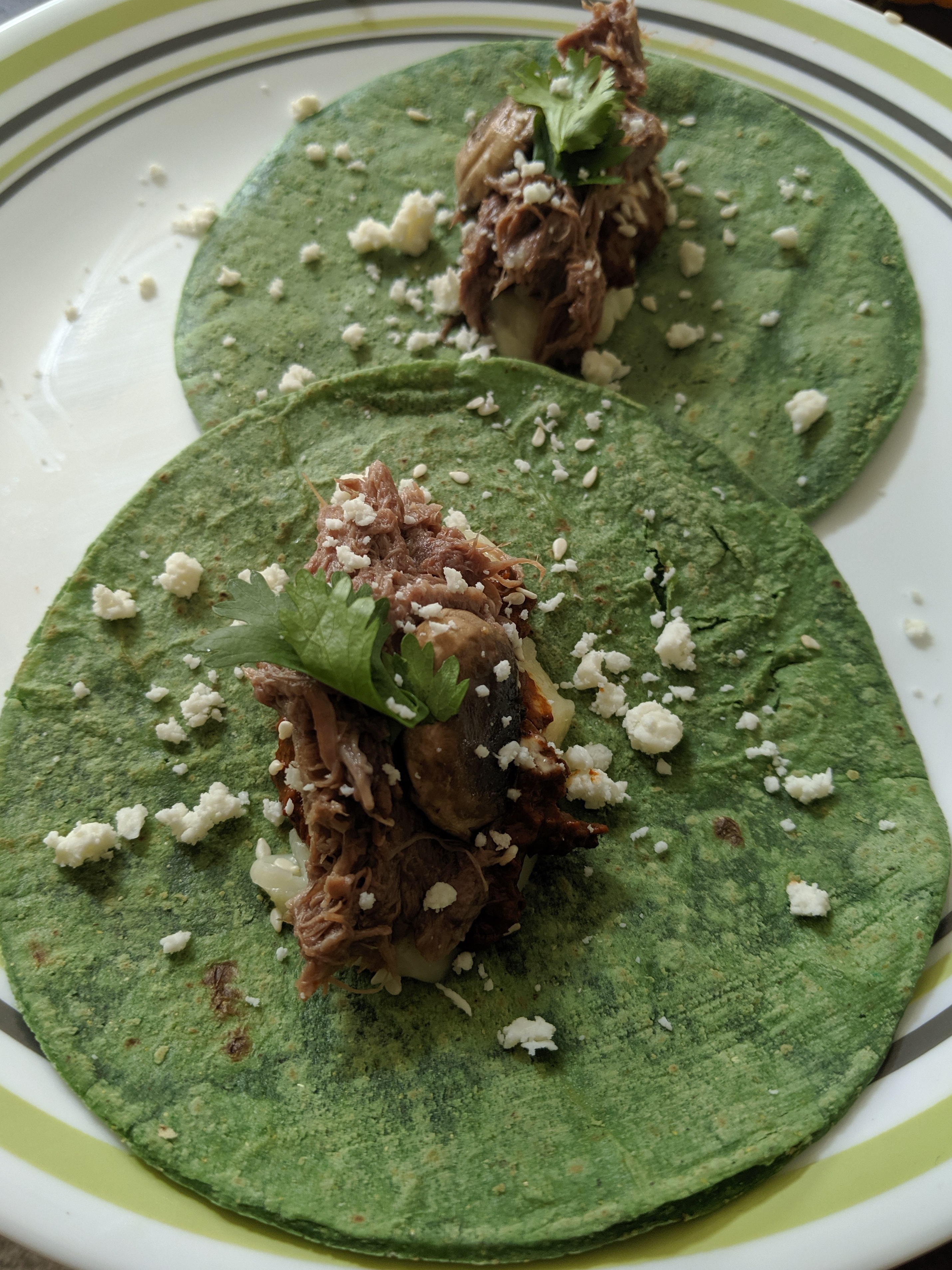
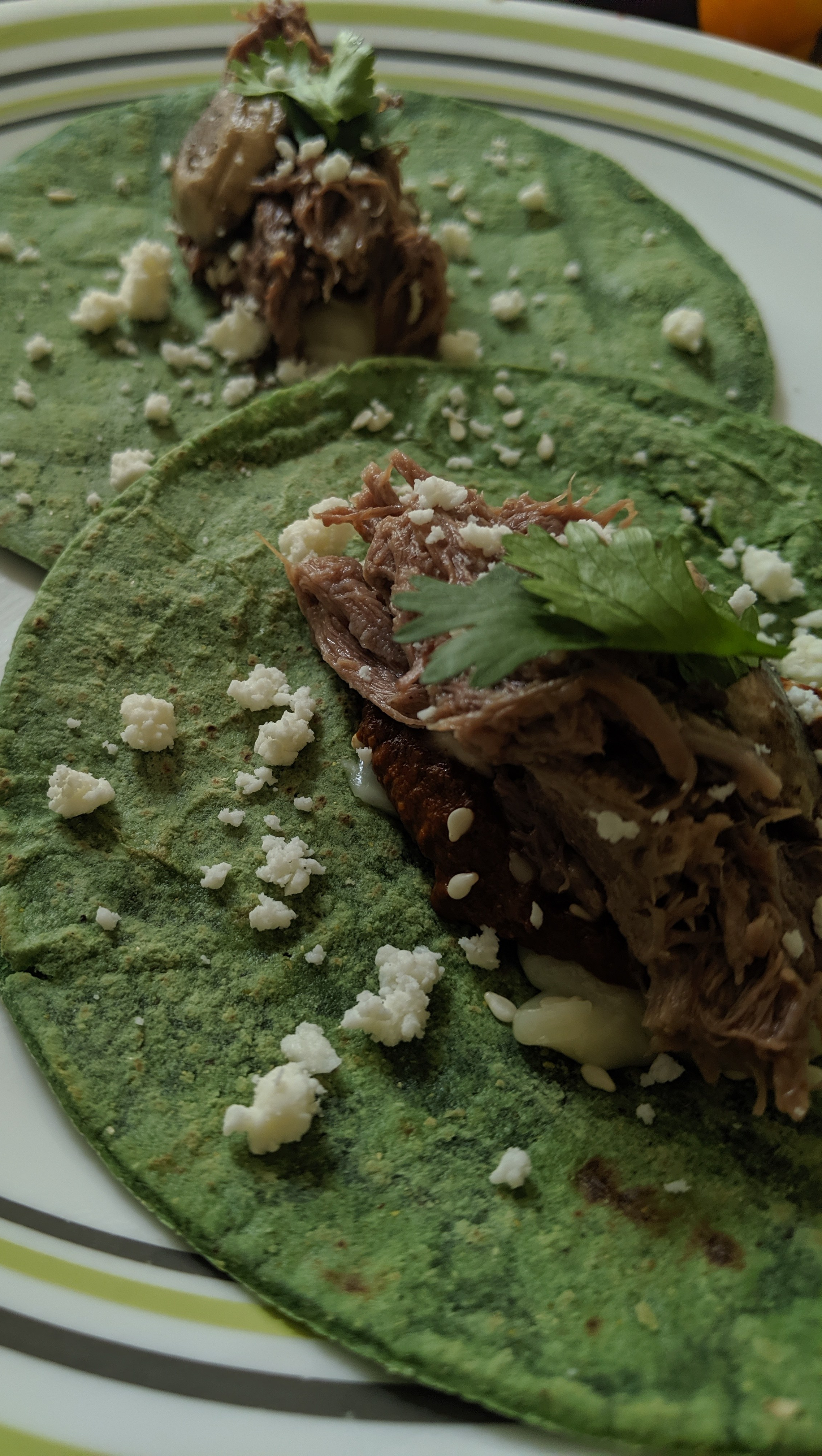
Tacos because anything is worth trying as a taco

Same components as the previous dish, but served as a taco with tortillas (corn for the first and hatch chile flour for the second), Oaxacan cheese, crema oaxaquena, and queso cotija don francisco. The tortillas add good texture as the starchiness from corn and flour go with practically anything lacking that. Meanwhile, the crema and oaxcan cheese compliment the mole’s deep spice and dull sweetness with its creaminess, while the cotija adds much needed tinges of salt.

And now for anyone who wants to see a little more.

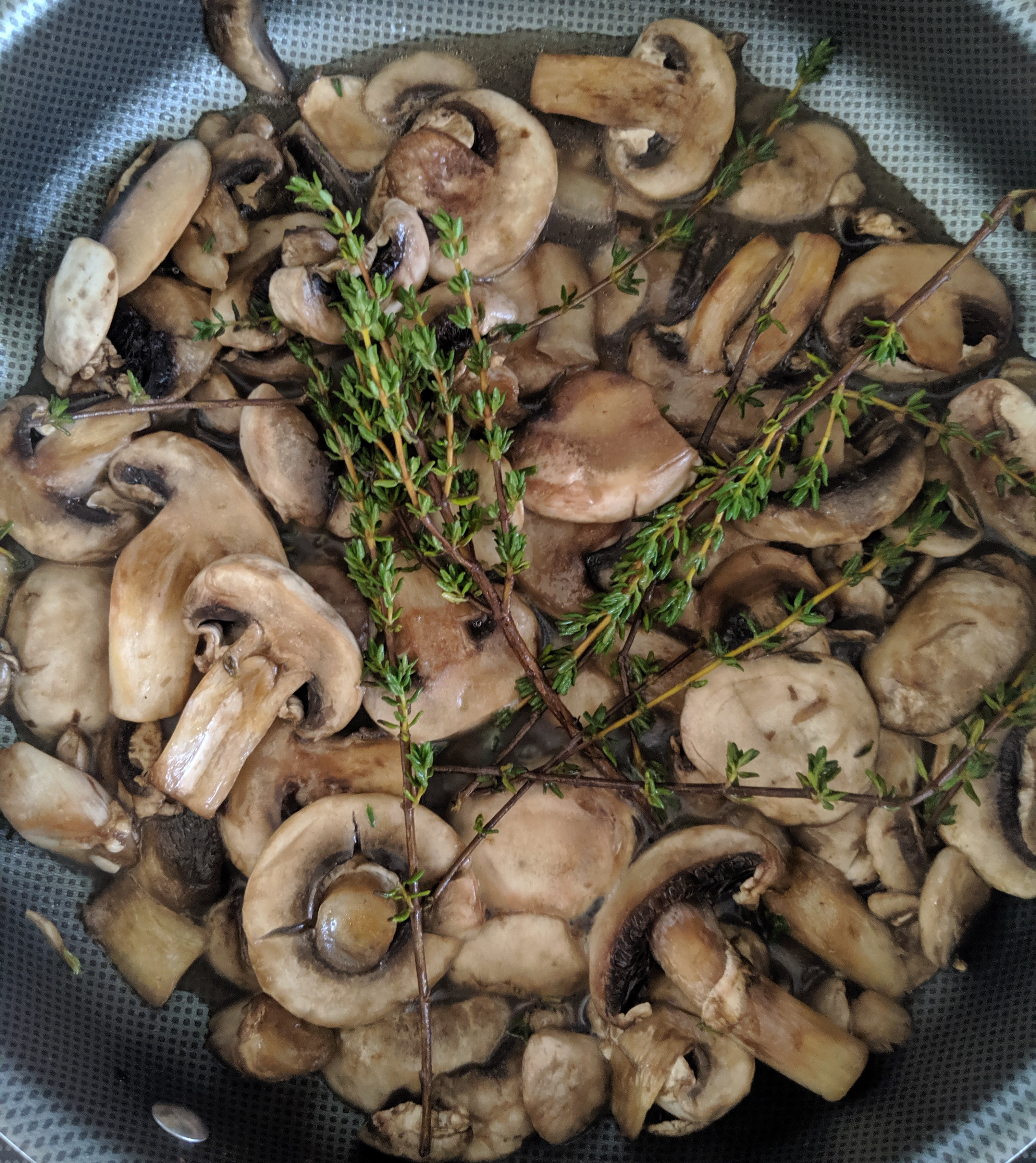
Some more behind the scenes

Sauteed mushroom with thyme and the beef tongue with its outer layer peeled in all its glory. The tongue is slow cooked for 8 hours in a crock pot with spiced honey, aleppo pepper, garlic, black pepper, and a little apple cider vinegar. I admit the beef tongue isn’t the most beautiful sight to behold, but it makes the process that more amazing right?

Follow me on Instagram (@valanthonyalvero) to keep up with all these experiments, events and more. And if you are interested in participating in anything like this in the future be sure to comment and/or DM me with your interest.

The First Feastival Theme: Modern Mexican

Although this would technically be my third recent feast, this will be the first officially hosted feast to mark my beginning documenting and giving access to the event itself via Instagram. That being said, I am a practical man and I like to build on the groundwork laid before me, so I decided to take inspiration from prior experiences making a kamayan feast and a giant quesarito by taking from the two concepts. The result is the concept of a large modern Mexican feast, or a “feastival” (aptly coined by one of the “staff” members) as I’d like to call it going forward.

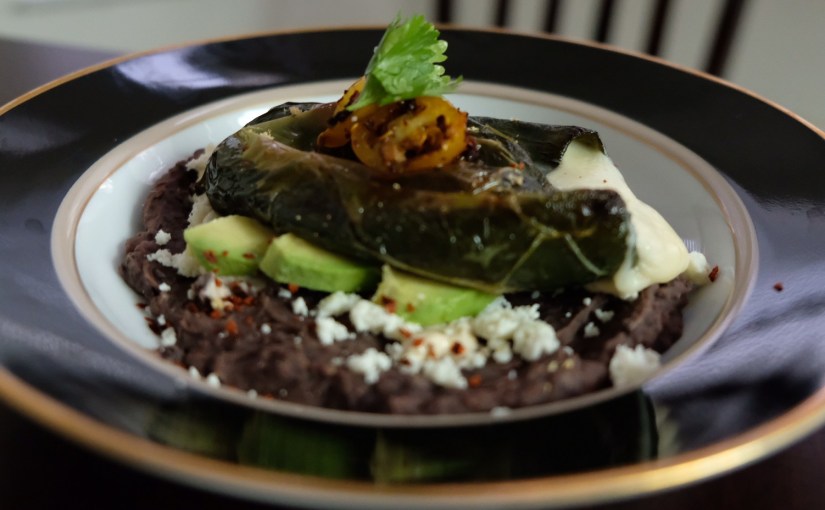
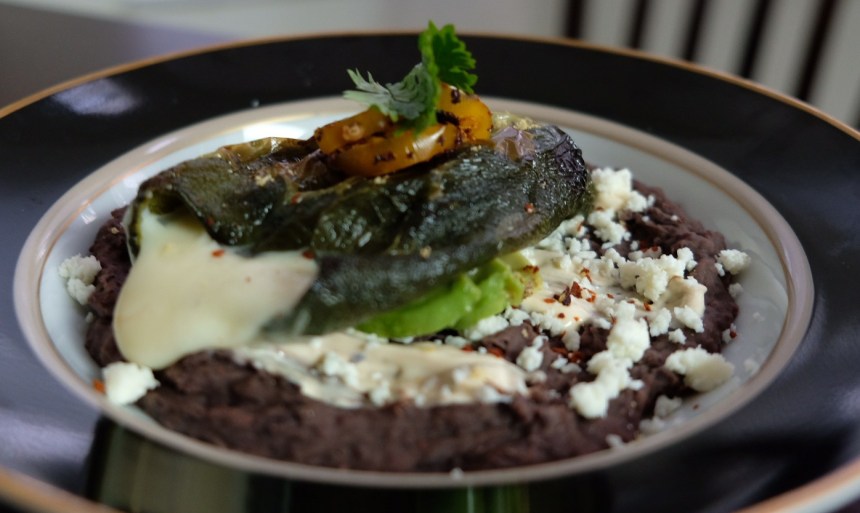
But first a test. What would taking some notes from popular Mexican ingredients and flavors yield when put against a little creativity. So with a couple leftover ingredients supplemented with a quick trip to a nearby grocery, I concocted a proof of concept for the framework that would support this upcoming feastival.

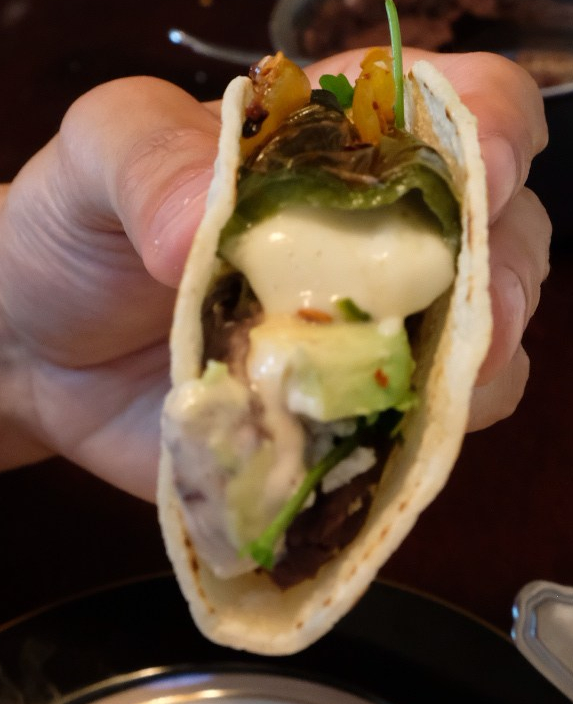
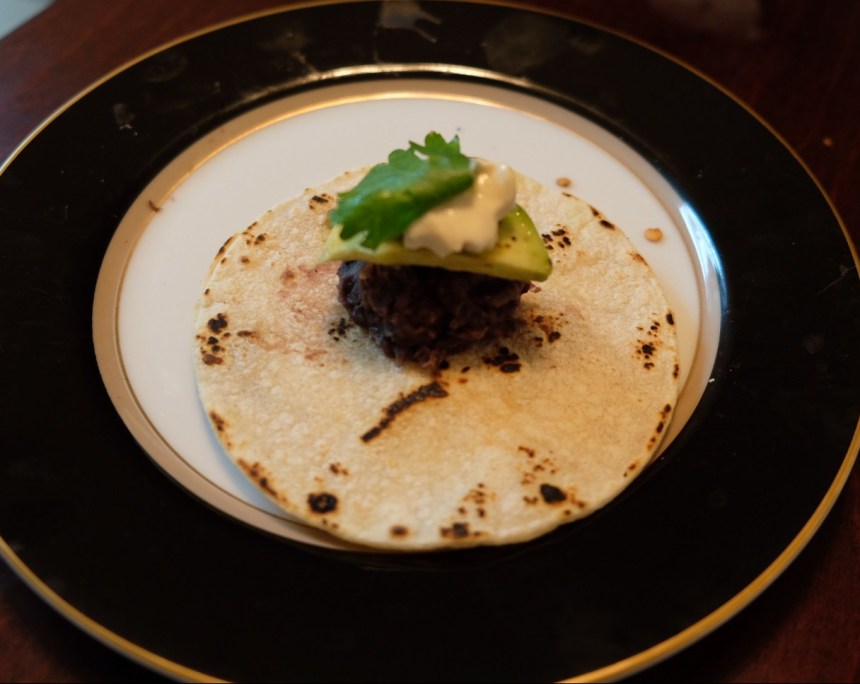
Nearly the same ingredients done three different ways.

The Components

  • Black bean puree – seasoned with dashi, yuzu, black pepper, dark amber, garlic, and Chile Morita Seco
  • Queso Fresco Pancho
  • Queso Cotija Don Francisco
  • Crema Oaxaquena blended with Chile Morita Seco
  • Lime marinated avocados seasoned with salt
  • Lime marinated cilantro
  • Sliced baby tomato rolled in Chile Morita Seco
  • Roasted Chile Pasilla stuffed with Oaxacan cheese
  • Aleppo pepper
  • Corn Tortilla

How Does It Taste?

The smooth starch of the black bean is blended with the depth in umami of dashi and garlic, while brightened with notes of yuzu and cut by peppery tones from the black pepper and chile morita seco as dark amber syrup rounds everything out.

Richness from the cheeses and avocado are cut by notes of lime and a creamy heat is brought forth from the smoky spiced crema Oaxaquena. Roasted chile pasilla adds a tinge of roasted bitterness and textural contrast as sweetness from the tomato and herbal cilantro keep it from getting overpowering.

When served with a semi-crunchy, roasted tortilla you get another layer of textural depth complemented by strokes of corn flavor. Take out the roasted chile pasilla and play with the ratios when served as a quesadilla, and now you have similar flavors yielding a subtly different result as milder tones take precedence.

The most successful aspect in this proof of concept was the showcase of the versatility of a few components. Everything works with everything else in different subsets within this limited set as every combination something new. Needless to say I am excited with the potential of scaling this up and adding more ingredients to cross match with while adding more notes from other cultures to provide unique flairs. Up next is planning the broader structure to this feastival.

A Beginning in Product Iteration: Curry Salted Egg Yolk

Salted egg is a traditional staple in Asian cuisine for having a rich, umami flavor from egg yolk that is accompanied by the saltiness of your curing method of choice. This delicacy has been on a recent rise with the likes of Irvin’s salted egg fish skin in Singapore along with several other variations of salted egg chips across various brands from Asia. Despite that strong affinity with the Asian population, its presence in America has been little to none with foreign makers largely being unable to meet their own domestic demand. As with anything production restricted, this leads to rampant premiums on third party sites like Amazon. All this sounded like a recipe for a good product, so I embarked on the journey of having my own take on the traditional meets contemporary craze.

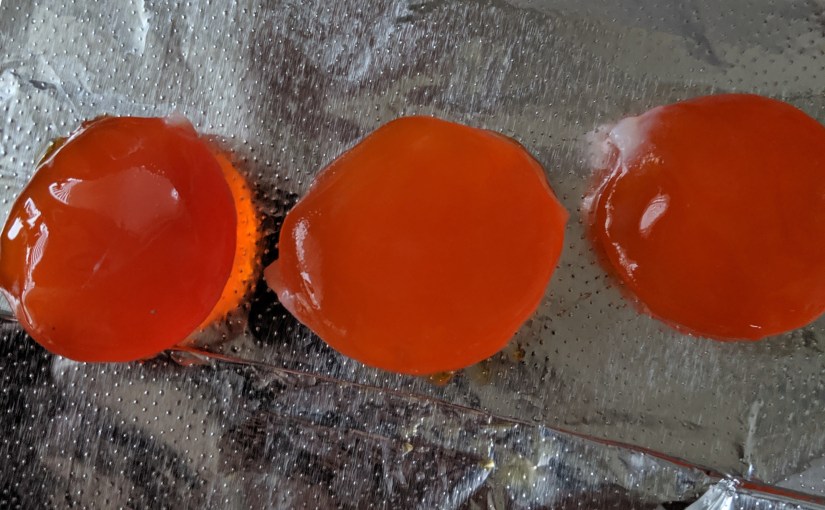
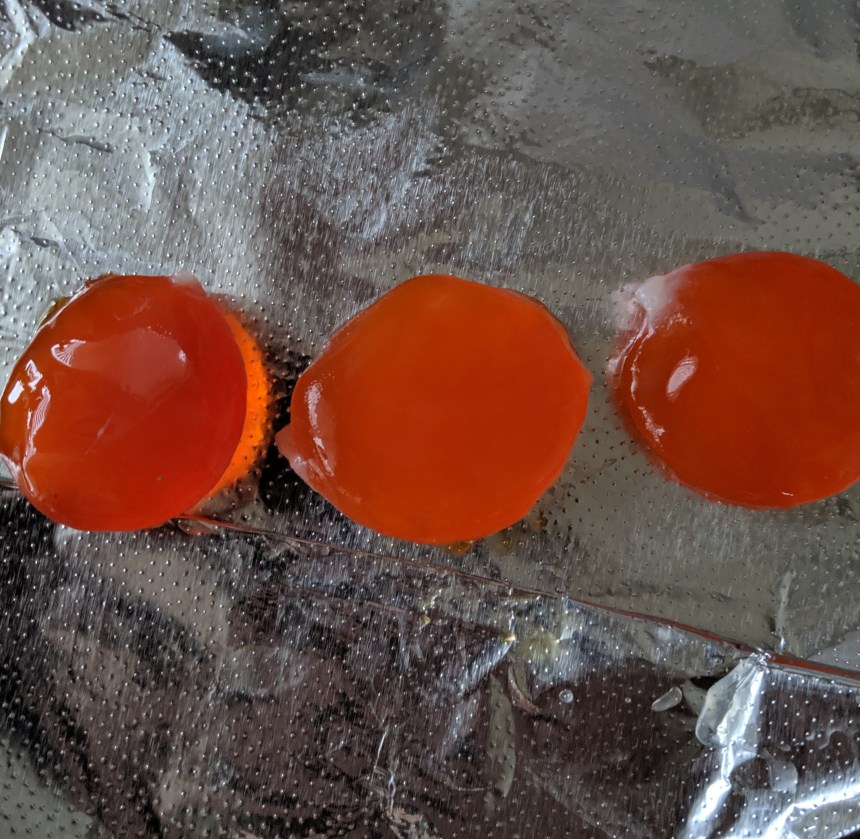
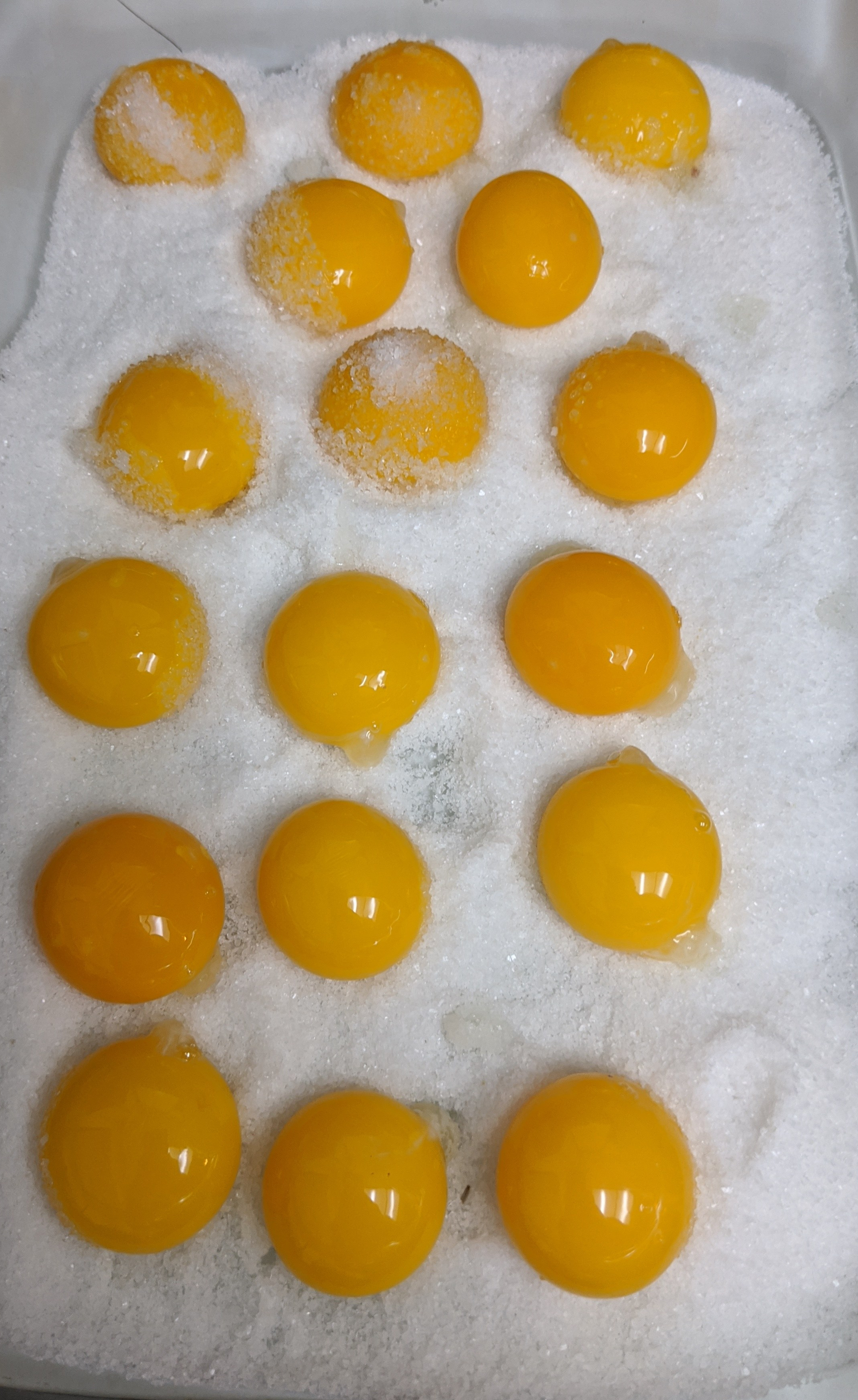
Chicken Egg Yolks cured in salt overnight

The base comprised of salted egg yolk and, because tradition should always be challenged when given an opportunity, I opted for high quality chicken egg yolks (golden egg yolks provide near incomparable flavor). Then I chose the quickest method of curing by dropping the yolks in a vat of salt overnight. Afterwards, I removed the excess moisture via low temperature baking.

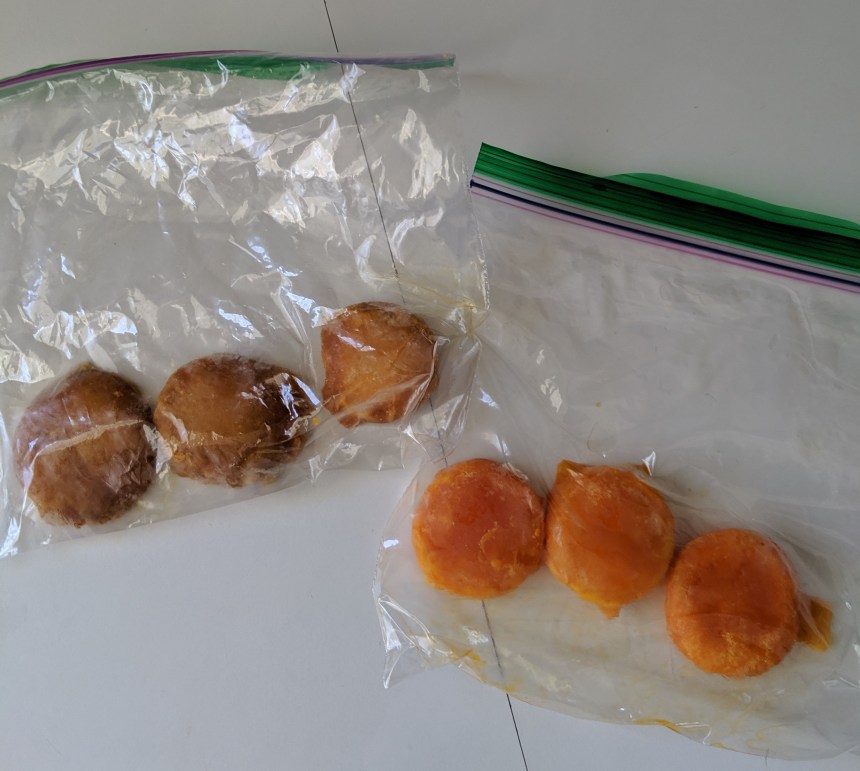
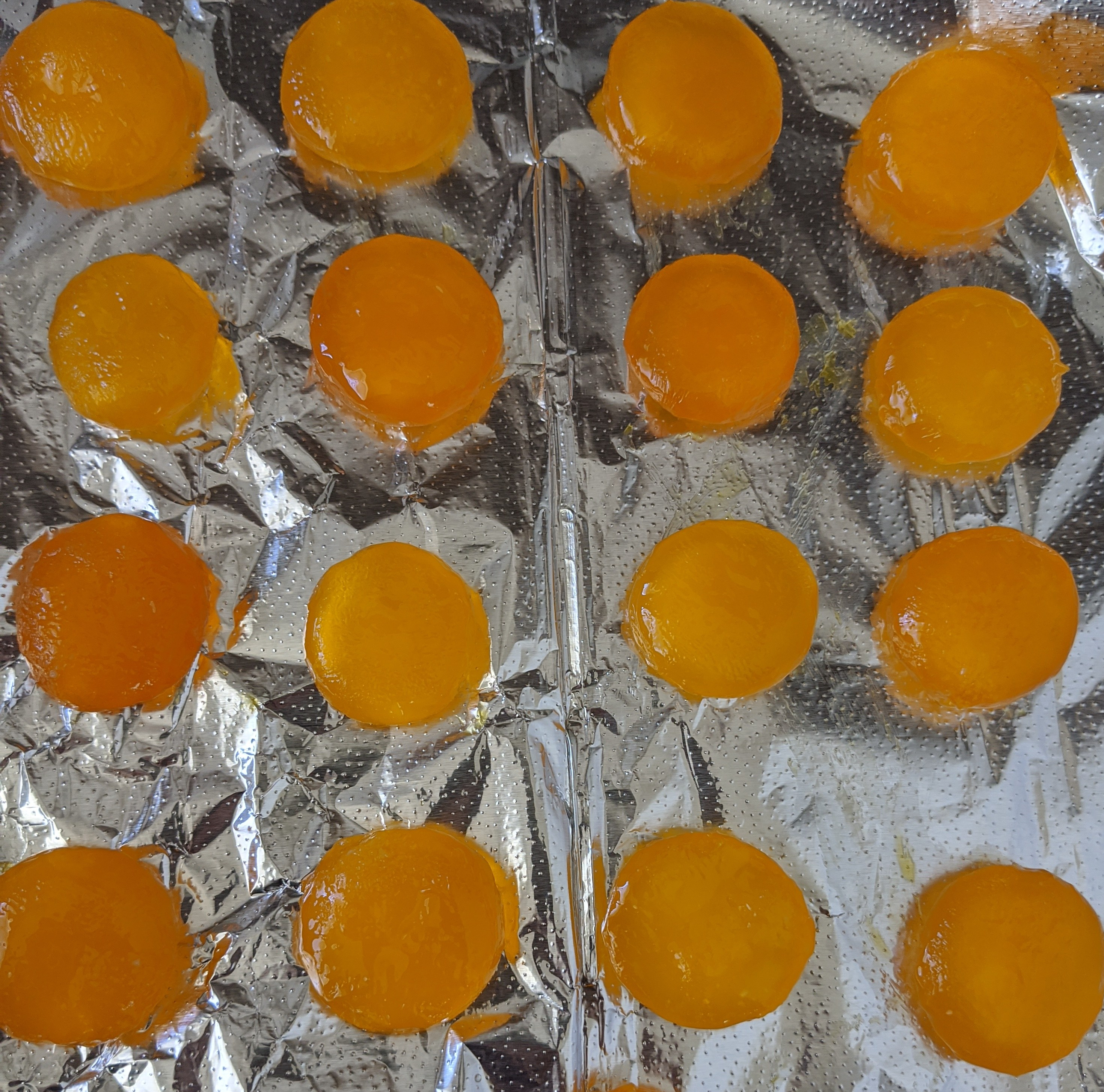
The salted egg yolks after being baked at 175 degrees for 3 hours on the right and 6 hours on the left. The difference in color due to the cooking time, but they actually taste almost identical.

The result was something that tasted nearly identical to salted duck yolks. Now having the foundational component, it was time to integrate it into its medium as a seasoning. This would provide the most flexibility to both pick up on the salted egg chip craze and allow for other adaptations to any opportunities.

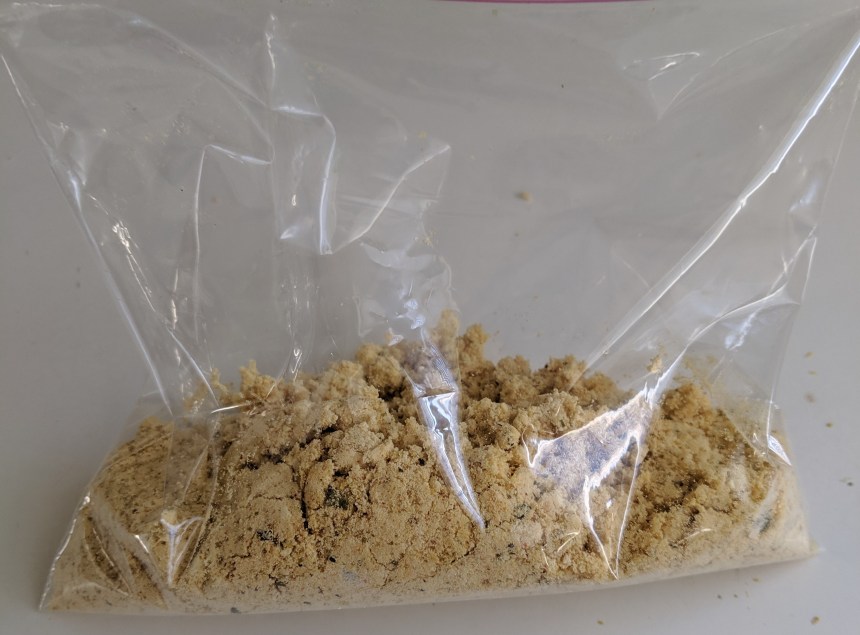
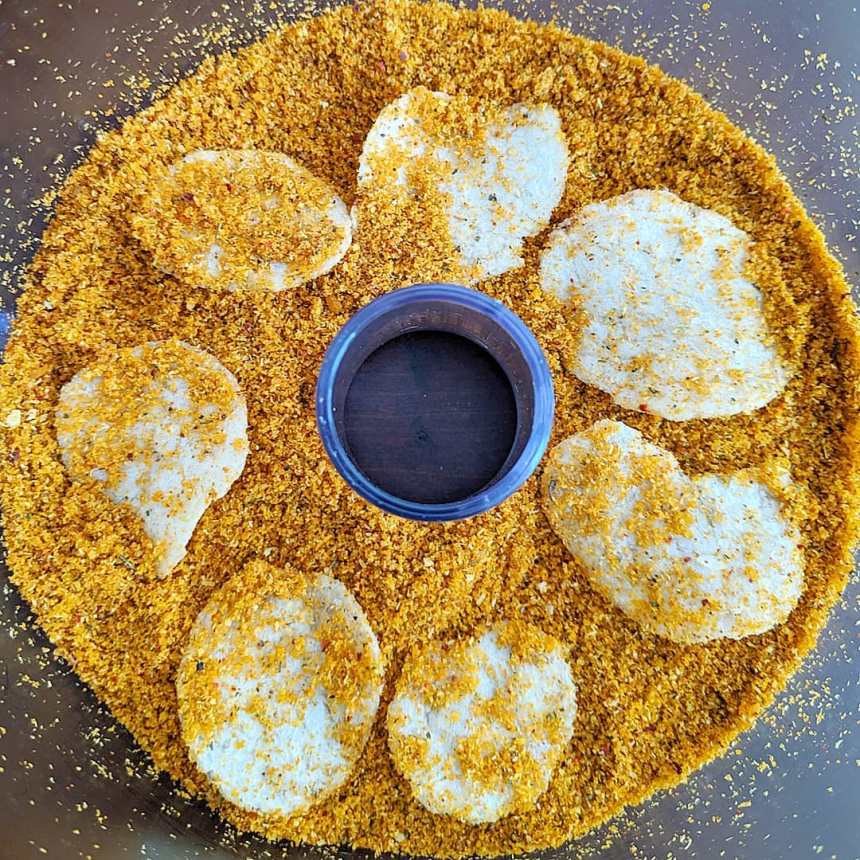
The same salted egg yolks as before after being put through a food processor

With this golden powder in hand, it was time to blend and balance flavors. One of the most popular salted egg chip flavors is curry so, hoping to improve upon the pairing, I stuck with that as my flavoring of choice. Though unlike my other cooking experiments, the goal was to create a product which meant embarking on the side excursion of learning what it takes to make curry from scratch. Fortunately, I had a close Indian co-worker deeply familiar with the topic that walked me through what was used and in what way. After a little trial and error, my newfound knowledge gave way to my own curry blend. The umami from the egg is fortified by notes of coconut, accented by a dull sweetness from brown sugar, spiked with tones of spice from common curry spices, and rounded out with herbs. Fully flavored yet enticingly mild, but I noticed a particular flavor lacking (as with all similar products) so I took things a little further by adding some citrus to the mix with yuzu.

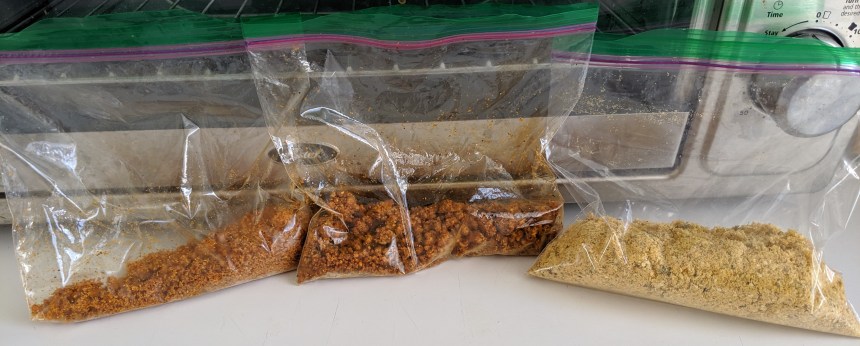
The curry powder flavor blend without salted egg on the left.
The curry powder with salted egg yolk compared to without it.

The goal of this exercise was to derive a fully flavored curry salted egg seasoning, that I could apply to something like chips, and was made from the ground up using a combination of my knowledge from other products and people with some personal intuition. After a couple of iterations and adjustments, I arrived at a solution that now needs to be put through the ringer to beget scale, but after several tastings I am confident that I have familiar flavors with just a touch of unique twists that grasp beyond just appeasing to this modern sensation.

Ultimately, it looks like my first food product endeavor will be this blending of new and old in an up and coming craze that I iterated on with what I feel to be a unique personal touch to satisfy those with similar yearnings. In other words, a similar beginning to my motivations for cooking in the first place. I guess some things never change.

Sorbets In Savory Dishes

My first real experience with sorbets in a non-dessert scenario was yellowtail paired with a mango habanero sorbet and I still to this day don’t understand why this concept is not more prominent. The textural and thermal play between components is unique to this medium as transitions from solid to liquid entertain your palate, while flavors burst in every direction. There is also the added benefit of having a dish adapt to the sweetness most sorbets provide, making for increasingly addicting bites between individual ingredients.

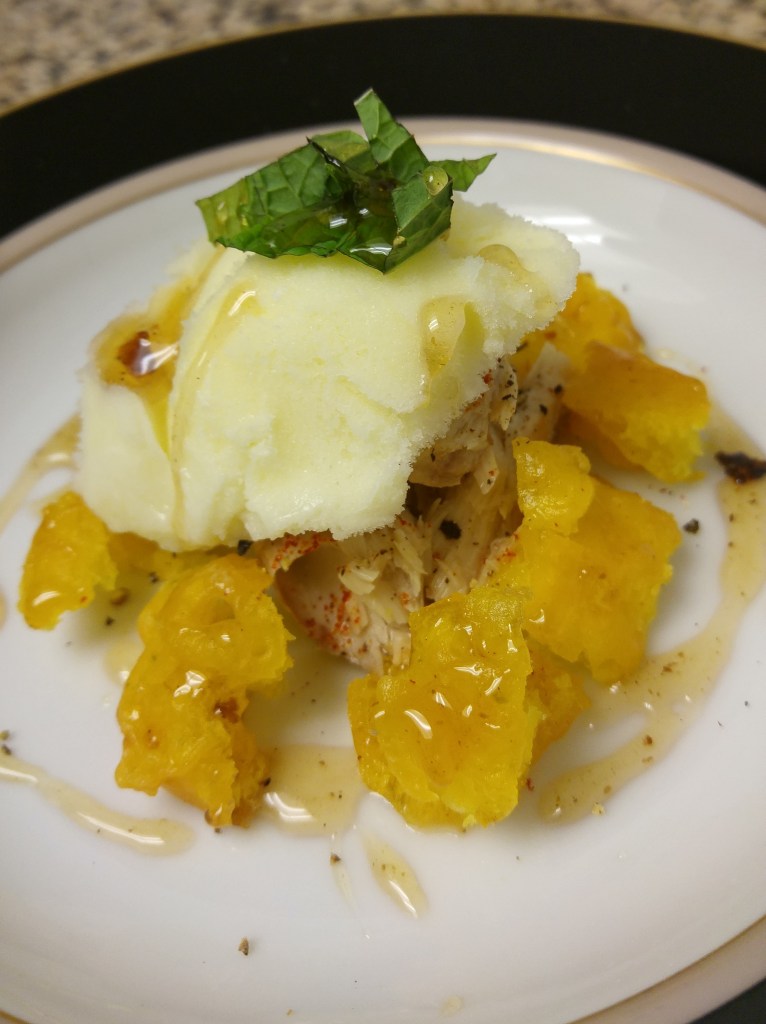
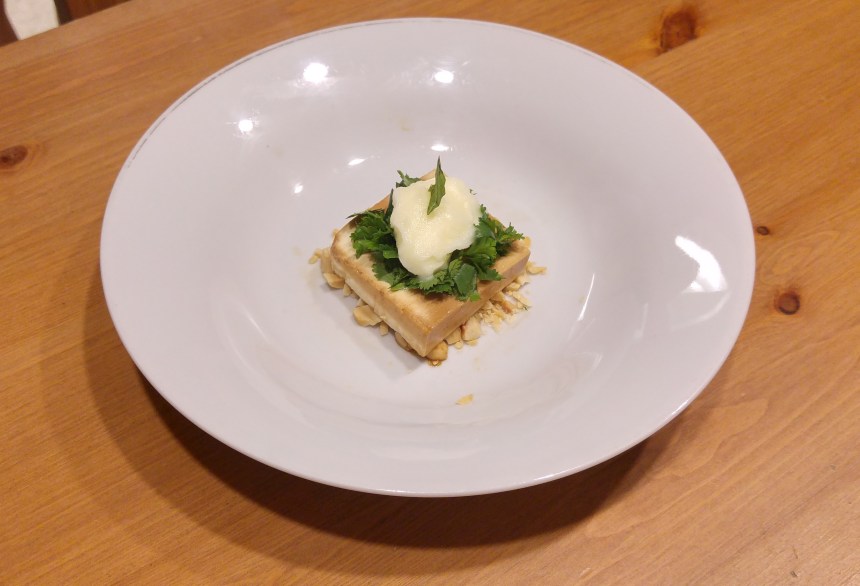
A variety of dishes I created around the concept of utilizing sorbets in appetizers.
First Slide: Mackerel seasoned with cayenne and black pepper, surrounded by saffron tempura, topped with yuzu sorbet, garnished with mint, and drizzled with truffle honey
Second Slide: From the bottom up this dish is composed of unsalted crushed peanuts, soft tofu marinated in soy sauce and fish sauce, a layer of cilantro and parsley, yuzu sorbet, and a garnish of mint.
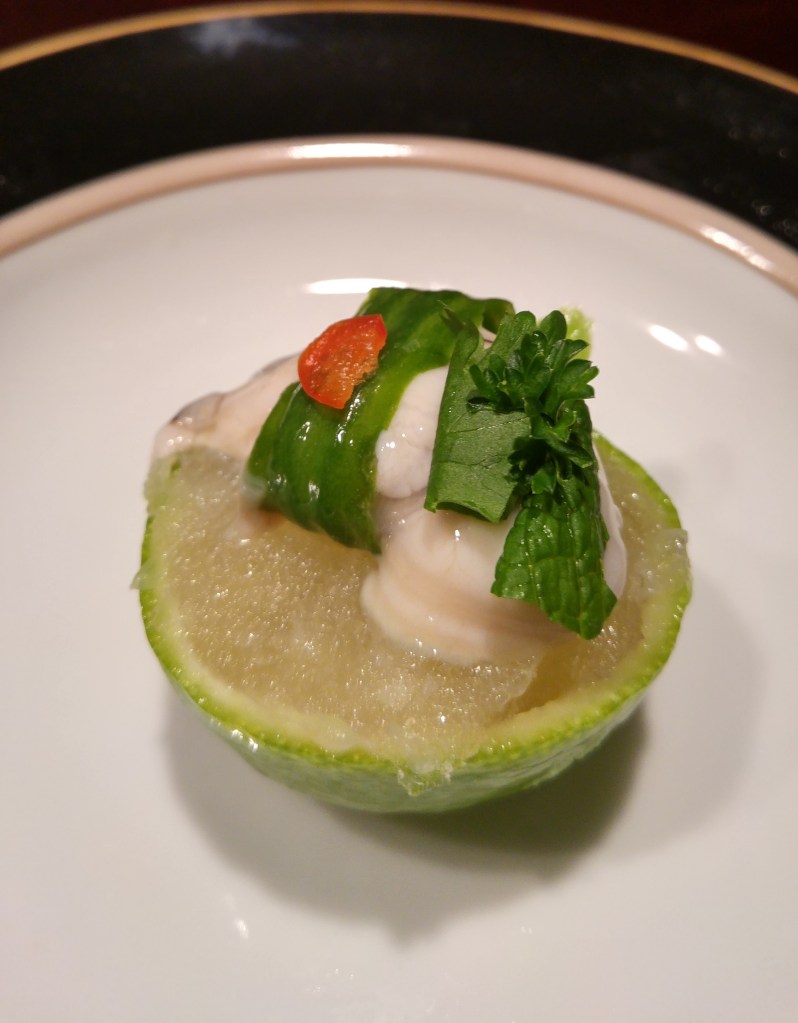
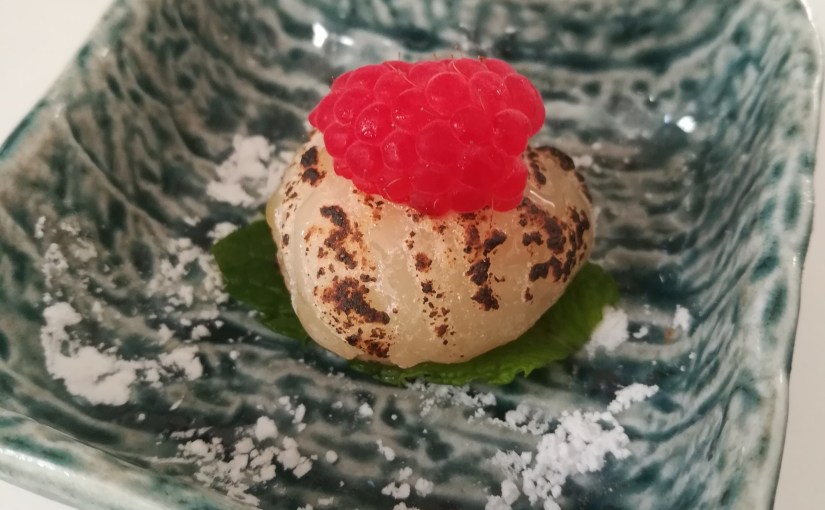
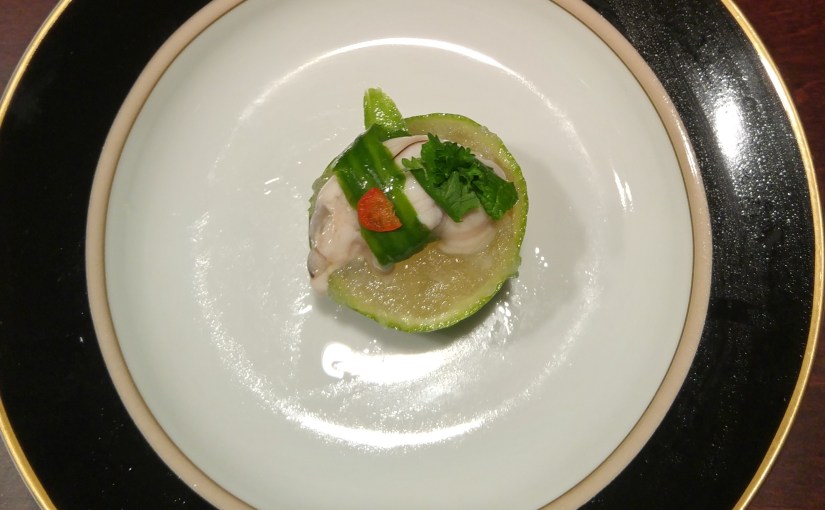
Third Slide: Lime sorbet lightly sweetened with dark amber maple syrup, fresh oyster wrapped in mirin and yuzu marinated cucumber skin, and garnished with red chili, cilantro, parsley, and mint.

The dishes above utilize a myriad of textures and sharp, savory flavors that create a balance like no other. Each composed to open with the depth of a slightly sweet, citric sorbet that acts as both a palate cleaner and centerpiece where each bite prepares you for wave upon wave of sensational onslaught. Maybe its just the novelty of not having it often or maybe I just love ice cream related foods, but I feel that building around sorbets is a sure-fire method of creating an amazingly unique experience.

An Exercise in Versatility: Vietnamese Style Chow Mein 4 Ways

The process of creating anything is always an amazing feat as you can start with seemingly arbitrary components and end with a thoughtfully composed master piece. Well, at least that’s the goal. Going in reverse, you can recursively break down any item, while each time being able to marvel at the mess in front of you. Every moment I lay out the raw ingredients for a dish, I ask myself, “Wait, am I really able to turn all these random ingredients into the coherent concept in my mind?” The answer is usually yes, so I took the thought a step further and decided to create a dish that would be used to create another dish. I call it “dishception” (I don’t really call it that, so please don’t quote me). But all that didn’t sound like enough of a challenge, so I used the dish three different ways.

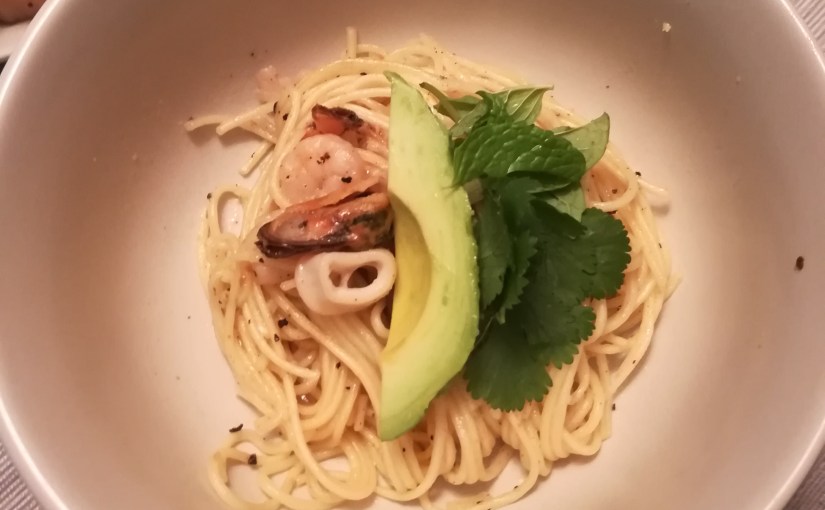
Cue Vietnamese Style Chow Mein. I was still brimming with inspiration from prior experimentation with fish sauce, so a fusion of Chinese Chow Mein with Vietnamese flavors had been occupying the back of my mind for months. Growing up in a predominately Chinese neighborhood, I had a solid idea of chow mein, but always felt there were areas for improvement. The dish was hearty, but lacked variety in flavors and textures. Vietnamese cuisine was the answer to the lack of flavors, while its role as being a part of something greater would improve its textural complexity.

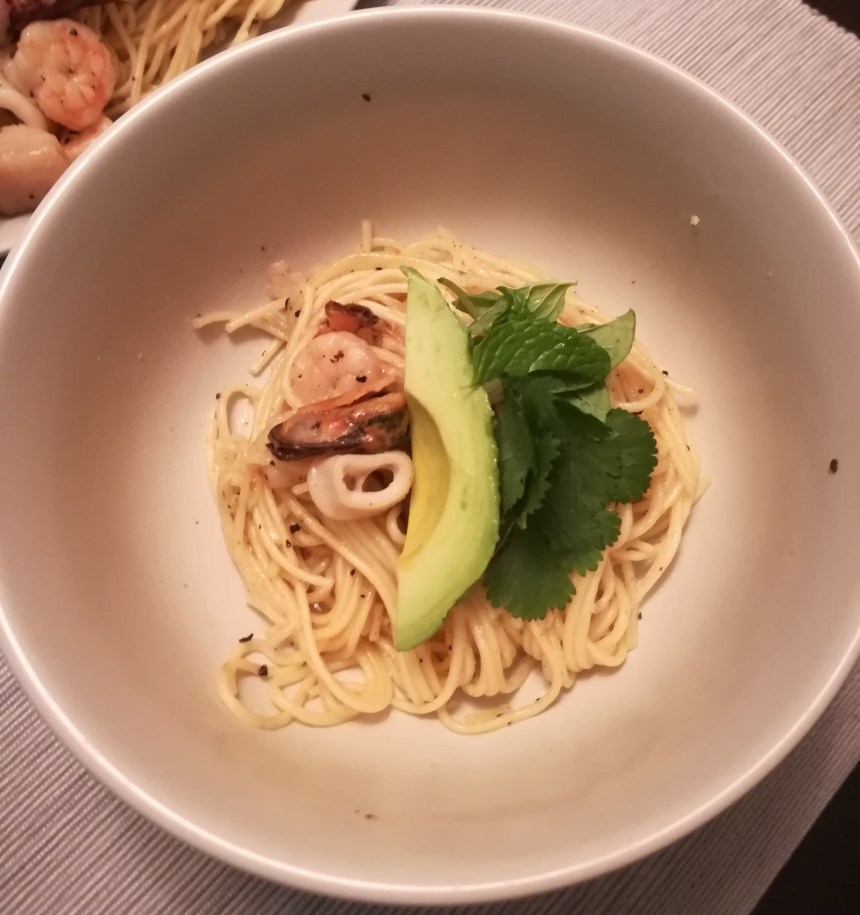
Vietnamese Style Chow Mein: chow mein Noodles, Seasoned (fish sauce, oil, sugar, white pepper, black pepper, soy sauce, lime) seafood medley, avocado, mint, cilantro

Fish sauce brought in an extra layer of depth to the seafood umami, aside herbal contrast from the herbs, avocado for a rich, creaminess, and the whole package lightened by the presence of lime. Without the aforementioned components, the dish would be reduced to a relatively light seafood chow mein. This laid the groundwork for the next three dishes that would utilize it: a slider, a lettuce wrap, and a sushi roll.

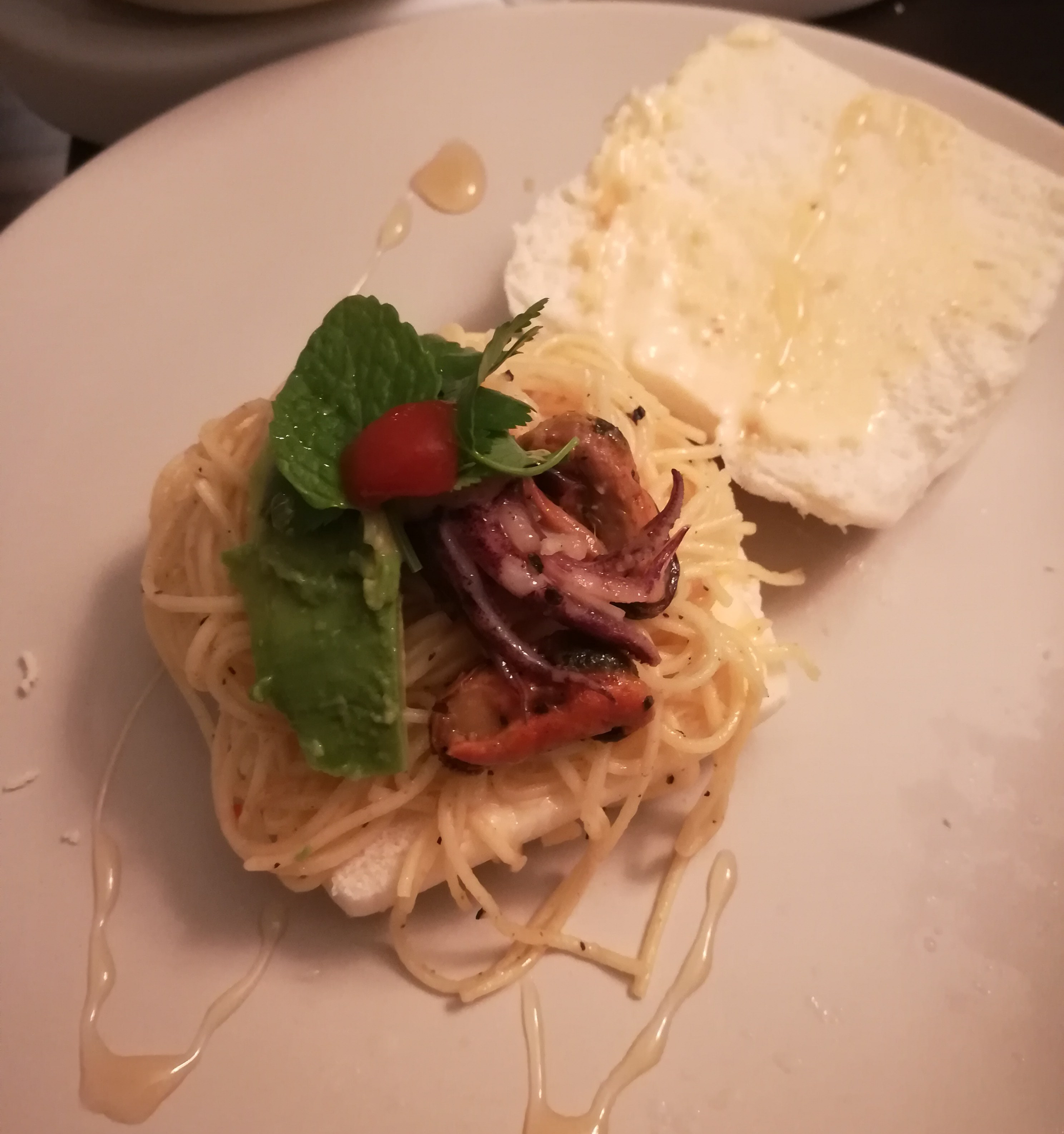
First Slide: A slider version with bao bread, Zombie apocalypse hot sauce with mayo, honey and a touch of sriracha.
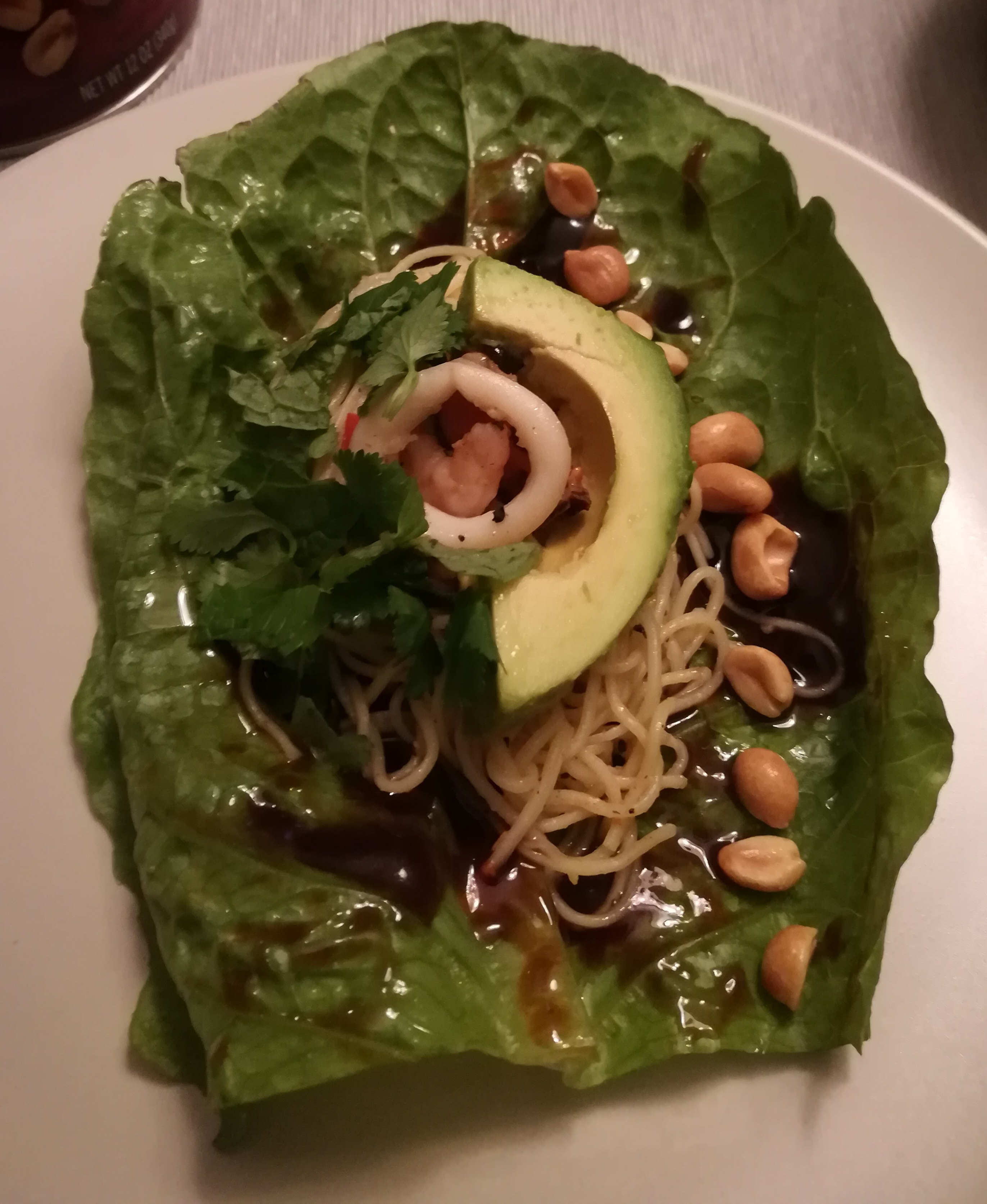
Second Slide: A wrap version with sriracha, hoisin, and peanuts.
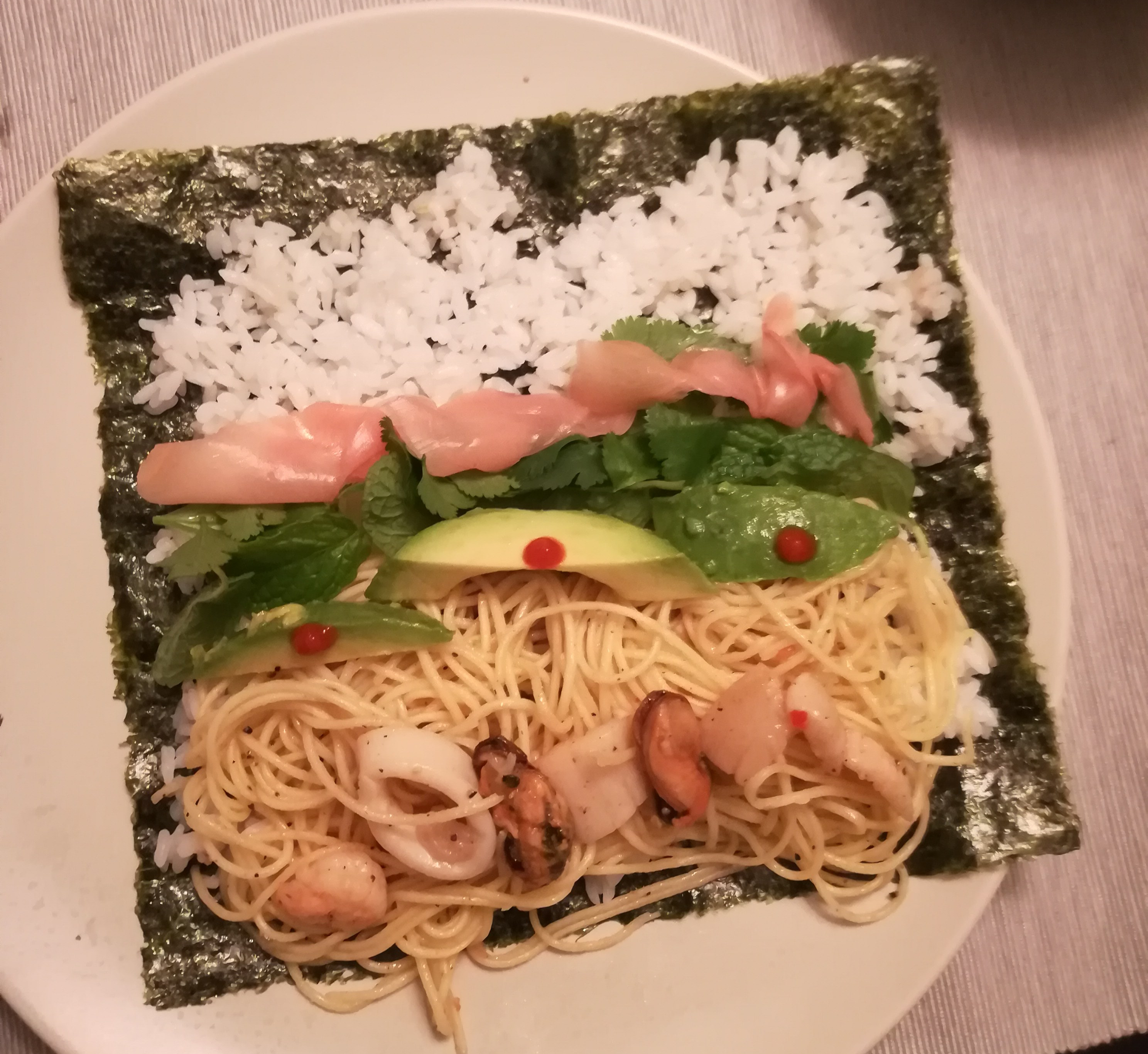
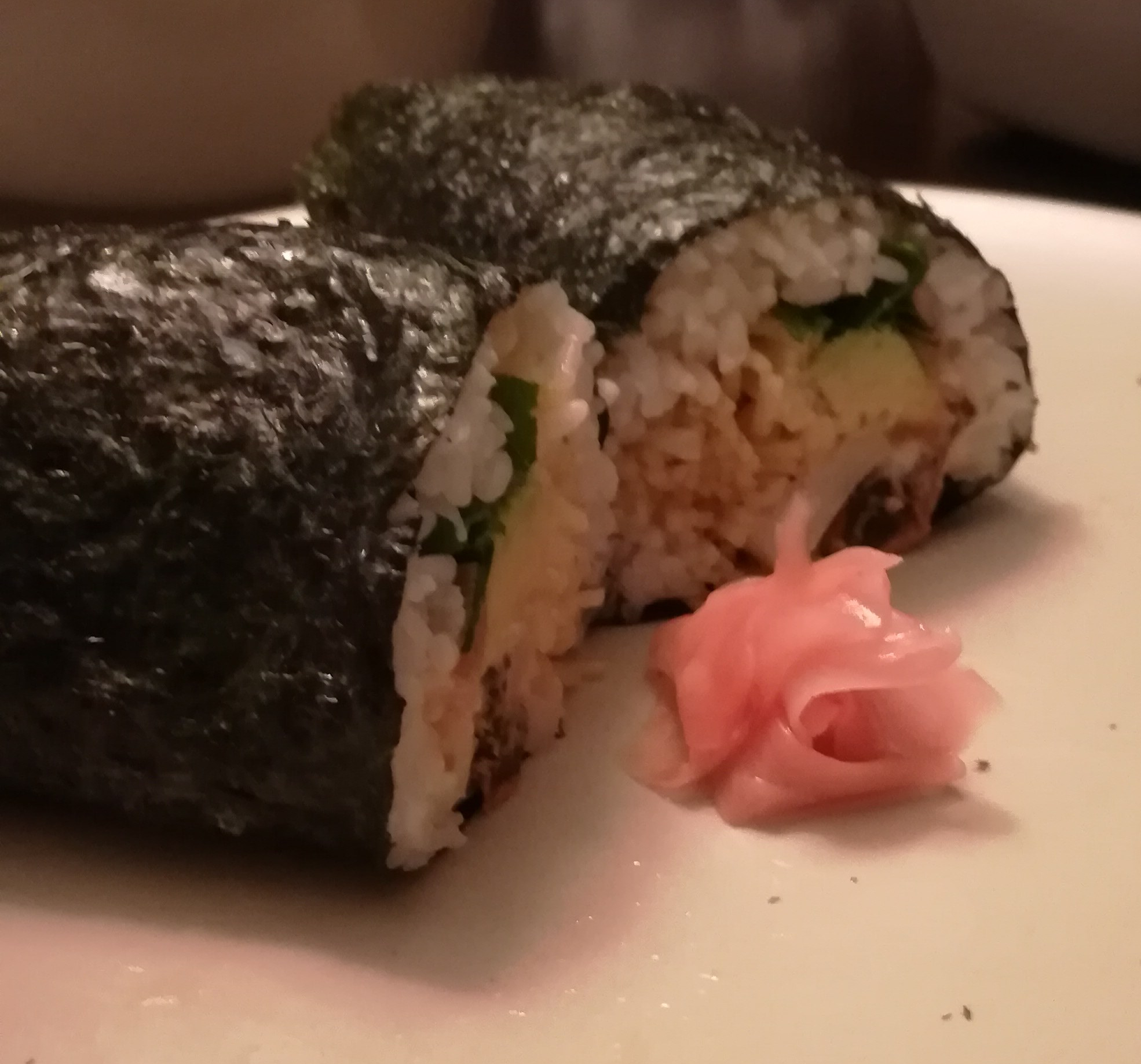
Last Two Slides: A sushi roll version with ginger, sriracha, rice, and seaweed.

Each dish was a different experience formed by the little details surrounding the integration between the format and chow mein. Bao bread demanded more flavor, which allowed for more spice and sweetness in the slider. Meanwhile, the vibrant butter lettuce’s water content called for more salt and textural variance, leading to the use of hoisin and peanuts. Finally, the sushi roll was more about bridging the gap to have the noodles feel at home in its new role by accenting the rice and seaweed with a common pairing in ginger.

Variety is the spice of life and variety within formats and small details dictated the change in experience of these noodles. With each combination of detail, the chow mein morphed until it appeared unreminiscent of its beginnings, while evoking nostalgia of its original flavor profile. The night was a successful reminder that the recursive process of creation goes in both directions. A reminder that food has more to it than what is initially seen and, like anything else, is as much the sum of its parts as it is the part of something greater.

Experiments

When I first tried out cooking at 10 years old, I didn’t understand what all the hype was about. Follow some steps and the food comes out as you’d expect it. If it came out any different, then it most likely means you did something wrong. This was about all I could think about as my aunt showed me the ropes by cooking some family recipes. So after a few weeks, I got bored and stopped cooking.

Fast forward a few years and a couple Travel channel shows later, I was beginning to see food in a different light. I saw culture, creativity, and craft in all the culinary works being showcased on these television shows. So, once again, I cooked. But this time it was different. My sister had brought up the idea of cooking a whole meal. But this was no normal family meal. She had gotten the idea to cook a red wine chicken with potatoes au gratin. A meal in which I would cook the potatoes and she would cook the chicken. Not only was this something we’d never had or done before, it was completely different from all our family recipes. This meant I was starting from a blank slate. I had a recipe, but no concept of what it could or should turn out to be. The process remained largely the same, but the little details started to change. Between figuring out what I had available, what I found necessary, and the techniques I had from what my family’s knowledge was limited to, there was puzzle to be solved. Cooking wasn’t about following a recipe at that point. It was about solving that puzzle to bring to life the image of what the dish I wanted to create was. The shows had given me a window of the creativity of food from all around the world, and then the experience of making something from a lack thereof gave me the realization that there was nothing stopping me from doing the same.

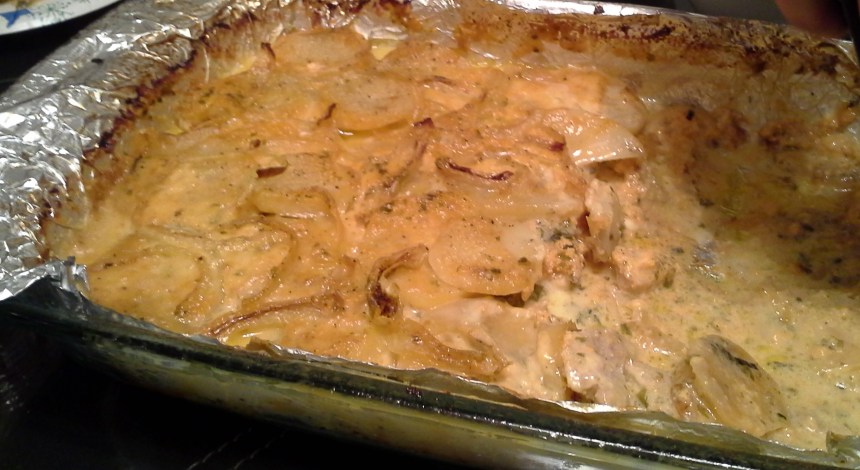
An example of mentaiko version of gratin I made many years later for my first coursed meal

At this point you are probably thinking that I began cooking all the time and it became an amazing life long hobby from then on. In reality though, this dish became the only thing I cooked once every few months. After all, I was only around 16 at the time and cooking for the family sounded like a chore that got in the way of TV and video games because it would be. But it did start the groundwork for what was to come as I would later recall this experience during college. By then I had to do my own groceries, make my own food, and eat out at many establishments where I was disappointed by the lack of creativity (I remember the first time someone told me about a sushirrito and my excitement turned into disappointment when it turned out it was just a marketing ploy for a slightly larger uncut sushi roll). All this meant I ended up cooking what I wanted to eat and enjoyed blindly trying to get to what that was.

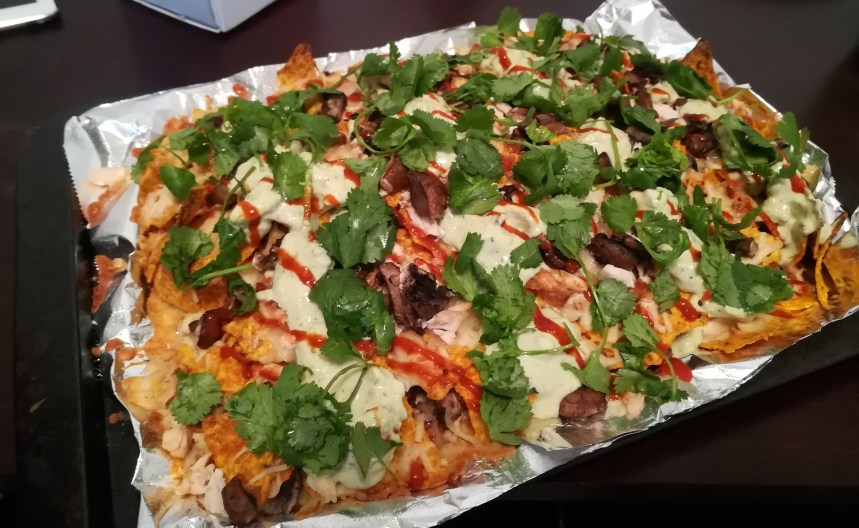
Example of what happens when I crave nachos

Now, after all these years, aspiring to satisfy my desires and creativity through cooking has served as a fun hobby. I learn from what I see and hear, but I have no regard for keeping convention for convention’s sake. I do what I want to do because it sounds like a good idea and, if it happens to turn out well, I share it with the people around me. All this has led to periods of experimentation with ingredients that you see here with those learnings later utilized in coursed meals I would create.

Ukishima Cake Style Cornbread

I have always loved the look of traditional Japanese sweets. Wagashi (和菓子, wa-gashi, lit. Japanese sweet) comes in many different shapes and colors, but even here in Southern California you’d be hard pressed to find many places to purchase these wonderful confections. One day I came across a group on meetup.com for making Wagashi a couple miles from me. Two weeks later I found myself in a home learning about and making Wagashi with three other strangers and the group coordinator. The magic of the internet.

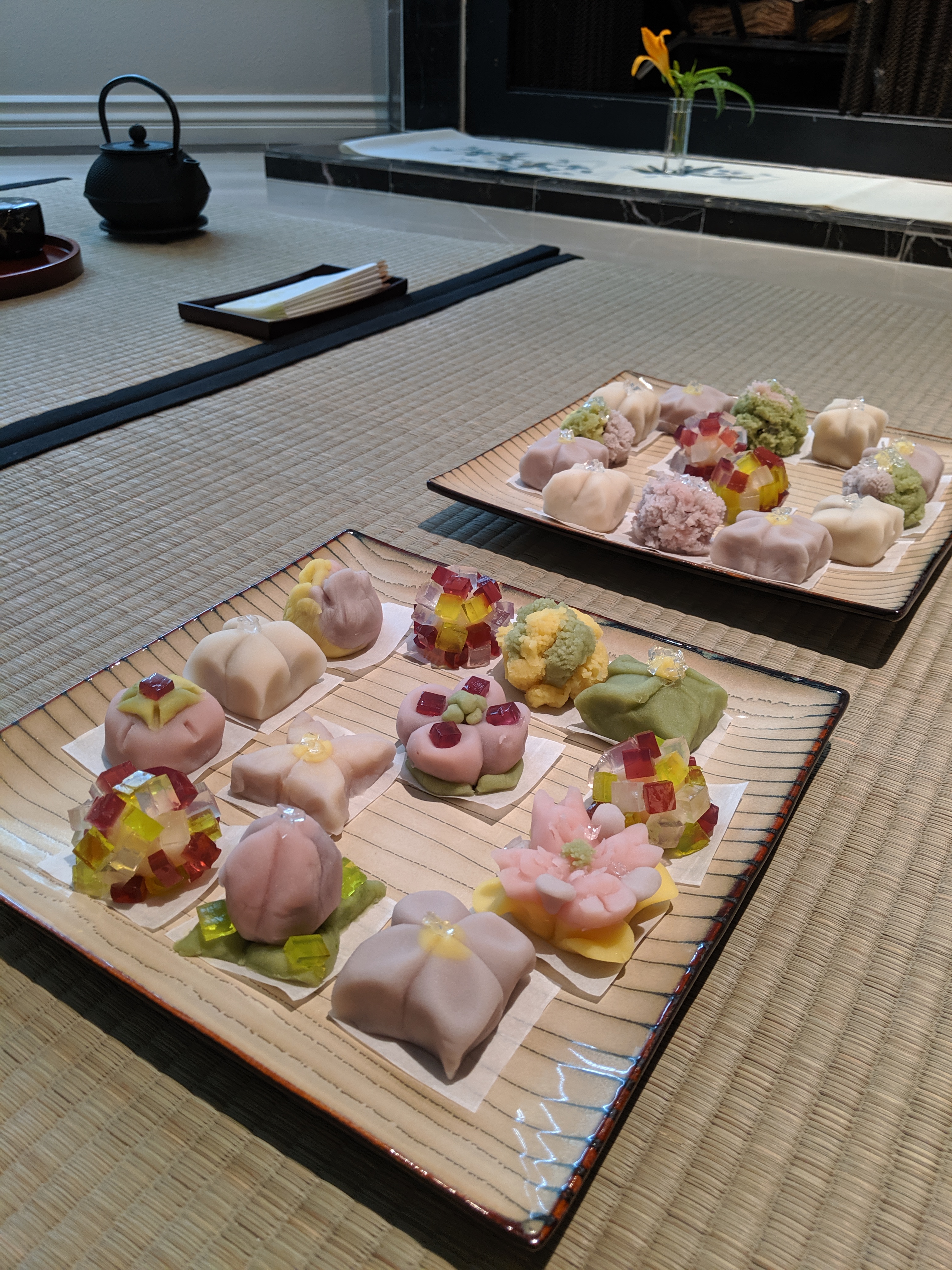
An example of wagashi from a later meetup in that group

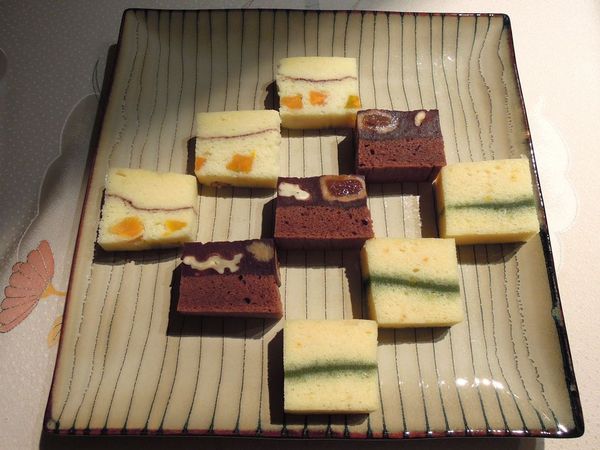
Our coordinator was born and raised in Japan and had pursued the hobby of Wagashi after gaining her credentials in the art of Japanese tea ceremony. She explained that there were different types of Wagashi and the one we would be making that day was a mushi mono (蒸し物) (steamed confectionery) named Ukishima cake. After giving us a quick rundown of what we would be making, we tasted some cakes that she had had prepared beforehand. The cakes were delicious particularly because steamed cakes are a rarity here and even more so that we were using a particular type of rice flour called Joshinko (上新粉). Slightly mochi like, accented with the starchiness of lima bean, a mellow sweetness, and with several layers varying on the flavor. There was a nice variety of cakes ranging from yuzu with matcha jelly, to chocolate with dates, and pumpkin spice. Afterwards, we went through the steps to make the yuzu Ukishima cake with a matcha jelly layer and each took home a couple slices of cake.

Ukishima Cake from the meetup
From left to right: pumpkin spice, chocolate, yuzu with matcha jelly

As with any time I have a new experience with food, my mind began racing thinking about what I could apply this knowledge to. The possibilities seem endless as the process was relatively simple. In essence, Ukishima cake consisted of bean paste mixed in a food processor with some white sugar, egg yolks, and Joshinko, folding in some meringue, and then steaming the resulting mixture. Looking at that process there was one thing that came to my mind immediately. Cornbread.

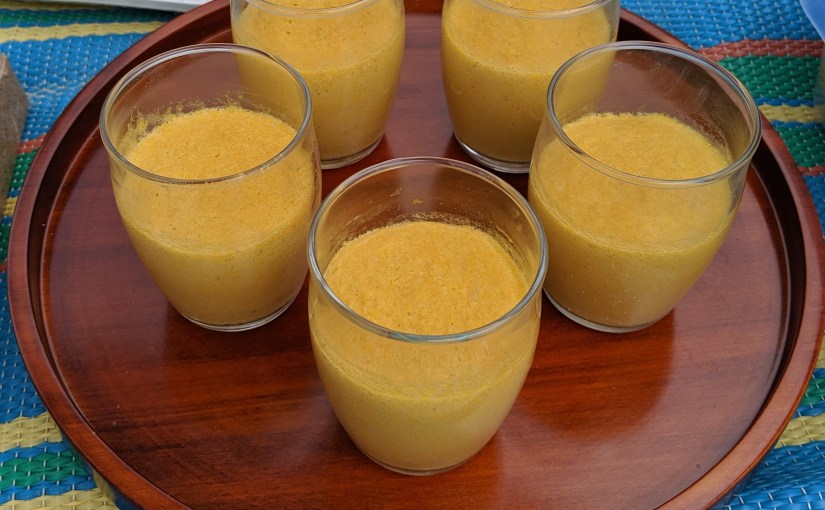
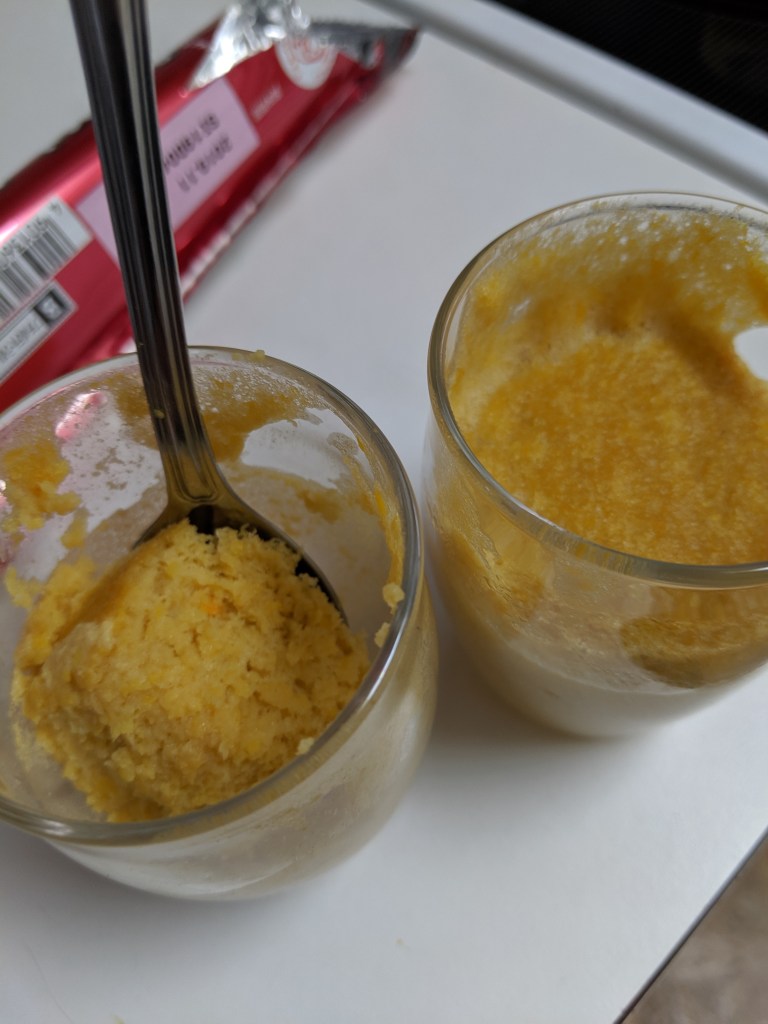
The resulting “Ukishima Cornbread”

I replaced the beans with corn and the white sugar with brown sugar and dark amber maple syrup. Everything else remained unchanged. I pureed the corn in a food processor, cooked it on a stove with the sugars to turn it into a paste, followed the rest of the process, and steamed the mixture having no idea how it would turn out. Beans and corn seemed similar enough so that the texture would be fine. Right? Turns out that the assumption was correct and all went according to my expectations. The result was a lighter, fluffier, slightly mochi cornbread with a strong corn flavor. Success. Now on to making a more savory miso version and a sweeter dessert version.