Creativity

The antithesis of creativity is the fear of failure. Failure to not please others. Failure to not meet a standard or goal. The fears are endless, but in reality the only measure of creativity should be how a work represents you in a given medium. So if everyone is creative in their own right, then why do we constantly distinguish between the creative and uncreative?

Breaking out of the mold

For a long time I viewed myself as uncreative purely based on comments from my peers on whether I could draw, design, etc. I grew up with the constant notion of creativity as a level of artistic skill. There were those that had it, and those that didn’t. So I never really thought about creating anything. I believed I didn’t have the creativity to make something meaningful. Something people could view as creative and admirable. In other words, I thought I couldn’t succeed. That all I could do was fail.

The first step in creativity is realizing you are creative in your own right. That the expression is what matters. It doesn’t mean you’ll change lives. It doesn’t mean everyone will love what you do. But when you’re truly out there expressing your creativity, you’re creating something only you would choose to do. Something undeniably unique to you.

I know there are those that would disagree. Those that would pull up countless examples of regurgitated or similar work and say that’s uncreative. They may be even be right for some of those examples, but I believe the quirks of every individual shine in their own self expression and that’s what matters. Little details that come out when they choose to express their creativity that snowball after deciding not to chase the standards of creativity that other people set.

For me, that is what cooking is and has always been. Cooking was what freed me from my own self-perception of being uncreative. It’s what led me to explore my creativity by writing and even some other things. For whatever reason, I never hesitated to express myself by changing a recipe or creating my own dish. I created whatever came to mind. I created what I wanted. My creations were mine and I enjoyed it for what it was. Luckily, other people did too and so I realized I was creative. Except in reality I always was and you are too.

Expressing Yourself

I think its important to distinguish that being creative may have nothing to do with whether people like what you create. There is some pattern to what people like based on where you live, time, etc. and its fine if people around you don’t care for what you do. The most important thing is to create what you want and then, if you feel inclined to do so, there’s an endless amount of ways to reach others with that weird and magical thing we call the internet.

All it takes is browsing channels on YouTube to see the broad range of human creativity and interests. People often like to generalize what people will end up loving or hating, but there’s some weirdly popular stuff out there. Many people might swear against them as it doesn’t adhere to the formulas/quality of success content (I love this channel by the way, but I doubt many would bet on its success) that you see in many big time TV shows.

Formulas aren’t creative. The process of creating one might be, but definitely not once it is used repeatedly. In fact, its kind of the opposite. Its filtering your thoughts into a predefined way of thinking. Its a focus on the standard of success, and with the opportunity of success comes the chance of failure.

Just like how videos exist to cover a wide range of interests and tastes free from predefined formulas, food should always do the same. A world where everyone cooks the same thing (a.k.a. recipes) would be hell and I don’t understand the obsession with right or wrong in cooking. It is exactly like how some people group others as creative and uncreative. I always tell people the best way to cook is to cook what you want.

Creating a dish should be about what you want

Let’s suppose a situation where you want to prepare dish A for your family or friends. You could follow recipe X, but whose to stop you from adding your own flair or taking your own risks. Maybe you like spicy food and the recipe isn’t spicy, so you add some spice. It may not always work and I may be part of the minority when I say this, but I find a conversation about the things you tried more interesting than the recipe that you followed.

There is nothing wrong with wanting to follow a recipe just because you want to eat something without having to think much. There is everything wrong with feeling like you can’t try to make something just because you don’t know the right way to do it. Remember there is almost always more than one way to do things. And if there isn’t, then I guess you were just creative enough to create something new.

You may not get what you want the first time. You may not even get it after five times. But focus on what you want to eat and I guarantee that you’ll enjoy the process and eventually the result. A result that will be unique to you. This is because you dictate what you like and no one can take that away from you. It’s because you have your own creativity. There is no replacement for your unique perspective and using that will always result in a creation unique to you. That is unless you post the recipe and everyone follows it religiously. The irony of it all.
What does it really mean to cook?

The most common question I get asked when someone finds out I cook is “what recipes do you use?” and the answer I give is typically some variation of me describing how I come up with recipes myself. This is generally followed by a couple nods in agreements, me showing some examples of things I have made, and then finally proceeded by the question “so what recipes did you use?” Well, at least they changed out a word.

Why cooking is such a loaded term

In all seriousness, I get asked these questions all the time and, for many years, I thought this was weird. I felt like I had to repeat myself like a broken record and constantly show pictures before they would really understand my answers. After all that, and maybe even trying some food I made, the light bulb finally clicks when they say “oh, you really do cook.”

I’ve pondered heavily on why this is such a common occurrence. Don’t a lot of people cook? At the very least, doesn’t everyone have to put together a meal at some point? So why is it so shocking when people find out that I (or anyone else for that matter) can cook? Culture and media probably plays the largest role in deep seated perceptions such as this. Cooking is generally pegged as this magical process that can break at any moment, and braving a new trail in a world of recipes is viewed as a route to certain failure more often than not.

In its essence, cooking is just the process required to manufacture sustenance for you to maintain your life. Or in more layman terms, to fill your belly so it can stop growling at you. The difference is that some people may lack the initial knowledge, intuition, and/or creativity, and settle for the simplest methods to satisfy their hunger. This leads to a distinguishable difference in quality in what is cooked (or even avoids cooking altogether). But quality aside, whose really to say where the line is drawn between cooking and not cooking? People often say microwaving isn’t cooking, but what about microwave cakes and processes that utilize a microwave to melt an ingredient. I think this is all unnecessary semantics and everything involving a process with food should be considered cooking to some degree.

That being said, I have noticed a commonality in the public perception of cooking. Most people consider someone is not cooking when he/she prepares a microwave meal by following the directions on the box as that is just following the expressions from some member of the manufacturer; aka the true creator or cook.

How is following any recipe any different

So where is the line drawn when we say the mom that follows recipe A from blog B is an amazing cook, while the son that follows the cup noodles directions can be considered someone who can’t cook to save his life. Why are people so drawn to the moms of the world who know how to cook while these sons are overlooked? One key difference may be the complexity of the aforementioned dishes and their corresponding techniques, but if complexity of the technique employed is used to measure one’s ability to cook, then where does that leave creativity.

If I’m creating a unique dish using cooking that only utilizes a microwave, and the resulting dish tastes better than a complex recipe someone regurgitates, does that make me a better or worse cook? What about if we take the microwave out of the situation and use just raw ingredients? Now was it packaged or processed? How about mixed with anything? The questions can go on and on, but the key is that “cooking” is really a loaded term that disregards individual creativity.

Everything else aside, how would we go about factoring in the creativity of the creator? Cooking would be no different from person to person without creativity. Everyone would be following the steps and rules we call recipes, but all the results would be the same. Creativity’s role is really to fill the gap between what is available to you and the experience of the dish you want to create.

The line between a chef and a cook

Those that bring to life these new experiences in dishes are often given the title of chefs. Chefs are creators at heart and, though the quality and creativity of the resulting food may vary wildly to each person, the process of representing one’s unique influence is what makes them a creator.

Although many don’t think much of this distinction, I think there are those that are catching onto this idea of non-professional chefs. I’ve noticed that, once someone really believes I can cook, they would call me a chef (though some people seem to call anyone that cooks anything a chef). Yes, the group of people who cook a myriad of dishes (cooks) and group that comes up with creative concepts (chefs) may overlap, but the point is that both groups are not measured the same. Cooks are measured by what they can cook and chefs are measured by what food they can come up with. And even if they were measured the same, we should be equally interested in how much their own personal creativity was factored into the food they create as much as the fact that they actually went through the process of creating it.

So maybe the answer to this loaded question of “do you cook?” really boils down to asking the deeper follow-up question: “are you a cook or a chef?”

Bringing Fun Back To Food

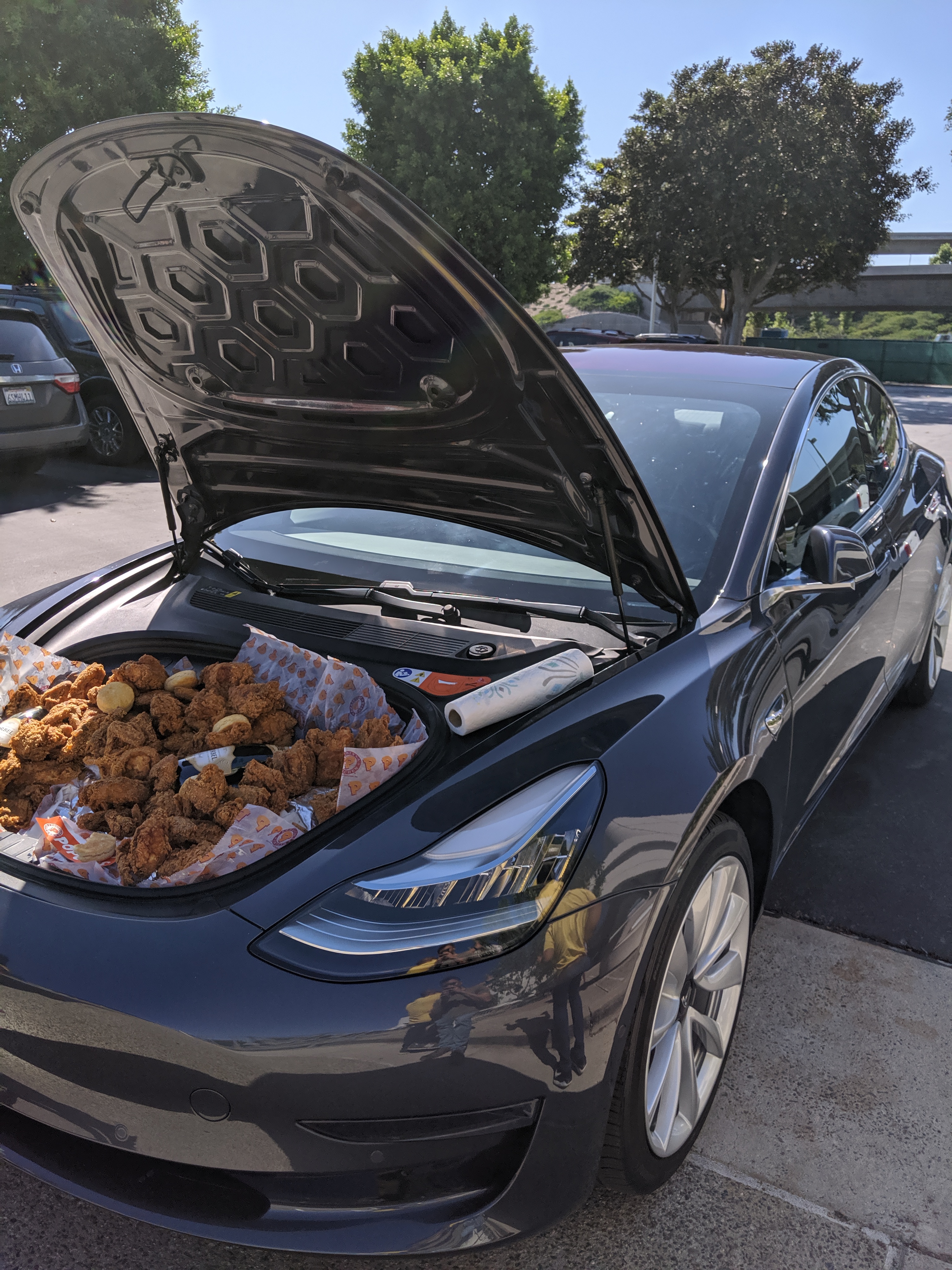
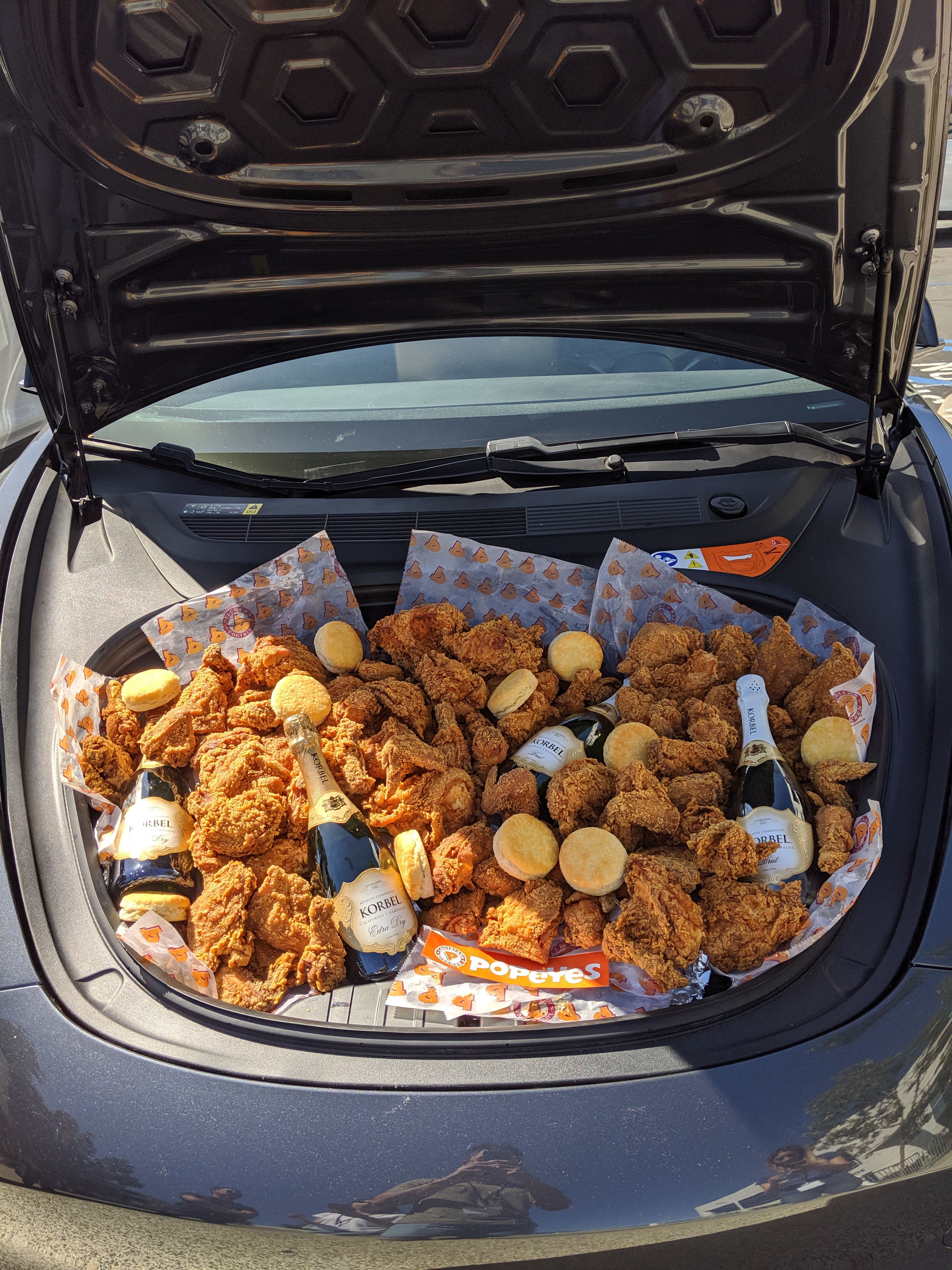
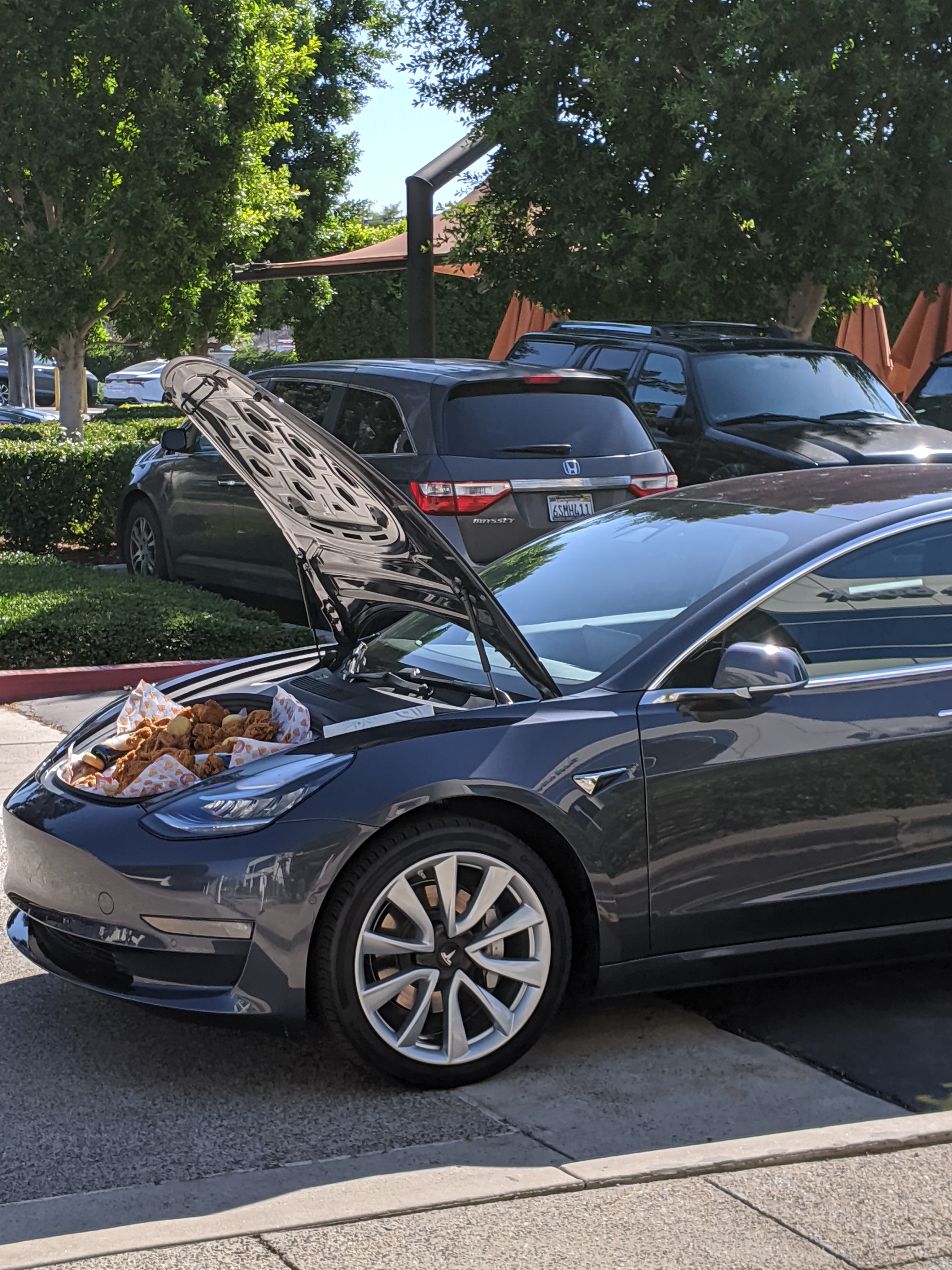
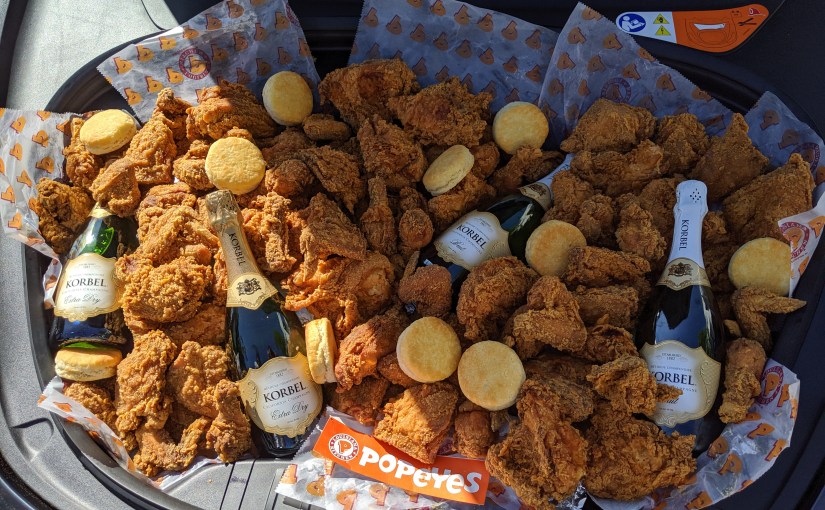
I was driving back from the grocery one fall evening and my friend made the suggestion to put the rotisserie chicken in the front trunk (frunk) of my Tesla. “You could say it’s chicken powered,” he laughed. To which I replied, “It’d have to at least be filled to the brim with fried chicken before I said that.”

And one year later…

Now you might be wondering what was stopping me from dropping by the nearest fried chicken establishment and grabbing over 100 pieces of fried chicken. The short answer is that I thought only me and my friend would care and that seemed like a whole lot of effort for two people (we actually did have a date set initially that didn’t go through, but that’s the reason I didn’t set a new one until much later).

Also, champagne just because I want to be extra.

So why did I finally do it?

Two reasons: my decision to use social media to create and publicize my food events gave me motivation to do more things and I just remembered that I wanted to do this.

Though these two reasons are really rooted in the same idea — I wanted to do more food events that would make food more fun for everyone. There could be these ridiculous creations that everyone could laugh at in amazement, while still bringing my own twists to the table in unique flavor combinations. Ridiculously large foods and feasts are out there, but I felt like there’s a general perception of large and good as being mutually exclusive in the food world.

With my car getting the newly released enhanced summon Tesla update, I decided to pair the two events together. I could have fun treating my full sized car as a remote control toy and get a kick out of the ridiculousness that is a frunk full of fried chicken. Two long standing dreams at once! So I jumped at the opportunity and created an event, while pitching the idea of having a video where my car would drive up from where it was parked to deliver me my frunk full of fried chicken to a couple co-workers.

I expected some interest, but was blown away by the amount of support I actually got. One person to edit, another to bring a drone, people to participate in the video and help out, and someone to even bring a cat for a possible video idea. Everyone I told went from initial shock (giving me that “what would even drive me to propose such a concept” look) to being enamored with actually seeing it happen.

All these events culminated in people from all ages enjoying fried chicken out of the frunk of my car, which made me sure of one thing: it really is great to have fun with your food.

The world could always use more fun food events

Sometimes I feel like the food world takes itself too seriously all the time. There is often a stress on executing the right technique/steps, paying respect to culture/history, or having to prove yourself in the pursuit of doing things differently. I do think its important to have “perfecting your craft” as part of the focal point, but I don’t think it has to mean sidelining silliness. After all, that silliness is a crucial point to the uniqueness of any creator’s artistic endeavor.

This is not to say that fun food is not out there. It just usually isn’t accessible. The internet is filled with ridiculous food creations if you look hard enough, but when’s the last time you were actually able to participate in one.

All this is exactly why I want to break that mold with more food events. The world is in constant need of more opportunities for people to not just enjoy food, but for it to be fun events that they can participate in. I want to continue to capture ridiculous moments where there is more to enjoy than just the food itself. But more importantly, I want more people to experience the fun of these concepts themselves.

In the words of Tesla founder Elon Musk himself, “fun is underrated.”

Time will tell if I’m wrong and people just want regurgitated formats and impersonal food experiences. But if I’ve learned anything from sharing my thoughts and experiences with people, it’s just that people want to have fun with food. There needs to be a shift in the perception of what can actually be done and is available to them. A realization that there is more to food appreciation than the food itself. There’s so much in the little details of food presentation and the environment surrounding a meal left to be explored to continue to spark the imaginations of all those who partake.

So here I’ll continue to try to do just that. Trying to play my part in making food a personal, fun experience that all can enjoy. Hopefully you’ll join in on this journey, one fried chicken filled Tesla frunk at a time.

Solo Dining

I tend to limit my higher end fine dining experience to a handful of times a year and this warm Wednesday evening was one of those occasions. The Michelin guide had just come out for LA, and being located in OC, I had taken it upon myself to make sure I had visited the two rated restaurants near me. One was Taco Maria, a modern Mexican restaurant I had frequented in the past, and the other was Hana Re, a Japanese restaurant I had never even heard about. Thinking I ought to beat the rush as more people read about the newly minted list of starred restaurant, I had quickly contacted Hana Re for their most recent available reservation for one.

This dinner marked would be my first foray into having a fine dining meal by myself. I am no stranger toward grabbing a bite (or several) to eat by myself, but this was a full on, multi-hour fine dining experience. A first that I would quickly find meant anything but dining solo.

I had heard about the concept of solo dining at a gourmet establishment as an idea that contrasted the popular notion that meals are always meant to be enjoyed with an intimate party of two or more. The core of solo dining follows the principle that food is the focus and, as with many solo experiences, your mind opens up to both the experience at hand and the environment around you when there is less to focus on. No need to divert your attention and energy towards any accompanying participant. Just you, the food, and your environment.

The irony is that, although you do focus on the food and its preparation more so than not, in these solo dining situations you also find yourself engaged in a much more social experience than you had otherwise planned. One that’s organic in a way I rarely experience with my more introverted tendencies.

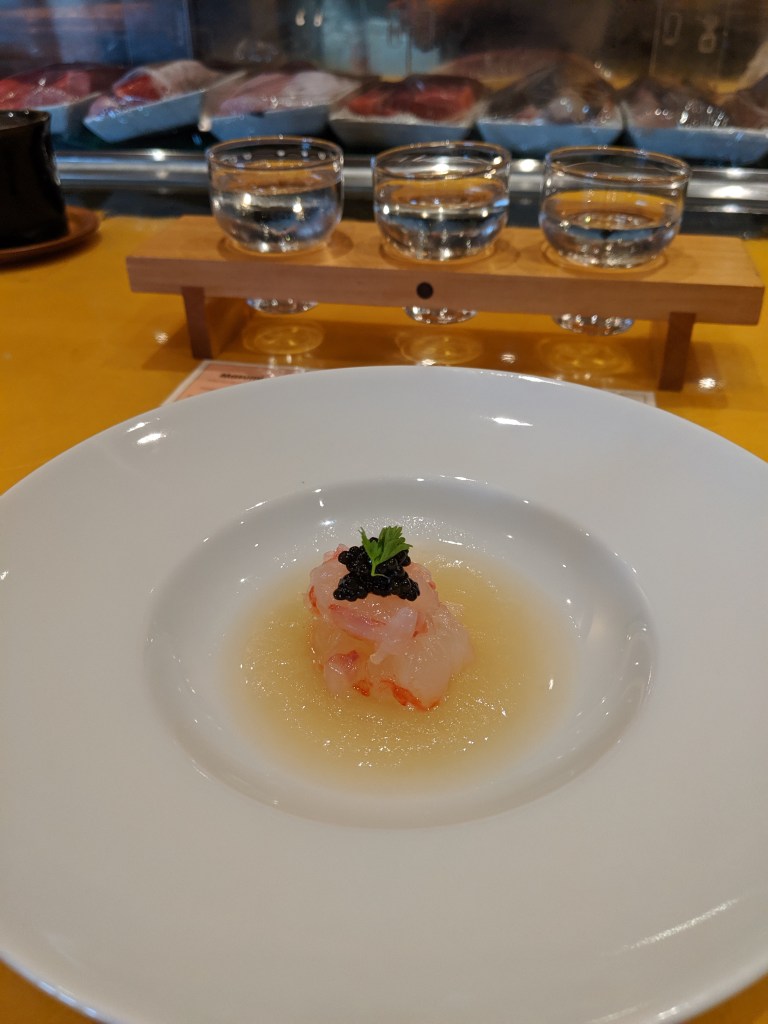
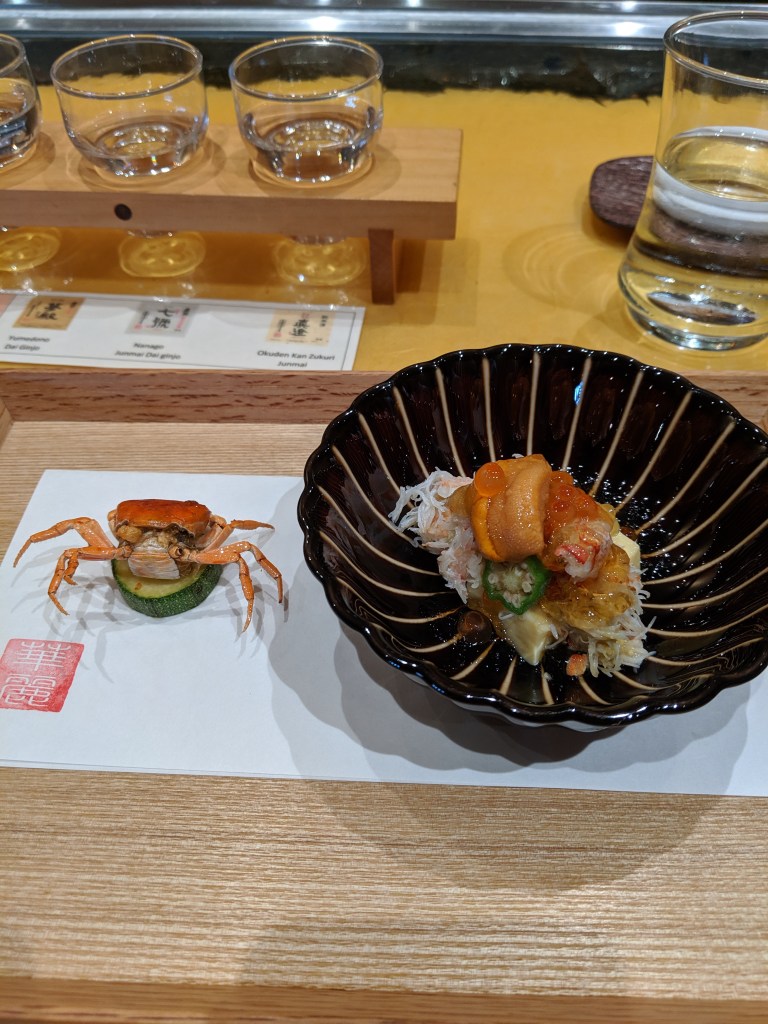
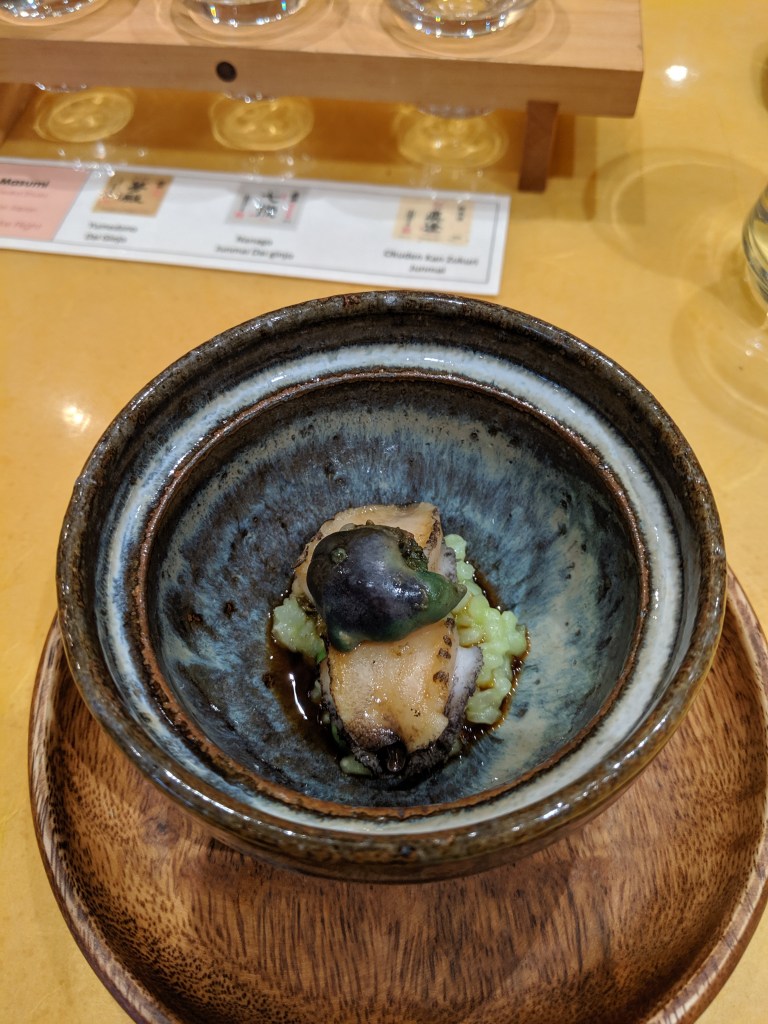
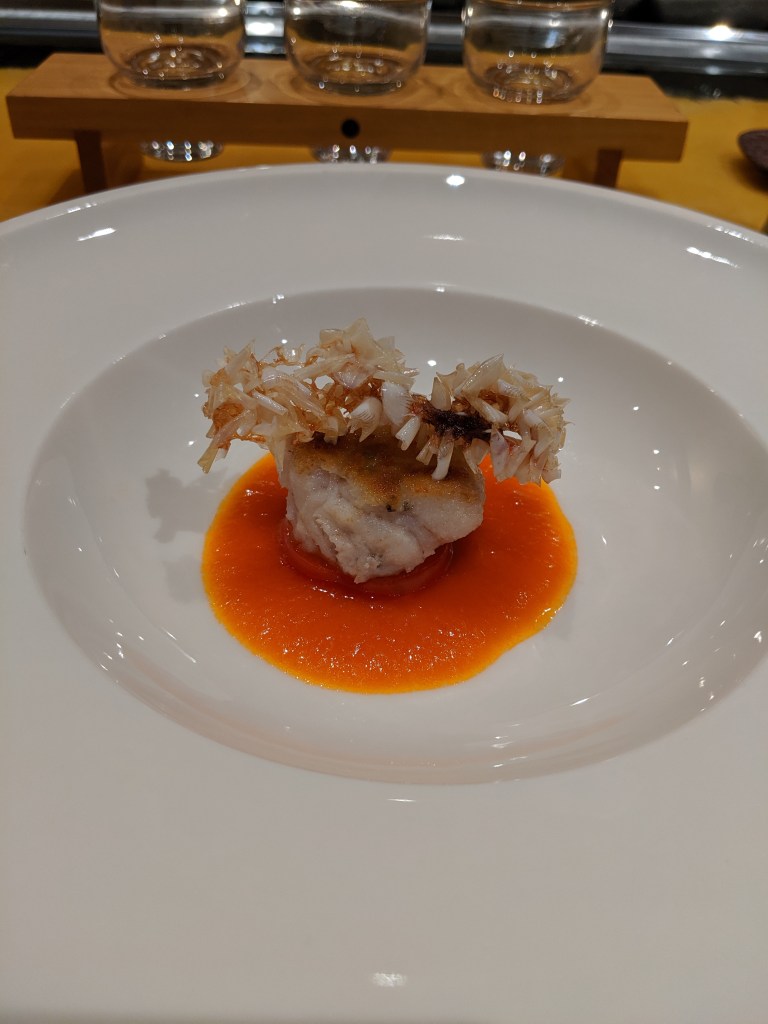
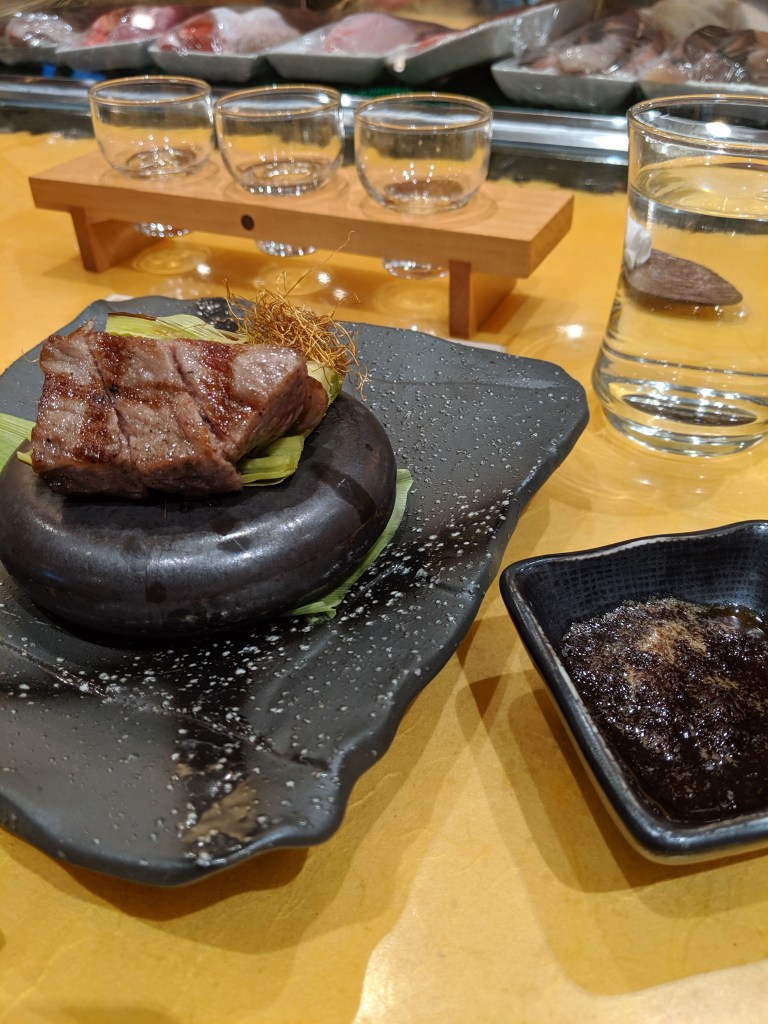
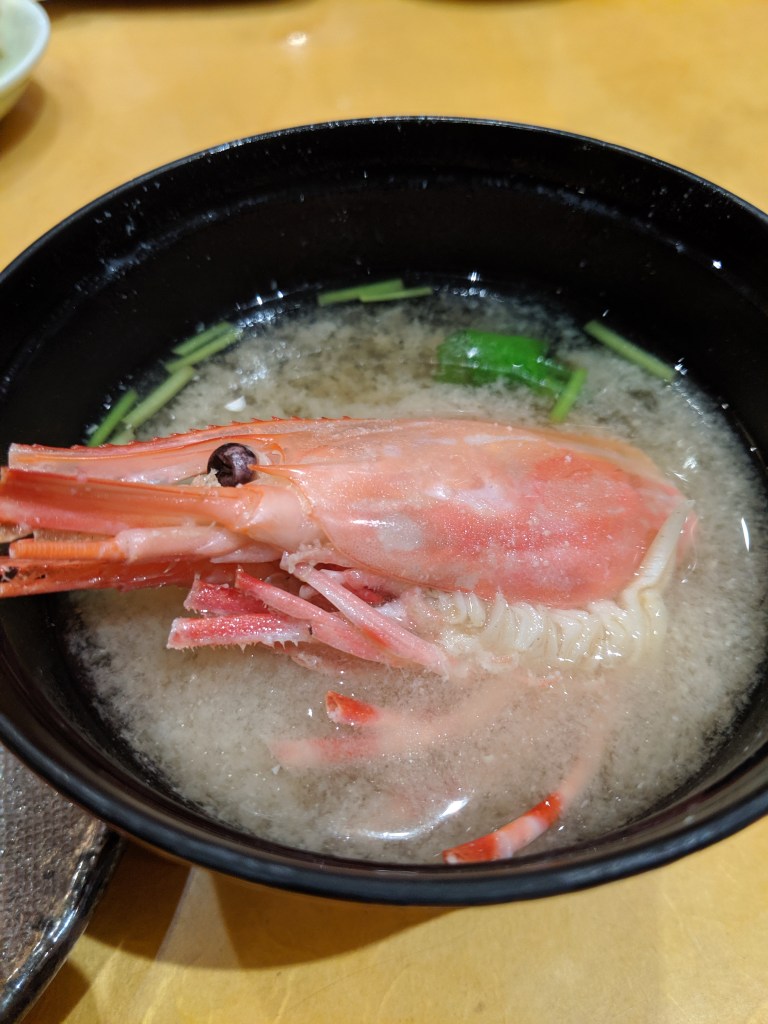
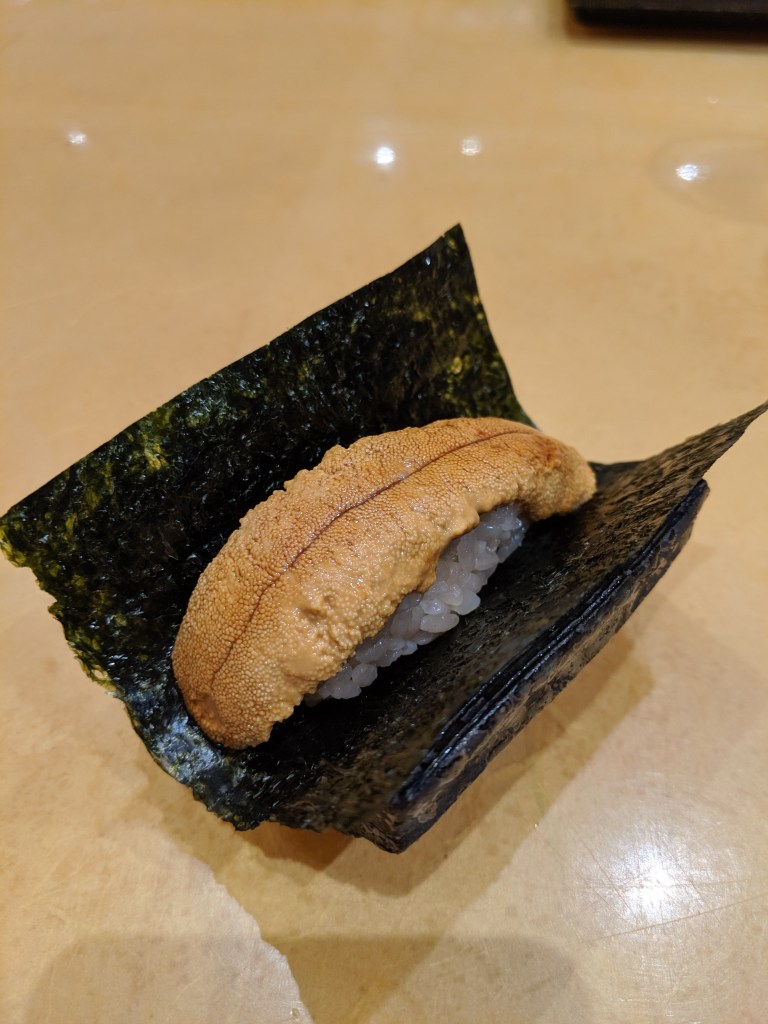
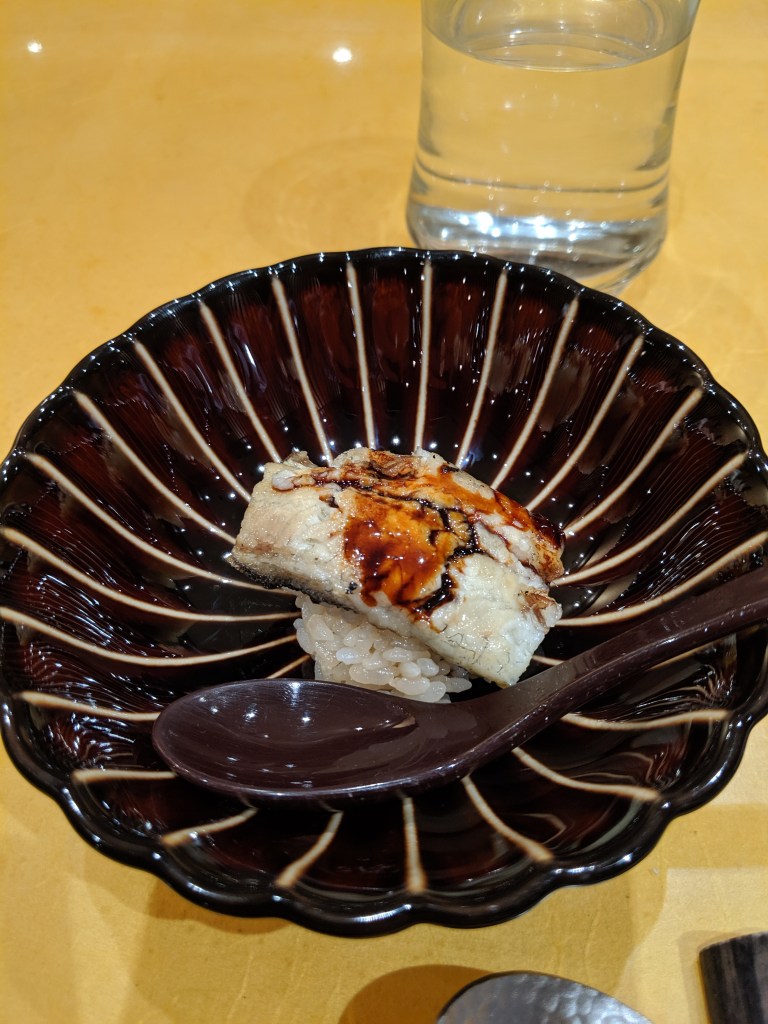
Dining at Hana Re’s 10 seat sushi bar, I found myself naturally engaging in conversations with the other diners as the picturesque plates rolled in throughout the evening. The whole restaurant gradually felt as one group sharing in the experience created by Chef Atsushi Yokoyama united in their pursuit and partaking of such a grand meal. Nothing brings together people quite like food and none other is that further amplified than by being in a room filled solely of people who go through such great lengths to get food at its best.

It dawned on me that the social experience unfolding before me in that room was one based on the shared interest in the culinary spectacle being put before us. The common ground created a sense of trust as we were all there spending a couple hundred dollars to have a meal spanning a couple hours. In other words, there was more to each of our visits than just looking for something to do on this particular Wednesday evening.

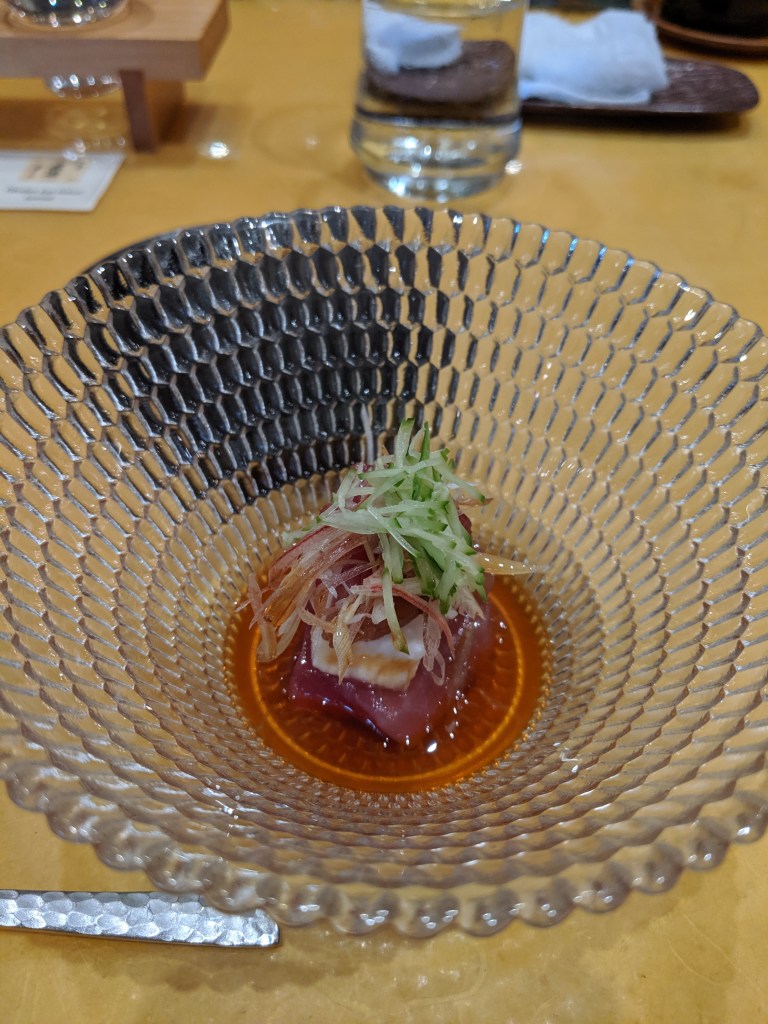
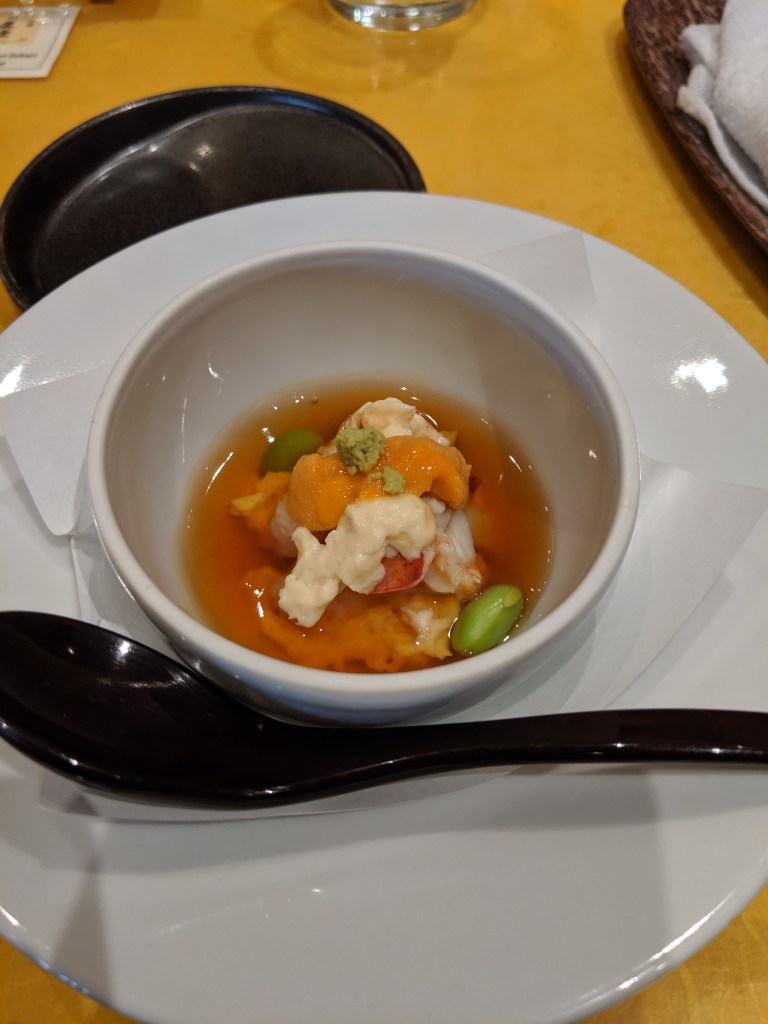
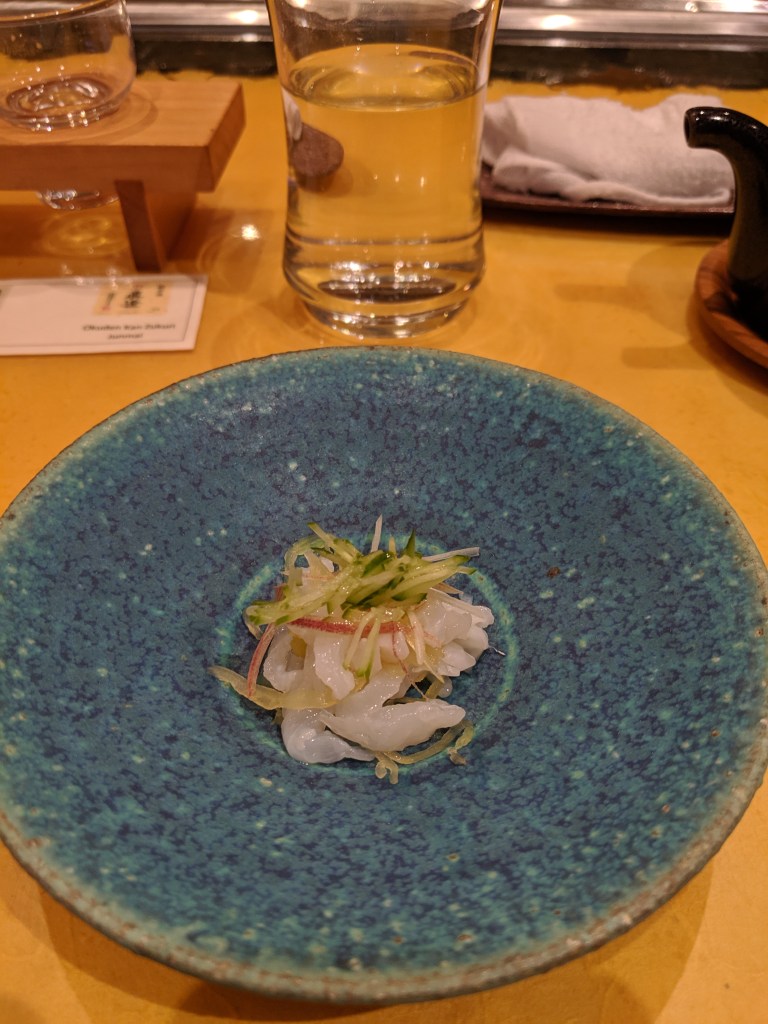
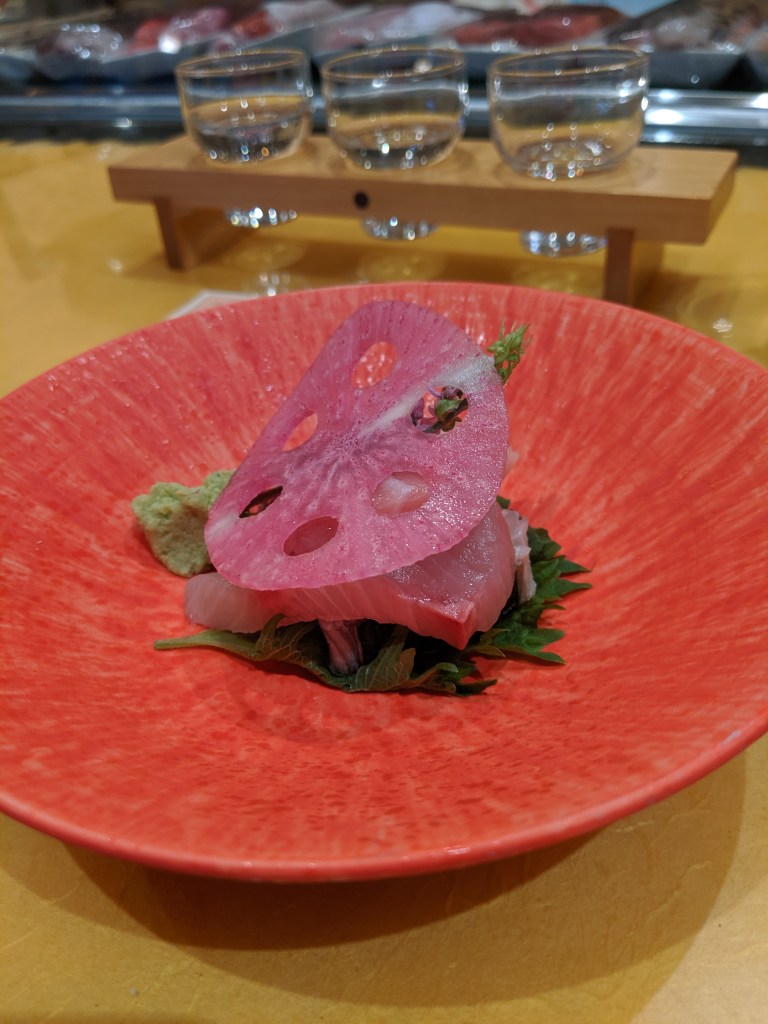
All of the different courses from my dining experience at Hana Re (minus the sushi courses and the panna cotta dessert).

In between each culinary concoction, I’d notice the uniqueness of my fellow diners through conversation and their interactions with the chef. For example, one of the couples to my immediate right were fellow food connoisseurs (I’m fully aware of how stuck up this sounds, but hey it’s better than the word “foodie”) of the same alma mater and software background with the husband turned entrepreneur. I learned everything from the restaurants they frequented, their travels, the differences in starting a career in software today and over twenty years ago, and even various startups ventures. The most interesting being how he sold a cloud business before the dotcom bust, re-purchased it afterwards for pennies on the dollar, and finally sold it again before the great recession in 2007. All these stories I probably would have never heard had I been with another person and it didn’t stop there. By the end of the night I even learned of another restaurant closer to me that I now frequent.

There was even more details in just taking in the environment: a group to my left consisting of a relatively young couple that frequented the restaurant entertaining a guest from abroad as they drank with Chef Atsushi, the couple to my right sharing stories with Chef Atsushi having followed him around for the better part of two decades, and the couple to the far right talking of their various other affluent dining experiences. There was so much to take in that it acted as a welcomed pause in between each exquisite dish. One where I can focus on both food quality and everything around me by not being distracted by having to entertain a companion.

In another account at a different sushi bar, a similar experience awaited me. I was having an omakase course at a restaurant I hadn’t been to in over 5 years, but this time enjoying the meal by myself as I was conveniently nearby for lunch. After watching the sushi chefs at work for the majority of the meal and savoring in the experience, I eventually ended up in conversation with the older man dining next to me after it was clear we were both thoroughly enjoying our meals. I learned details and recommendations from everything from business, to ingredients, and even other restaurants. Interestingly enough I found out that he was also more introverted and equally intrigued by the fact that he would not normally engage in conversations with a stranger like this. That’s the magic that comprises solo dining or really any solo experience.

By isolating yourself you find yourself drawn to more natural actions as you focus on what you want to do and what you’re interested in. Humans are social creatures and ones that find interest in shared experiences and beliefs. Going into a fine dining restaurant by yourself may first sound like a waste, but it really just gives way to that raw desire to connect with those who feel similar. There is also a sense of respectful understanding given to someone who chooses to dine alone as they are going against the typical status quo with the sole intention of enjoying that meal first and foremost. All this enables a social behavior to, at a first glance, a seemingly anti-social move. I gave into this notion to test out the theory of whether I really would enjoy fine dining by myself and I leave each experience feeling more validated in that theory. Had I not had any of these conversations I wouldn’t find the time a waste because I thoroughly enjoyed the meals and the environment that houses all the chefs and workers at work. But there is nothing like the unexpected benefit of walking away with learnings, recommendations, and a good old organic conversation with someone who has no reason to engage in such.

Now with all this glowing praise for the experience of solo dining, I’m not going to tell you to go have as many meals as you can by yourself or that I now dine alone as much as possible. These two examples were optimal situations given the nature of direct contact in sushi restaurants with the chef and the parties next to you. There are definitely establishments and moments that may not lend themselves as well to going by yourself, though I am pleasantly surprised in these sub-optimal situations by the tidbits in even the most mundane settings and moments when given some extra attention and focus. What I will say is that, when you do get a good opportunity to go try that restaurant you always wanted, consider that you may not have to work around anyone but your own schedule and that you just might have a better experience by doing so.

Food Thoughts

Just to clear this up from the beginning, this is not about the thoughts you get where you are hungry or scrolling through the pictures of that restaurant you have been wanting to go to. By “food thoughts” I am referring to all that encompasses the conversation of food and its cultural, social, and artistic influence on human life. At a glance this may seem like a melodramatic analysis, but I’ve always seen food as this multi-sensory art form to express and ingest an individual’s creativity. A multi-medium canvas that spans even more mediums in its communication (pictures, artworks, writing, etc.). Being such a layered concept and one that draws the attention of my own creative expression, I feel it fitting that I have this category to analyze and detail the higher concepts involving different food mediums and formats. A place where I can delve into my own thoughts on the complexities that is the expression of food.

Here you’ll see my take on the importance of extremes, views on where the food world has, is, and will be, and any other meaningful impact I could possibly analyze for any label you could give to any set of culinary distinctions. With a hint of irony, I title this category of posts as “food thoughts,” but, as with anything, there is more than what’s on the surface and this allows me to avoid the semantics of some fancy title. These are my food thoughts and, although I can’t guarantee you’ll agree with what I have to say, I will guarantee the topics will serve as good starting point for some food reflection.

Feasts And A Story Of Giant Dishes

I’ve always been drawn to the sight of a large feast. Dishes sprawling as far as the eye can see. A plethora of aromas. The sensory overload. Throughout history feasts were always used as a hallmark of commemoration. Think of any large scale celebration and you’ll find it largely centered around food and drink. It seems only natural to also be captivated by the concept of gigantic food. An equivalent to the concept of a feast, but with one dish as opposed to many. Or as I like to think of it, one dish that would feed the many.

There’s a certain comfort in a massive shared dish by knowing there is more than you can eat. A comfort incited by the looming certainty that your appetite will be satiated by what you see in front of you. Now amplify this satisfaction by having this experience be shared by those around you. What would have been a normal meal now becomes a communal event, and finishing that meal turns into a goal for that community to accomplish (unless of course, you’re a competitive eater). This is the magic of a gigantic dish. Together you marvel at the experience you are about to partake, indulge in its assault on your senses, and relish the goal of consuming the entirety of the creation in front of you. Call it communal eating, a big dish, a one meal feast, or whatever. Its fun in one of the most primal senses, and one in which food is truly an experience.

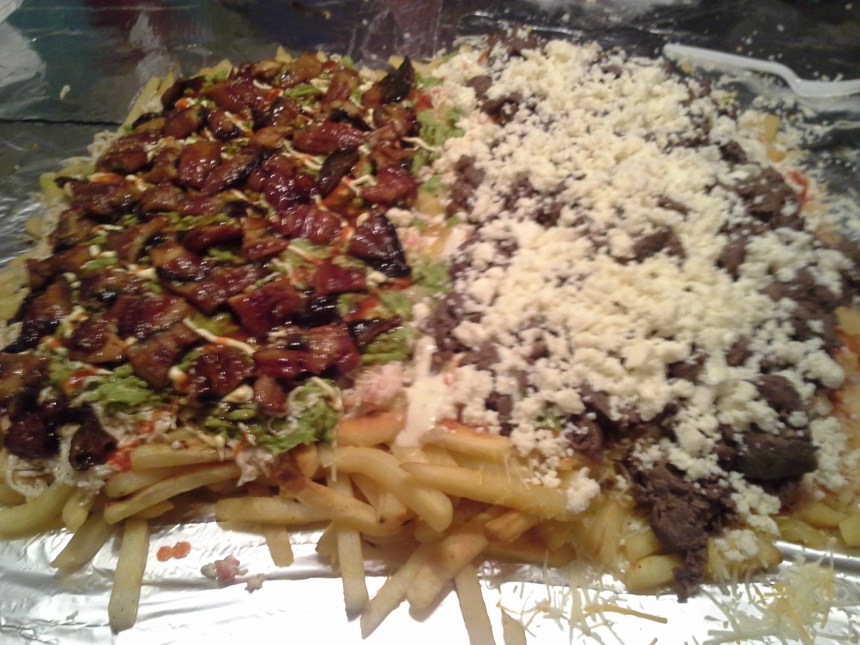
I first stumbled upon this format being inspired by the fusion fries craze blowing up around the time I was in college. Starting with Mexican American California fries and ending up with every ethnic french fry combination you could possibly think of. Take a meat, one or more cheeses, fries, some sauce, a garnish or two, and voilà, you have a solid concept for some fusion of fries. That sounded easy so I tried my own and shared it with all my friends. Except it didn’t make sense to make ten separate portions, so I just made one big one.

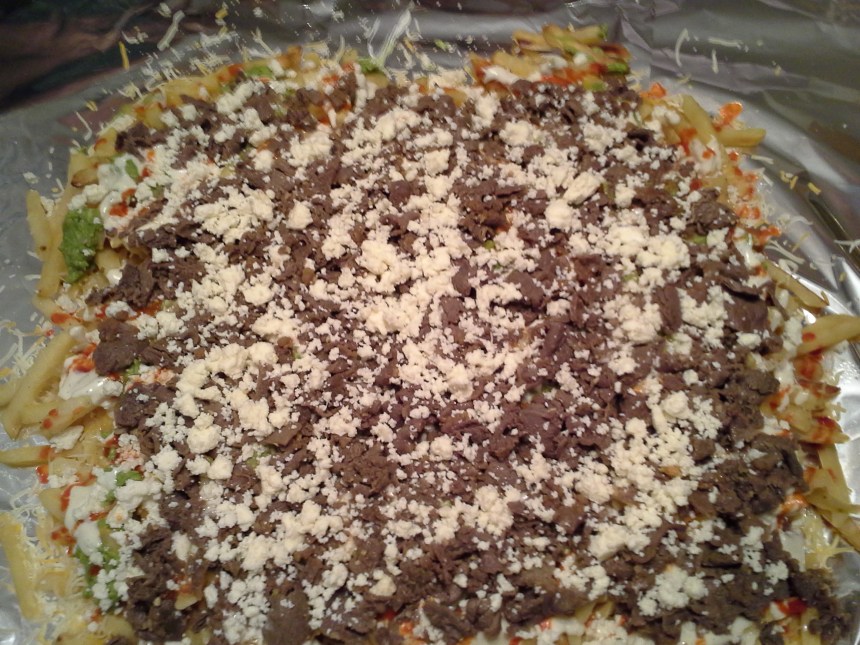
A table full of Korean fries: Queso fresco, bulgogi, homemade guacamole, sriracha, Mexican cheese, french fries

I don’t know about you, but not many things gets me quite as excited as the sight of filling the top of a table with a mountain of food. So, with the momentum going and a tad more creativity, I did it again.

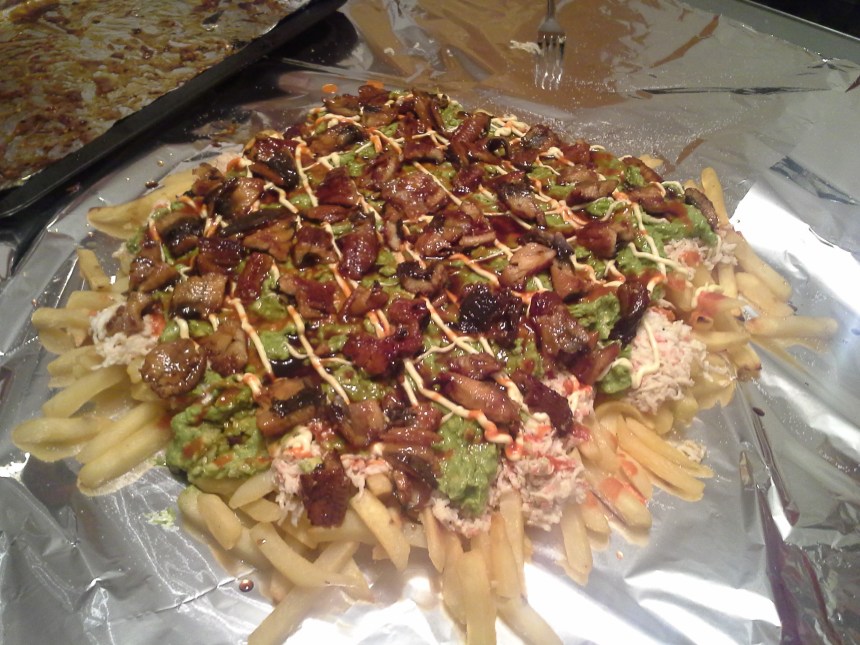
Bigger than a tray portion of Japanese Fries: Japanese mayo, unagi sauce, sriracha, homemade guacamole, seasoned imitation crab,

And, because once is not ever enough, why not have both?

Korean AND Japanese Fries (such genius)

Now getting back to doing something a little more creative…

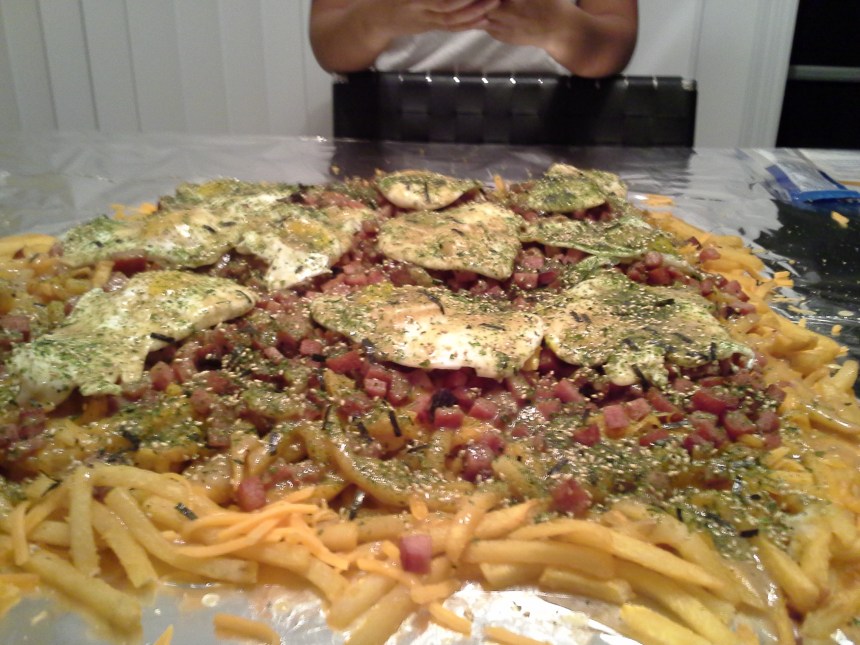
A tabletop of Hawaiin Fries: Furikake, fried eggs, small chunks of spam, homemade pineapple gravy, cheddar cheese, and fries

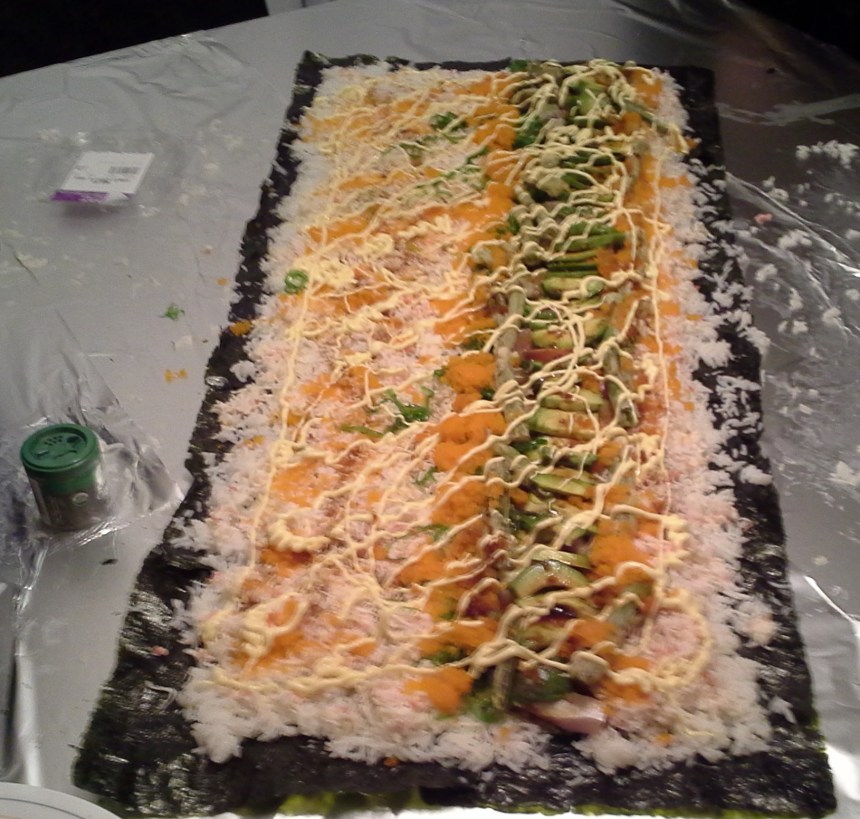
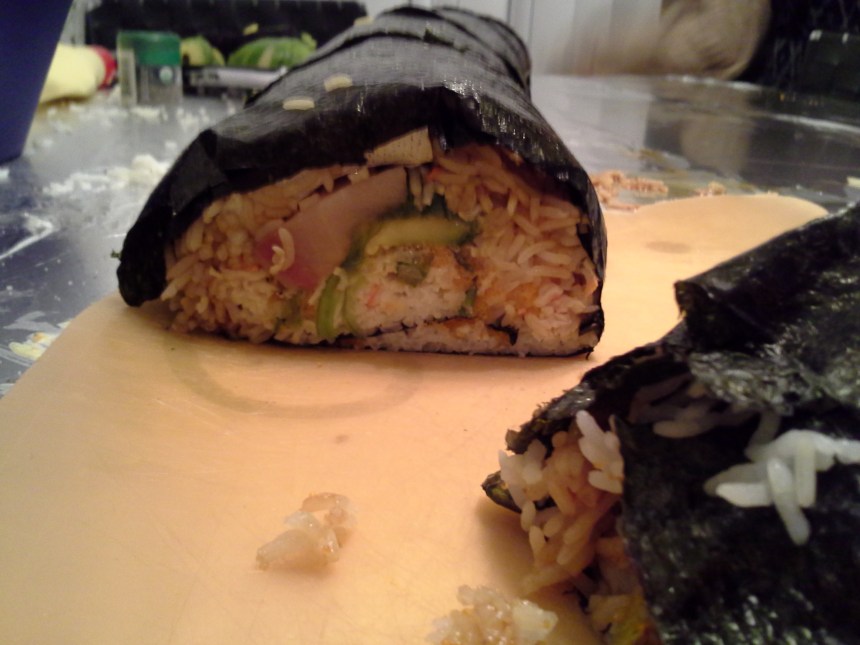
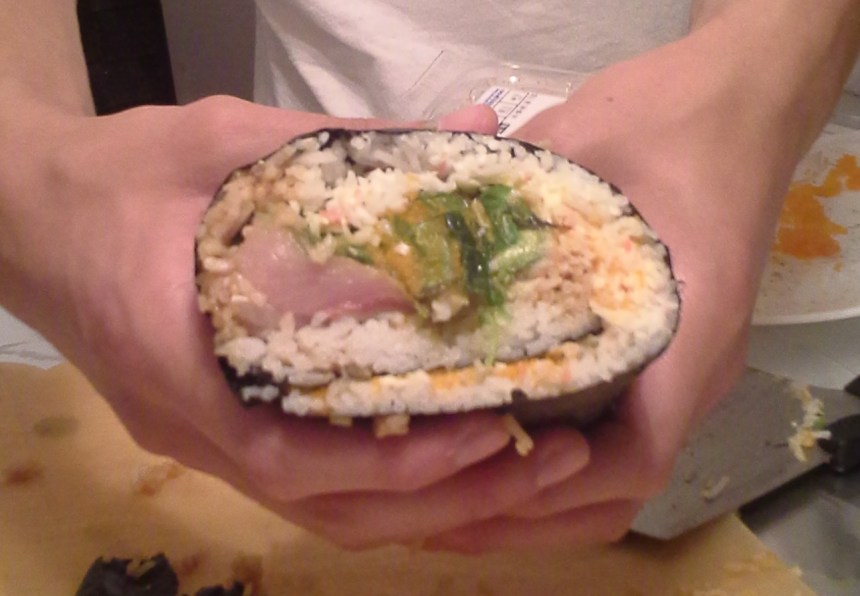
Then I heard of sushirittos that I envisioned being these massive sushi rolls. You can only imagine my disappointment so I had to make things right.

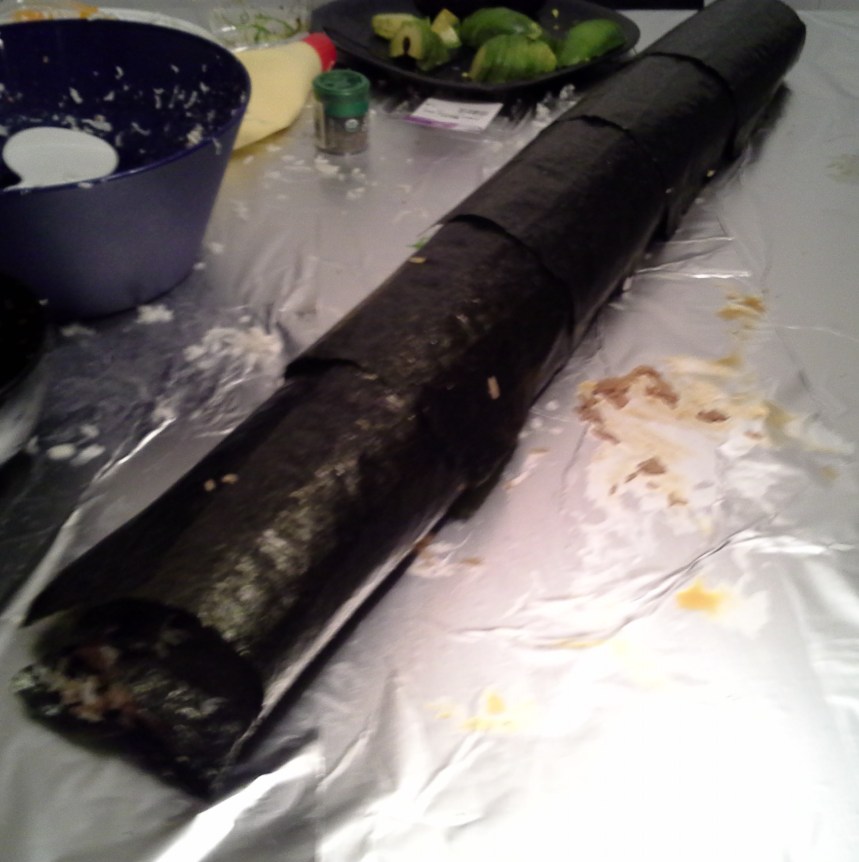
Several feet long sushiritto: Seaweed, rice, seasoned imitation crab, masago, Japanese mayo, yellow tail, tempura fried green onions, and unagi sauce

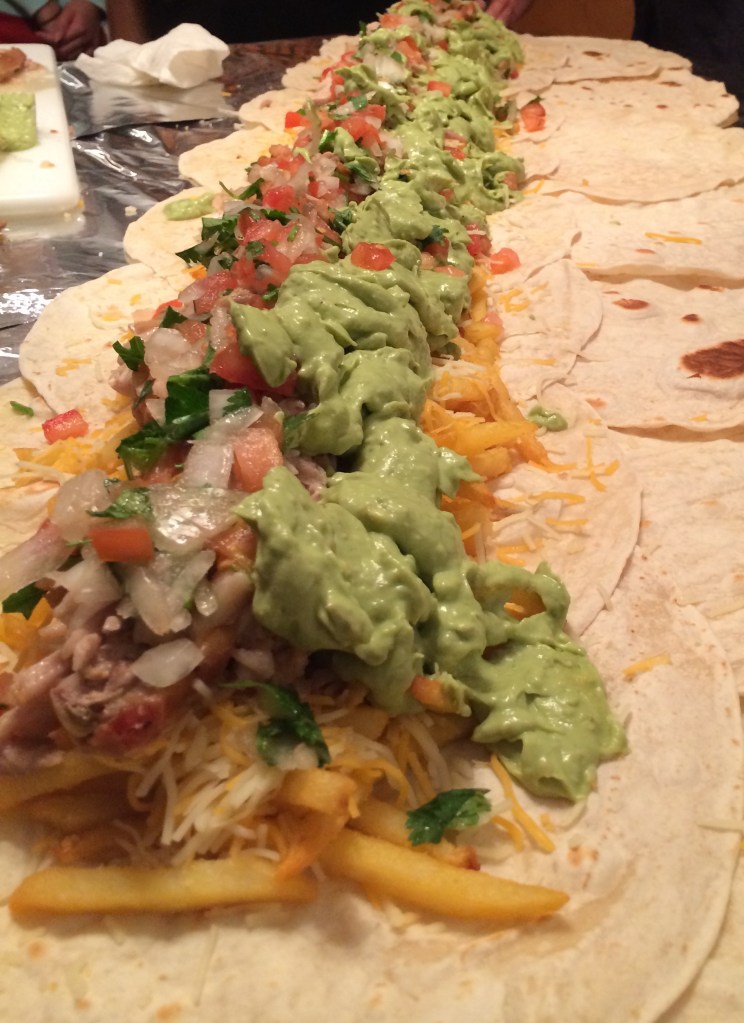
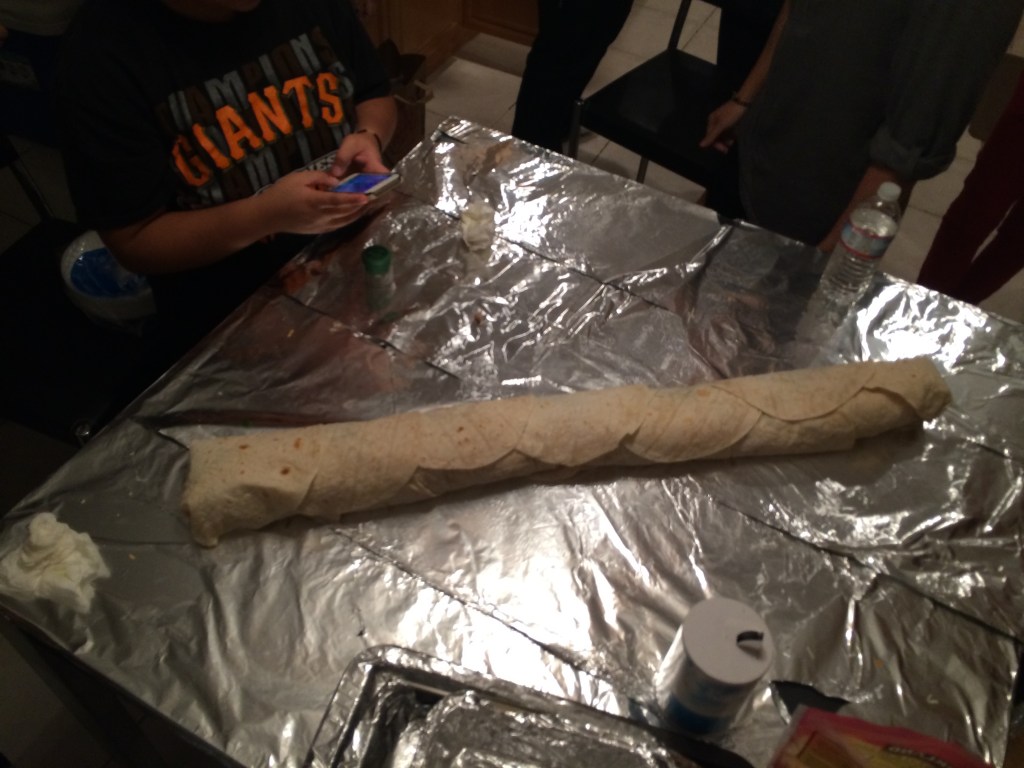
And it dawned on me I needed my entry in the giant burrito craze…

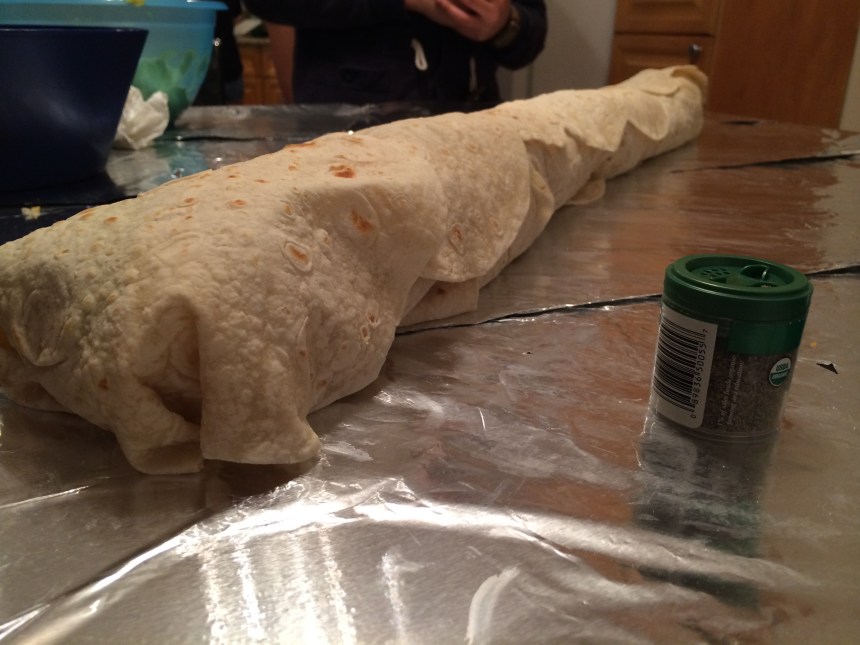
Several feet long Pork Belly California Burrito

The format was quickly becoming natural instinct, which came in handy when I had too many leftover blueberry donuts (pro-tip: people don’t realize how many donuts they eat when you turn it into bread pudding).

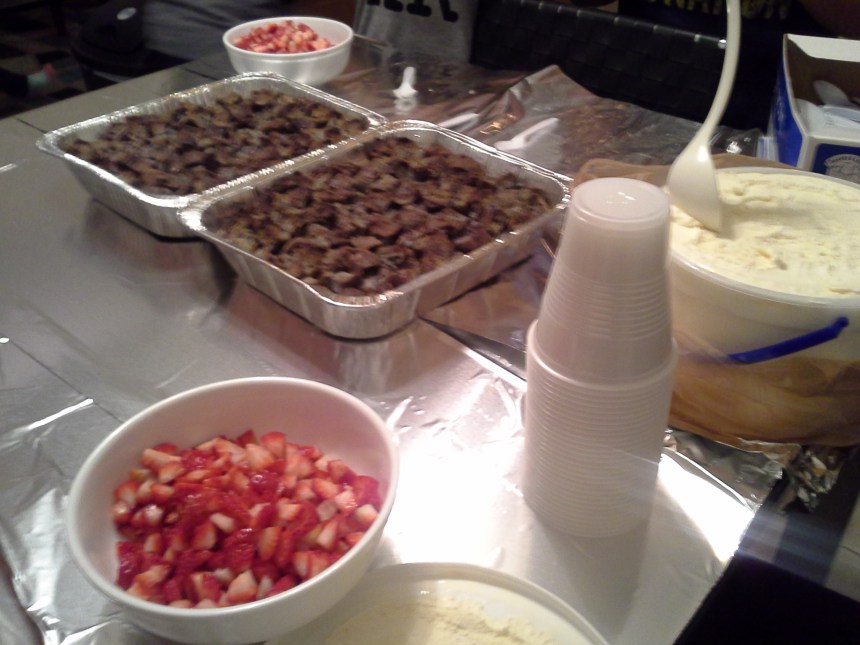
Blueberry Donut Bread Pudding with strawberries and vanilla ice cream

As you can tell from the pictures, these were all taken during more nascent periods of my culinary endeavors and, as such, some records of these events have been lost (R.I.P. giant sundae left unfinished by a record attendance of twenty-eight people, your legend lives on in my heart). But these giant food events became a semi-regular occurrence that somehow evolved into me making coursed meals with my “staff” and the rest became history. Although I don’t frequent this format these days, there is nothing quite like throwing together one large dish onto a table and tackling it with some close friends. So, instead of having your next potluck with a million dishes, remember that sometimes less is more. You can have a million items filling that table or a table filled with one huge item. The choice is yours.