Modern Filipino Inspired Cuisine

For a long time I had put off the day I attempted the challenge of integrating the bold flavors of a cuisine I had once discounted of providing any meaningful value to the food world. I had grown up with this food my entire life, but never perceived much other than distant nostalgia that I felt would never be appreciated by the masses. A culinary culture much drawn to Spanish influence, thus one I dismissed as being an inferior knock off. The theme for this dinner was to prove otherwise with the loud and raw inspiration of Filipino food.

For those unfamiliar, Filipino cuisine is composed largely of one noted wonders. If a dish is sweet, salty, sour, or anything in between then you can be damn sure that’s what you’ll get. This being what led to both my ire and commendation for its culinary composition. Food that exhibits one aspect boldly is a shock to the senses that is confident in its approach, but for those less exposed it’s a rude forcefulness left unrestrained in its unrelenting assault. After several years in delay, I finally had the experience, understanding, and answers necessary to tame the forces available in Filipino food. This would be achieved by pairing delicate, accenting flavors to refine and bolster the raging wildness it exudes.
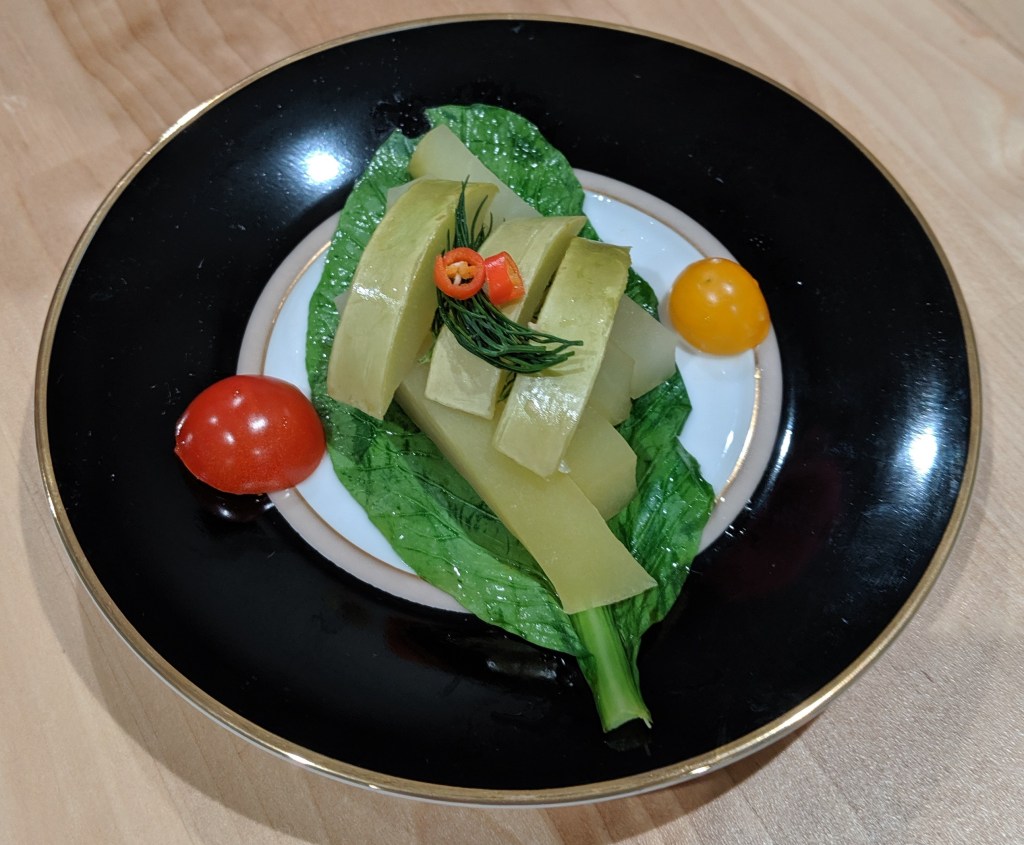
Filipino Citric “Salad”: Thai Chili and Dill topped Upo, Papaya, and Pechay boiled in white vinegar, yuzu, lime, fish sauce, apple cider vinegar, and dark amber maple syrup, and served with cherry tomatoes

First up was a salad take on the classic upo side dish assigned the purpose of highlighting sourness. Amongst varying degrees of firmness from the upo and papaya, a myriad of citric flavor from the vinegars, yuzu, and lime would hit while being intermingled with a round of dull sweetness from the syrup. The intense acidity is further complimented by a mild bitterness from the pechay, heat from the Thai chili, and freshness from the dill. Accompaniments of cherry tomatoes then chime in to function as a palette cleanser between bites.
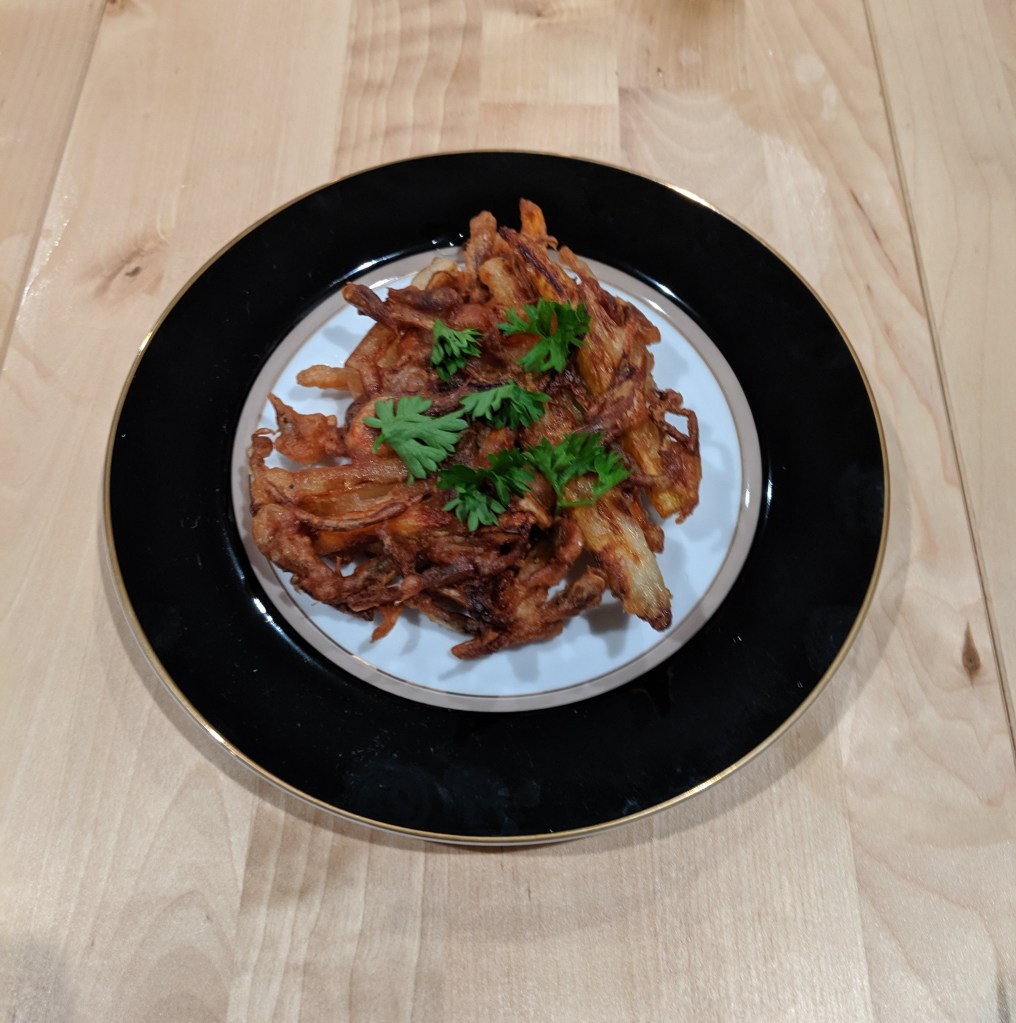
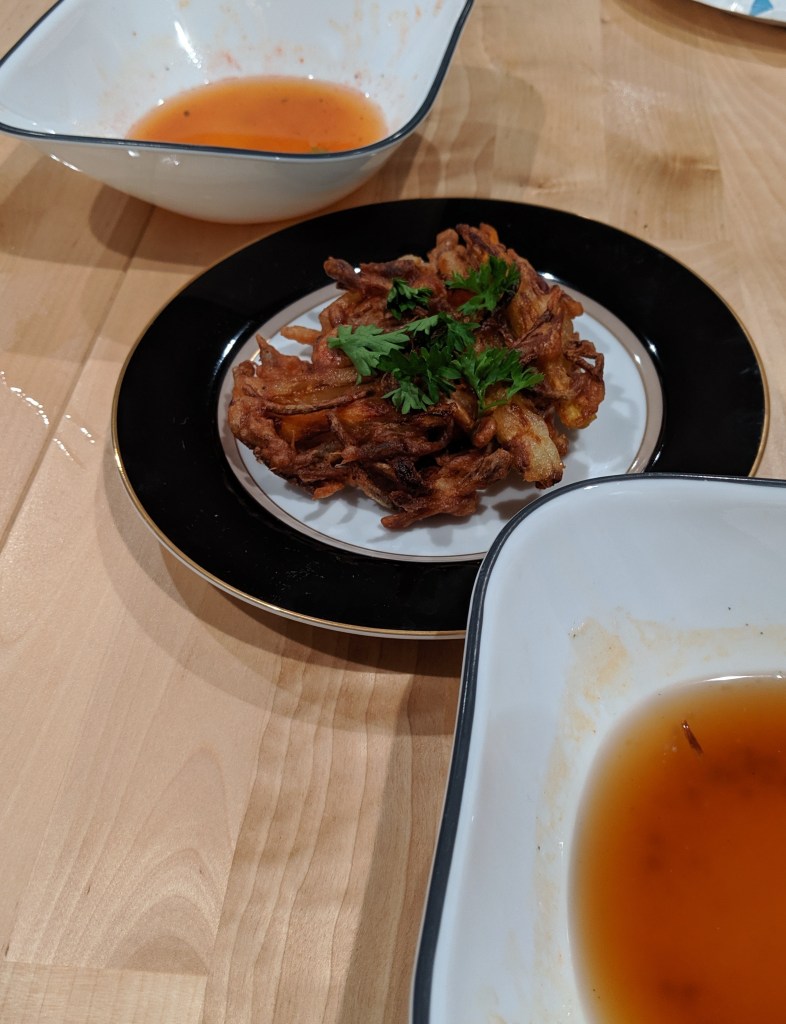
Ukoy: A mixture of papaya, carrot, bean sprouts, and yuzu and hot sauce marinated small shrimps coated in corn starch, flour, fish sauce, brown sugar, garlic salt, black pepper, and lime that’s deep fried, garnished with parsley, and served with a grapefruit hot sauce mixed with soy sauce and white vinegar

Next was ukoy, a classic Filipino fried fritter appetizer. It is typically relatively unseasoned and optionally served with soy sauce, vinegar (spiced or plain), or a combination of the two. For this dish, yuzu and heat accompany the shrimps while fish sauce, garlic, and brown sugar bring a sweet wave of deep umami to the crunch of the fritter, then followed by sourness from the lime and herbal flavor of the parsley aiding to disperse the oily richness. The sauce is also an intensified variant of the traditional sauce with more spice amidst complexity from the grapefruit.
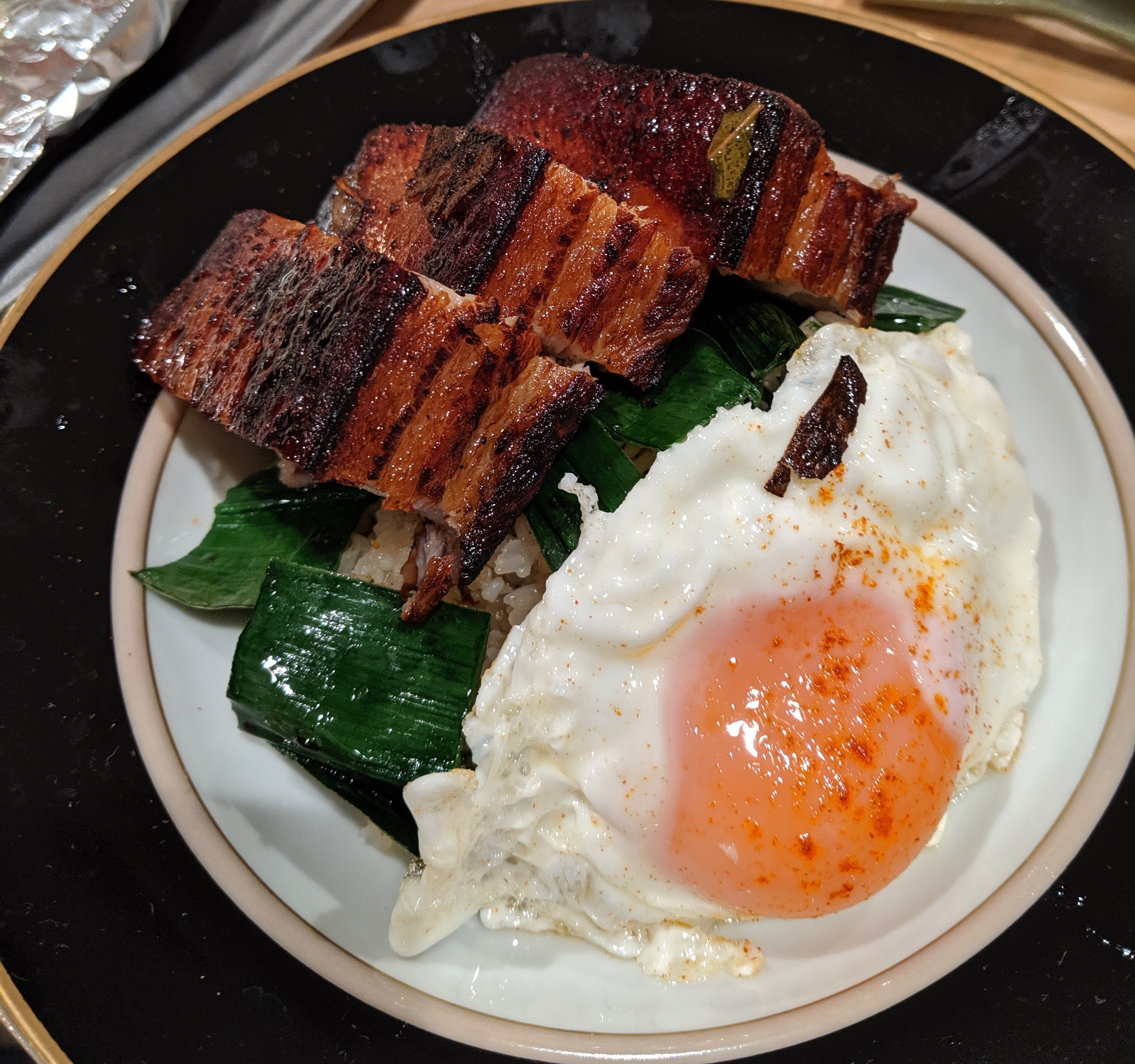
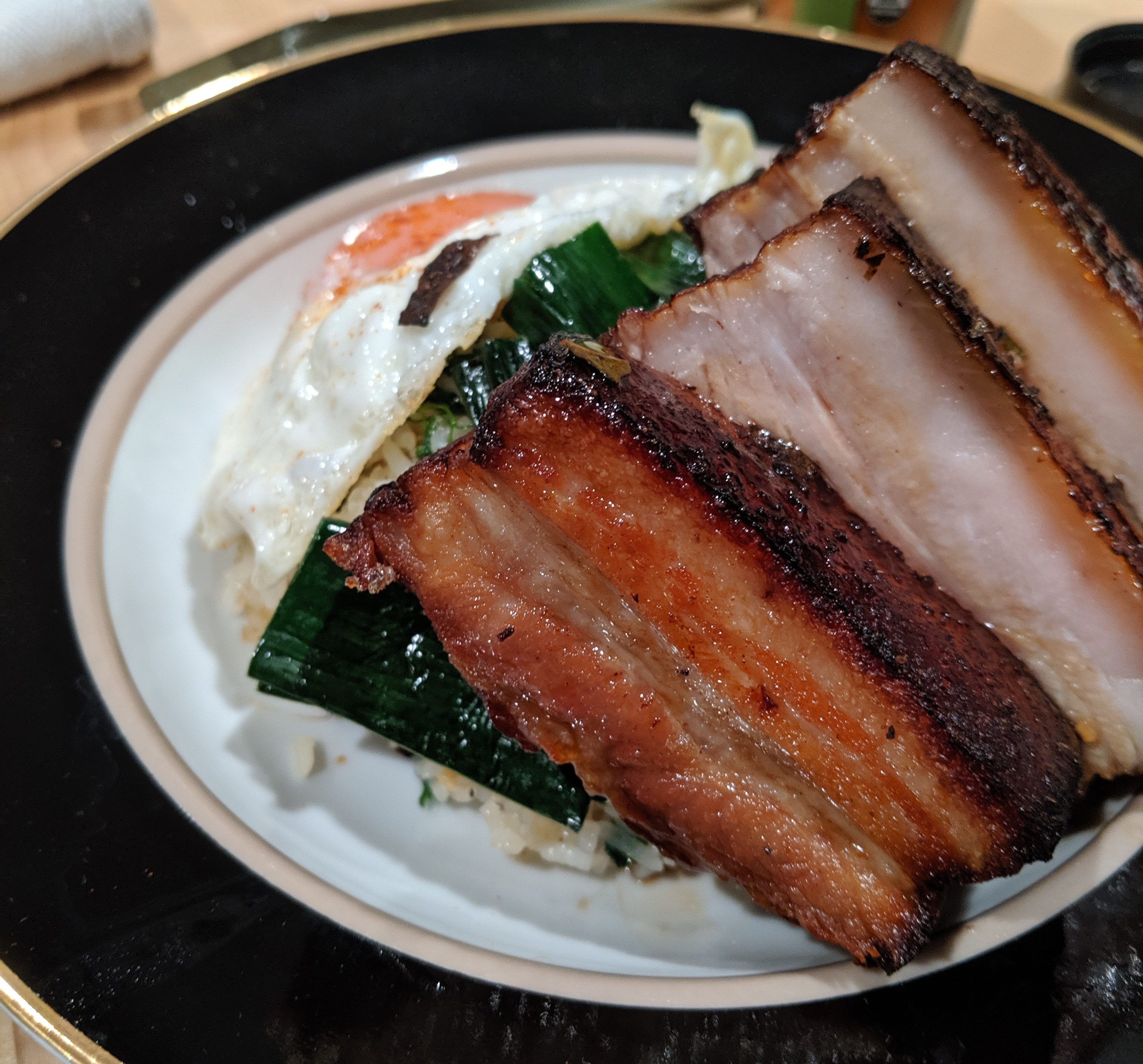
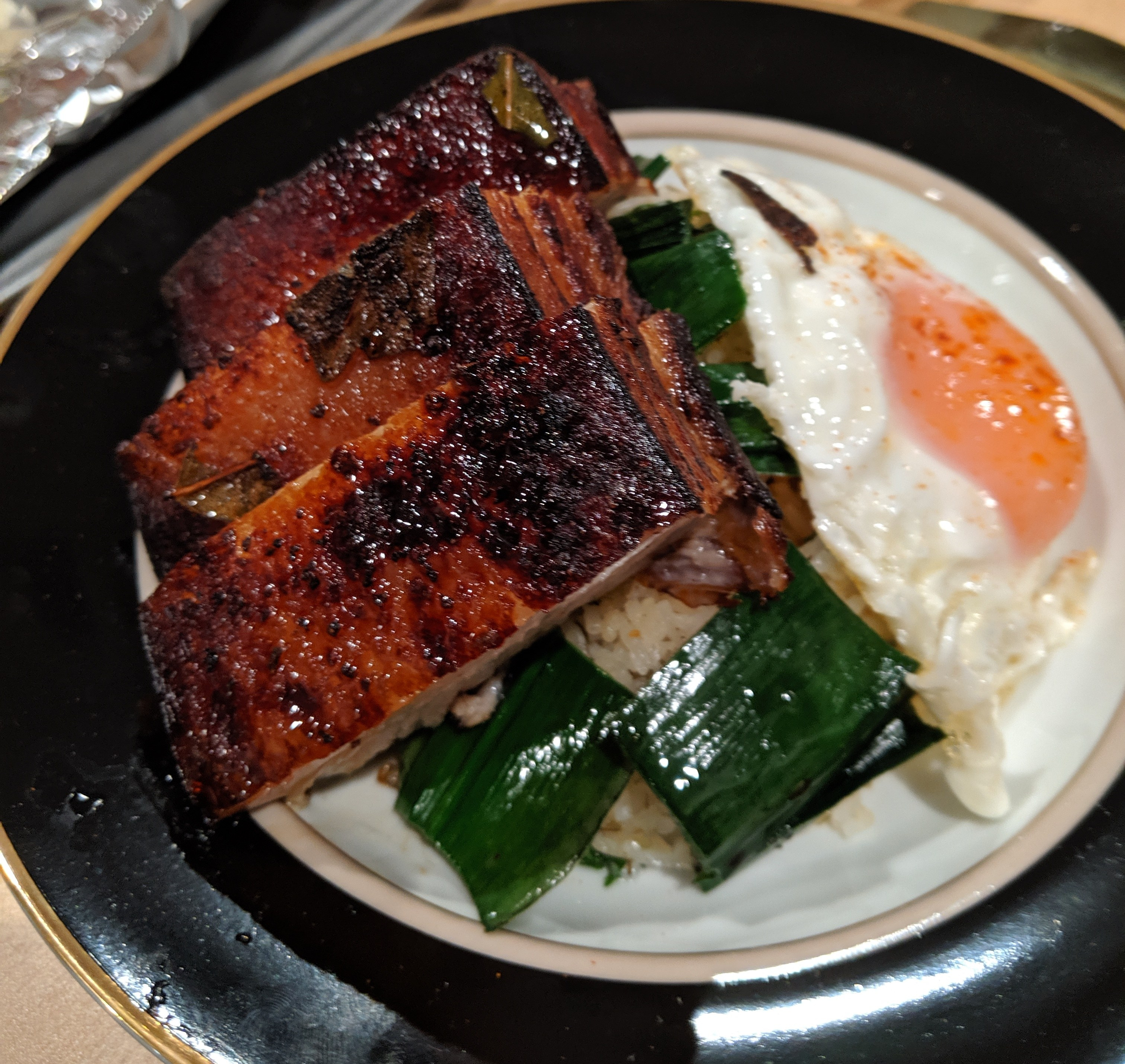
Honey Adobo Fried Pork Belly Over Herbal Garlic Rice:
slow cooked honey adobo pork belly that is deep fried and served over sauteed leeks and herbal (lemon grass, cilantro, and white pepper) garlic fried rice with a side of cayenne seasoned egg

The main entree brings one of the most well known Filipino food terms in adobo and plays with it as a component of something greater. Honey is utilized to accent the base adobo flavor (composed of soy sauce, white vinegar, garlic, and bay leaves) as well as bridge the gap between the fried, slow cooked pork belly and fried rice. The rice brings in Asian herbal notes from lemon grass and cilantro with a touch of white pepper to an otherwise standard garlic rice. Sauteed leeks add texture while furthering the play between the pork belly and herbs in the rice. With each bite of pork belly, the intense adobo flavor is met with soft notes of honey as flavors from the rice clean the palette and inhibit a sense of heaviness from all the oils. Finally, an egg with cayenne is added for good measure to provide a rich, creamy mouthfeel.
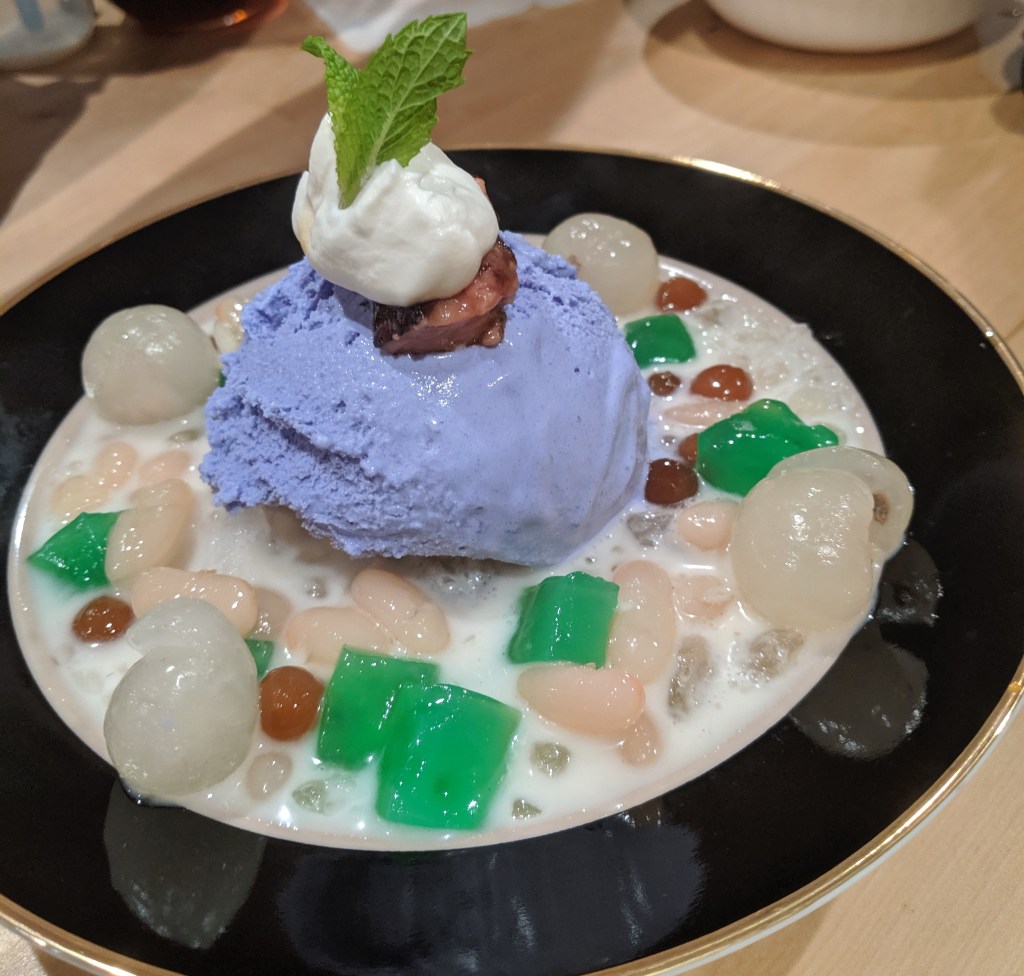
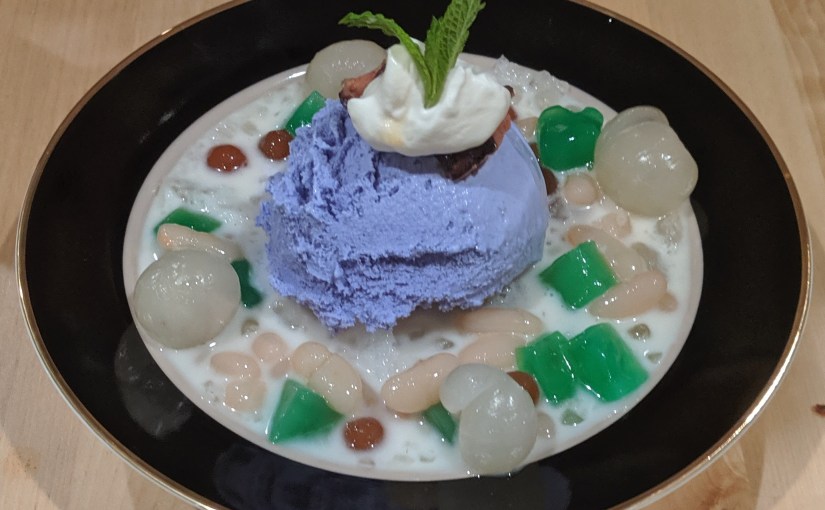
Foie Gras Halo Halo: Mint, yuzu whipped cream, foie gras, salt, ube macupuno ice cream, longan, white bean, tapioca, jelly, honey, crushed ice, and condensed milk mixed with foie gras fat

Finishing up the night was the iconic Filipino dessert Halo Halo. Deriving from the Tagalog term for mix (lit. mix mix), the dish is typically composed of ice, ube flavor, condensed milk, and sweetened jellies, beans, and/or tapioca. In other words sweet, sweet, and more sweet. Therefore the optimizations on this medium were to keep its strength as a sweet dish, while mixing in all the other flavors it was missing. Nostalgic to its roots, while functioning as a complete overhaul to the original concept. Bold savory notes are met by waves of varying iconic sweetness with unassuming citric and fresh herbal tones. A dish that represents the ideal mash up for bringing Filipino flavors into a modern world view. The bottom consists of crunchy crushed ice blended with intense umami from the foie gras greased condensed milk met with traditional pairings of tapioca, white beans, and jelly steeped in honey. The sweetness from the honey accommodates fresh yuzu cream and mint as salty bits of foie arrive with ube macupuno ice cream. Between bites, longan brings fresh fruit into the mix as a palette cleanser.

With that, my first foray into the use of Filipino flavors culminated in success. Each dish brought classic elements to the table that were well fortified by diverse cultural influences. All this resulting in an eventualized medley of Filipino staples amplified by variety in flavor, yet kept true to its iconic, aggressively bold notes. A worthy mark of my serious beginnings with a new culinary asset.
The First “Staff” Dinner

I first began making coursed after a couple events doing gigantic dishes for large groups of friends. Giant burritos, sundaes, nachos, sushirittos, fries. You name it and I did it (because who doesn’t love ridiculously sized food). But I wouldn’t be cooking if I was doing the same type of thing over and over again, so eventually it came time for a change.

I had grown enamored with the idea of doing a multi-coursed meal after seeing them in videos. Making small, detailed creations that culminate in an overarching dining experience spanning several courses just looks and feels like the apex of culinary creativity. So I embarked on this journey with a group of friends that helped me organize the aforementioned gigantic food meals. A group we endearingly called “staff”, thus giving rise to our first “staff dinner.”

My decisions for the courses were relatively straightforward. The basic thought process was to create dishes by combining ideas, processes, and ingredients I enjoyed across prior meals. All this would result in innovations on known mediums that were relatively familiar, yet distinct. Much of these early creations were also highly Asian in influence, so akin to a unique Asian fusion. Be warned that these pictures were from much more inexperienced times in late 2013 so they don’t look anywhere near the quality of something you’d see ten iterations in.

First Course: Seafood Shot

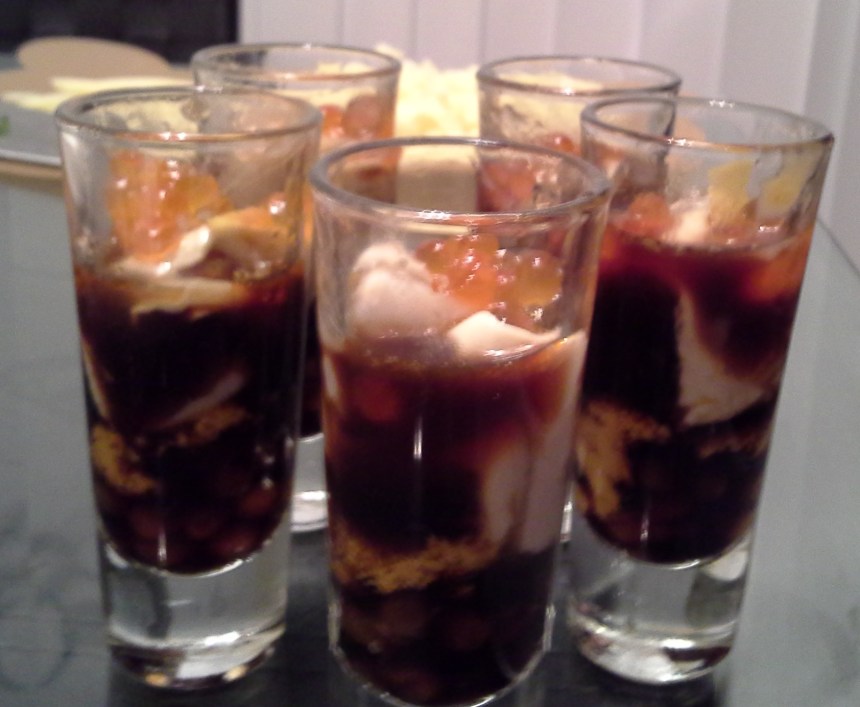
Up first was my take on the seafood shot. A staple in omakase dinners I had at the time. Oyster, salmon roe, sea urchin, and lemon rind in a glass rounded up by lightly diluted soy with a touch of sugar. The idea was to emulate each component being lightly seasoned with soy, eaten at the same time, and having all those strong sea flavors be tempered by a touch of sweetness coupled with citric bitterness coming from the rind.

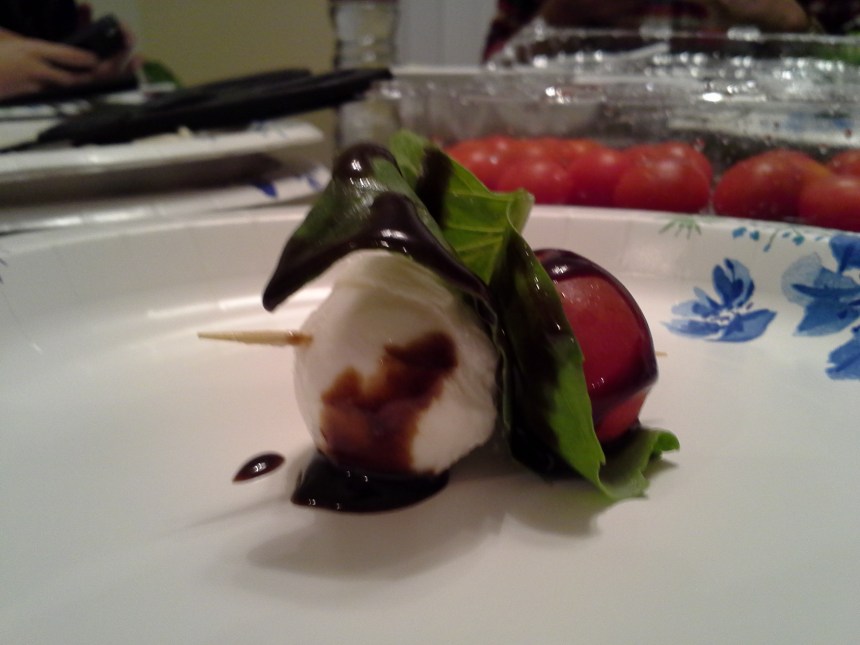
Second Course: Balsamic Hoisin Caprese

Next was a salad appetizer. Given the smaller nature of these dishes, I chose the most commonly used salad type appetizer, caprese. The dish needed a unique spin on it, so I blended some hoisin with some balsamic to create a sweeter sauce that accented the tomatoes while still complementing the basil and mozzarella. All this resulted in a familiar take on the classic Italian combination, but with a strong tug of Chinese flair.

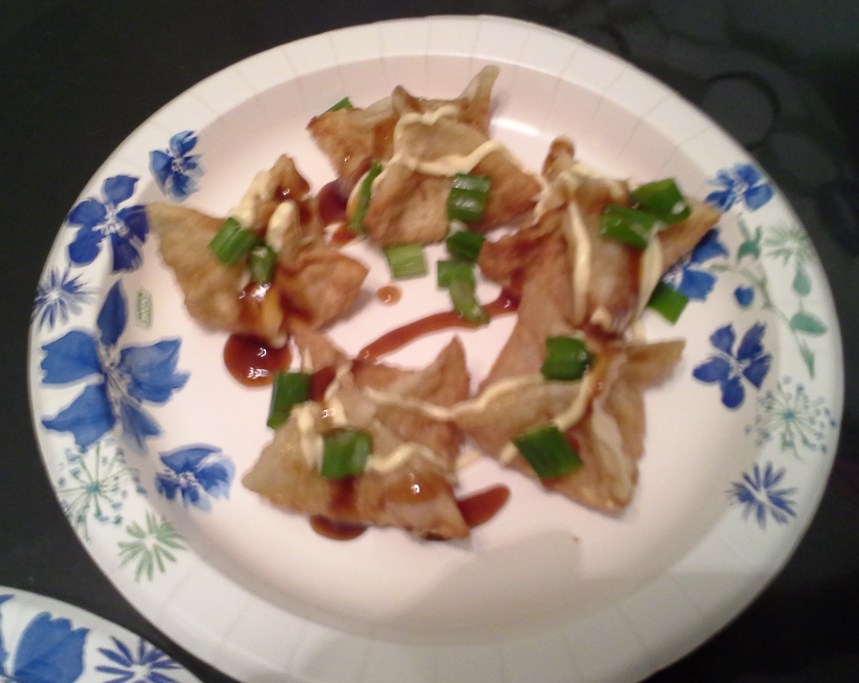
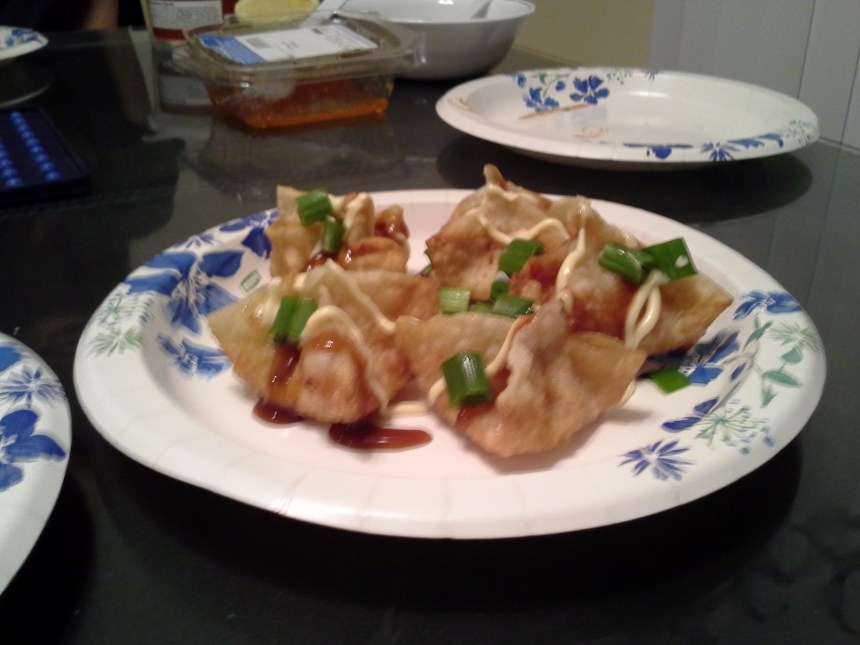
Third Course: Curry Cream Corn Wontons

The third course would be the most memorable creation of the night. I had loved the curry creamed corn I had multiple times at Tokyo Fried Chicken Co and knew I wanted to take that dish further. Packaging all of it in a crispy layer seemed like the best way to bring a nice textural contrast, so I decided on filling a fried wonton with the mixture. In my mind, I felt like sauce was necessary to tie the whole thing together. Being that it reminded me of takoyaki, it was only natural that I topped with takoyaki sauce, Japanese mayo, and green onion. Reaching beyond its components, the overall package was compact and pleasing as the toppings would bring to mind takoyaki, while the filling would bring to mind a Japanese Southern experience. With each bite, strong notes of creamy curry would come bursting out of the crunchy wonton as granules of corn burst with sweetness.

Fourth Course: Salmon Patty Sliders

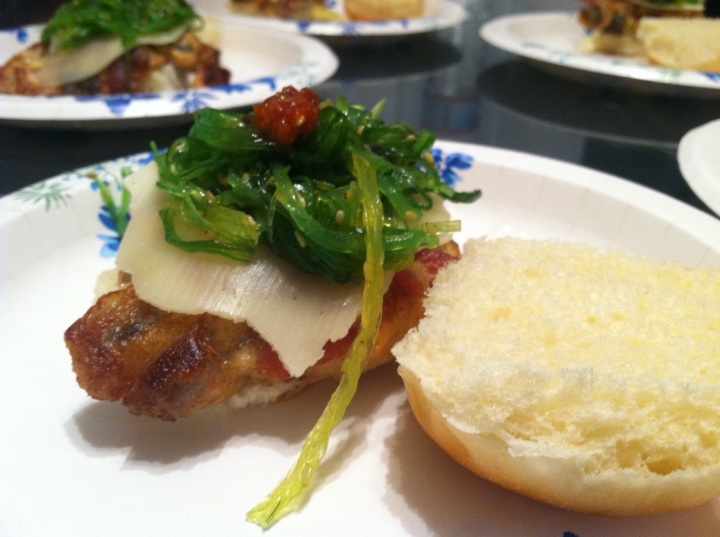
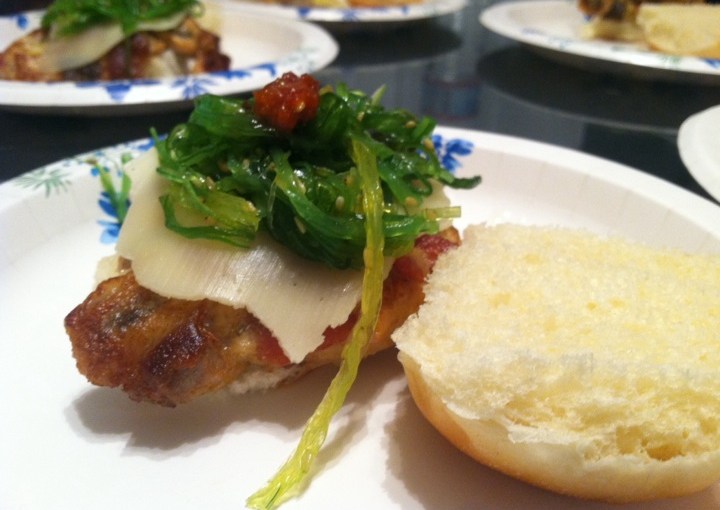
Following the wontons was the main course, the salmon patty sliders. Burgers are an iconic staple of heartiness and filled with so much possibilities given their versatility. A slider was the smaller version of burgers that would fit more neatly into this coursed format. I settled on salmon skin being the centerpiece as it was a tasty, cheap part of the fish that I had been enjoying throughout my college days. To amplify the richness of the fish, I formed a patty that combined the fish with crispy bacon using egg. Completing the slider was provolone cheese to bring the creaminess, seaweed salad representing the greens, and a touch of sriracha to add some heat as the sauce of the dish. All this was contained by a sweet Hawaiian roll. With each bite, the crunchy multi-meat patty would be accented with the salt of seaweed , balanced by creamy cheese, spiced by the sriracha, and finished with the starchy, sweetness of the roll.

Fifth Course: Tempura Brownie Covered Vanilla Ice cream

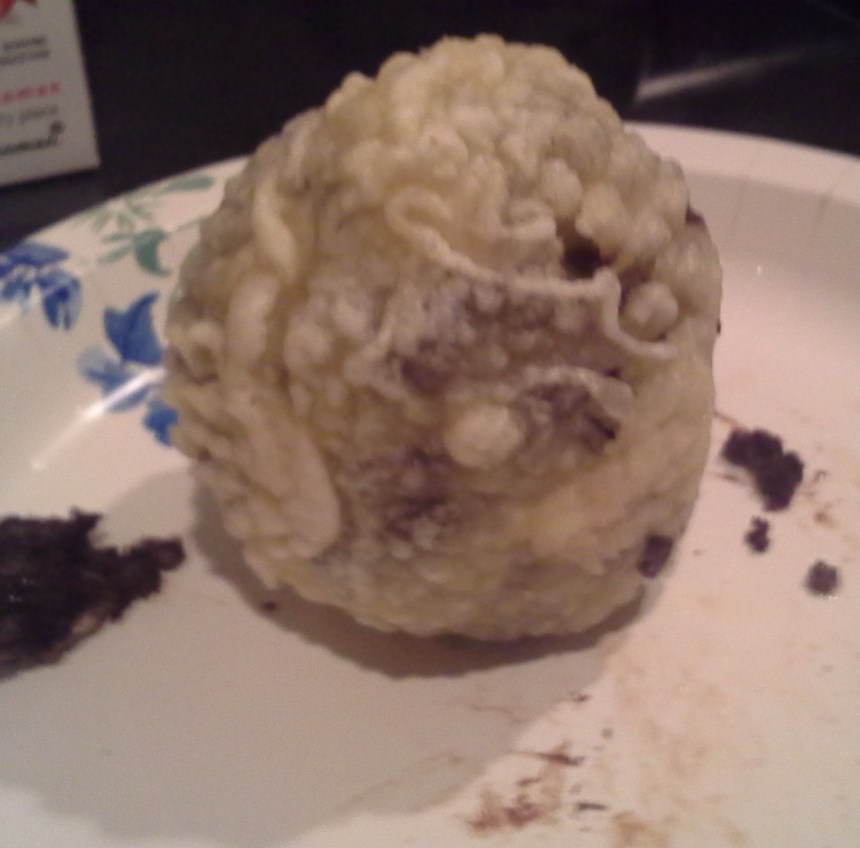
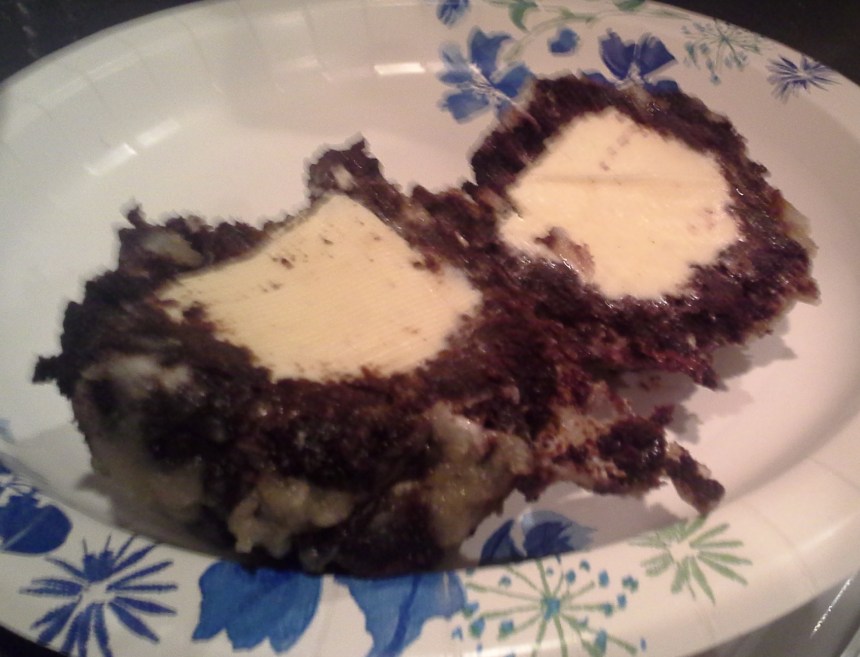
Ending the meal was a combination of things I loved the most. Brownies, ice cream, and fried things. In typical fashion, I had decided I wanted it all. So I got vanilla ice cream, wrapped it in a rich, dark chocolate brownie, and fried it in tempura batter (sometimes simplicity really is the answer). Given my inexperience with frying ice cream and making tempura, the result was the monstrosity you see here. Airy tempura meets dense brownie with a cold creamy filling. A bit crude, but you can’t go wrong with this.

And that concluded the first chapter on my journey of making coursed meals. I had completed the challenge I set for myself, and looked forward to improving on my ability to deliver within the format. It was rough around the edges, but true to my desire to make new things I wanted to eat based on dishes I have enjoyed. Next up was to create a multi-coursed meal that would be unified under a theme.

Back to “Baesics”

Back when I cooked my first coursed meal everything was just a mess of random interesting concepts. That first meal was whatever I could come up with, which always ended up being an arbitrary assortment of “Asian fusion.” Although enjoyable, I felt that after nine preparations of coursed dinners later I should be able to achieve something much greater. Thus came the goal to create a more coherent meal that transcended my brash beginnings. Design, flavor profiles, quality. Everything must be better, yet adhere to the whimsical creativity that my group of friends and I enjoyed. Coined after feelings of endearment from more humble beginnings, the theme was set, it was time to go “back to baesics.”

First Course: Seafood Shot

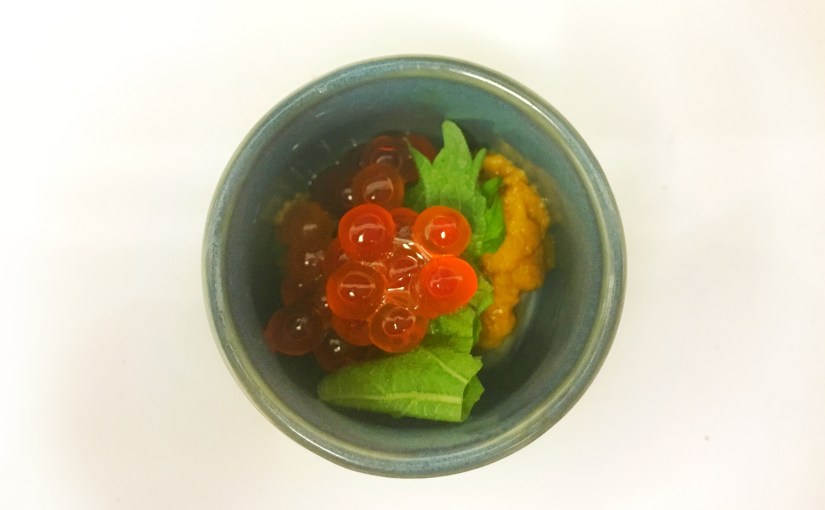
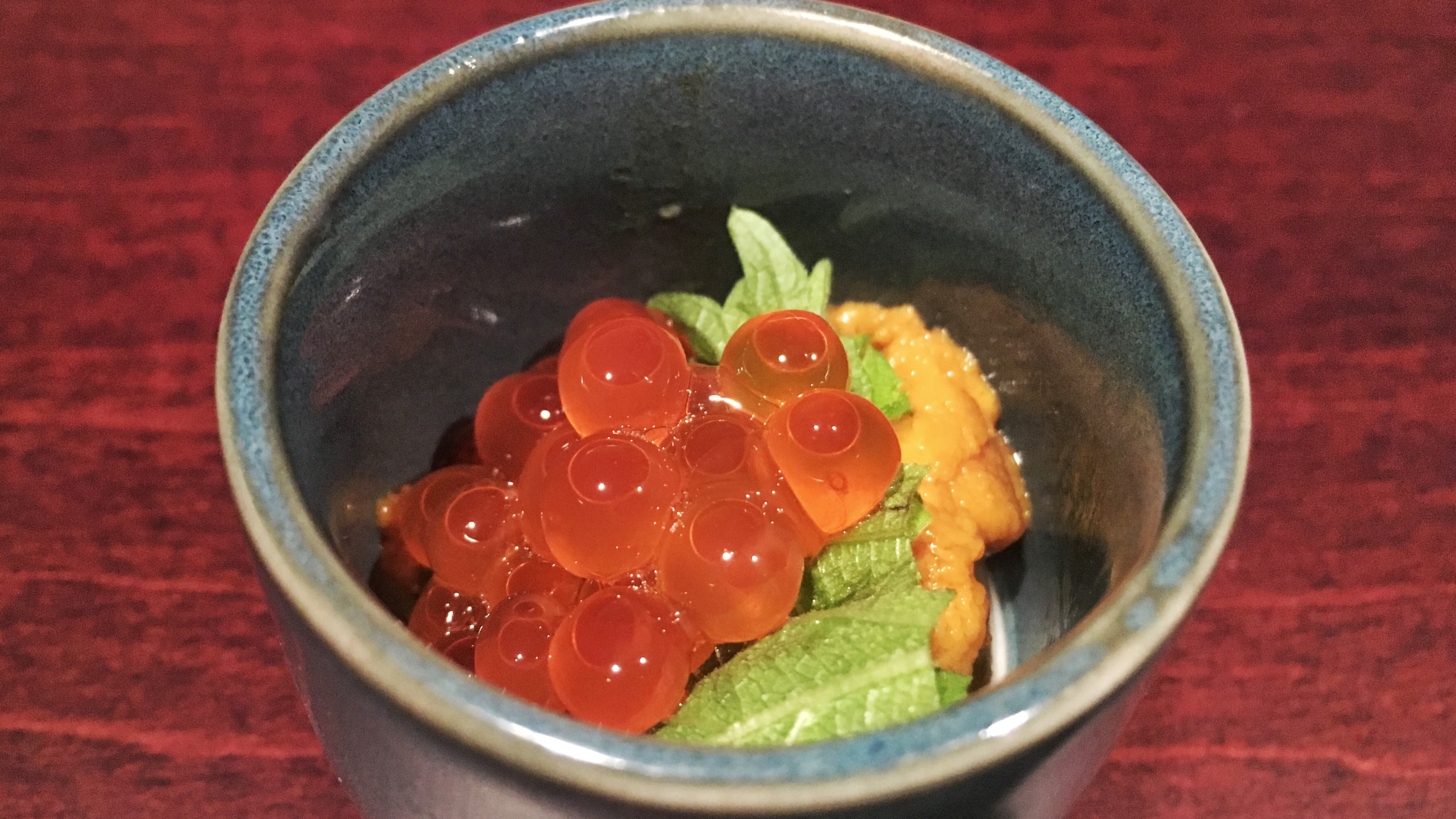
I originally opened with a seafood shot. It was reminiscent of what you would find in any standard fare Japanese American restaurant, but that’s exactly what I didn’t want this time around. I wanted more precision and more thought. The bottom is sea urchin with a touch of soy, followed by shiso leaf marinated in yuzu, and finished with salmon roe marinated in a dark amber maple syrup. Order matters and so does the experience as each flavor hits your palate. A rush of dull sweetness with a hint of the sea, quickly cleaned up by an herbal minty citrus, and then ending with the ever popular and ever classic sea urchin with just enough salt from sushi grade soy.

Second course: Salad

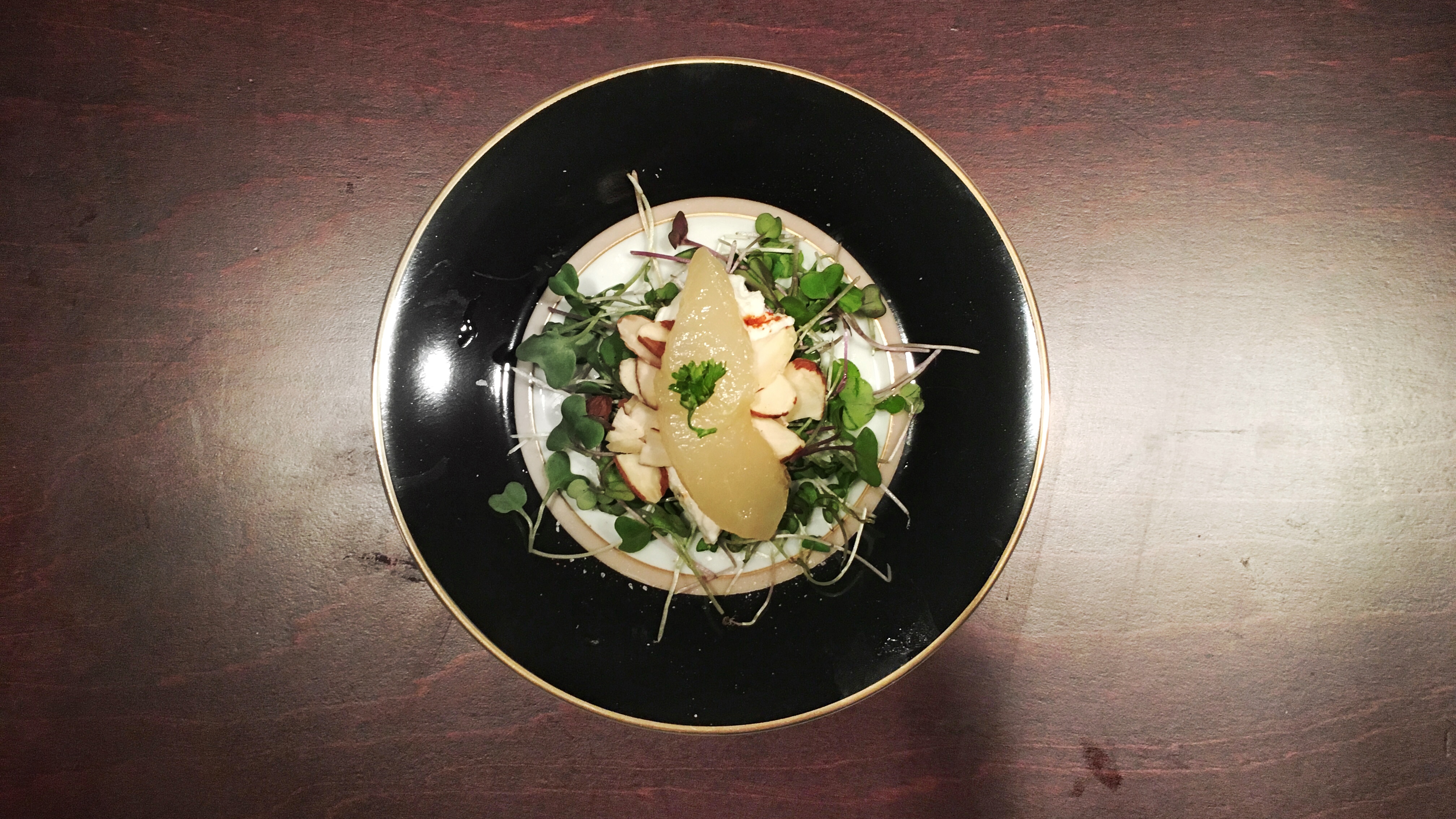
A salad was the next item to revisit. The first dinner was a straightforward take on caprese salad on a skewer with the main innovation being a balsamic hoisin as opposed to a standard balsamic. Simple and effective, but not what I was aiming for on this day. Starting from the bottom is microgreens, topped with ricotta seasoned with black pepper and cayenne, followed by a mound of raw almonds with a hint of salt, and finished with dashi marinated pears and a garnish of parsley. Again, order matters. Early sensations of earthy leaves are greeted by a rush of creaminess that are touched with moments of spice. Before the textures get boring the crunch of almonds livens everything up as it ends with a mouthful of sweet and umami only to be broken up by garnishes of parsley.

Third Course: Creamed Cheese Corn

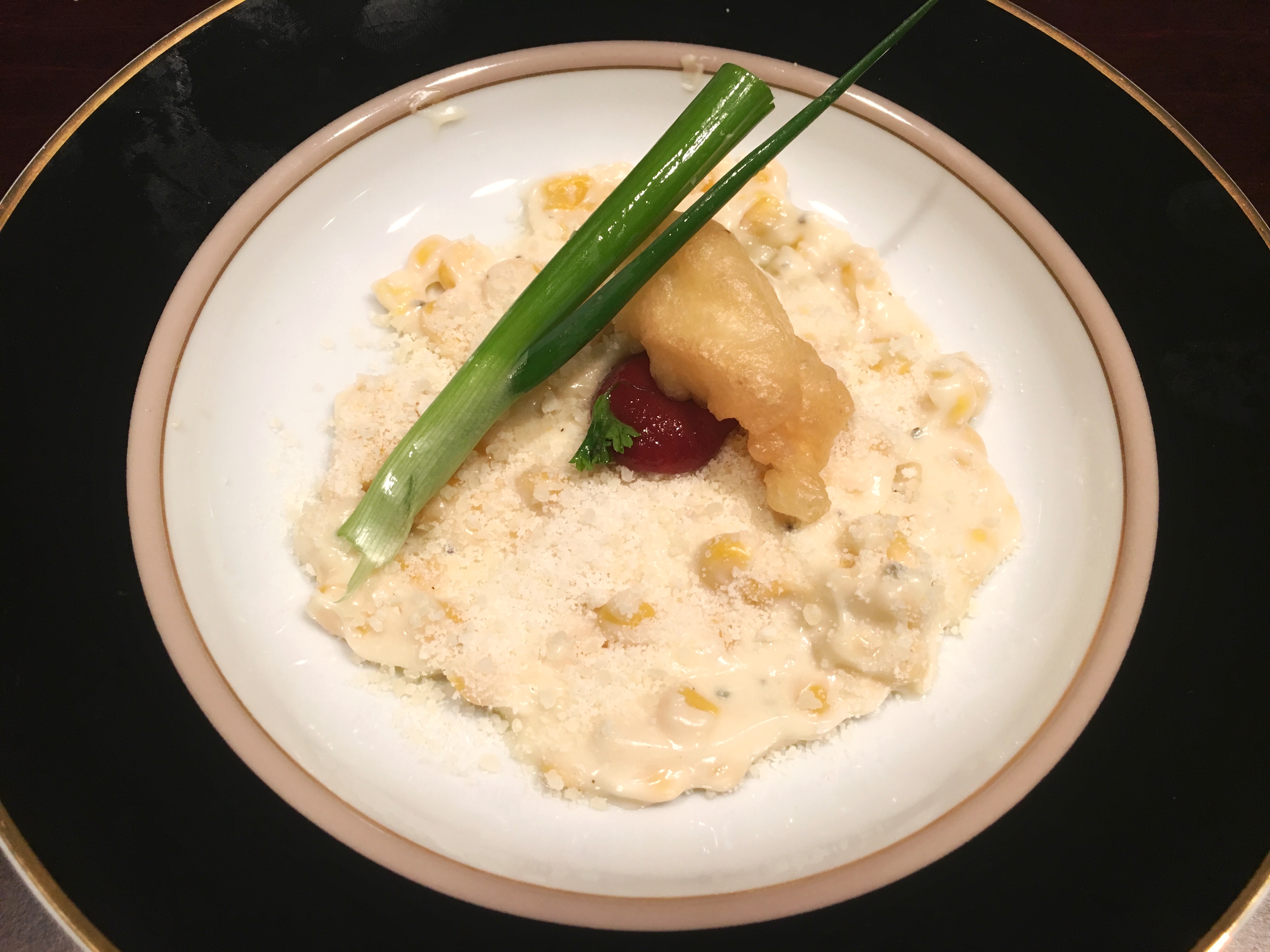
My favorite dish from that first coursed dinner was one I called “wonton curry creamed corn” served with takoyaki condiments. Super fun and would work wonders in any street fare. I wanted something that kept that level of fun, while applying some level of gourmet feeling utilizing my newfound experiences. This dish is comprised of a very rich, cheesy creamed corn seasoned with garlic, black pepper, and a hint of sugar, sprinkled with parmesan, and topped with a dollop of gochujang, green onion, parsley, and tempura fried green onion stuffed with the same cheesy creamed corn as seen on the bottom (some fun cornception going on here). Imagine the richest cream corn you have ever had, thicken it with cheese, add in notes of salt from parmesan, cut that richness with some green onion and parsley, and spread some spice throughout as you take in some gochujang. Now with all that going on, throw in some more of everything with a little texture as you take a bite of that tempura fried green onion that is stuffed with the same cheesy creamed corn.

Fourth Course: Slider

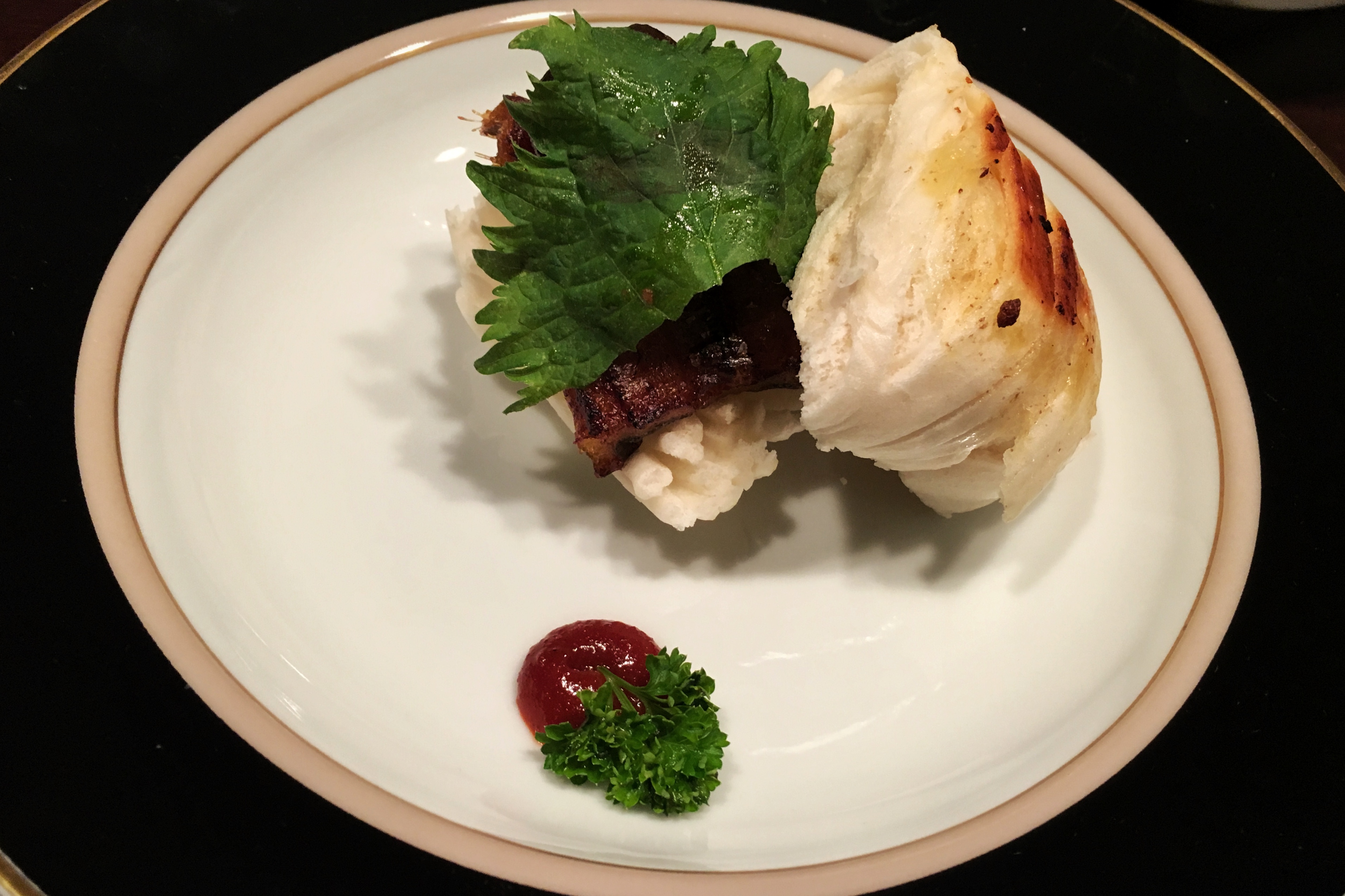
Next up was the slider concept. I could come up with a slider a million different ways, but I wanted this one to be out there. To “push the bounds” as some might say. Definitely an amalgamation of “this sounds cool” and “this should work” as I wracked my brain with concepts and ingredients that could be “unique” and “gourmet.” I settled on eel as it is a meaty tasting fish that was the closest thing to a hardy grill flavor that most people would love on a normal slider. Then I combo’d that with bao bread, as it is relatively under represented in the slider realm (I know bao buns are a thing, but this is a slider and most definitely not a bun). The outside is butter charred bao bread filled with heavily dried eel and a lettuce/greens replacement consisting of shiso leaf. On the side is a sauce of gochujang and parsley. Think of soft bao bread with a buttery crunch followed by smokey eel, freshened up with hints of shiso and parlsey, add in a tang of spice, and you’ve nailed what its like to eat this dish.

Fifth Course: A dessert

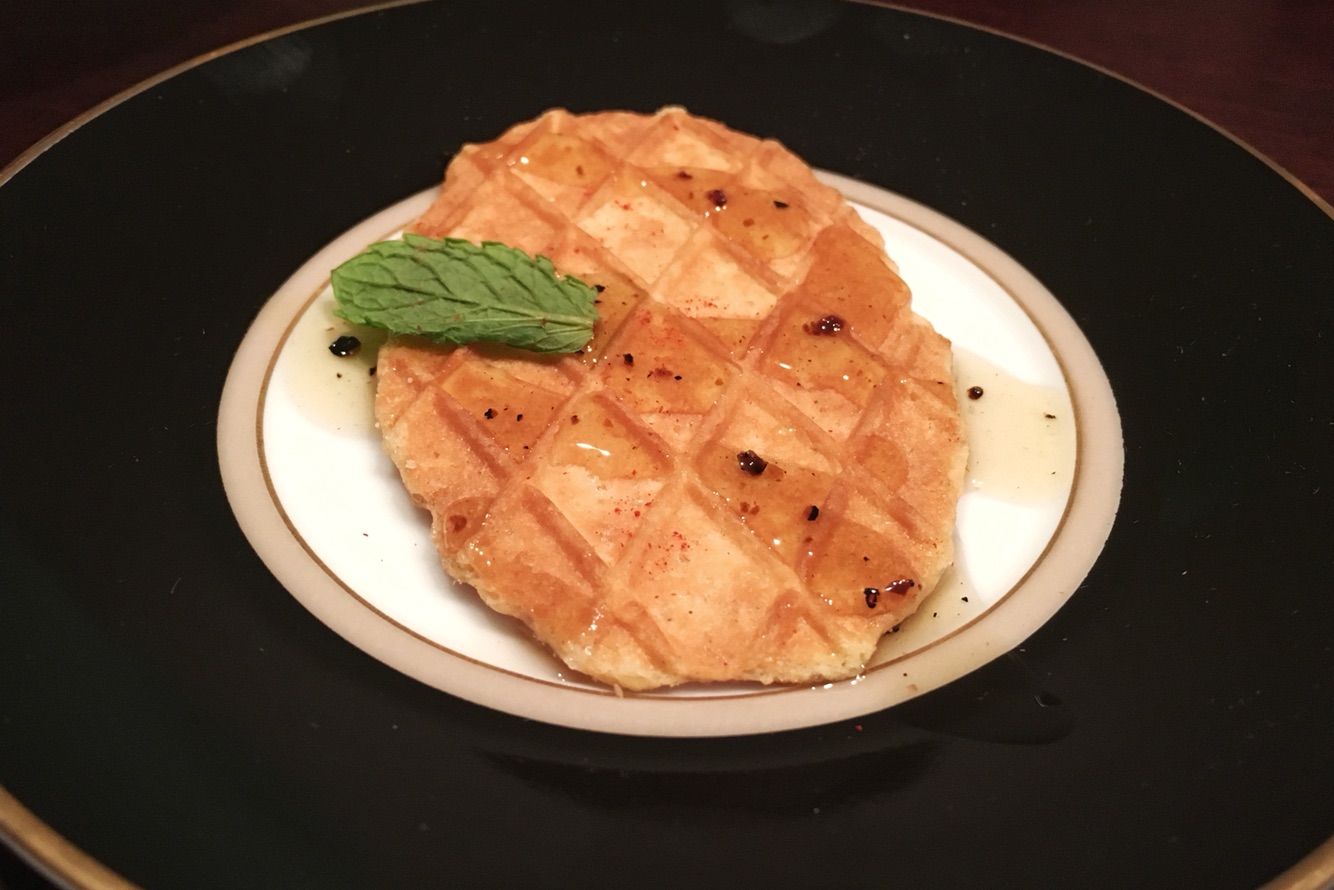
I’ll admit this has no resemblance to the abomination (in a good way I swear) I made the first meal. I don’t know if you could draw a single similarity between this and the monster tempura fried ball of ice cream that was wrapped in brownie. This is light, simple, and yet deceptively complex as it consists of a butter wafer drizzled in truffle honey, a couple drops of yuzu, a dash of cayenne and salt, and a garnish of mint. Rich wafer meets notes of sweet umami broken up by granules of salt and touches of cayenne, while being kept fresh by mint.